UN Secretary-General and European Leaders Warn of Escalating Climate Crisis as Wildfires Ravage the Continent and El Niño Intensifies
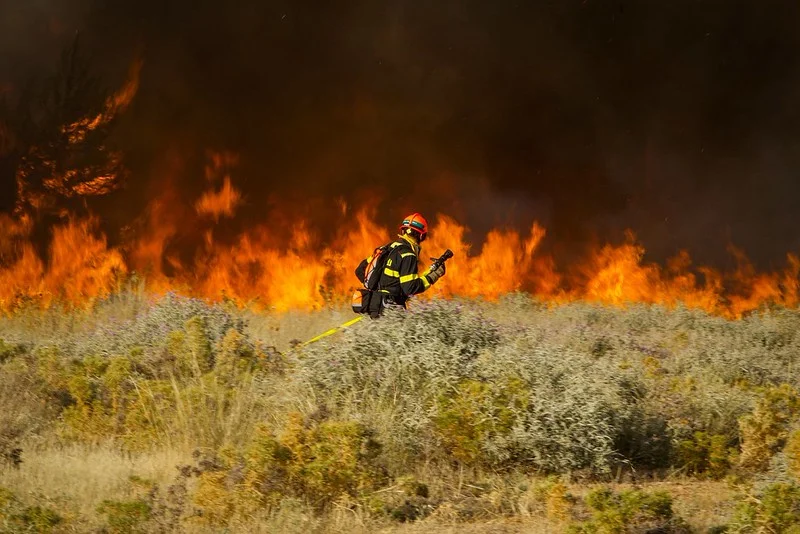
United Nations Secretary-General António Guterres, alongside the foreign ministers of the United Kingdom, France, and Spain, has issued a stark warning regarding the catastrophic wildfires currently sweeping across Europe, explicitly linking the disasters to the accelerating pace of climate change. In a series of high-level diplomatic statements, these officials have utilized the current environmental emergency to demand an immediate and drastic reduction in global greenhouse gas emissions. Guterres informed journalists on Friday that the "climate crisis is in overdrive," characterizing the record-breaking heat witnessed throughout the summer as a mere "warm-up act" for the more severe impacts projected to follow. The Secretary-General emphasized that the burgeoning El Niño phenomenon is effectively "adding fuel to a planet already on fire," signaling a dangerous new phase in the global climate emergency.
The Convergence of Extreme Heat and the El Niño Phenomenon
The warnings from the United Nations are grounded in a newly released report from the World Meteorological Organization (WMO). Published on Friday, the report predicts that the current weather pattern is rapidly evolving into a "strong event" expected to peak between now and October. El Niño, a naturally occurring climate pattern associated with the warming of the ocean surface temperatures in the central and eastern tropical Pacific Ocean, historically leads to higher global temperatures and significant disruptions in rainfall patterns. However, the WMO underscores that this natural cycle is now occurring against the backdrop of a planet already significantly warmed by human activity, primarily the combustion of fossil fuels.
Guterres warned that the intensification of El Niño "risks shattering every seasonal record" and will likely drive even more severe environmental effects worldwide. This sentiment was echoed by WMO scientists who briefed the press under the condition of anonymity. One senior scientist noted that the record-breaking heatwaves and ecological impacts observed in the first half of the year occurred "before the effects of El Niño are really kicking in at a global scale." This suggests that the current atmospheric distress is largely the result of long-term global warming, and the full weight of the El Niño-induced heat is yet to be felt by the global population.
A Chronology of the 2023 Summer Heat Crisis
The current crisis in Europe did not emerge in a vacuum but is the culmination of a series of record-breaking months that have pushed the continent’s infrastructure and ecosystems to their limits.
- April 2023: Spain and Portugal experienced an unprecedented early-season heatwave, with temperatures in some regions exceeding 38°C (100°F). This event served as an early warning sign of a destabilized Mediterranean climate.
- June 2023: Global sea surface temperatures reached record highs, particularly in the North Atlantic. This marine heatwave contributed to higher humidity and stifling night-time temperatures across Western Europe.
- July 2023: This month was officially declared the hottest month ever recorded in human history. The "Cerberus" and "Charon" heatwaves swept across Southern Europe, bringing temperatures near 48°C (118.4°F) in Sicily and triggering massive wildfires in Greece, Italy, and Algeria.
- Late July 2023: Massive evacuations took place on the Greek islands of Rhodes and Corfu as wildfires spiraled out of control, fueled by tinder-dry vegetation and high winds. It was during this peak of destruction that the UN and European foreign ministers issued their collective call for action.
The timeline demonstrates a consistent upward trajectory in temperature volatility, leaving little doubt among the scientific community that the traditional "fire season" has expanded in both duration and intensity.
Supporting Data: The Rising Cost of a Warming Planet
The statistical evidence supporting the Secretary-General’s claims is increasingly undeniable. According to the Copernicus Climate Change Service (C3S), the global average temperature for the first three weeks of July 2023 was significantly above the 1.5°C threshold above pre-industrial levels—a key limit established by the Paris Agreement. While a temporary breach of this limit does not mean the treaty has failed, it illustrates the narrowing window for meaningful intervention.
Furthermore, data from the European Forest Fire Information System (EFFIS) indicates that the total area burned in the European Union this year has already surpassed the long-term annual average. In Greece alone, over 50,000 hectares were consumed by flames in a single week in July, representing a nearly twofold increase in fire severity compared to the previous decade.
The economic implications are equally staggering. A report by the European Central Bank (ECB) suggests that extreme weather events could shave up to 2% off the Eurozone’s GDP growth if emissions are not curtailed. The tourism sector, a vital component of the economies of Spain, Greece, and Italy, is particularly vulnerable as travelers begin to reconsider Mediterranean destinations during the peak summer months due to health risks and the threat of fire.
Diplomatic Responses and National Positions
The coordinated stance of the UK, France, and Spain reflects a growing consensus among European powers that climate change is no longer a future threat but a present national security issue.
The United Kingdom: British officials have emphasized the need for "urgent international solidarity." Despite domestic debates regarding the pace of the UK’s own "Net Zero" transition, the Foreign Office has maintained that global leadership is required to prevent the total collapse of climate targets. The UK government has pledged to continue its support for the Green Climate Fund, though critics argue that more direct pressure on major polluters is necessary.
France: The French Foreign Ministry has called for an "ecological awakening" among the G20 nations. President Emmanuel Macron has frequently advocated for a "Global Financing Pact" to help developing nations bypass fossil-fuel-heavy industrialization, a position that the current wildfires have only reinforced. France has also been a leading voice in calling for more robust EU-wide firefighting resources, such as the RescEU aerial fleet.
Spain: Perhaps no country in Western Europe is as directly impacted as Spain. The Spanish Foreign Minister has highlighted that the Iberian Peninsula is becoming a "climate frontline." With reservoirs at historic lows and desertification threatening nearly a third of the country, Spain has become a vocal proponent of aggressive EU emissions targets, arguing that the cost of inaction far outweighs the cost of the green transition.
Analysis of Implications: Beyond the Wildfires
The implications of the current climate "overdrive" extend far beyond the immediate threat of fire. The convergence of the climate crisis and the El Niño cycle suggests a period of prolonged global instability.
Food Security and Agricultural Disruption
The disrupted rainfall patterns predicted by the WMO are likely to devastate global agriculture. In Europe, the heat has already impacted olive oil production in Spain and wheat yields in France. Globally, El Niño often leads to droughts in Australia and parts of Southeast Asia, while causing flooding in South America. These twin threats to the global "breadbaskets" could lead to a spike in food prices, exacerbating the cost-of-living crisis and potentially leading to civil unrest in vulnerable regions.
Public Health and Heat Mortality
Heat is often referred to as a "silent killer." Unlike floods or fires, its impact is often only visible in excess mortality statistics. A study published in Nature Medicine estimated that over 61,000 people died from heat-related causes in Europe during the 2022 summer. With 2023 proving to be even hotter, health experts warn that healthcare systems may be overwhelmed by cases of heatstroke, respiratory failure, and cardiovascular stress.
The Geopolitics of Climate Migration
As regions in Southern Europe and North Africa become increasingly uninhabitable during the summer months, the world may see an uptick in "climate refugees." While most climate-driven migration is internal, the persistent nature of these heatwaves may eventually trigger a permanent shift in population density toward Northern Europe and higher latitudes, placing new pressures on urban infrastructure and social cohesion.
Conclusion: The Mandate for Faster Cuts
The statements from Secretary-General Guterres and the European ministers serve as a final warning before the next United Nations Climate Change Conference (COP). The "warm-up act" of 2023 has demonstrated that current mitigation strategies are insufficient to handle the "overdrive" phase of the climate crisis.
The scientific consensus is clear: without an immediate and sustained reduction in the burning of coal, oil, and gas, the records broken this year will soon become the new baseline. As El Niño continues to intensify through the remainder of the year, the international community faces a pivotal moment. The choice is no longer between economic growth and environmental protection, but between a managed transition to a sustainable future or an unmanaged descent into a world of perpetual crisis.
The UN chief’s metaphor of a "planet on fire" is not merely rhetorical; for the residents of Rhodes, the farmers of Andalusia, and the firefighters across the Mediterranean, it is a literal and daily reality. The call for "faster cuts" to emissions is not just a policy recommendation—it is a demand for survival in an era where the climate has moved from a predictable background force to an unpredictable and destructive protagonist in human history.

Related Posts
Constitutional Court of South Africa Bars Shell Oil Exploration in Landmark Victory for Environmental and Community Rights
The Battle for Saldanha Bay: South Africa’s Ambitious Ocean Economy Strategy Faces Legal and Environmental Reckoning