Danube water levels threaten Hungary’s Paks nuclear facility as government scrambles to prevent power outages
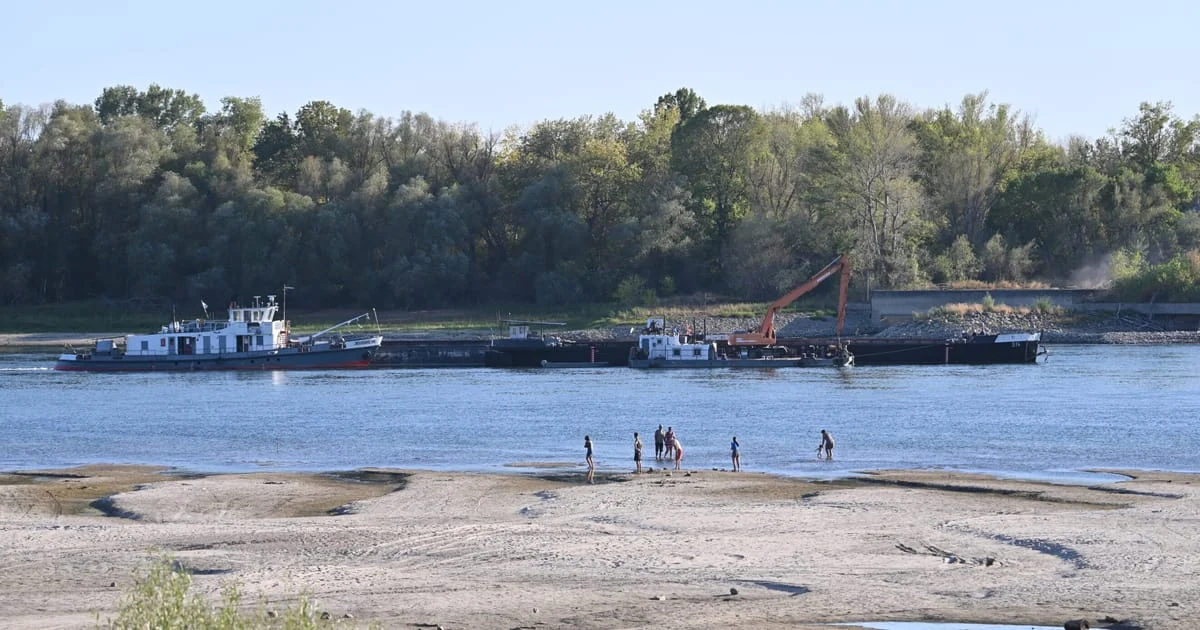
Hungary faces a critical energy security challenge as record-low water levels on the Danube River threaten the operational viability of the Paks Nuclear Power Plant, the nation’s primary source of electricity. The facility, which provides roughly half of Hungary’s domestic power generation, is currently under severe strain due to a prolonged summer drought that has significantly reduced the volume of water available for cooling its reactors. Péter Magyar, in recent communications, indicated that water levels near the plant have fallen 122 centimeters below the seasonal average. Projections from hydrological monitoring stations suggest that levels could drop by an additional 132 centimeters by early next week, a threshold that would trigger mandatory safety protocols necessitating the immediate shutdown of one of the plant’s two primary turbines.
Emergency Engineering Measures and Military Mobilization
In a desperate bid to maintain the flow of electricity to the national grid, the Hungarian government has authorized an emergency engineering project to stabilize water levels in the vicinity of the plant. The strategy involves the construction of an underwater riverbed sill, a submerged dam designed to slow the river’s current and artificially raise the water level upstream. The scope of this undertaking is substantial, requiring the deployment of approximately 150,000 cubic meters of stone to form a physical barrier across the riverbed.
Furthermore, the government is evaluating the unconventional strategy of sinking two decommissioned 80-meter barges to reinforce the structure and further restrict water discharge. Prime Minister Viktor Orbán’s administration has mobilized 100 soldiers from the Hungarian Defense Ministry to assist in the round-the-clock construction efforts. This logistical operation is being conducted under intense time pressure, as the window to prevent a partial plant shutdown narrows. Experts from the national water directorate have been tasked with overseeing the integrity of the sill, ensuring that the alteration to the riverbed does not cause secondary ecological or navigational hazards downstream.
The Broader Context of European Nuclear Vulnerability
The crisis in Hungary is not an isolated incident but rather the latest manifestation of a systemic vulnerability affecting nuclear power plants across the European continent. Nuclear reactors require massive quantities of water for cooling and the condensation of steam. As climate change leads to more frequent and intense heat waves, the rivers that serve as these plants’ lifeblood are becoming increasingly unreliable.
Earlier this week, Romania experienced a significant disruption when the Cernavodă nuclear power plant was forced to scale back operations due to critical water levels in the Danube. Similarly, France, which maintains one of the world’s most extensive fleets of nuclear reactors, has faced a difficult summer. The French energy giant EDF has been forced to modulate output at several of its sites. According to recent reporting by Le Monde, at least six of France’s 57 reactors have been taken offline or throttled back due to the dual pressures of thermal pollution regulations—which limit how hot the discharged cooling water can be—and the physical lack of river water. In a bizarre climate-related complication, another French plant was forced to suspend operations earlier in the season after a surge in jellyfish populations clogged intake pipes, a phenomenon increasingly linked to shifting marine temperatures.
Chronology of the Crisis
The current situation is the culmination of a summer marked by record-breaking temperatures and a lack of precipitation across Central and Eastern Europe.
- Mid-June: Initial meteorological reports identify a precipitation deficit in the Danube basin, signaling potential water scarcity for the summer months.
- July 15: The Paks facility begins monitoring water intake levels with increased frequency as the Danube flow rates hit the 25th percentile of historical averages.
- August 10: Water levels drop below the critical "normal" baseline, prompting the Ministry of Energy to hold emergency consultations with grid operators.
- August 12: Péter Magyar issues a public statement regarding the 122-cm deficit, highlighting the risk to the Paks turbine operation.
- August 14: The Hungarian government officially announces the construction of the riverbed sill and the deployment of military engineering units.
- August 19 (Projected): The water level is expected to reach the 132-cm threshold, requiring the planned shutdown of one turbine if current efforts fail to raise the water level sufficiently.
Technical and Economic Implications
The Paks nuclear facility operates four VVER-440 reactors. A shutdown of even one of these units would represent a significant loss of base-load power. Under normal conditions, Paks produces approximately 2,000 megawatts of electricity. A 500-megawatt reduction would necessitate an immediate increase in electricity imports from neighboring countries, a move that would likely drive up wholesale energy prices for Hungarian consumers and industrial entities.
The reliance on a single nuclear facility for such a large portion of the national energy mix has long been a subject of intense political debate in Hungary. The Paks expansion project, which aims to add two new reactors (Paks II) to the existing site, has been a cornerstone of the current government’s energy policy. However, the project—which is being financed and built in partnership with Russian state-owned firm Rosatom—is now facing renewed scrutiny. Critics, including Magyar, have questioned the wisdom of expanding the plant’s capacity when the physical environment itself is struggling to support the existing infrastructure. The "water issue" has become a central argument for those advocating for a more diversified energy portfolio that relies less on large-scale, water-intensive centralized power plants.
Strategic Energy Security Analysis
The situation at the Danube presents a multifaceted challenge for the Hungarian state. From a technical perspective, the reliance on river water for cooling is a legacy design requirement that makes the plant inherently sensitive to climate volatility. While the construction of a riverbed sill offers a temporary fix, it is not a long-term solution for climate-induced drought.
From a geopolitical standpoint, the Paks facility is inextricably linked to Hungary’s complex relationship with Moscow. The dependence on Russian technology and nuclear fuel, coupled with the current physical vulnerability of the site, creates a precarious scenario for energy security planners. If the plant were to experience a prolonged period of reduced output, Hungary would be forced to turn to the European energy market to bridge the gap. Given the existing cross-border transmission constraints and the volatility of European natural gas prices, this would place significant strain on the national budget.
Furthermore, the government’s decision to involve the military in the construction of the sill underscores the severity with which the state views the current energy threat. It represents an escalation from a routine infrastructure maintenance task to an issue of national security. As the project nears completion, the focus will shift to whether these measures are sufficient to mitigate the immediate impact of the drought.
Conclusion and Outlook
As the days progress, the eyes of the Hungarian energy sector remain fixed on the hydrological data coming from the Danube. The construction of the sill is a race against time, with the success of the project depending on both the engineering speed of the military units and the rate of evaporation and upstream usage.
This crisis serves as a sobering reminder of the intersection between climate change and critical infrastructure. It highlights the urgent need for European nations to conduct comprehensive climate stress tests on their power grids. Whether it is nuclear, coal, or hydroelectric power, the dependence on water is a vulnerability that can no longer be ignored. For Hungary, the events of this summer at Paks are likely to ignite a much broader, more intense discussion about the country’s long-term energy strategy, the sustainability of large-scale nuclear power in a warming world, and the necessity of investing in decentralized, climate-resilient energy solutions to prevent similar crises in the future. As of late this week, the government maintains that all efforts are being made to avoid power rationing, but the reality remains that the facility’s output is at the mercy of the river’s dwindling flow.