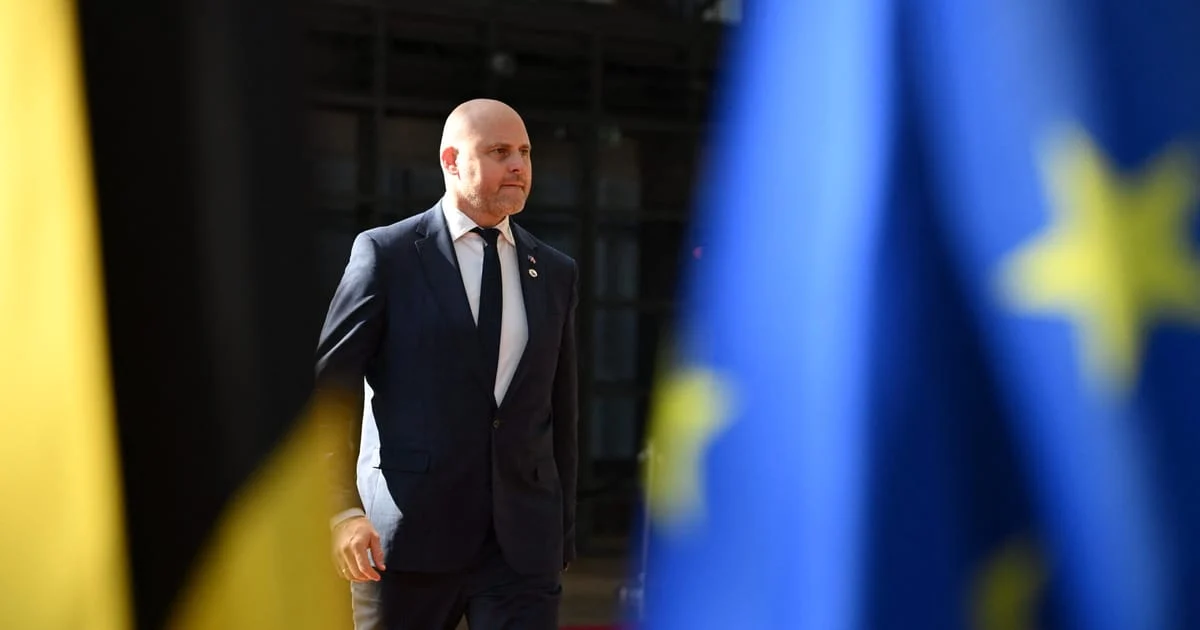
Latvia wants €7B from EU to cope with fallout from Russia’s war
The End of the Hungarian Shield
For the past several years, Viktor Orbán’s administration in Budapest frequently exercised its veto power within the European Council to delay or dilute sanctions packages targeting the Kremlin. This dynamic allowed other member states to maintain a performative unity while quietly signaling their reservations regarding energy dependency, trade ties, or specific financial measures. The sudden shift in this dynamic—whether driven by internal political realignment, external pressure, or a change in European Council voting strategies—has left a vacuum.
Without the "Hungarian scapegoat," European capitals are now directly responsible for their own policy stances. This shift has triggered a series of quiet, high-stakes negotiations behind closed doors in the Berlaymont and the Council headquarters, where the focus has moved from "Why is Hungary blocking this?" to "Why are we, as a collective, not moving faster?"

A Chronology of Policy Stagnation
The timeline of EU sanctions against Russia has been characterized by iterative rounds of negotiation, often followed by long delays.
- February 2022: Initial massive sanctions are passed in the immediate wake of the full-scale invasion of Ukraine, characterized by broad consensus.
- Mid-2022 – Early 2024: The "Orbán Era" of obstruction. Nearly every major package, particularly those involving energy, faced significant hurdles in Budapest, leading to watered-down provisions on oil imports and banking systems.
- July 2026: The current "Post-Orbán" phase, where the lack of a primary obstructionist has led to a realization that the EU lacks a unified strategy on the next tier of sanctions, specifically concerning secondary sanctions on non-EU entities helping Russia bypass existing trade bans.
Economic Realities and Internal Divergence
The reluctance of certain member states to push for further escalation is not merely political; it is deeply rooted in macroeconomic data. Several Central and Eastern European nations, while rhetorically strong, remain heavily reliant on Russian nuclear technology or specialized pipeline energy. Simultaneously, certain Western European nations are concerned about the impact of further sanctions on their industrial manufacturing bases, which are already reeling from high energy costs and a cooling global economy.
Data from the European Commission’s recent trade reports indicate that while direct imports from Russia have plummeted by nearly 70% since 2022, "shadow trade" via third-party intermediaries has surged. The challenge for the EU is no longer just cutting off the source, but policing the entire supply chain. This requires a level of administrative cooperation that some capitals are hesitant to sign off on, fearing that stricter compliance enforcement will negatively affect their domestic exporters.

The European Parliament’s Digital Pivot
As the Council grapples with these geopolitical fractures, the European Parliament is simultaneously attempting to modernize its internal operations, an effort that reflects the broader technological anxiety currently permeating Brussels. The institution has recently confirmed it is integrating large language models from major AI developers, including OpenAI, Meta, Anthropic, and Mistral, into its internal workflows.
This decision, while framed as a necessary step toward efficiency, highlights the Parliament’s growing awareness of the risks associated with AI. By bringing these models under a managed, internal framework, the institution hopes to provide lawmakers with the tools to understand the technology they are simultaneously trying to regulate via the AI Act. This digital pivot acts as a backdrop to the political turmoil; while the Council argues over the geopolitical future, the Parliament is preparing for a future where policy drafting and legislative analysis are augmented by generative AI.
Midterm Reshuffles and Political Fragility
The political volatility is further complicated by the ongoing midterm reshuffling of senior posts within the European Parliament. The maneuvering for committee chairmanships and rapporteur roles has created a period of instability, where long-standing alliances—such as the "grand coalition" between the center-right EPP and the center-left S&D—are being tested.

This internal realignment has real-world consequences for legislative progress. The recent controversy involving a Slovenian lawmaker, who was shielded from prosecution by a right-wing bloc in the Parliament, serves as a case study in how ideological alignments are shifting. When the center-right joined forces with the right and far-right to block the lifting of parliamentary immunity, it sent a clear signal that domestic political survival and coalition maintenance are increasingly prioritized over institutional integrity. This, in turn, makes it harder for the Parliament to maintain a unified, coherent stance on sensitive foreign policy matters, including the enforcement of Russia sanctions.
Implications for the Future of EU Foreign Policy
The exposure of these red lines has significant implications for the European Union’s credibility on the global stage. If the EU cannot maintain a robust, unified stance on sanctions without a convenient villain to blame for delays, it risks signaling to Moscow that the European resolve is fracturing.
The implications are threefold:

- Strategic Autonomy: The EU’s ambition for strategic autonomy is being hampered by the very dependence it sought to break. Without a unified economic front, the EU’s ability to act as a geopolitical power is severely curtailed.
- Enforcement Gap: The current deadlock is moving the focus from "what" to sanction to "how" to enforce. This requires a supranational oversight mechanism that many member states—particularly those protective of their sovereignty—are currently unwilling to support.
- Institutional Credibility: The internal squabbles regarding immunity and the midterm reshuffle create a perception of a Brussels that is more interested in its own power dynamics than the pressing crises of the continent.
Official Responses and The Path Ahead
While no single spokesperson has admitted to the "end of the shield" dynamic, the rhetoric from the European Commission has shifted from "unity at all costs" to "targeted, enforceable action." Officials in Brussels acknowledge that the era of "easy consensus" is over. The coming months will likely see a push for "minilateralism," where smaller groups of member states move forward on specific sanctions packages without waiting for the full 27-member consensus, effectively bypassing the national red lines that have become so visible.
As the summer break concludes, the pressure will mount. The Russian economy has shown surprising resilience, and the lack of new, impactful EU measures is increasingly viewed by policymakers as a strategic failure. The challenge for the leadership in Brussels is to reconcile the competing economic interests of 27 distinct nations while maintaining the perception of a unified bloc.
Whether the EU can successfully transition from a period of forced consensus to a period of pragmatic, multi-speed integration remains to be seen. What is clear is that the "Post-Orbán" reality has arrived, and the EU must now confront its own internal contradictions if it hopes to maintain its role as a decisive actor in the ongoing conflict in Ukraine. The coming autumn sessions of the European Council will be the ultimate test of whether these exposed red lines are immovable barriers or merely the starting points for the next phase of European diplomatic negotiation.