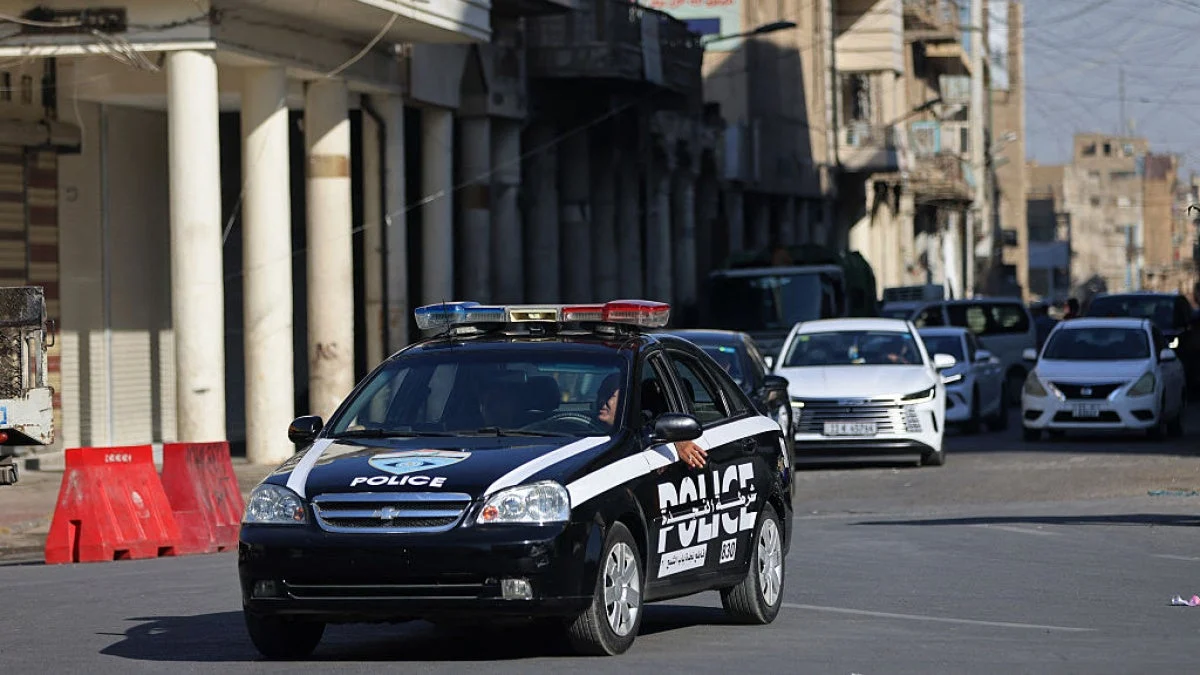
Human Rights Watch Calls for Investigation into Death of Detainee Following Removal from Najaf Hospital by Iraqi Drug Police
The death of a 22-year-old man in the custody of Iraqi narcotics police has sparked significant international concern and calls for a transparent investigation into the circumstances surrounding his treatment and subsequent passing. Muhsin Ali Kani, who was being treated for severe abdominal pain at a hospital in Najaf, was reportedly removed from medical care by police officers just one day before his death in late June 2026. Human Rights Watch (HRW) has raised urgent questions regarding the legality and ethics of removing a patient in a precarious health state from a medical facility to a detention center, suggesting that such actions may constitute a violation of the right to life and health.
According to statements from the Najaf General Directorate for Anti-Narcotics and Psychotropic Substances Affairs, a branch of the Iraqi Interior Ministry, Kani was detained after medical tests confirmed drug use and the individual admitted to swallowing four bags of crystal methamphetamine. While the authorities claim Kani died during a transfer back to the hospital after his condition deteriorated at the police station, his family and human rights advocates point to a series of troubling events and physical marks on the body that suggest potential mistreatment or negligence.
Chronology of the Incident
The events leading to the death of Muhsin Ali Kani began on June 25, 2026, when he sought emergency medical assistance at Al-Najaf Teaching Hospital. Kani was experiencing acute abdominal distress, a symptom consistent with the ingestion of narcotics. While at the hospital, Kani’s condition was brought to the attention of the authorities. Under current Iraqi medical protocols, healthcare providers at facilities like Al Hussein Medical City in Karbala and Al-Najaf Teaching Hospital are reportedly required to notify law enforcement if a patient is suspected of being under the influence of illicit substances.
Following this notification, officers from the drug police arrived at the hospital. Kani’s uncle, who spoke with Human Rights Watch, recounted that the family pleaded with the officers to allow the 22-year-old to complete his medical treatment before taking him into custody. Although the officers initially appeared to agree, they allegedly reversed this decision shortly after the family left the bedside. Kani’s mother later informed the family that the police had proceeded with the arrest despite his visible physical distress. At the time of his removal from the hospital, Kani’s heart rate was recorded at approximately 170 beats per minute—a dangerously high level that typically requires immediate and continuous medical supervision.
On the morning of June 26, the Anti-Narcotics Directorate contacted Kani’s family, requesting his identification documents. Upon arrival at the station, the family was directed to the Health Ministry’s forensic medicine department to retrieve his body. Staff at the morgue indicated that the drug police had delivered the deceased at approximately 10:00 a.m. that morning. The family initially refused to accept the body, demanding a formal investigation and an autopsy to determine the true cause of death.
Forensic Findings and Allegations of Abuse
An autopsy was subsequently conducted, and the body was released to the family on June 29. The official autopsy report, which was reviewed by Human Rights Watch and an independent forensic pathology expert from Physicians for Human Rights, concluded that the primary cause of death was a methamphetamine overdose. The report detailed the discovery of two plastic-wrapped rolls and one open roll containing white powder in Kani’s stomach, along with a fourth roll in the upper colon. Laboratory tests confirmed these contained methamphetamine.
However, the physical condition of the body has raised further questions. The autopsy noted external abrasions on Kani’s wrists, elbows, right forearm, and right knee, which the report characterized as "marks of handcuff restraint" and "superficial" injuries. More concerning were the observations made by the family and the independent forensic expert. Photographs of the body revealed horizontal lines across the lower and mid-back. The independent expert noted these "could be contusions or bruises from blows with a linear object," though they remained inconclusive without further internal examination.
The official report maintained that these injuries were not life-threatening on their own. It attributed other internal symptoms—such as pulmonary congestion, edema, and kidney congestion—to methamphetamine toxicity. Despite these findings, the decision to move a patient with a heart rate of 170 bpm from a hospital to a jail cell remains the focal point of the human rights critique.
Context of the Narcotics Crackdown in Iraq
The death of Muhsin Ali Kani occurs against the backdrop of an aggressive and intensified national campaign against drug trafficking and consumption in Iraq. Throughout 2026, Iraqi security forces have significantly ramped up operations to dismantle both domestic and cross-border smuggling networks. According to government data, authorities have seized more than 1.7 tons of illicit drugs this year alone.
The judicial response has been equally severe. In the first half of 2026, Iraqi courts reportedly issued 42 death sentences and 357 life sentences for individuals convicted of drug trafficking. This hardline approach is a response to the growing "Captagon" and crystal meth epidemic that has gripped the region, shifting Iraq from a transit hub for drugs heading to the Gulf to a major consumer market.
While the government views these measures as necessary for national security, human rights organizations argue that the "war on drugs" often leads to the erosion of due process and the mistreatment of detainees. In Najaf specifically, Kani’s death marks the third reported fatality in state custody in 2026. The previous two deaths were also allegedly linked to physical abuse by security forces.
Systemic Issues in Detention Centers
The allegations surrounding Kani’s death are exacerbated by a history of reported torture within the Najaf police departments. Local journalists and human rights groups have documented various methods of physical and psychological abuse used to extract confessions or punish detainees. One such method, known locally as al-shawaya (the grill), involves suspending a detainee by their hands, which are tied behind their back, while they are beaten.
Human Rights Watch highlighted that many former detainees are unwilling to speak publicly about their experiences for fear of violent reprisals. However, the recurring nature of these allegations suggests a systemic issue within the regional drug police units. While some members of the drug police have faced criminal proceedings in the past for abuse, the outcomes of those cases are often shielded from public view, leading to a perceived culture of impunity.
Legal Analysis and International Standards
From a legal perspective, the removal of a patient from a hospital while they are in a life-threatening condition may violate several international treaties to which Iraq is a party, including the International Covenant on Civil and Political Rights (ICCPR). Under international law, the state has a "heightened duty of care" toward individuals in its custody. This includes the obligation to provide necessary medical care and to ensure that detention does not aggravate existing health conditions.
Adam Coogle, deputy Middle East director at Human Rights Watch, emphasized that the decision to transfer Kani was a critical failure. "Any death in state custody raises questions around the treatment of a detainee, but detention while receiving medical treatment should sound alarm bells," Coogle stated. He argued that an impartial investigation must look beyond the immediate medical cause of death to examine the administrative and operational decisions that placed Kani in a jail cell instead of an intensive care unit.
Furthermore, the Najaf Anti-Narcotics Directorate’s public statement, which referenced previous drug-related convictions of Kani’s family members, has been criticized as an attempt to bias public opinion. Human rights advocates point out that criminal responsibility is strictly individual, and such statements undermine the presumption of innocence.
Implications and the Need for Accountability
The case of Muhsin Ali Kani serves as a litmus test for the Iraqi justice system’s ability to police itself. The formation of an investigative committee in Baghdad is a positive step, but history suggests that such committees often lack the transparency required to restore public trust.
For the investigation to be deemed credible by the international community, it must satisfy several criteria:
- Independence: The investigators must be entirely separate from the Najaf police and the Interior Ministry units involved in the arrest.
- Scope: The probe must investigate the specific police officers and hospital administrators who authorized the discharge of a high-risk patient.
- Transparency: The full findings of the investigation and the autopsy should be made available to the family and their legal representatives.
- Accountability: If negligence or abuse is found, those responsible must face criminal charges rather than simple administrative discipline.
As Iraq continues its struggle against the narcotics trade, the balance between law enforcement and human rights remains precarious. The death of a young man who sought help at a hospital only to die in a police cell highlights the urgent need for reform in how the state handles those suffering from substance abuse and medical emergencies. Without a rigorous and public accounting of what happened in Najaf, the rift between the security forces and the communities they serve is likely to widen, further complicating the country’s efforts to achieve stability and justice.

Related Posts
Human Rights Watch Urges UN Security Council to Extend Lebanon Peacekeeping Mission Amid Escalating Conflict and Humanitarian Crisis
South Africa Calls for Global Recognition of Gender Apartheid in Solidarity with Afghan Women and Girls