Human Rights Watch Urges UN Security Council to Extend Lebanon Peacekeeping Mission Amid Escalating Conflict and Humanitarian Crisis
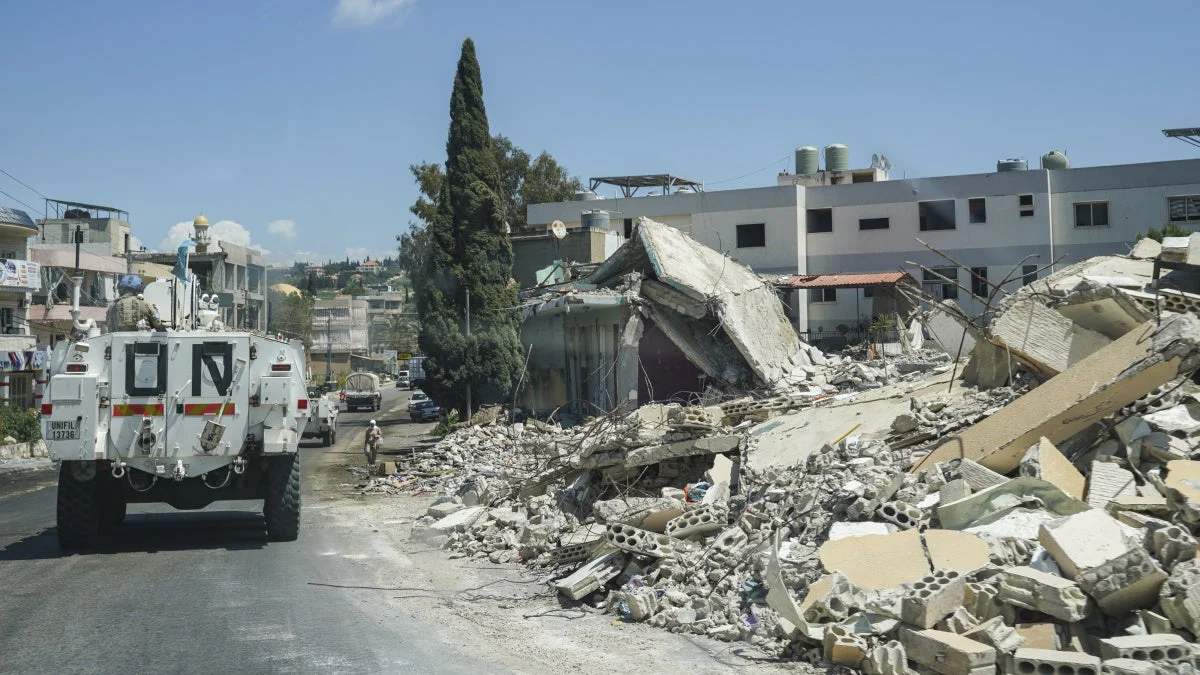
The United Nations Security Council is facing mounting international pressure to reconsider its decision to terminate the United Nations Interim Force in Lebanon (UNIFIL) following a dramatic escalation in hostilities that has left southern Lebanon in a state of humanitarian emergency. Human Rights Watch (HRW) issued a formal appeal today, asserting that the withdrawal of international peacekeepers would leave millions of Lebanese civilians vulnerable to systematic abuses and further displacement. The call for an extension comes as the security landscape in the region has shifted fundamentally since the Security Council’s 2025 resolution to phase out the mission.
The Shift from Withdrawal to Crisis
In August 2025, the UN Security Council unanimously adopted Resolution 2790, which sought to conclude UNIFIL’s nearly five-decade-long presence in Lebanon. At the time, diplomatic assessments—led largely by the United States—suggested that the security environment along the "Blue Line" had stabilized significantly. The resolution established a timeline for a phased withdrawal to begin at the end of 2026, with the force intended to provide one final year of support for the Lebanese Armed Forces (LAF) and humanitarian corridors.
However, the geopolitical calculus underpinning that decision was shattered in March 2026. A sudden and violent escalation between the Israeli military and Hezbollah has since transformed southern Lebanon into an active theater of war. Israeli forces have occupied significant portions of the border region, while Hezbollah has maintained a consistent barrage of rocket fire. This resurgence of high-intensity conflict has resulted in the displacement of hundreds of thousands of civilians, a situation HRW warns may constitute the war crime of forced displacement.
Louis Charbonneau, the United Nations director at Human Rights Watch, emphasized the danger of adhering to an outdated withdrawal schedule. "Pulling the plug on UNIFIL without a robust international force in place would effectively abandon millions of Lebanese civilians to an uncertain and potentially disastrous fate," Charbonneau stated. He noted that while UN missions are rarely viewed as permanent solutions, the presence of peacekeepers remains a "crucial deterrent" against direct attacks on non-combatants.
Chronology of the Conflict and Diplomatic Response
To understand the current impasse, it is necessary to examine the timeline of events that have led to the present crisis:
- August 2006: Following a 34-day war, the UN adopts Resolution 1701, significantly expanding UNIFIL’s mandate to include monitoring the ceasefire, supporting the LAF, and protecting civilians under imminent threat.
- August 2025: The UN Security Council passes Resolution 2790. The US representative to the UN describes the security situation as "radically different than just one year ago," justifying the decision to terminate the mission by December 31, 2026.
- March 2, 2026: Hostilities escalate sharply. Cross-border strikes evolve into a full-scale military campaign, with Israeli forces moving into southern Lebanese territory.
- March 23, 2026: HRW publishes a report highlighting that Israeli displacement of Lebanese civilians may amount to war crimes.
- April 17, 2026: A nominal ceasefire is declared, but it fails to halt the violence. Both Hezbollah and the Israeli military continue operations, citing "security necessity."
- May 2026: China’s UN envoy, Fu Cong, publicly calls for the Security Council to revisit the withdrawal decision, noting the absence of a genuine ceasefire.
- June 2026: UN Secretary-General António Guterres delivers a note to the Council outlining post-UNIFIL options, though notably, he does not explicitly propose delaying the withdrawal, focusing instead on smaller peacekeeping variations.
- July 2026: A joint letter from 86 members of the Lebanese Parliament is sent to the UN, requesting not only an extension of UNIFIL but an expansion of its operational capabilities.
- August 2026: Denmark, holding the rotating presidency of the Security Council, facilitates discussions on revisiting the mandate in light of the humanitarian toll.
Escalating Human Toll and Humanitarian Impact
The data provided by Lebanon’s Ministry of Health paints a grim picture of the conflict’s intensity. Since the escalation began on March 2, 2026, Israeli attacks have resulted in the deaths of over 4,333 people in Lebanon, with more than 12,250 wounded. These figures include a high proportion of women and children, many of whom were caught in the crossfire or killed during strikes on residential infrastructure.
The UN itself has not been immune to the violence. UNIFIL personnel, who are tasked with monitoring violations along the Blue Line, have been victims of deadly attacks. These incidents have raised questions about the safety of international observers and the degree to which combatants are respecting the neutral status of UN installations.
Human Rights Watch argues that the protection of civilians must be the paramount concern for any international presence in the region. The current mandate of UNIFIL authorizes the force to "protect civilians under imminent threat of physical violence," a provision that HRW believes is more necessary now than at any point in the last two decades. The organization asserts that any future force must be equipped not only to provide physical protection but to monitor and publicly report on violations of international humanitarian law by all parties involved.
Diplomatic Deadlock: The Role of the United States and Israel
Despite the deteriorating conditions, the path to extending UNIFIL’s mandate remains fraught with political obstacles. The United States and Israel have remained steadfast in their opposition to an extension. For the U.S., the decision in 2025 represented a strategic pivot toward a more localized security architecture, with a focus on empowering the Lebanese Armed Forces to take full control of the south.
As a permanent member of the Security Council, the United States holds the power of the veto. Diplomats speaking to Human Rights Watch have indicated that while as many as 14 out of the 15 Council members may support a delay in UNIFIL’s withdrawal, a U.S. veto could unilaterally block any such resolution.
Israeli officials have frequently criticized UNIFIL, alleging that the force has failed to prevent Hezbollah from stockpiling weapons and maintaining military infrastructure in southern Lebanon. From the Israeli perspective, the mission has been ineffective in enforcing the demilitarization requirements of Resolution 1701.
Conversely, other major powers and troop-contributing countries have expressed deep concern. Christina Markus Lassen, Denmark’s UN Ambassador, emphasized that the decision to terminate the mandate was made under a set of assumptions that no longer exist. China’s envoy, Fu Cong, echoed this sentiment, arguing that the international community cannot ignore the reality of the ongoing war.
Exploring Alternative International Presences
Recognizing the potential for a U.S. veto, several nations have begun exploring "non-UN" options for maintaining an international presence in Lebanon. In June 2026, French President Emmanuel Macron and Italian Prime Minister Giorgia Meloni announced plans to assemble a multinational coalition to succeed UNIFIL.
France, Italy, and Spain are currently the largest contributors to the nearly 7,500 peacekeepers from 47 countries serving under the UN flag. A European-led multinational force could potentially operate with the consent of the Lebanese government, even without a formal UN Security Council mandate. Such a model would mirror recent international interventions in Haiti, where missions were authorized by the UN but operated as multinational coalitions.
Türkiye has also signaled its willingness to support the Lebanese Armed Forces after UNIFIL departs. However, this proposal has met with skepticism from human rights advocates. Both the Turkish armed forces and the Lebanese military have faced allegations of abuses in recent years, particularly concerning their conduct in Syria and their treatment of refugees. HRW warns that any future force must be held to the highest standards of accountability to avoid replicating the very abuses they are meant to deter.
The Security Vacuum and Future Implications
The core concern for human rights organizations and Lebanese officials is the creation of a "security vacuum." If UNIFIL departs as scheduled on December 31, 2026, without a credible replacement, there is a significant risk that the region will descend into further chaos.
A security vacuum would likely lead to:
- Increased Civilian Casualties: Without international observers and physical protection units, the threshold for military strikes in populated areas may lower.
- Unchecked Human Rights Abuses: UNIFIL currently serves as a mechanism for reporting violations. Its absence would eliminate a primary source of objective data on the conduct of the warring parties.
- Humanitarian Collapse: The drawdown of UNIFIL includes the loss of logistics and security for humanitarian aid delivery. Millions of displaced people could lose access to essential supplies.
- Regional Instability: A total collapse of security in southern Lebanon could draw neighboring states deeper into the conflict, potentially sparking a broader regional conflagration.
As the Security Council prepares for its upcoming sessions, the debate over Lebanon’s future remains a test of the UN’s ability to adapt to changing realities on the ground. Human Rights Watch maintains that the moral and legal obligation to protect civilians must override previous diplomatic agreements.
"The Security Council should not leave Lebanese civilians unprotected," Charbonneau concluded. "The Council will share much of the blame if UNIFIL’s departure creates a security vacuum that opens the door to further abuses." The international community now watches to see if the Council will choose to adhere to a defunct timeline or pivot to address the escalating tragedy in southern Lebanon.

Related Posts
Human Rights Watch Calls for Investigation into Death of Detainee Following Removal from Najaf Hospital by Iraqi Drug Police
South Africa Calls for Global Recognition of Gender Apartheid in Solidarity with Afghan Women and Girls