South Africa Calls for Global Recognition of Gender Apartheid in Solidarity with Afghan Women and Girls
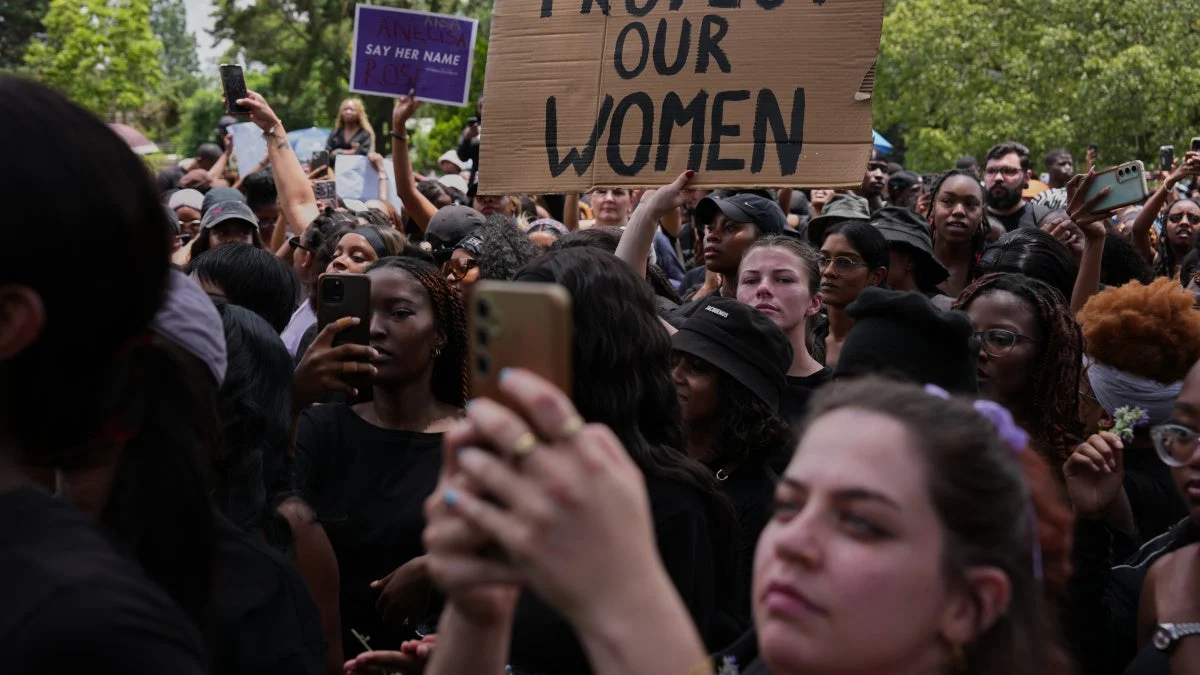
The commemoration of National Women’s Day in South Africa on August 9 served as a platform for a significant diplomatic and moral appeal, as President Cyril Ramaphosa and Nobel Peace Prize laureate Malala Yousafzai called upon the international community to recognize the Taliban’s treatment of women in Afghanistan as "gender apartheid." Speaking from the Union Buildings in Tshwane—the same site where 20,000 women marched in 1956 to protest the racial apartheid pass laws—President Ramaphosa drew a direct parallel between South Africa’s history of institutionalized segregation and the current systematic oppression of Afghan women. The call marks a pivotal moment in the global effort to expand the legal definition of apartheid under international law to include discrimination based on gender.
During the event, Malala Yousafzai, who survived a Taliban assassination attempt in 2012 for advocating for girls’ education, stood alongside the South African President to urge governments to adopt the term "gender apartheid." She argued that the restrictions currently imposed by the Taliban are not merely human rights violations but constitute a cohesive system designed to erase women from public life entirely. President Ramaphosa echoed this sentiment, noting that South Africa’s unique history provides the nation with a particular authority and a moral obligation to identify and challenge systems of domination wherever they manifest. "South Africans know what it means when the law is used to determine where people may go, what they may learn, what work they may do and what place they may occupy in society," Ramaphosa stated, explicitly linking the struggles of the past with the crisis in contemporary Afghanistan.
The Historical Context of National Women’s Day
To understand the weight of President Ramaphosa’s statements, it is essential to consider the historical significance of August 9 in the South African consciousness. In 1956, during the height of the apartheid era, women of all races organized a massive demonstration against the "pass laws," which required Black South Africans to carry internal passports to justify their presence in "white" urban areas. This march was a seminal moment in the anti-apartheid movement, demonstrating that women were central to the fight for liberation and that laws controlling movement and everyday life were the primary instruments of state-sponsored domination.
By invoking this history, the South African government is positioning the plight of Afghan women not as a localized cultural issue, but as a global human rights emergency that mirrors the systemic injustice South Africa spent decades dismantling. The presidency’s address emphasized that the "duty to stand in solidarity" is born from a shared understanding of how legal frameworks can be weaponized to dehumanize specific demographics.
A Chronology of Systemic Erasure in Afghanistan
Since the Taliban regained control of Afghanistan in August 2021, the country has seen a rapid and calculated dismantling of the rights of women and girls. What began as temporary "security-related" suspensions has evolved into a comprehensive legal and social architecture of exclusion.
- August 2021: Following the fall of Kabul, the Taliban initially promised to respect women’s rights "within the framework of Sharia law." However, women were almost immediately told to stay home from work for their own safety.
- September 2021: Secondary schools reopened for boys, but girls above the sixth grade (roughly age 12) were barred from returning to the classroom.
- May 2022: A decree was issued requiring women to cover their faces in public and advising them to remain at home unless absolutely necessary. Male relatives were made responsible for enforcing these rules, facing punishment for a woman’s non-compliance.
- November 2022: Women were banned from entering public parks, gyms, and funfairs, further restricting their presence in the public square.
- December 2022: The Taliban banned women from attending universities and prohibited them from working for national and international non-governmental organizations (NGOs).
- April 2023: The ban on employment was extended to include Afghan women working for the United Nations, a move that severely hampered the delivery of humanitarian aid in a country facing widespread famine.
- 2024 and Beyond: Recent reports indicate that the "Law on the Propagation of Virtue and the Prevention of Vice" has further codified restrictions, including prohibitions on women’s voices being heard in public and requirements for even stricter facial covering.
Human Rights Watch has documented these developments extensively, labeling the situation as the crime against humanity of gender persecution. However, the push for the term "gender apartheid" seeks to capture the institutionalized nature of the regime, which goes beyond individual acts of persecution to a state-run system of total subjugation.
Defining Gender Apartheid in International Law
The term "apartheid" is currently defined in international law—specifically in the 1973 International Convention on the Suppression and Punishment of the Crime of Apartheid and the 1998 Rome Statute of the International Criminal Court (ICC)—as inhumane acts committed in the context of an institutionalized regime of systematic oppression and domination by one racial group over any other racial group.
Afghan women’s rights defenders, supported by international legal scholars and organizations like Human Rights Watch, are campaigning to amend this definition. They argue that the "institutionalized regime" in Afghanistan is identical in structure to racial apartheid, with the only difference being the protected characteristic targeted. The proposal is to include gender alongside race as a ground for the crime of apartheid in the new "Treaty on the Prevention and Punishment of Crimes Against Humanity," which is currently under negotiation at the United Nations.
The International Criminal Court has already taken significant steps by issuing arrest warrants for senior Taliban leaders on charges of gender persecution. However, advocates argue that "persecution" does not fully encompass the state-sanctioned "system" that the term "apartheid" conveys. Recognizing gender apartheid would create a higher level of international obligation for states to refuse recognition of the Taliban regime and to take active steps to dismantle the system.
Data on the Impact of the Taliban’s Decrees
The socio-economic impact of these restrictions on Afghanistan has been catastrophic. According to data from UN Women and the United Nations Development Programme (UNDP):
- Education: Over 1.1 million girls and young women are currently denied access to formal education. The exclusion of women from the workforce is estimated to have cost the Afghan economy up to $1 billion—roughly 5% of its GDP.
- Mental Health: A 2023 report indicated a surge in depression and suicidal ideation among Afghan women, with 80% of female respondents reporting a decline in their mental health due to the loss of autonomy and educational opportunities.
- Maternal Health: With women banned from working in many sectors and restricted in their movement, access to female healthcare providers has plummeted, leading to fears of a sharp increase in maternal mortality rates.
- Poverty: Roughly 85% of the Afghan population lives below the poverty line. The ban on female NGO workers has left millions of households, particularly those headed by widows, without reliable access to food and medical aid.
Official Responses and Global Support
The movement to codify gender apartheid is gaining diplomatic momentum. So far, seven state delegations have officially expressed support for including gender apartheid in the draft treaty on crimes against humanity. These nations include Albania, Brazil, Chile, Mexico, and others who view the current legal vacuum as a failure to protect half of the world’s population from systemic state-sponsored erasure.
In South Africa, the government’s stance is seen as a fulfillment of its constitutional commitment to human rights and gender equality. The Department of International Relations and Cooperation (DIRCO) has signaled that South Africa will use its influence in the UN General Assembly’s Sixth Committee (Legal) to advocate for the treaty’s expansion.
Civil society organizations have praised the South African president’s vocal support. "South Africa’s voice is essential because it reminds the world that apartheid is not a relic of the past, but a blueprint for oppression that can be adapted to target different identities," said a representative from a prominent human rights NGO. "By naming it gender apartheid, we strip away the excuse that these are ‘cultural differences’ and reveal them as crimes against humanity."
Implications and the Path Forward
The inclusion of gender apartheid in a new international treaty would have far-reaching implications for global diplomacy and international justice. It would provide a clear legal framework for holding the Taliban—and any future regimes that adopt similar systems—accountable in international courts. Furthermore, it would mandate that signatory states do not aid or abet the maintenance of such a system, potentially leading to more stringent diplomatic isolation and targeted sanctions.
For South Africa, the move to support this legal evolution reinforces its role as a moral leader on the African continent and in the Global South. By honoring the 1956 Women’s March through modern-day advocacy, the nation bridges the gap between its historical struggle for racial justice and the contemporary struggle for gender justice.
As the United Nations prepares for the next round of treaty negotiations, the eyes of the international community will be on South Africa and its peers. The transition from "gender persecution" to "gender apartheid" is more than a semantic change; it is a shift toward acknowledging that when a state systematically removes women from society, it is committing a crime that the world has a collective duty to stop. The legacy of National Women’s Day suggests that just as the walls of racial apartheid were brought down through international pressure and internal resistance, the system of gender apartheid in Afghanistan can, and must, be dismantled.

Related Posts
Human Rights Watch Calls for Investigation into Death of Detainee Following Removal from Najaf Hospital by Iraqi Drug Police
Human Rights Watch Urges UN Security Council to Extend Lebanon Peacekeeping Mission Amid Escalating Conflict and Humanitarian Crisis