The Battle for Saldanha Bay: South Africa’s Ambitious Ocean Economy Strategy Faces Legal and Environmental Reckoning
The landscape of Saldanha Bay, a deep-water port situated on the West Coast of South Africa, is defined by a persistent layer of crimson dust. This fine residue is the physical legacy of the Sishen-Saldanha railway line and the subsequent export of more than one billion tonnes of iron ore since the 1970s. For decades, this industrial activity transformed a once-secluded fishing village into a critical node of South Africa’s mineral export economy. Today, however, the bay stands at the precipice of an even more radical transformation. The South African government has identified the region as the future "oil and gas hub" of the nation, a move intended to catalyze economic growth but one that has ignited a fierce confrontation between state ambitions and local resistance.
This shift is part of a broader national strategy known as Operation Phakisa. Launched in 2014, the initiative was designed to "unlock the economic potential of South Africa’s oceans." While the program encompasses various sectors, including aquaculture and maritime transport, its most controversial pillar focuses on offshore oil and gas exploration. Under this mandate, more than 95% of the ocean territory along South Africa’s nearly 3,000-kilometer coastline has been mapped for potential hydrocarbon extraction. The government’s roadmap is aggressive, aiming to drill 30 exploration wells within a decade. Projections suggest this could yield an average of 370,000 barrels of oil and gas per day over a 20-year period, with Saldanha Bay serving as the primary logistics and processing center.
The Historical Context of Saldanha’s Industrialization
To understand the current tension, one must look at the industrial evolution of Saldanha Bay. In the early 1970s, the South African government recognized the bay’s potential due to its natural deep-water harbor—the largest and deepest in Southern Africa. The construction of the 861-kilometer Sishen-Saldanha railway line connected the iron ore mines of the Northern Cape to the coast, facilitating a massive export industry.
While the iron ore trade brought infrastructure and jobs, it also brought environmental degradation. The "red dust" that coats the town has long been a point of contention for residents, who cite respiratory issues and the contamination of the Langebaan Lagoon, a globally recognized Ramsar wetland site. The transition toward an oil and gas hub represents, for many locals, an escalation of this industrial burden rather than a diversification of opportunity.
Operation Phakisa: The "Ocean Scramble"
Operation Phakisa—meaning "hurry up" in Sesotho—was modeled after Malaysia’s Big Fast Results methodology. The South African Department of Forestry, Fisheries, and the Environment (DFFE) and the Department of Mineral Resources and Energy (DMRE) view the ocean as an "untapped frontier."
The data driving this push is significant. According to government estimates, the ocean economy has the potential to contribute up to R177 billion to the national Gross Domestic Product (GDP) and create approximately one million jobs by 2033. The oil and gas component is the centerpiece of this valuation. By earmarking Saldanha Bay for specialized services, including rig repair and fabrication, the government hopes to capture a larger share of the offshore servicing market currently dominated by West African ports.
However, critics have dubbed this rapid expansion the "Ocean Scramble." Since 2014, the granting of exploration rights to multinational corporations, including Shell, TotalEnergies, and Impact Oil & Gas, has accelerated. These rights cover vast swathes of the Exclusive Economic Zone (EEZ), often overlapping with critical marine biodiversity areas and traditional fishing grounds.
A Chronology of Conflict and Exploration
The push for offshore oil and gas has been marked by several key milestones and subsequent legal setbacks:
- 2014: President Jacob Zuma launches Operation Phakisa, focusing on the "Oceans Economy."
- 2019: TotalEnergies announces a significant gas-condensate discovery at the Brulpadda prospect in the Outeniqua Basin, approximately 175 kilometers off the southern coast.
- 2020: A second discovery at the Luiperd well further bolsters the government’s case for a domestic gas industry.
- 2021: Shell attempts to conduct a seismic survey on the Wild Coast, sparking national protests and a landmark legal challenge.
- 2022: The Makhanda High Court rules against Shell, citing a failure to adequately consult local communities and a lack of consideration for the constitutional right to a healthy environment.
- 2023-2024: TotalEnergies faces similar resistance regarding its exploration blocks off the West Coast and Southern Coast, leading to several permit delays and reconsiderations.
The Legal Frontline: Precedents and Human Rights
The resistance to the Saldanha Bay hub and broader offshore drilling is not merely environmental; it is deeply rooted in administrative law and human rights. Civil society groups, led by organizations such as Natural Justice and the Green Connection, have successfully argued in court that the government’s permitting process is fundamentally flawed.
Melissa Groenink-Groves, a programme manager at the legal nonprofit Natural Justice, emphasizes that these cases are about more than just South Africa. "When communities win in the courts, the successes serve as inspiration for other communities to advocate for their rights in their own contexts," she stated. The legal victories in South Africa have established that "meaningful consultation" must include the consideration of indigenous knowledge and the spiritual connection that coastal communities have with the ocean.
In Saldanha Bay, the local fishing community—many of whom have operated in these waters for generations—argues that an oil spill or even the routine noise of seismic blasting would decimate their livelihoods. The artisanal fishing sector provides a critical food security net for the region, and residents fear that the industrialization of the bay will prioritize multinational profits over local survival.
Economic Imperatives vs. Environmental Protection
The South African government’s stance remains focused on energy security and the "Just Transition." With the country facing a chronic energy crisis characterized by frequent power outages (load shedding), the DMRE argues that domestic gas is a necessary "bridge fuel" to move away from coal-fired power stations while renewable energy infrastructure is scaled up.
The economic data presented by proponents suggests that the development of a domestic gas industry could reduce South Africa’s reliance on imported fuels, improving the balance of payments. Furthermore, the development of the Saldanha Bay Industrial Development Zone (SBIDZ) is intended to create a specialized ecosystem for the oil and gas sector, providing high-skilled employment in engineering and logistics.
Conversely, environmentalists point to the climate implications. South Africa is a signatory to the Paris Agreement, and critics argue that investing in new fossil fuel infrastructure is inconsistent with the goal of limiting global warming. Furthermore, the potential impact on the tourism industry—a significant employer in the Western Cape—cannot be overlooked. The Langebaan Lagoon and the surrounding West Coast National Park attract thousands of visitors annually for whale watching, birding, and water sports, all of which depend on a pristine marine environment.
Supporting Data and Marine Impact
The scientific concerns regarding offshore exploration are well-documented. Seismic surveys involve high-decibel airgun blasts every few seconds, which can disorient and harm marine mammals, such as the Southern Right Whales that frequent the coast.
Data from marine biologists suggest:
- Acoustic Disturbance: Seismic noise can travel over 2,000 kilometers, affecting the communication and mating patterns of cetaceans.
- Benthic Disruption: Drilling activities can smother seabed ecosystems (benthic zones) with drill cuttings and chemicals.
- Livelihood Risk: Small-scale fisheries in the Western Cape contribute to the livelihoods of over 30,000 people. Any disruption to fish migration patterns would have an immediate socio-economic impact.
Regional Implications and the Path Forward
The outcome of the struggle over Saldanha Bay will likely dictate the trajectory of energy development across the Southern African Development Community (SADC). Neighboring Namibia has recently seen massive offshore oil discoveries (Venus and Graff-1), and Mozambique continues to develop its LNG capabilities despite regional instability. South Africa’s legal and social pushback serves as a bellwether for how African nations balance the urgent need for industrial development with the preservation of natural heritage and the rights of marginalized citizens.
As the government continues to push for the realization of Operation Phakisa’s goals, the judiciary remains the ultimate arbiter. The cases currently moving through the South African court system will determine whether the "oil and gas hub" of Saldanha Bay becomes a reality or if the red dust of the iron ore era marks the final chapter of heavy industrialization for this coastal town.
The conflict highlights a fundamental tension in modern governance: the gap between high-level macroeconomic planning and the lived realities of the people those plans are meant to benefit. For the residents of Saldanha Bay, the promise of 370,000 barrels of oil a day is a distant abstraction compared to the tangible risk of losing the ocean that has sustained them for centuries. As the legal battles unfold, the "red dust" remains a silent witness to a community caught between its industrial past and an uncertain, high-stakes future.

Related Posts
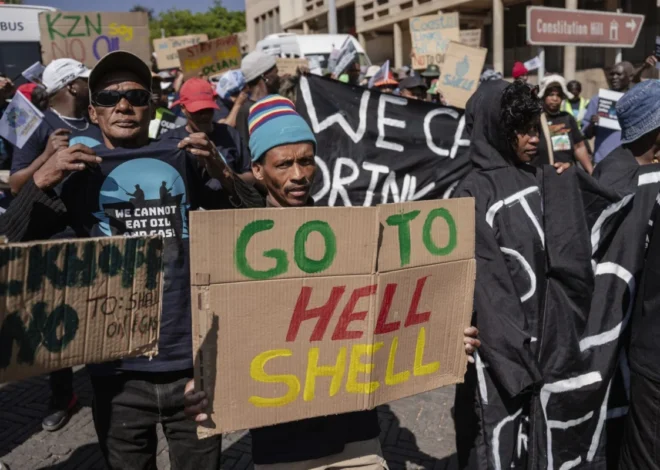
Constitutional Court of South Africa Bars Shell Oil Exploration in Landmark Victory for Environmental and Community Rights
Climate Change and Rapid Urbanization Drive Catastrophic Flooding Across West Africa According to World Weather Attribution Study