UN Seabed Authority Asserts Global Governance as Legal Battle with The Metals Company Escalates Over Deep-Sea Mining Rights
The International Seabed Authority (ISA) has forcefully reaffirmed its mandate as the sole global regulator of the deep ocean floor, signaling a deepening rift between international law and corporate interests seeking to fast-track mineral extraction. Speaking at the ISA’s annual assembly in Kingston, Jamaica, newly appointed Secretary-General Leticia Carvalho defended the institution’s oversight capabilities after two subsidiaries of the Canadian-headquartered firm, The Metals Company (TMC), initiated legal action to obstruct an internal investigation into their operational conduct. The confrontation marks a pivotal moment for ocean governance, as the race to secure critical minerals for the global energy transition clashes with the established legal framework that treats the deep seabed as the collective property of all humanity.
The dispute centers on the "Area"—the seabed and ocean floor beyond the limits of national jurisdiction—which is governed by the United Nations Convention on the Law of the Sea (UNCLOS). Under this framework, the ISA is tasked with managing these resources for the "common heritage of humankind." However, the emergence of TMC’s legal challenge, coupled with its attempts to bypass UN processes by seeking permits from the United States government, has raised alarms about the potential fragmentation of international maritime law. Secretary-General Carvalho emphasized that the regulator’s role is more critical than ever, warning that the failure to maintain a unified regulatory approach could lead to the same environmental and social injustices that have historically plagued terrestrial mining.
The Legal Conflict and the Quest for Sovereignty
The immediate catalyst for the current tension is a lawsuit filed by Nauru Ocean Resources Inc. (NORI) and Tonga Offshore Mining Limited (TOML), both subsidiaries of The Metals Company. The legal action seeks to halt an ISA investigation into the firms’ conduct, although the specific details of the investigation remain largely confidential under the ISA’s administrative protocols. Industry observers suggest the probe may relate to transparency issues, environmental impact assessments, or the subsidiaries’ adherence to the ISA’s rigorous exploration standards.
TMC’s strategy took a controversial turn following moves by the previous Trump administration in the United States to offer domestic permits for deep-sea mining. Although the U.S. is not a party to UNCLOS, it has sought to assert its own claims to seabed minerals, potentially providing a "flag of convenience" for companies like TMC that find the UN’s regulatory pace too slow. By aligning with U.S.-sponsored permits, TMC appears to be testing the limits of international jurisdiction, a move that critics argue could undermine decades of diplomatic consensus on ocean management.
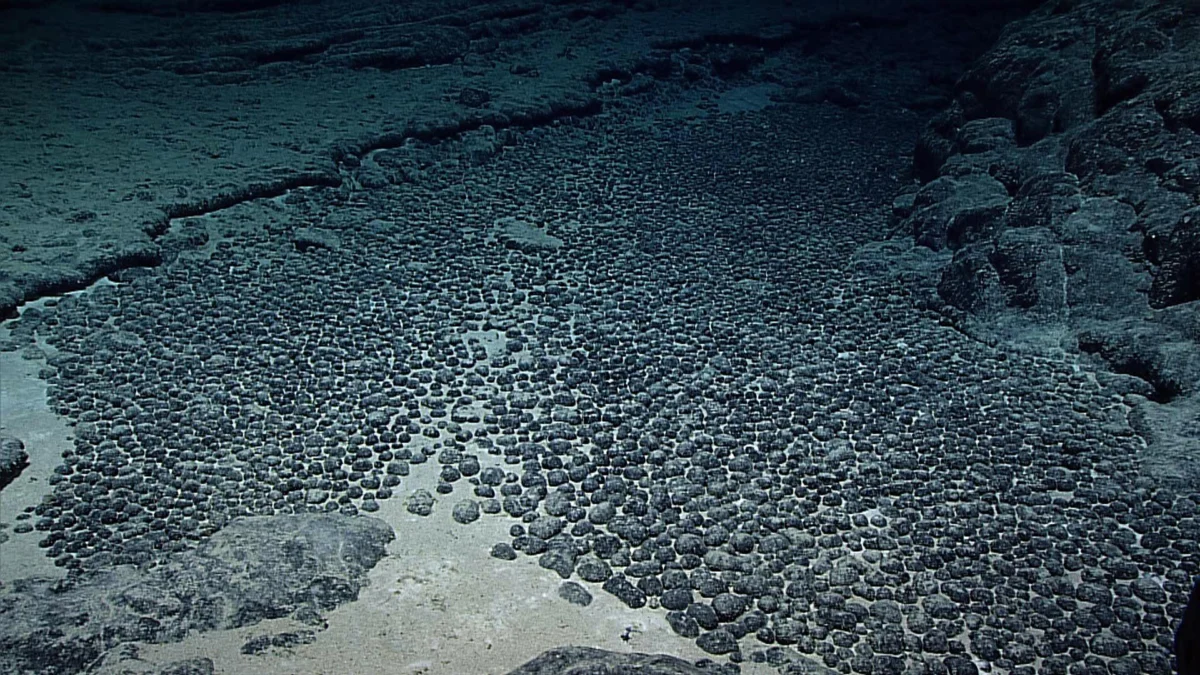
The Canadian firm’s primary objective is the extraction of polymetallic nodules—potato-sized rocks found four kilometers deep on the ocean floor, particularly in the Clarion-Clipperton Zone (CCZ) of the Pacific Ocean. These nodules are rich in nickel, manganese, cobalt, and copper, all of which are essential components for electric vehicle (EV) batteries and renewable energy storage systems. TMC argues that seabed mining is a necessary evil to meet climate goals, claiming it offers a lower carbon footprint and less human rights risk than traditional mining in places like the Democratic Republic of Congo or Indonesia.
Chronology of the Deep-Sea Mining Dispute
The path toward the current impasse began decades ago, but the timeline has accelerated rapidly in the last five years:
- 1982: The United Nations Convention on the Law of the Sea (UNCLOS) is adopted, establishing the ISA to organize and control activities in the Area.
- 1994: The Agreement relating to the Implementation of Part XI of the Convention is signed, further refining the rules for seabed mining and the distribution of its benefits.
- 2021: The Republic of Nauru, acting as the sponsoring state for TMC’s subsidiary NORI, triggered the "two-year rule." This legal provision required the ISA to finalize mining regulations within two years. If the regulations were not completed, the ISA would be forced to consider mining applications under whatever rules existed at the time.
- 2023: The July deadline for the two-year rule passed without a finalized "Mining Code." The ISA member states agreed to a new target of 2025 to complete the regulatory framework, but the legal ambiguity persists.
- 2024 (Early): Reports surfaced of the Trump administration’s offer of ocean mining permits, providing an alternative pathway for firms to bypass the ISA.
- 2025 (Present): TMC subsidiaries launch legal action against the ISA investigation, and Secretary-General Carvalho takes office, pledging to uphold the "common heritage" principle.
Supporting Data: The Scale of the Resource and Environmental Risks
The scale of the potential industry is staggering. The Clarion-Clipperton Zone alone is estimated to contain more nickel and manganese than all known terrestrial reserves combined. According to data provided by the ISA, the CCZ holds approximately 21 billion tonnes of polymetallic nodules. For a company like TMC, the commercial stakes are in the billions of dollars.
However, the scientific community has raised significant concerns regarding the environmental impact of such operations. A study published in Nature Communications suggests that deep-sea mining could result in the permanent loss of biodiversity in the targeted areas. The process involves massive robotic crawlers that vacuum the nodules from the seafloor, creating vast sediment plumes that can travel hundreds of kilometers, potentially smothering marine life and interfering with the feeding mechanisms of deep-sea organisms.
Furthermore, data from the Deep Sea Conservation Coalition indicates that the deep ocean acts as a massive carbon sink. There is currently no consensus among scientists on how disturbing the seabed at such a scale would affect the ocean’s ability to sequester carbon, leading many nations to call for a "precautionary pause" or a complete moratorium on commercial mining until more research is conducted.
Official Responses and Global Reactions
The reaction to TMC’s legal maneuver and the ISA’s defense has been polarized across the international community. Secretary-General Carvalho’s remarks in Kingston were seen as a direct rebuttal to the idea that corporations can dictate the terms of global resource management. "The deep seabed belongs to no single country and no corporation; it belongs to all of us," she told the assembly, reinforcing the ISA’s position as the guardian of the global commons.
Environmental organizations have been quick to support the ISA’s stance. Louisa Casson, a campaigner with Greenpeace, stated that TMC’s attempt to sue the regulator is a "desperate move by a company that realizes the tide is turning against them." She added that "international law cannot be subverted by the commercial interests of a single firm or the political whims of one nation."
Conversely, the government of Nauru, which sponsors TMC, has defended the company’s right to proceed. Nauru’s representatives argue that small island developing states (SIDS) have a right to develop these resources to build economic resilience against climate change—a phenomenon they contributed the least to but suffer from the most. This "equity" argument creates a complex moral dilemma within the ISA, as many member states are torn between environmental protection and the developmental needs of poorer nations.
The United States’ role remains a wild card. While the U.S. State Department has historically observed ISA proceedings, the domestic push for independent mining permits suggests a shift toward resource nationalism. This has drawn criticism from the European Union and China, both of which have invested heavily in the ISA process, albeit for different reasons—the EU focusing on environmental standards and China on securing its own supply chains.
Analysis of Implications for International Law
The clash between the ISA and TMC is more than a corporate dispute; it is a test case for the future of multilateralism. If TMC successfully bypasses the ISA or prevents an investigation into its conduct, it could set a precedent that undermines the authority of all UN-based regulatory bodies. It would signal that private entities, backed by powerful non-member states, can opt out of global treaties when they become inconvenient.
There is also the risk of a "race to the bottom" regarding environmental standards. If the ISA’s Mining Code is seen as too restrictive, and alternative permits from the U.S. or other nations offer a path of less resistance, the global community may lose its ability to enforce any environmental safeguards on the high seas. This would likely result in fragmented governance where different parts of the ocean are subject to vastly different ecological protections.
From a geopolitical perspective, the struggle over seabed minerals is becoming a new frontier in the "Great Power Competition." China currently holds more ISA exploration contracts than any other nation. If the Western-aligned TMC moves outside the ISA framework, it could trigger a breakdown in the cooperative spirit that has governed the seabed since the 1980s, potentially leading to a "Wild West" scenario on the ocean floor where might makes right.
The Path Forward: Finalizing the Mining Code
As the ISA assembly continues in Kingston, the focus remains on the development of the Mining Code. This set of regulations will determine how royalties are shared, how environmental damage is mitigated, and how the "common heritage" principle is translated into a functional economic model.
Secretary-General Carvalho has a difficult path to navigate. She must balance the pressure from mining-ready nations like Nauru and China with the growing number of countries—including France, Germany, Chile, and Brazil—that are calling for a moratorium. The legal challenge from The Metals Company only adds to the urgency of establishing a robust, transparent, and legally binding framework.
The outcome of this struggle will dictate the health of the world’s oceans for centuries. As Carvalho noted in her closing remarks on Monday, the decisions made today will determine whether the deep sea remains a shared legacy for future generations or becomes the latest site of industrial exploitation and ecological ruin. The world is watching to see if the International Seabed Authority can maintain its grip on the steering wheel of ocean governance, or if the lure of mineral wealth will cause the international order to drift off course.

Related Posts
Constitutional Court of South Africa Bars Shell Oil Exploration in Landmark Victory for Environmental and Community Rights

The Battle for Saldanha Bay: South Africa’s Ambitious Ocean Economy Strategy Faces Legal and Environmental Reckoning