UN Maritime Court Rejects Deep Sea Mining Firms Bid to Halt Investigation into Contractual Breaches
The International Tribunal for the Law of the Sea (ITLOS), the world’s premier judicial body for maritime disputes, has formally rejected a legal challenge brought by subsidiaries of The Metals Company (TMC), allowing a high-stakes United Nations investigation into the firms’ activities to proceed. In two significant orders issued on Saturday, the Hamburg-based court declined to suspend an inquiry launched by the International Seabed Authority (ISA) into whether Tonga Offshore Mining Ltd (TOML) and Nauru Ocean Resources Inc (NORI) have violated their contractual obligations under UN-sanctioned exploration licenses. The ruling marks a critical juncture in the global race for seabed minerals, reinforcing the regulatory oversight of the ISA at a time when the deep-sea mining industry is attempting to accelerate commercial operations amid heightening geopolitical tensions over critical mineral supply chains.
The legal battle stems from a move by the Canadian-headquartered TMC to seek permits from the United States government to extract polymetallic nodules from the ocean floor. This maneuver was seen as a strategic pivot to bypass the ISA’s established regulatory framework, particularly as the United States is not a party to the United Nations Convention on the Law of the Sea (UNCLOS). The ISA inquiry was initiated to determine if the companies’ engagement with a non-member state constitutes a breach of their existing UN exploration contracts, which grant them exclusive rights to explore specific sectors of the Clarion-Clipperton Zone (CCZ) in the Pacific Ocean under the condition of strict adherence to international law.
The Legal Conflict and the ITLOS Decision
The dispute reached the international court after TOML and NORI filed suit against the ISA last June. The companies alleged that the regulator was targeting them in a manner that breached "due process" and lacked "good faith." They sought an immediate suspension of the ISA’s investigation, arguing that the inquiry was biased and harmful to their commercial interests and reputation. However, the ITLOS judges ruled that the companies failed to provide sufficient grounds to halt the administrative process.
While the court allowed the ISA to continue its investigation, it did not grant the regulator carte blanche. The tribunal emphasized that the ISA must adhere to rigorous standards of procedural fairness. According to the court orders, the ISA is required to clearly explain the factual and legal basis for its inquiry and provide the companies with a "meaningful opportunity" to defend their actions. This "due process" requirement ensures that while the investigation proceeds, the companies are protected against arbitrary regulatory overreach. The decision is being viewed as a balanced approach that preserves the ISA’s authority to police its contractors while upholding the legal rights of private entities operating under international licenses.
Background: The Metals Company and the Push for Deep-Sea Minerals
The Metals Company has positioned itself as a leader in the nascent deep-sea mining industry, arguing that the minerals found on the ocean floor—specifically nickel, cobalt, copper, and manganese—are essential for the global transition to green energy. These metals are primary components in the lithium-ion batteries that power electric vehicles (EVs) and store renewable energy.
The company’s subsidiaries, NORI and TOML, hold exploration contracts sponsored by the Pacific island nations of Nauru and Tonga, respectively. Under the UNCLOS framework, private companies must be sponsored by a state party to the convention to apply for mining rights in international waters. The "Area," as defined by the UN, is considered the "common heritage of mankind," meaning its resources must be managed for the benefit of all nations.
The tension between TMC and the ISA escalated earlier this year when TMC executives began lobbying the U.S. Congress and the Department of Defense. The company argued that the U.S. should support domestic processing and extraction of these minerals to reduce reliance on Chinese supply chains. Because the U.S. is not an UNCLOS member, TMC’s pursuit of American permits raised immediate red flags for the ISA, which maintains that it has the sole legal authority to regulate mining in international waters.
A Chronology of the Deep-Sea Mining Escalation
To understand the current legal friction, it is necessary to examine the timeline of events that led to the ITLOS intervention:
- July 2021: The Republic of Nauru triggered the "two-year rule" under UNCLOS, a provision that required the ISA to finalize mining regulations within 24 months. This was seen as a move to force the transition from exploration to commercial exploitation.
- July 2023: The two-year deadline passed without a finalized "Mining Code." While the ISA agreed to continue working toward a regulatory framework, the legal vacuum created uncertainty for investors.
- Early 2024: The Metals Company began a visible campaign in the United States, seeking legislative and executive support for seabed mining. This included discussions regarding the potential for U.S.-backed permits for areas already covered by ISA exploration licenses.
- June 2024: The ISA launched an inquiry into TOML and NORI regarding potential contract breaches related to their U.S. engagement. In response, the companies sued the ISA at ITLOS, seeking to block the investigation.
- October 2024: ITLOS issued its ruling, denying the request to suspend the inquiry but mandating procedural transparency from the ISA.
Supporting Data: The Economic and Environmental Stakes
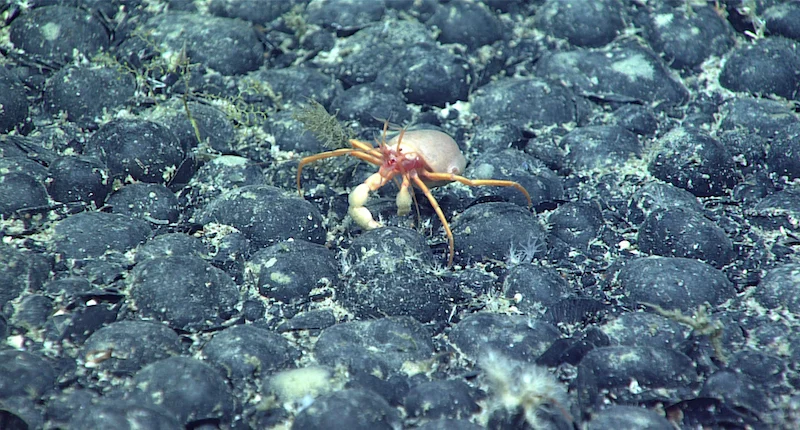
The stakes involved in the ITLOS ruling are monumental, both economically and environmentally. The Clarion-Clipperton Zone (CCZ), where TMC’s subsidiaries operate, covers approximately 4.5 million square kilometers between Hawaii and Mexico. It is estimated to contain trillions of polymetallic nodules.
According to data from the International Energy Agency (IEA), the demand for critical minerals could increase six-fold by 2040 to meet net-zero goals. The CCZ is estimated to hold more nickel and cobalt than all known terrestrial deposits combined. TMC has claimed that its NORI-D project alone could provide enough battery metals to electrify 280 million vehicles.
However, the environmental cost is a subject of intense scientific debate. Oceanographers and marine biologists warn that deep-sea mining could cause irreversible damage to fragile ecosystems that have remained undisturbed for millions of years.
- Biodiversity: Scientists have identified over 5,000 new species in the CCZ, most of which are found nowhere else on Earth.
- Sediment Plumes: Mining operations involve vacuuming nodules from the seafloor, which creates massive sediment clouds. These plumes can travel hundreds of kilometers, potentially smothering marine life and disrupting the food chain.
- Carbon Sequestration: There are concerns that disturbing the seabed could interfere with the ocean’s ability to store carbon, potentially exacerbating climate change.
Official Reactions and Industry Implications
Following the ITLOS ruling, reactions from the involved parties have highlighted the polarized nature of the industry. While The Metals Company has not yet issued a comprehensive statement regarding the long-term impact on its stock value, spokespersons for the subsidiaries have emphasized their commitment to "transparency" and their belief that the inquiry will ultimately vindicate their actions. They maintain that exploring domestic U.S. options is a necessary strategic backup given the slow pace of UN regulatory development.
The ISA, headquartered in Kingston, Jamaica, has characterized the ruling as a victory for the rule of law. A spokesperson for the authority noted that the tribunal’s decision affirms the ISA’s mandate to ensure that all contractors play by the same set of international rules. "The common heritage of mankind cannot be managed through unilateral actions or by bypassing the collective oversight of the international community," the statement suggested.
Environmental advocacy groups, including Greenpeace and the Deep Sea Conservation Coalition, have lauded the decision. "This is a clear signal that deep-sea mining companies cannot simply ignore international law when it suits their commercial interests," said a representative from Greenpeace. "The ISA must now use this inquiry to rigorously hold these firms accountable."
Broader Implications: Geopolitics and the "Mining Code"
The ITLOS decision has broader implications for the "Great Race" for critical minerals. The United States finds itself in a difficult position; it seeks to secure mineral independence from China but remains outside the UNCLOS framework, which limits its legal standing in seabed disputes. TMC’s attempt to bridge this gap by using the U.S. as a "regulatory haven" has now hit a significant legal roadblock.
Furthermore, the ruling puts pressure on the ISA to finalize its "Mining Code." Without a clear set of rules for commercial extraction, more companies may be tempted to seek alternative legal avenues or national permits, potentially fracturing the international maritime order. The ISA is currently under immense pressure to balance the economic demands of member states like Nauru and China—the latter of which is heavily investing in deep-sea technology—with the environmental concerns of nations like France, Germany, and Chile, which have called for a "precautionary pause" or moratorium on mining.
Conclusion: A Precedent for Oceanic Governance
The ITLOS ruling serves as a landmark precedent for oceanic governance. It reinforces the principle that the deep seabed is not a "Wild West" for corporate interests, but a regulated domain subject to international scrutiny. By allowing the ISA investigation to continue, the court has prioritized the integrity of the UNCLOS framework over the immediate commercial timelines of private industry.
As the ISA moves forward with its inquiry, the global community will be watching closely. The outcome will likely determine whether the future of deep-sea mining remains a collaborative international effort or devolves into a series of bilateral disputes and nationalistic land-grabs. For now, the "due process" mandated by ITLOS ensures that the road to the deep ocean floor will be paved with legal rigor rather than administrative shortcuts. The Metals Company and its subsidiaries must now prepare to justify their strategic pivots in a court of international opinion and law, as the world decides how to weigh the hunger for minerals against the preservation of the Earth’s final frontier.

Related Posts
Constitutional Court of South Africa Bars Shell Oil Exploration in Landmark Victory for Environmental and Community Rights

The Battle for Saldanha Bay: South Africa’s Ambitious Ocean Economy Strategy Faces Legal and Environmental Reckoning