Doodle Labs Scales Global Manufacturing Footprint Amid Surging Demand for Resilient Drone Communication Systems in Ukraine
The escalating intensity of electronic warfare in Eastern Europe has catalyzed a strategic pivot for Doodle Labs, a prominent developer of long-range wireless mesh networking solutions. As the conflict in Ukraine increasingly hinges on the ability of unmanned systems to navigate heavily jammed environments, the company is moving to diversify its manufacturing operations beyond its primary facility in Singapore. By establishing new production hubs in the United States and Europe, Doodle Labs aims to secure Western supply chains and meet the burgeoning requirements of the National Defense Authorization Act (NDAA).
The shift comes at a critical juncture in the evolution of modern combat. In the sprawling theaters of the Donetsk Oblast and beyond, the "cat-and-mouse" game between drone operators and electronic warfare (EW) specialists has reached a fever pitch. As Russian forces deploy increasingly sophisticated jamming platforms, the demand for frequency-agile, resilient radio systems has transitioned from a specialized requirement to a baseline necessity for survival on the front lines.
The Ukrainian Crucible: A Proving Ground for Mesh Networking
In the current conflict, the lifespan of a standard commercial drone can often be measured in hours, if not minutes. Ukrainian forces have reported losing thousands of unmanned aerial vehicles (UAVs) per month to electronic interference. This reality has forced a tiered approach to drone deployment, a strategy that Ira Hughes, Senior Director of Sales at Doodle Labs, notes is central to the company’s current operational feedback loop.
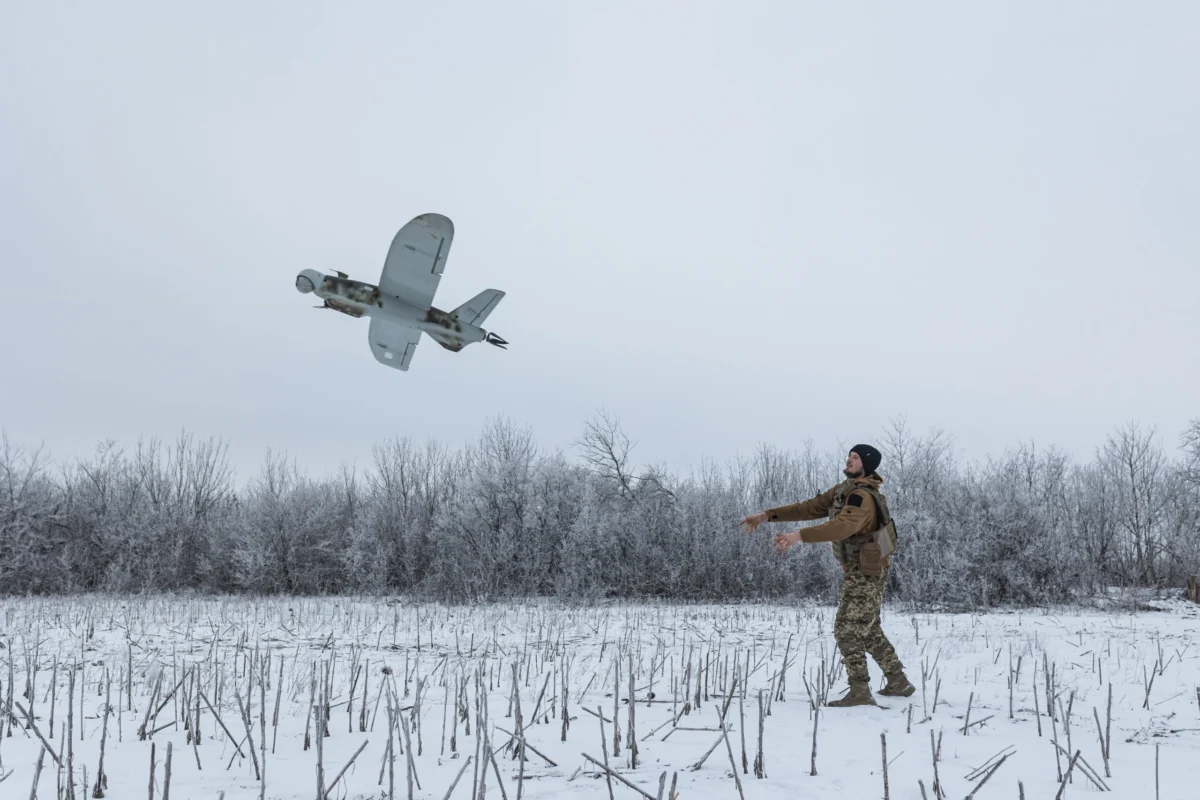
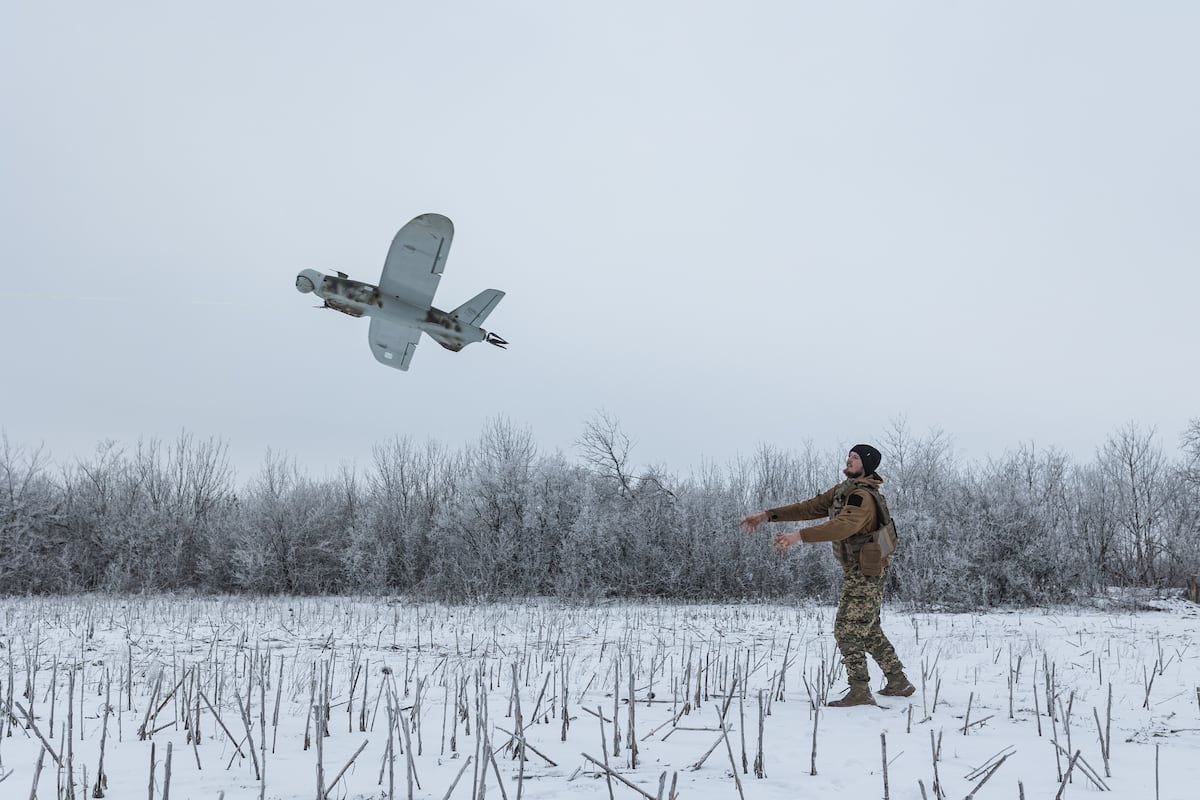
According to Hughes, Ukrainian manufacturers are bifurcating their production lines. One line focuses on high-volume, low-cost "attrition" drones equipped with rudimentary radio and camera systems. These are intended for short-range strikes or to saturate enemy defenses. The second line, however, utilizes Doodle Labs’ advanced Mesh Rider technology. These high-value platforms are reserved for precision strikes against critical assets such as tanks, mobile command centers, and localized jamming units.
The technical advantage of the Doodle Labs system lies in its ability to operate across a wide spectrum of frequencies and its capacity for rapid channel switching. When a drone encounters a localized jammer—often mounted directly onto Russian armored vehicles—the operator can shift the communication link to an unjammed frequency almost instantaneously. This agility ensures that the link between the pilot and the craft remains unbroken, even in the "last mile" of a terminal attack where EW interference is most concentrated.
Strategic Expansion into the United States and Europe
While Singapore remains a vital manufacturing hub for Doodle Labs, the company is actively engaged in high-level discussions with partners in the U.S. and Europe to launch localized production within the next 24 months. This expansion is driven by two primary factors: the sheer volume of demand and the shifting regulatory landscape of Western defense procurement.
In the United States, the National Defense Authorization Act (NDAA) has introduced increasingly stringent requirements regarding the provenance of defense technology. Section 848 of the NDAA specifically restricts the Department of Defense from procuring unmanned aircraft systems (UAVs) and certain components—including radios and data links—from "covered foreign entities," most notably China.
"We are working on the ability to do U.S. manufacturing when needed," Hughes stated, highlighting that the company is prepared to utilize third-party manufacturers to meet "Made in America" incentives. This move aligns with the U.S. Department of Defense’s "Blue UAS" initiative, which seeks to create a pre-approved list of secure, high-quality drone components for federal use. By establishing a domestic footprint, Doodle Labs positions itself as a primary supplier for the next generation of American robotic programs, such as the Army’s Replicator initiative, which aims to field thousands of autonomous systems within the next two years.
In Europe, the motivation is similarly strategic. NATO allies have observed the attrition rates in Ukraine with growing concern, leading to a continent-wide push for "sovereign industrial capacity." Countries like Poland, Germany, and the Baltic states are seeking to ensure that their drone fleets are not dependent on vulnerable trans-Pacific shipping lanes. Localized production of Doodle Labs’ radios would provide European defense contractors with a "plug-and-play" solution that meets NATO security standards while bypassing traditional supply chain bottlenecks.
Chronology of Drone Communication Evolution in Ukraine
The demand for Doodle Labs’ technology can be traced through the chronological shifts in the Ukraine conflict’s electronic environment:
- Phase I (Early 2022): Initial reliance on off-the-shelf consumer drones. Electronic warfare was present but localized, allowing standard 2.4 GHz and 5.8 GHz frequencies to operate with relative ease.
- Phase II (Late 2022 – Early 2023): Russia began deploying large-scale EW complexes like the Pole-21 and Zhitel. Ukrainian forces saw a massive spike in "lost link" incidents, leading to the first widespread adoption of frequency-hopping radios.
- Phase III (Late 2023 – Present): The rise of First-Person View (FPV) kamikaze drones. Both sides moved toward "trench-level" EW, with small jammers placed on individual vehicles. This necessitated the wide-band, multi-frequency radios that Doodle Labs provides, allowing operators to "dodge" specific jammed bands.
- Phase IV (Future Outlook): The shift toward autonomous terminal guidance and AI-driven swarming. These systems require high-bandwidth mesh networks to share data between drones, a core feature of Doodle Labs’ "Mesh Rider" firmware.
Supporting Data and Market Projections
The market for resilient communication systems is expanding in lockstep with the global drone market. According to recent industry analyses:
- Global Military UAV Market: Projected to grow from approximately $14 billion in 2023 to over $35 billion by 2030, representing a Compound Annual Growth Rate (CAGR) of over 12%.
- Electronic Warfare Market: The specific niche for EW-resilient components is expected to see even more aggressive growth, as modern militaries prioritize "EMSO" (Electromagnetic Spectrum Operations).
- Production Capacity: Doodle Labs currently possesses the infrastructure to produce tens of thousands of radios per month. With the addition of U.S. and European third-party facilities, this capacity could scale into the millions annually, meeting the requirements of a "total war" industrial footing if necessary.
The Role of Wireless Mesh Networking in Modern Robotics
To understand why Doodle Labs is seeing such high demand, one must look at the underlying technology of wireless mesh networking. Unlike traditional point-to-point radios—where a single break in the link results in a total loss of control—a mesh network allows every node (drone, ground station, or relay) to act as a router.
In a complex combat scenario, if a direct line of sight between a pilot and a drone is blocked by a building or suppressed by a jammer, the signal can "hop" through another drone or a terrestrial relay station. This creates a self-healing network that is significantly harder to dismantle than traditional architectures. For Ukrainian forces operating in urban environments or dense forests, this capability is the difference between a successful mission and a lost airframe.
Furthermore, Doodle Labs’ radios are designed to be "SWaP-optimized" (Size, Weight, and Power). In the world of unmanned systems, every gram matters. The ability to pack long-range, high-bandwidth, and encrypted communications into a form factor the size of a credit card has made the company a favorite among integrators of small-to-medium-sized UAVs.
Implications for Allied Defense Strategy
The expansion of Doodle Labs reflects a broader trend in the defense industry: the move away from "black box" proprietary systems toward modular, interoperable components. By providing a radio that can be integrated into a variety of airframes—from quadcopters to fixed-wing reconnaissance craft—Doodle Labs is helping to standardize the "nervous system" of allied robotic forces.
The implications of this are profound. As the U.S. and its allies prepare for potential high-intensity conflicts in the Indo-Pacific or Eastern Europe, the ability to rapidly scale production of attrition-tolerant systems is paramount. The "Singapore-U.S.-Europe" manufacturing triangle that Doodle Labs is building serves as a blueprint for how tech-sector companies can navigate geopolitical sensitivities while maintaining global reach.
Military analysts suggest that the success of companies like Doodle Labs in Ukraine has fundamentally altered the requirements for future defense contracts. No longer is "range" the primary metric for a radio system; "resilience in contested environments" has taken its place. As Ira Hughes noted, the ability to move from jammed channels to unjammed ones is what allows a drone to "continue to get to the target."
Conclusion
As Doodle Labs prepares to break ground on its new manufacturing partnerships, the lessons learned from the Ukrainian battlefield remain at the forefront of its engineering efforts. The company’s move to establish production in the United States and Europe is more than just a logistical expansion; it is a strategic realignment designed to meet the realities of 21st-century warfare. In an era where the electromagnetic spectrum is as much a battlefield as the land, sea, or air, the ability to maintain a clear and constant connection will remain the ultimate arbiter of success on the front lines. With the capacity to produce millions of radios and a commitment to domestic manufacturing, Doodle Labs is positioning itself as a cornerstone of the Western democratic defense industrial base.

Related Posts
Pentagon Forges Landmark Seven-Year Agreements with Boeing and RTX to Accelerate Standard Missile-3 Production and Stabilize Defense Supply Chains
Boeing Unveils Ultra Low-Cost Seeker to Enhance Missile Inventory and Combat Cost Challenges in Modern Warfare