Boeing Unveils Ultra Low-Cost Seeker to Enhance Missile Inventory and Combat Cost Challenges in Modern Warfare
Boeing officially introduced its Ultra Low-Cost Seeker (ULCS) during the opening of the annual Space and Missile Defense (SMD) Symposium in Huntsville, Alabama, signaling a strategic shift toward high-volume, affordable precision munitions. The aerospace giant presented the new technology as a direct response to the Pentagon’s growing need for cost-effective guidance systems that can be produced at scale. As modern conflicts increasingly demand the expenditure of high-precision weapons against relatively inexpensive threats—such as one-way attack drones and cruise missiles—the ULCS aims to bridge the gap between sophisticated performance and fiscal sustainability.
Positioned within the nose of a missile or guided bomb, the seeker serves as the "eyes" of the weapon, identifying, tracking, and guiding the munition to its terminal point. Historically, seekers have represented one of the most significant cost drivers in missile production, often accounting for a substantial percentage of the total unit cost. Boeing’s argument for the ULCS is rooted in the belief that lowering this financial barrier is the only viable path toward replenishing depleted stockpiles and achieving the "affordable mass" required for long-term theater operations.
Technical Architecture and Commercial Integration
The ULCS is an active radar seeker, a distinction that allows it to operate independently of external guidance once launched. Unlike semi-active seekers, which require a "painted" target from a ground-based radar or a parent aircraft, an active seeker emits its own radio frequency (RF) pulses. This "fire-and-forget" capability is essential for modern air-to-air and surface-to-air engagements, providing the launching platform with the ability to maneuver or engage multiple targets simultaneously.
The primary innovation of the ULCS lies in its construction. Boeing engineers have utilized commercial-off-the-shelf (COTS) components, traditionally found in non-military industrial and telecommunications sectors, and ruggedized them for the extreme environments of missile flight. This approach contrasts with the traditional defense procurement model, which relies on bespoke, low-volume, high-cost components. By leveraging commercial supply chains, Boeing intends to reduce lead times and bypass the bottlenecks often associated with specialized defense microelectronics.
Furthermore, the ULCS is designed with a modular, open-architecture framework. This allows the seeker to be integrated across a wide spectrum of weapon systems, including air-to-ground guided bombs, cruise missiles, and defensive interceptors. Rather than developing a unique guidance package for every individual missile program, the ULCS offers a common hardware and software baseline that can be adapted to specific mission sets through minor configuration changes.
A Chronology of Validation and Testing
Boeing’s path to the ULCS reveal involved a series of rigorous milestones designed to prove that commercial components could survive the high-stress environment of kinetic warfare. The development timeline accelerated over the last year, culminating in a series of successful field evaluations in the summer of 2024.
Phase One: Laboratory and Static Testing
Initial validation began in anechoic chambers, specialized facilities designed to absorb reflections of electromagnetic waves. In this controlled environment, engineers verified the seeker’s sensor sensitivity and its ability to distinguish target signatures from background noise. These tests were critical in ensuring that the commercial-grade RF components could maintain signal integrity without the interference common in high-power military environments.
Phase Two: Captive-Carry Airborne Evaluation
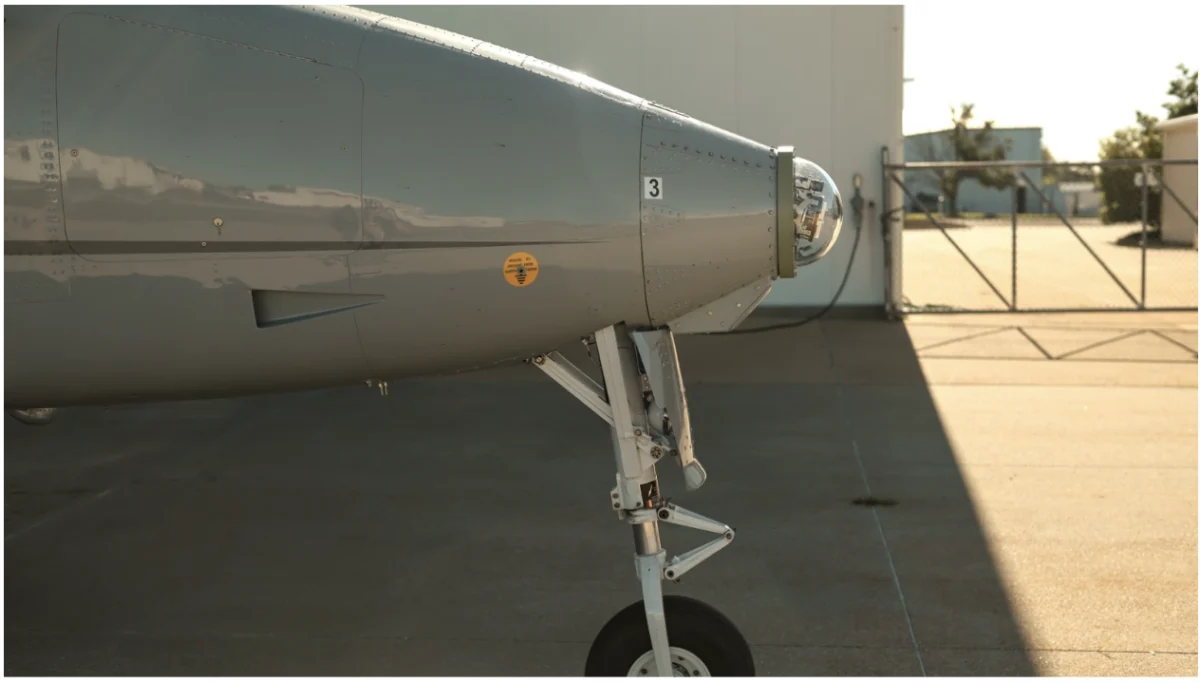
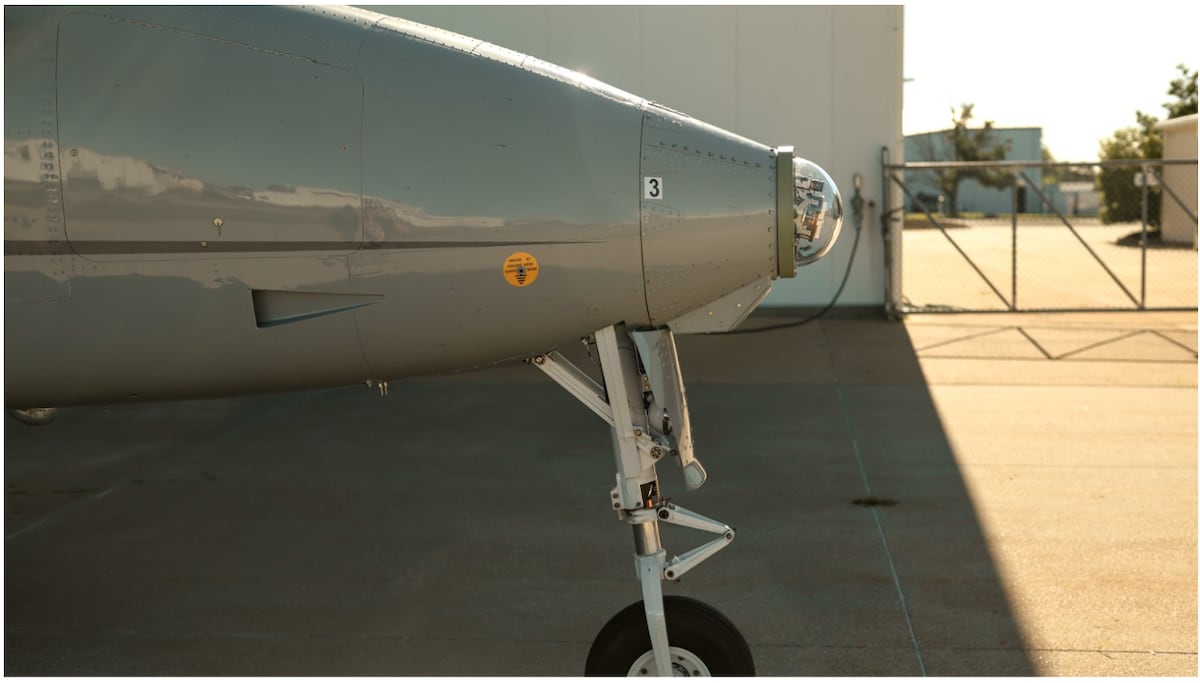
Following laboratory success, the seeker was mounted to a Beechcraft 1900 turboprop aircraft for captive-carry testing. This phase involved flying the seeker over varied terrain, including land and maritime environments, to test its ability to track moving targets against complex clutter. According to Boeing, the ULCS successfully identified and maintained locks on targets in both environments, demonstrating that its baseline detection algorithms were robust enough for real-world application.
Phase Three: Ground Tracking at Spaceport America
The testing moved to Spaceport America in New Mexico, where the seeker was placed in a fixed ground position. The objective was to track high-speed drones passing overhead. This test provided data on the seeker’s angular tracking accuracy and its ability to maintain a track at varying ranges and speeds.
Phase Four: Rocket-Assisted Launch and Vibration Testing
In perhaps the most demanding test of the cycle, the ULCS was mounted on a rocket to simulate the violent acceleration and vibration profile of a missile launch. The rocket was fired toward a drone equipped with a radar reflector—a device that mimics the radar cross-section of a much larger aircraft. Boeing reported that the seeker survived the launch forces and successfully detected the target mid-flight. This test was vital in proving that the "low-cost" nature of the hardware did not equate to fragility.
Strategic Context: The Huntsville SMD Symposium
The unveiling of the ULCS at the Space and Missile Defense Symposium is highly symbolic. Huntsville, known as "Rocket City," is the heart of the U.S. Army’s missile and space programs and serves as a hub for the Missile Defense Agency (MDA). The symposium is the premier event for the missile defense community, bringing together military leadership, lawmakers, and industry executives to discuss the future of the "Arsenal of Democracy."
The backdrop of this year’s symposium is defined by the lessons learned from the conflict in Ukraine and the ongoing maritime defense operations in the Red Sea. In both theaters, the U.S. and its allies have faced the challenge of "cost-attrition"—using multimillion-dollar interceptors to down drones that cost only a few thousand dollars. Pentagon officials have repeatedly voiced concerns that the current rate of expenditure is unsustainable in a protracted conflict with a peer or near-peer adversary.
Economic and Logistic Drivers for Affordable Mass
The underlying philosophy of the ULCS aligns with the Department of Defense’s "Replicator" initiative, which seeks to field thousands of cheap, autonomous systems across multiple domains. By reducing the cost of the most expensive component of a guided weapon, Boeing is positioning itself to support a high-low mix strategy: maintaining a small number of "exquisite" high-end missiles for the most difficult targets, while fielding a massive volume of "good enough" munitions for high-attrition scenarios.
While Boeing has not released specific price points for the ULCS, the designation "ultra-low-cost" suggests a target price significantly below the current market rate for active radar seekers, which can often exceed $100,000 to $200,000 per unit depending on the application.
Comparison with Industry Competitors
Boeing is not the only player seeking to dominate the modular seeker market. Just days prior to Boeing’s announcement, Lockheed Martin introduced "Strigo," a family of modular radio-frequency sensors and datalinks. Like the ULCS, Strigo is designed to be platform-agnostic, allowing for rapid integration into various missiles and drones. This competition highlights a broader industry trend toward "software-defined" hardware where the value lies in the algorithms and the ability to manufacture in bulk rather than in specialized, artisanal engineering.
Official Perspectives and Future Roadmap
Bob Ciesla, Vice President of Boeing Precision Engagement Systems, emphasized the long-term vision for the program. "We are developing ULCS with the goal of sharing a common sensor architecture across several of our programs," Ciesla stated. He highlighted that the modularity and open standards are the keys to avoiding the "vendor lock" and "design dead-ends" that have plagued previous generations of missile technology.
Steve Wright, Boeing’s senior manager for weapon sensors and advanced guidance, acknowledged that while the summer tests were successful, the journey toward full production continues. "We still have more work to do, but the rapid testing our teams have completed prove that this capability is real and will fundamentally change how we look at seeker affordability across our programs," Wright noted.
The next phase of development will focus on refining the software and hardening the seeker against electronic warfare (EW) and jamming—a critical requirement for any weapon intended for use in contested environments. Boeing has scheduled a series of flight tests for 2027 that will attempt to replicate more complex, real-world combat scenarios, including multi-target environments and heavy electronic interference.
Broader Impact and Implications for the Defense Industrial Base
The successful deployment of the ULCS could have profound implications for the defense industrial base. If Boeing can prove that commercial-grade electronics can reliably replace specialized military hardware in high-stakes environments, it could lead to a broader deregulation or "commercialization" of certain defense sectors. This would allow for a more resilient supply chain, as the Pentagon could tap into the massive manufacturing capacity of the global electronics industry.
Furthermore, the ULCS supports the concept of "reconstitutable forces." In a major conflict, the ability to rapidly manufacture and deploy thousands of guided weapons would be a decisive advantage. A common seeker architecture simplifies logistics, training, and maintenance, as technicians would be dealing with familiar hardware across multiple weapon types.
As the 2027 flight tests approach, the defense community will be watching closely to see if Boeing’s "ultra-low-cost" gamble pays off. If it does, the ULCS may not just be a new component for a missile; it may be the blueprint for how the next generation of American munitions is designed, purchased, and employed on the battlefield. The focus remains on whether this technology can maintain its performance edge while significantly undercutting the price of current systems—a balance that will determine the shape of future aerial and missile warfare.

Related Posts
Pentagon Forges Landmark Seven-Year Agreements with Boeing and RTX to Accelerate Standard Missile-3 Production and Stabilize Defense Supply Chains
US Army Pursues 50mm Cannon Solutions to Counter Growing Drone Threats on the Modern Battlefield