
The New Geopolitics of Energy and the Urgent Evolution of Global Climate Diplomacy in a Fragmented World
The global geopolitical landscape in 2026 has entered a period of unprecedented volatility, defined by a shift from cooperative multilateralism to a "new normal" of disruption, resource nationalism, and overt conflict. At the center of this upheaval is a renewed and aggressive struggle for control over global fossil fuel supplies, a trend underscored by recent events ranging from the United States’ direct intervention in Venezuela to the ongoing and destabilizing war in Iran. For the international climate community, these developments represent more than just diplomatic hurdles; they signal a fundamental shift in how energy policy must be conducted. As the Trump administration prioritizes the securing of oil and gas reserves under the banner of national interest, the traditional frameworks of climate diplomacy are being forced to evolve to remain relevant in a world increasingly defined by trade wars, rising fascism, and a fracturing global order.
The Resurgence of Resource Nationalism and the 2026 Crisis
The first half of 2026 has been marked by a series of high-stakes maneuvers that have upended the international energy market. The most striking of these was the United States’ involvement in the removal and subsequent detention of Venezuela’s leadership, an action widely interpreted by international observers as a move to secure the world’s largest proven oil reserves. This intervention, coupled with the escalating conflict in Iran, has placed energy security at the forefront of the global agenda, often at the expense of established climate commitments.
According to analysts at the International Climate Politics Hub, these actions are not isolated incidents but part of a broader strategy by the current U.S. administration to assert "energy dominance." By controlling the flow and pricing of hydrocarbons, the administration seeks to leverage energy as a tool of geopolitical coercion. This "fossil fuel first" diplomacy has created a ripple effect, forcing other nations to reconsider their own energy security strategies, often leading back to a reliance on coal and gas rather than the accelerated transition to renewables envisioned in the early 2020s.
Chronology of Geopolitical Instability (2025–2026)
To understand the current state of global energy politics, it is essential to trace the timeline of events that led to the current volatility:
- January 2025: The inauguration of the second Trump administration marks a pivot back toward aggressive deregulation of the domestic energy sector and a withdrawal from international climate financing agreements.
- June 2025: The "Green Trade Wars" intensify as the U.S. and the European Union clash over carbon border adjustment mechanisms, while China retaliates by restricting the export of processed lithium and rare earth elements essential for battery production.
- October 2025: Hostilities break out in the Persian Gulf. The Iran war begins, leading to the immediate closure of the Strait of Hormuz. Global oil prices spike to over $150 per barrel, triggering inflationary pressures across the Global North and South.
- January 2026: In a move that shocks the international community, U.S.-backed forces are involved in the "extraction" of the Venezuelan presidency during a period of civil unrest, citing the need to stabilize global energy markets.
- March 2026: The United Nations reports a significant stalling in Nationally Determined Contributions (NDCs), as nations divert climate mitigation budgets toward military spending and fossil fuel subsidies to combat rising energy costs.
Data Analysis: The Economic Cost of Volatility
The shift toward a conflict-driven energy model has had measurable impacts on the global economy and the environment. Data from 2025 and the first quarter of 2026 indicate a troubling divergence between climate goals and economic realities.
- Energy Prices: Brent Crude, which averaged $82 per barrel in 2024, has seen a 65% increase by mid-2026 due to the Iran conflict and supply chain disruptions.
- Climate Finance Gap: Contributions to the Green Climate Fund from G7 nations have dropped by an estimated 40% compared to 2023 levels, as domestic "energy security" takes precedence.
- Renewable Stagnation: While solar and wind capacity continue to grow in China, the rate of new installations in the United States and Southeast Asia has slowed by 15% due to high interest rates and the "bipolarization" of trade, which has made the import of affordable Chinese components politically and economically difficult.
Andreas Sieber, head of political strategy at 350.org, notes that the "spiraling inequality" resulting from these price hikes is pushing many developing nations toward a debt crisis. "We are seeing a world where the cost of the energy transition is being pushed onto the most vulnerable, while the most powerful nations use fossil fuels to shore up their own economic and military standing," Sieber stated in a recent policy briefing.
US-China Rivalry: The Bipolarization of the Green Transition
The rivalry between the United States and China has evolved into a "superpower rivalry" that is effectively pulling the global economy apart. This competition is no longer limited to traditional military or digital spheres; it has become the dominant paradigm for the green industrial revolution.
China currently controls over 80% of the global supply chain for solar panels and a significant portion of the processing capacity for critical minerals. In response, the U.S. has adopted a policy of "aggressive decoupling," incentivizing domestic production through heavy subsidies while placing prohibitive tariffs on Chinese green technology. While this has spurred some domestic industrialization in the U.S., it has also increased the global cost of decarbonization.
This rivalry has created a "zero-sum" environment where technological breakthroughs are guarded as state secrets rather than shared as global public goods. For the climate community, this means that the collaborative spirit of the Paris Agreement is being replaced by a competitive model of "green industrialization." While competition can drive innovation, the current atmosphere of trade wars and sanctions threatens to delay the deployment of technology at the scale and speed required to meet the 1.5°C target.
Official Responses and International Sentiment
The international response to the U.S. administration’s energy maneuvers has been divided. In the European Union, there is a growing movement toward "strategic autonomy." EU officials have expressed concern that the U.S. focus on fossil fuel dominance undermines the Western alliance’s long-term security by maintaining a dependence on volatile commodities.
In a joint statement, several leaders from the Global South expressed their alarm at the "militarization of energy." The statement highlighted that the abduction of a sovereign leader and the pursuit of war for resources represent a return to 19th-century imperialism, updated for the 21st-century energy crisis.
Cat Abreu, director of the International Climate Politics Hub, argues that climate diplomacy must now operate within this "fascism and trade war" framework. "We can no longer talk about climate change as an isolated environmental issue," Abreu said. "It is now inextricably linked to the survival of multilateralism itself. If we cannot protect the rules of international law, we cannot hope to enforce international climate agreements."
Broader Implications for Climate Strategy
The implications of this new geopolitical reality are profound. To operate effectively, the climate movement must adapt to several emerging paradigms:
1. The Energy Security Paradigm
Climate advocates must frame the transition to renewables not just as an environmental necessity, but as the ultimate form of energy security. In a world where oil supplies can be disrupted by a single war or a change in administration, decentralized renewable energy offers a path to national sovereignty that fossil fuels cannot provide.
2. Addressing Economic Inequality
The transition must be equitable to survive the rise of populist and fascist movements. If the "green shift" is perceived as a project of the elite that increases the cost of living for the working class, it will continue to face political backlash. Effective diplomacy in 2026 requires a focus on debt relief for the Global South and the creation of high-quality "green-collar" jobs in the Global North.
3. Navigating a Bipolar World
The climate community must find ways to maintain "climate corridors" of cooperation between the U.S. and China, even as they clash in other arenas. This may involve third-party mediators or the strengthening of non-aligned blocs that can trade with both superpowers while maintaining a commitment to decarbonization.
Conclusion: The Path Forward in a Volatile Landscape
As 2026 progresses, the "new normal" of geopolitical disruption shows no signs of abating. The desire to control fossil fuels remains a primary driver of global conflict, threatening to derail decades of progress in environmental governance. However, this volatility also presents an opportunity to redefine the narrative of the energy transition.
The events in Venezuela and Iran serve as a stark reminder of the costs associated with the old energy order. For Andreas Sieber, Cat Abreu, and the wider climate community, the mission is now to prove that an equitable green shift is not a luxury for a peaceful world, but a prerequisite for achieving peace in a fractured one. Today’s climate governance must be resilient enough to withstand the pressures of trade wars and the challenges to multilateralism, ensuring that the pursuit of energy security does not come at the cost of a livable planet.

Related Posts
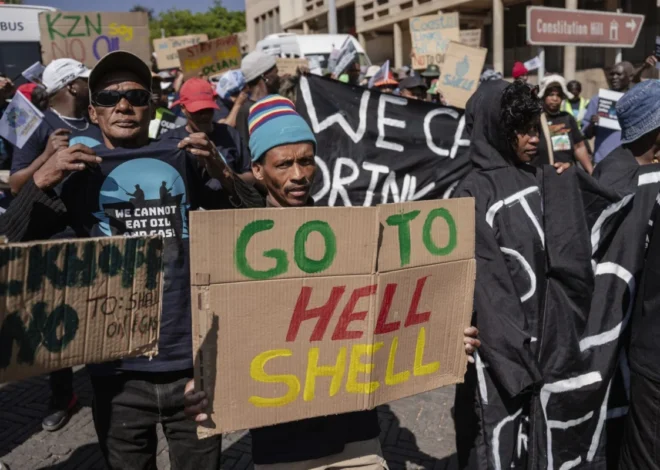
Constitutional Court of South Africa Bars Shell Oil Exploration in Landmark Victory for Environmental and Community Rights

The Battle for Saldanha Bay: South Africa’s Ambitious Ocean Economy Strategy Faces Legal and Environmental Reckoning