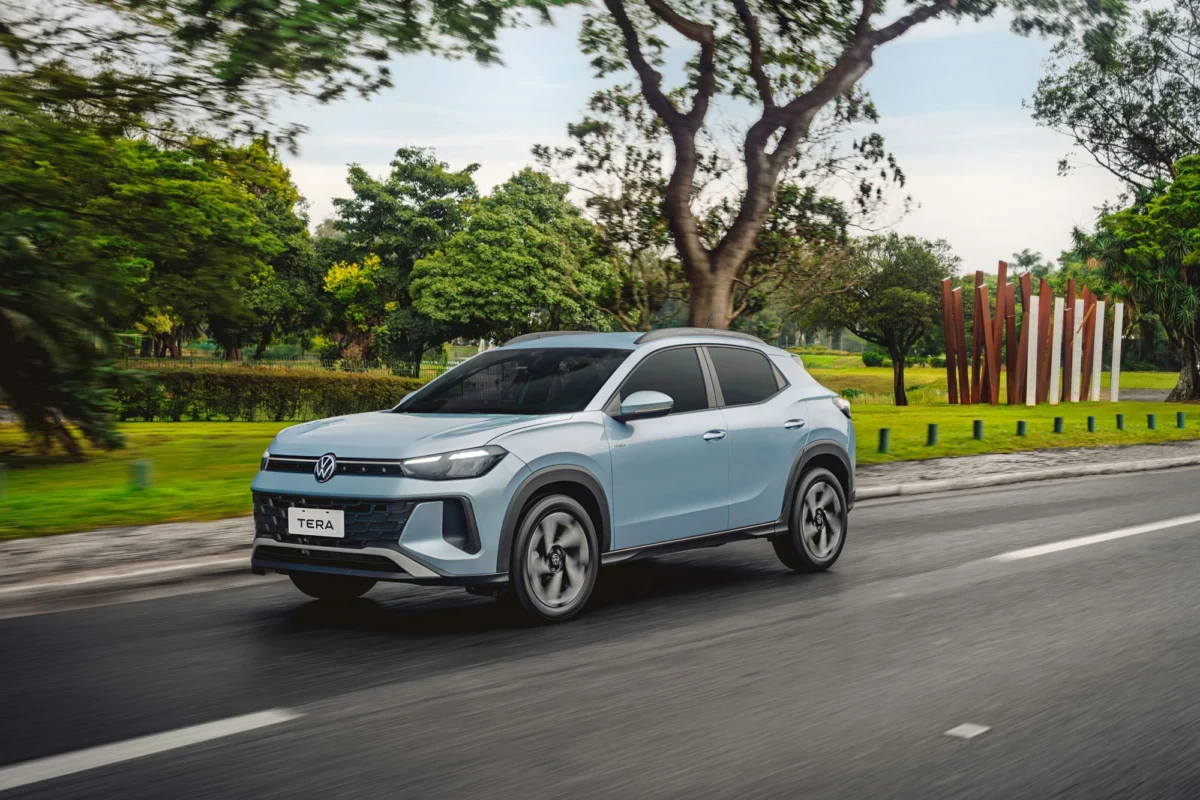
The Volkswagen Taos Dominates Argentine SUV Market with Strong Sales and Strategic Pricing Adjustments
The Volkswagen Taos, a compact SUV and crossover from the German automaker, has rapidly ascended to become one of the most significant launches in recent automotive history in Argentina. Its market debut has been met with substantial commercial success, securing its position as the sixth best-selling model in the first half of the year, with an impressive 8,240 units sold. This data, provided by the Association of Automotive Dealerships of the Argentine Republic (Acara), underscores the Taos’ immediate impact and widespread consumer appeal within the competitive Argentine automotive landscape.
Initially, the entry-level version of the Taos held the distinction of being Volkswagen’s most affordable vehicle according to official price lists. However, a strategic reconfiguration of the model range implemented several months prior saw the Nivus model assume this position, even retailing at a price point lower than the Polo. This adjustment in Volkswagen’s pricing strategy reflects a dynamic approach to market positioning, aiming to cater to a broader spectrum of consumer budgets while maintaining the Taos’ strong presence in the SUV segment.
The current month marks a notable trend in the Argentine automotive market, with most manufacturers reinstating price increases across their lineups after a period of price stability. Volkswagen has followed this prevailing tendency, implementing a general increase of 2% across almost its entire range. An exception to this broad adjustment is the Amarok, the mid-size pickup truck manufactured at the Pacheco plant in the province of Buenos Aires. The Amarok’s pricing remains unaffected as it approaches the introduction of a new generation, signaling a strategic shift in focus for this iconic utility vehicle. The Taos, as Volkswagen’s most successful model currently, is directly impacted by these pricing adjustments, a factor that will be closely monitored by industry analysts and consumers alike.
Volkswagen Taos: July Pricing and Market Performance
Following the recent price adjustments by Volkswagen, the July pricing structure for the Taos reveals its current market standing. While specific figures are subject to fluctuation and official dealer information, the general trend indicates a strategic recalibration of its market position. The Taos’ sustained sales momentum, despite potential price increases, highlights its strong value proposition and appeal to Argentine consumers seeking a capable and stylish compact SUV. Its ability to maintain a top-tier sales ranking, even as entry-level options from the same brand shift in price, speaks volumes about its desirability. The fact that the Taos has surpassed even the Amarok in sales volume during the first half of the year further solidifies its status as Volkswagen’s flagship model in the Argentine market at this time. This performance is a testament to its design, features, and Volkswagen’s effective market strategy.
Comprehensive Features and Performance of the Volkswagen Taos
The Volkswagen Taos is offered in four distinct trim levels: Trend MSI MT, Comfort 170 TSI AT, Highline 170 TSI AT, and Outfit 170 TSI AT. These variations allow consumers to select a model that best aligns with their specific needs and preferences, ranging from more accessible options to feature-rich premium variants.
In terms of its physical dimensions, the Taos measures 4.151 meters in length, positioning it slightly longer than the Polo by 7 centimeters and shorter than the Nivus by 12 centimeters. Its width is 1.777 meters, approximately 2 centimeters less than its stablemates, while its height stands at 1.504 meters, just 1 centimeter taller. Despite these minor variations in external dimensions, the wheelbase remains consistent across these models at approximately 2.566 meters, contributing to a stable and comfortable ride. The cargo capacity of the Taos is a practical 350 liters, offering ample space for daily necessities and weekend getaways.
Under the hood, the Taos is powered by the well-regarded 170 TSI turbocharged gasoline engine. This three-cylinder, 12-valve, 1.0-liter powerplant delivers a robust 101 horsepower at 5,600 rpm and a peak torque of 170 Nm, available across a broad range from 1,750 to 4,250 rpm. This versatile torque band ensures responsive acceleration and efficient performance in various driving conditions. Customers can opt for either a five-speed manual transmission or a six-speed Tiptronic automatic transmission, both of which are paired with front-wheel drive, providing a dynamic and engaging driving experience.
The interior of the Taos is designed to offer a blend of technology, comfort, and convenience. Key features include a 10-inch central multimedia display and a 10-inch digital instrument cluster, providing drivers with intuitive access to information and entertainment. The vehicle also boasts a keyless entry and push-button start system, a climate control system for optimal passenger comfort, and a tire pressure indicator for enhanced safety. A refrigerated wireless smartphone charger adds a touch of modern convenience, complemented by USB Type-C ports for device connectivity. For ease of parking and maneuvering, the Taos is equipped with front and rear parking sensors and a rearview camera. Ambient lighting enhances the cabin’s atmosphere, while synthetic leather upholstery adds a premium feel to the interior.
Safety and Advanced Driver-Assistance Systems
Safety is a paramount consideration in the design of the Volkswagen Taos, with a comprehensive suite of standard safety features. The vehicle is equipped with six airbags, Isofix anchorages for child seats, and an assist system for starting and descending inclines. Braking is handled by four-wheel disc brakes, complemented by advanced safety systems such as ABS (Anti-lock Braking System), ASR (Traction Control System), EDL (Electronic Differential Lock), EDTC (Engine Drag Torque Control), and ESP (Electronic Stability Program). These systems work in unison to provide maximum control and stability under various driving conditions.
The range-topping Outfit trim level elevates the Taos’ safety and convenience by incorporating advanced driver-assistance systems (ADAS). These include adaptive cruise control, lane-keeping assist, blind-spot monitoring with rear cross-traffic alert, driver fatigue warning, and autonomous emergency braking with pedestrian detection. These intelligent systems aim to mitigate potential hazards and enhance driver awareness, contributing to a safer driving environment.
A significant testament to the Taos’ safety credentials is its performance in crash tests conducted by Latin NCAP prior to its market introduction. The vehicle achieved the highest possible rating, securing five stars, which signifies an exceptional level of occupant protection and structural integrity in the event of a collision. This prestigious rating provides consumers with added confidence in the Taos’ ability to safeguard its occupants.
Market Context and Competitive Landscape
The Volkswagen Taos’ success in Argentina can be attributed to several factors, including its competitive pricing strategy (especially at its launch), its appealing design, its well-equipped interior, and the robust reputation of the Volkswagen brand. The compact SUV segment in Argentina is highly contested, with models from various manufacturers vying for market share. The Taos has managed to carve out a significant niche for itself by offering a compelling package that balances practicality, technology, and style.
The recent price adjustments by Volkswagen, while impacting the entire range, are a reflection of broader economic conditions and supply chain dynamics affecting the global automotive industry. For the Taos, these adjustments will likely influence its price competitiveness relative to other models in its segment. However, its established sales momentum suggests that a significant portion of its customer base values the overall package it offers, beyond just the initial price point.
The strategic decision to position the Nivus as the entry-level model, even below the Polo, indicates Volkswagen’s intention to maintain a distinct market presence for the Taos as a more premium offering within its compact vehicle lineup. This tiered approach allows Volkswagen to cater to a wider range of consumer needs and budgets while ensuring that each model occupies a clearly defined space in the market.
Broader Implications and Future Outlook
The strong performance of the Volkswagen Taos is a positive indicator for the Argentine automotive market, signaling consumer confidence and a robust demand for new vehicles, particularly in the SUV segment. The Taos’ success not only bolsters Volkswagen’s market position but also contributes to the overall health of the automotive industry in the country, supporting manufacturing, dealership networks, and related employment.
The ongoing evolution of the automotive market, characterized by advancements in technology, increasing emphasis on safety, and shifting consumer preferences, means that models like the Taos must continually adapt. Volkswagen’s commitment to offering advanced features, such as ADAS and digital interfaces, positions the Taos favorably for future market demands. The vehicle’s five-star Latin NCAP rating also aligns with growing consumer awareness and demand for vehicles with superior safety standards.
As the Argentine market navigates economic fluctuations and evolving consumer preferences, the Volkswagen Taos stands as a significant player, demonstrating resilience and adaptability. Its continued success will likely depend on Volkswagen’s ability to maintain a competitive pricing strategy, introduce incremental updates to its features and technology, and continue to leverage the strong brand loyalty associated with the Volkswagen marque. The Taos’ journey from a highly anticipated launch to a sales leader is a compelling narrative in the contemporary Argentine automotive landscape, setting a benchmark for compact SUVs in the region. The impact of its consistent sales performance and the strategic pricing adjustments will be keenly observed by competitors and analysts as the year progresses.

Related Posts

The Electric Vehicle Battery Health Debate Emerges as Argentina’s EV Market Accelerates

President Donald Trump Confirms Secret Departure from Turkey Amidst Assassination Threat