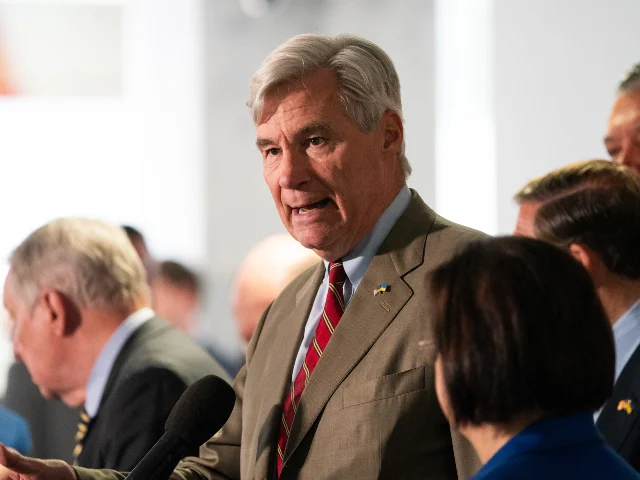
Senator Sheldon Whitehouse Defends Initial Dismissal of Allegations Against Disgraced Maine Senate Candidate Graham Platner Amid Broader Scrutiny
Senator Sheldon Whitehouse (D-RI) has continued to defend his initial skepticism regarding allegations made against Maine’s now-disgraced Democrat U.S. Senate candidate, Graham Platner. Whitehouse’s stance, articulated during a recent interview with CNN’s Jake Tapper, centers on his prosecutorial approach to evaluating claims, particularly those from Platner’s initial accuser, Lyndsey Fifield, whom he characterized as a conservative operative with potential motives to mislead. This defense comes in the wake of Platner’s withdrawal from the Senate race following a new, on-camera accusation of rape, which subsequently brought renewed attention and perceived credibility to Fifield’s earlier claims of domestic violence and sexual misconduct. The controversy has ignited a broader debate about the vetting of political candidates, the influence of political affiliation on the credibility of accusers, and the integrity of the Democratic Party’s support for Platner despite a litany of previous controversies.
The Genesis of the Controversy: Early Allegations and Dismissal
The narrative surrounding Graham Platner, once a promising Democratic hopeful for the U.S. Senate in Maine, began to unravel significantly with the re-emergence and subsequent amplification of allegations of abuse. The initial accusations came from Lyndsey Fifield, who dated Platner between 2013 and 2014. According to reports, Fifield accused Platner of physical abuse and a disturbing pattern of sexual misconduct, specifically alleging that he would surreptitiously remove condoms during sex, even after she had informed him she was not using birth control. These claims, detailed by Breitbart News, presented a serious ethical and legal challenge to Platner’s candidacy.
However, when these allegations first surfaced, Senator Whitehouse, a prominent figure in the Democratic Party and a former prosecutor, publicly dismissed them. His rationale, as he explained to Jake Tapper, was rooted in a professional skepticism that he applies to all accusations. Whitehouse highlighted Fifield’s political affiliations, stating she was "involved in basically a Koch brothers funded political operation and had been specifically involved in Maine political activities against Platner." This connection, in Whitehouse’s view, suggested a potential "motive to mislead or fabricate," and he further contended that there was no corroboration for her initial claims. This dismissal by a high-profile Democratic senator created a perception that Fifield’s conservative background was being used to undermine her credibility, a concern that would later be echoed by others, including former President Donald Trump.
Escalation: New Accusations and Platner’s Withdrawal
The political landscape for Platner drastically shifted last week following new, severe allegations. CNN’s Jake Tapper recounted during his interview with Senator Whitehouse that "a week ago Monday, a woman named Jenny Racicot… accused Platner on the record, on camera, of rape." This public and direct accusation proved to be a critical turning point. Racicot’s willingness to come forward on camera with such a grave charge provided a new level of public scrutiny and perceived authenticity to the allegations against Platner.
The immediate aftermath of Racicot’s statement was profound. The very next day, Lyndsey Fifield, encouraged by Racicot’s bravery and the renewed attention, spoke out again, detailing her own experiences with Platner. This sequence of events — a new, on-camera accusation followed by a corroborating statement from an earlier accuser — created an insurmountable crisis for Platner’s campaign. Within days, Graham Platner formally withdrew from the U.S. Senate primary race in Maine, marking a precipitous end to his political ambitions. His withdrawal statement, notably, included defiant phrases such as "F*ck ICE and Free Palestine," further highlighting his controversial public persona and ideological leanings that had previously drawn criticism.
Senator Whitehouse’s Defense and the Corroboration Debate
During the CNN interview, Jake Tapper directly challenged Senator Whitehouse on his initial dismissal of Fifield’s allegations, asking if he believed he had been "too quick to dismiss Fifield’s allegations?" Whitehouse maintained his position, emphasizing his long-standing experience as a prosecutor. "I think it’s important when you’re looking at allegations to, and I’ve done this as a prosecutor for years, to evaluate things like whether there is corroboration. And with respect to the first allegation there was none. Whether there’s motive to mislead or fabricate, there was plenty," Whitehouse responded. He reiterated his belief that Fifield’s involvement with "Koch brothers funded political operation" and her specific engagement in "Maine political activities against Platner" provided such a motive.
Whitehouse explained his evolving stance: "So, yeah there came a point when the straw broke the camel’s back, but if we don’t look with some professional skepticism at allegations then I think we have not done our duties. And then when the allegations continue there comes a point where yeah, you acknowledge that yes, there’s enough here to go forward. That’s the way prosecutors think, that’s the way I thought about this." His defense hinged on the idea that without initial corroboration and with a perceived political motive, a prosecutor’s duty is to exercise caution.
However, Tapper directly countered Whitehouse’s assertion regarding the lack of corroboration for Fifield’s claims. Tapper, who had personally interviewed Fifield, stated, "As somebody who interviewed her, she did have corroboration. She had a number of friends whom she told the sad and scary stories to years and years before. She had diary entries. There was a number of corroborating evidence." This direct refutation from Tapper cast doubt on Whitehouse’s initial assessment and raised questions about the thoroughness of the evaluation process applied to Fifield’s claims. The discrepancy between Whitehouse’s recollection of "no corroboration" and Tapper’s on-the-record knowledge of "a number of corroborating evidence" became a focal point of the debate, suggesting that either Whitehouse was misinformed or selectively interpreting the available information.
Broader Political Context and Reactions
The scandal surrounding Graham Platner extends beyond the immediate allegations and Whitehouse’s defense. Platner’s candidacy itself was fraught with other controversies that had raised eyebrows even before the most serious abuse allegations gained widespread traction. He was infamously associated with a "Nazi tattoo," and his public statements, such as "F*ck ICE and Free Palestine," while potentially appealing to a segment of the progressive base, were highly divisive and drew significant criticism from other quarters. Despite these red flags, the Democratic Party had invested heavily in his campaign. Reports indicated that the party had "vaporized 16 million dollars pushing failed Nazi tattoo candidate Graham Platner in Maine." This substantial financial backing underscores the party’s initial commitment to Platner and its perceived investment in his success, making his eventual downfall all the more impactful.
Senator Whitehouse was not merely a passive observer in Platner’s campaign. WPRI reported on July 7 that "Whitehouse has been a Platner backer for months despite those controversies, donating $10,000 to his campaign and co-hosting a lunch fundraiser for him back in March. Last fall, Whitehouse told Politico he’d spoken to Platner privately and thought he had ‘a wonderfully appealing local background and story.’" This direct financial and political support from a senior Democratic senator illustrates a deeper level of endorsement and faith in Platner, despite the controversies that had already begun to swirl around him. Whitehouse’s subsequent withdrawal of his endorsement, following the more severe allegations, marked a strategic retreat, but it did not erase his prior, enthusiastic backing.
Former President Donald Trump also weighed in on the unfolding scandal, suggesting a political double standard in how accusations are received and believed. Trump commented, "When this woman came out, everybody believed her," referring to Jenny Racicot. He implicitly contrasted this with the initial dismissal of Fifield’s claims, implying that the political affiliation of an accuser could unduly influence the public and political establishment’s willingness to believe them. This observation, while coming from a politically charged source, resonated with concerns raised by others about the perceived partisan lens through which allegations of misconduct are sometimes viewed.
Implications and Future Challenges
The Graham Platner saga carries significant implications for the Democratic Party, candidate vetting processes, and the broader societal conversation around sexual misconduct allegations. The substantial financial investment by the party in a candidate with multiple public controversies, culminating in serious allegations of rape and abuse, raises critical questions about due diligence. How thoroughly are candidates vetted for past behaviors, particularly in the digital age where historical statements and personal conduct can quickly surface? The party’s decision to back Platner, seemingly overlooking or downplaying earlier controversies and allegations, suggests either a failure in the vetting process or a calculated risk that ultimately backfired spectacularly.
The debate over Lyndsey Fifield’s credibility, initially dismissed due to her conservative ties, highlights a persistent challenge in the #MeToo era: how to assess the veracity of allegations fairly, irrespective of the accuser’s political leanings or perceived motives. Senator Whitehouse’s defense, rooted in prosecutorial skepticism, inadvertently fueled concerns that political expediency or ideological bias could influence judgments about credibility. Tapper’s clarification regarding Fifield’s corroborating evidence further complicates Whitehouse’s position, suggesting that a more thorough or unbiased initial review might have been warranted.
This incident is likely to prompt a reevaluation of how political parties handle accusations against their candidates. The pressure to win elections often clashes with the ethical imperative to uphold standards of conduct and protect potential victims. The public’s trust in political institutions and leaders is eroded when serious allegations are perceived to be dismissed or handled differently based on political calculations. For the Democratic Party, which often champions women’s rights and takes a strong stance against sexual violence, the Platner affair presents a particularly awkward and damaging contradiction. It underscores the difficulty of navigating such sensitive issues, especially when they involve prominent figures and high-stakes political races.
Moving forward, the Graham Platner case will undoubtedly serve as a cautionary tale. It emphasizes the need for rigorous, non-partisan vetting of all candidates, transparency in handling allegations, and a consistent application of principles regarding personal conduct, regardless of political affiliation or potential electoral gains. The public, media, and political parties alike will continue to grapple with the complex interplay of politics, power, and personal accountability in an increasingly scrutinized public sphere. The enduring question remains: how can political systems ensure that justice and truth prevail, even when inconvenient or politically damaging?

Related Posts
Democratic Candidates Must Moderate to Win General Elections, Says Rep. Greg Stanton
Lisa Demuth Secures Republican Gubernatorial Nomination in Minnesota, Defeating Trump-Endorsed Mike Lindell