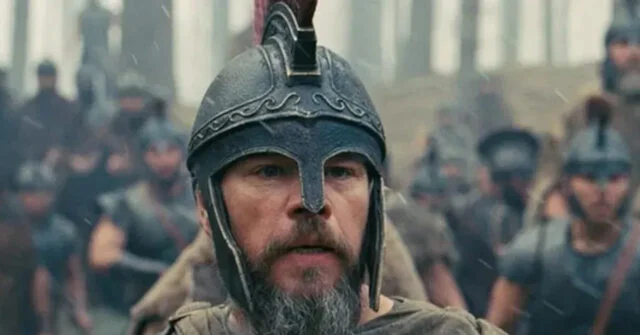
Christopher Nolan’s The Odyssey Defies Expectations with Staggering $120 Million Opening Weekend, Solidifying Director’s Unrivaled Box Office Brand
Oscar-winning director Christopher Nolan’s highly anticipated epic, The Odyssey, has shattered box office projections, securing an impressive $120 million in its domestic opening weekend. This formidable debut far surpassed industry forecasts, which had placed the film’s initial earnings in the range of $80 million to $90 million. The robust performance underscores a significant triumph for the film and its acclaimed director, particularly given the pre-release discussions surrounding potential casting controversies that some analysts believed might dampen audience enthusiasm. Instead, the film’s opening weekend demonstrated a powerful audience draw, proving that Nolan’s unique brand of filmmaking continues to resonate broadly.
An Unprecedented Opening for a Non-Animated Feature
The $120 million opening weekend for The Odyssey marks the best domestic debut for a non-animated film released this year, setting a new benchmark for live-action cinema in the current cinematic landscape. This achievement is particularly remarkable considering several factors that typically present challenges for mainstream box office success. The Odyssey is an R-rated feature, a classification that often limits a film’s potential audience reach compared to PG-13 or PG titles. Furthermore, the film boasts a substantial three-hour runtime, a duration that can sometimes deter casual moviegoers and limit the number of daily showtimes. Yet, these conventional hurdles proved no match for Nolan’s latest offering, indicating a strong desire among audiences for immersive, high-quality theatrical experiences.
Overwhelming Critical and Audience Acclaim Fuels Momentum
Beyond its impressive financial start, The Odyssey has garnered widespread critical praise and exceptionally strong audience reception, signaling promising long-term box office viability. Film critics have lauded the movie for its ambitious scope, breathtaking visual effects, intricate storytelling, and powerful performances. This critical consensus has been mirrored by moviegoers, who have awarded the film an coveted "A" grade from CinemaScore. CinemaScore ratings, based on immediate post-screening surveys of opening-night audiences, are widely considered a reliable indicator of a film’s word-of-mouth potential. An "A" grade suggests that viewers are highly satisfied and likely to recommend the film to others, a critical factor for sustained box office performance in subsequent weeks. Complementing this, The Odyssey has achieved an outstanding 97 percent positive audience score on Rotten Tomatoes, further solidifying its widespread appeal and confirming that the initial enthusiasm is deeply rooted in genuine viewer satisfaction. Such strong positive feedback from both critics and the public is invaluable for building momentum beyond the opening weekend, particularly for a film with a longer runtime that benefits from extended theatrical runs.
Christopher Nolan: The Director as a Global Brand
The resounding success of The Odyssey further cements Christopher Nolan’s status as one of Hollywood’s most consistently successful and critically acclaimed directors, akin to cinematic titans like Steven Spielberg in the 1990s or Alfred Hitchcock decades earlier. Nolan has cultivated a unique brand identity, where his name alone serves as a powerful draw for audiences worldwide. His filmography is characterized by a commitment to original concepts (or fresh interpretations of existing material), intricate narrative structures, a preference for practical effects over excessive CGI, and a dedication to delivering a grand, immersive cinematic experience, often utilizing IMAX technology.
Nolan’s journey to this unparalleled position began with critically lauded independent features like Memento (2000) and Insomnia (2002), which showcased his distinctive storytelling prowess. His transformation into a global blockbuster director commenced with Batman Begins (2005), which redefined the superhero genre, followed by the groundbreaking The Dark Knight (2008), which grossed over $1 billion worldwide and earned Heath Ledger a posthumous Academy Award. He continued this trajectory with original, mind-bending blockbusters like Inception (2010), a complex heist film set within dreams that also crossed the $800 million global mark, and the epic space exploration drama Interstellar (2014), which earned over $700 million globally. Even historical dramas like Dunkirk (2017) and the biographical epic Oppenheimer (2023) have achieved significant box office success, with Oppenheimer alone grossing nearly $1 billion globally and winning numerous Academy Awards, including Best Picture and Best Director for Nolan.
While his 2020 release, Tenet, faced challenges due to its release during the initial phase of the global pandemic and received a more mixed critical reception, it remains an anomaly in an otherwise unbroken string of critical and commercial triumphs. Nolan’s consistent ability to deliver intellectually stimulating yet broadly entertaining films has built an immense reservoir of trust with audiences, who seemingly approach his new releases as must-see cinematic events regardless of genre or subject matter. This phenomenon highlights how a director’s vision, artistic integrity, and consistent quality can transcend traditional marketing tactics, transforming an individual’s name into a powerful, standalone "franchise."
The 2026 Box Office Landscape: A Year of High Performers
The Odyssey‘s exceptional performance arrives in a year that has already seen several high-profile films make significant impacts at the global box office. Prior to Nolan’s epic, the biggest live-action opening of 2026 belonged to the Michael Jackson biopic, Michael, which debuted with $97 million domestically. Michael has since gone on to achieve monumental global success, already surpassing the $1 billion mark worldwide, indicating a strong appetite for compelling biographical narratives and event films.
These two films, The Odyssey and Michael, represent different facets of what is currently succeeding in the theatrical market. Michael tapped into a global pop culture phenomenon with a story rich in music and drama, while The Odyssey capitalizes on a revered director’s reputation for delivering visually spectacular and intellectually engaging storytelling. Both successes suggest that audiences are willing to return to cinemas en masse for films that offer a truly unique, high-quality, and immersive experience that cannot be replicated at home. This trend is crucial for the continued health of the theatrical exhibition industry, which has been navigating evolving viewing habits and increasing competition from streaming platforms. The ability of certain films to break through the noise and become cultural events is paramount, and The Odyssey has demonstrably achieved this status.
Navigating Pre-Release Discussions: The "Presentism" Controversy
In the lead-up to its release, The Odyssey faced a degree of public discussion regarding its casting choices, specifically concerning allegations of "presentism" – the interpretation of historical events or figures in terms of modern values – in its adaptation of the ancient Greek epic. While specific details of the casting decisions that sparked the controversy were not widely detailed, such debates often revolve around the casting of actors from diverse backgrounds in roles traditionally depicted by a specific ethnicity, or the perceived anachronistic portrayal of historical or mythological figures.
However, the film’s overwhelming box office success indicates that these pre-release discussions did not deter a significant portion of the audience. This outcome can be partly attributed to Nolan’s established reputation as an artist who transcends simple categorization. Throughout his career, Nolan has often been at the center of discussions regarding the thematic and political interpretations of his work. For instance, films like The Dark Knight (2008) and The Dark Knight Rises (2012) were perceived by some as having right-leaning undertones in their exploration of order, chaos, and societal control. Conversely, his Best Picture-winning Oppenheimer (2023) was seen by many as leaning more to the left in its critique of unchecked power and the moral dilemmas of scientific advancement. Even a character like Dr. Mann (played by Matt Damon) in Interstellar (2014) was interpreted by some as a subtle commentary on specific climate change alarmist figures.
Nolan’s body of work thus demonstrates a director whose thematic explorations often invite multifaceted interpretations, resisting easy political or social alignment. This artistic independence, coupled with his consistent delivery of high-quality cinema, appears to have insulated The Odyssey from any potential box office fallout stemming from casting debates. Audiences, it seems, prioritize Nolan’s unique artistic vision and the promise of a compelling cinematic experience above pre-release controversies, trusting him to deliver a thought-provoking and visually spectacular film.
Road Ahead: Sustained Success and Industry Ripple Effects
The immediate future looks exceptionally bright for The Odyssey. The film currently enjoys a substantial "runway" with limited direct competition from other major blockbusters. For two full weeks, Nolan’s epic will largely dominate the cinematic landscape before the arrival of Spider-Man: Brand New Day on July 31. This extended period without major new releases will allow The Odyssey to capitalize on its strong word-of-mouth and positive critical reception, ensuring sustained audience attendance and robust daily grosses.
Industry analysts are already projecting a phenomenal global box office run for The Odyssey. With its domestic start and anticipated strong overseas performance – Nolan’s films consistently perform well internationally – there is a growing expectation that the film could ultimately join the elite club of movies grossing over $1 billion worldwide. Should both The Odyssey and Spider-Man: Brand New Day achieve this milestone, it would mark a truly remarkable period for the film industry, showcasing the enduring power of event cinema and beloved franchises.
Beyond its financial success, The Odyssey‘s performance sends several significant messages to the broader film industry. Its triumph, particularly as an R-rated, three-hour epic that overcame pre-release casting discussions, reinforces the idea that original vision and directorial brand power remain critical drivers of box office success. While some filmmakers and studios might be tempted to misinterpret the lessons from The Odyssey‘s success – perhaps by focusing solely on superficial elements like specific casting strategies rather than underlying artistic quality and audience trust – the true takeaway appears to be the enduring value of a distinctive voice and a commitment to delivering an unparalleled theatrical experience. Christopher Nolan’s The Odyssey stands as a powerful testament to the idea that in an increasingly fragmented entertainment landscape, a visionary director with a consistent track record can still command global attention and deliver a monumental cinematic event that defies expectations and reshapes the box office narrative.

Related Posts

Democratic Candidates Must Moderate to Win General Elections, Says Rep. Greg Stanton

Lisa Demuth Secures Republican Gubernatorial Nomination in Minnesota, Defeating Trump-Endorsed Mike Lindell