Saab Secures $900 Million Contract to Equip New German MEKO A-200 DEU Frigates Amid Strategic Naval Pivot
Swedish defense giant Saab has officially entered into a definitive agreement with German shipbuilder ThyssenKrupp Marine Systems (TKMS) to provide the combat systems and advanced sensor suites for the German Navy’s new fleet of MEKO A-200 DEU frigates. The contract, valued at approximately 8.7 billion Swedish kronor (roughly $900 million), marks a decisive step in Germany’s rapid restructuring of its naval procurement strategy. The deal follows the high-profile cancellation of the F126 frigate program’s expansion, as Berlin shifts its focus toward a more agile, cost-effective, and rapidly deployable maritime force capable of meeting urgent NATO commitments in the North and Baltic Seas.
Under the terms of the agreement, Saab will be responsible for the delivery and integration of its 9LV Combat Management System (CMS) and a suite of sophisticated radar technologies across four vessels. Furthermore, the contract includes the provision of advanced composite superstructures, which are designed to reduce the radar cross-section and overall weight of the ships. This procurement is part of a broader €6.3 billion ($7.2 billion) investment approved by the German Bundestag’s budget committee in July 2024, which aims to modernize the German fleet under an accelerated timeline.
A Strategic Shift in German Naval Doctrine
The decision to move forward with the MEKO A-200 DEU represents a significant course correction for the Bundeswehr. For years, the German Navy had been focused on the F126 (formerly MKS 180) program, led by the Dutch shipbuilder Damen. However, the F126 program faced mounting criticism due to its immense scale—with ships displacing over 10,000 tons, making them larger than many destroyers—and a price tag that continued to escalate amid technical complexities and scheduling delays.
In June 2024, the German Ministry of Defense pivoted. Recognizing that the security environment in Europe had fundamentally changed following the invasion of Ukraine, Berlin prioritized "readiness" over "bespoke complexity." The MEKO A-200 DEU, a 4,000-ton class vessel, offers a mature, "off-the-shelf" design that TKMS has already successfully exported to various international navies. By choosing a proven platform and integrating Saab’s modular combat systems, Germany intends to bridge a critical capability gap in anti-submarine warfare (ASW) and air defense that the aging F122 and F123 frigates currently leave exposed.
Technical Specifications of the Saab Integration Package
The heart of the new frigates will be the Saab 9LV Combat Management System. Known for its open-architecture design, the 9LV allows for the seamless integration of third-party weapons and sensors, providing the German Navy with the flexibility to upgrade systems throughout the life cycle of the vessel. This modularity is seen as essential for maintaining a technological edge against evolving electronic warfare threats.
Complementing the 9LV system is a robust sensor package headlined by the Sea Giraffe radar family. The contract specifies the inclusion of:
- Sea Giraffe 4A Fixed Face (FF): A long-range, multi-function S-band radar utilizing Active Electronically Scanned Array (AESA) technology. The fixed-face configuration provides continuous 360-degree coverage, making it highly effective at detecting and tracking a wide range of threats, including supersonic missiles and small unmanned aerial vehicles (UAVs), even in high-clutter environments.
- Sea Giraffe 1X: A lightweight, short-range X-band 3D radar designed for naval protection and surveillance. This system is optimized for detecting "pop-up" threats at close range and provides the frigates with an extra layer of defense against asymmetric threats and swarming tactics.
Additionally, Saab will manufacture the ships’ superstructures using advanced carbon-fiber-reinforced polymer (CFRP) materials. These composite structures are significantly lighter than traditional steel, allowing for a lower center of gravity and increased stability, while also providing superior stealth characteristics by minimizing the ship’s electromagnetic signature.
Chronology of Procurement and Delivery
The path to this $900 million contract has been accelerated by the "Zeitenwende," the €100 billion special fund established by Chancellor Olaf Scholz to revitalize the German military.
- June 2024: The German Ministry of Defense announces the cessation of further F126 frigate orders in favor of the MEKO A-200 DEU design to save costs and speed up delivery.
- July 8, 2024: The Bundestag budget committee approves the €6.3 billion funding for four TKMS-built warships, with an option for four additional hulls.
- November 7, 2024: Saab and TKMS officially sign the contract for the combat systems and sensors, as announced during the Euronaval exhibition near Paris.
- 2025–2028: Detailed design phase and commencement of hull construction at TKMS facilities in Kiel and partner yards.
- 2029: Scheduled delivery of the first sensor and combat system packages to the shipyard for integration.
- 2030: Expected commissioning of the lead ship of the MEKO A-200 DEU class.
- 2032: Completion of the initial four-vessel order.
Official Responses and Industry Impact
The partnership between the Swedish and German firms is being hailed as a milestone for European defense cooperation. Micael Johansson, President and CEO of Saab, emphasized the strategic importance of the deal, noting that it solidifies Saab’s position as a premier provider of naval technology in the NATO sphere.
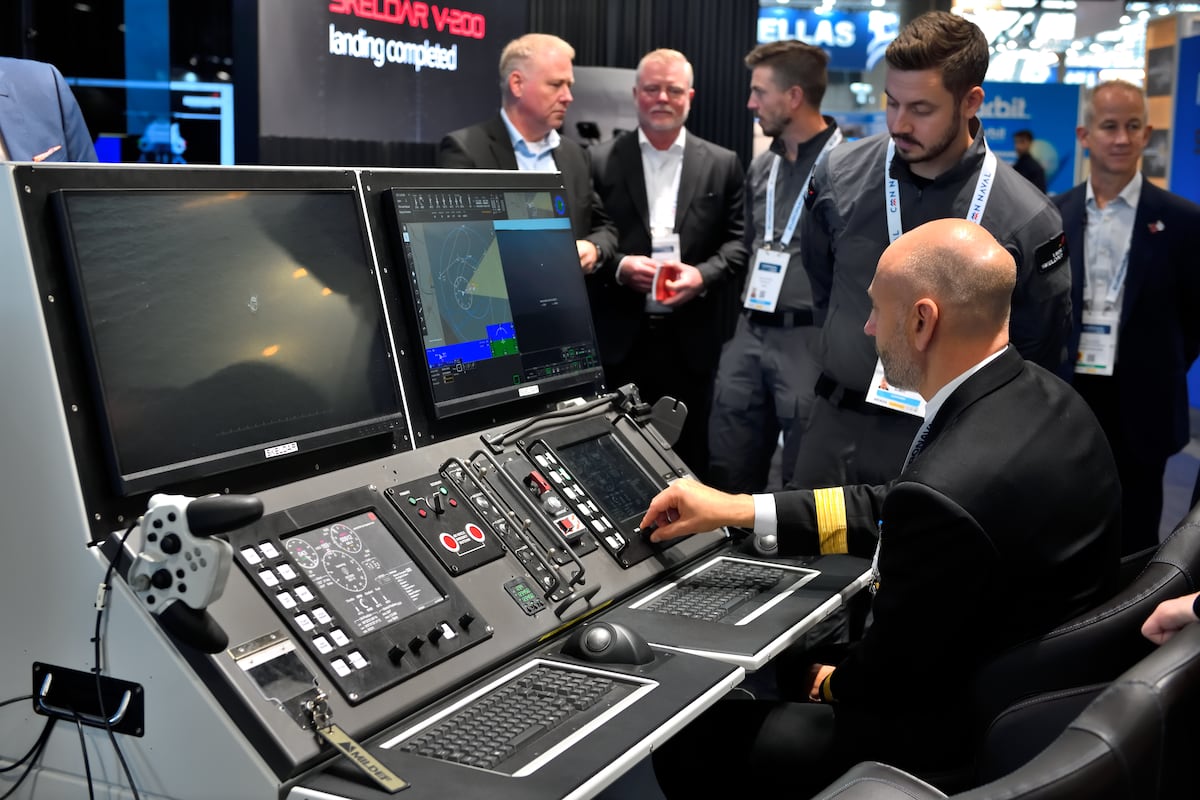
"Our 9LV combat management system and Sea Giraffe radars will significantly enhance the German fleet’s anti-air, anti-submarine, and anti-surface warfare capabilities," Johansson stated. "This contract is a testament to our long-standing relationship with Germany and our ability to provide high-end, battle-proven technology on a timeline that meets the urgent needs of modern naval forces."
Industry analysts suggest that the deal is a major win for TKMS as well. By securing the domestic order for the MEKO A-200, the German shipbuilder reinforces the viability of the MEKO platform for the European market. The MEKO (Mehrzweck-Kombination or multi-purpose combination) design has been a staple of naval exports for decades, but winning a major contract from its home navy provides a powerful endorsement that could lead to further international sales.
Geopolitical Context and NATO Requirements
The shift toward the MEKO A-200 DEU is deeply rooted in the current geopolitical climate. Following the sabotage of the Nord Stream pipelines and increased Russian naval activity in the Baltic and North Seas, the protection of critical undersea infrastructure has become a top priority for Northern European nations.
NATO has specifically called for its member states to bolster their anti-submarine warfare (ASW) capabilities. The MEKO A-200 DEU is being optimized for this role, featuring advanced sonar suites and the ability to carry heavy-duty ASW helicopters. Its smaller size compared to the F126 makes it more maneuverable in the shallow, littoral waters of the Baltic, where detecting quiet diesel-electric submarines is a primary challenge.
Furthermore, the integration of Saab technology ensures high levels of interoperability with other regional navies. Sweden, a new NATO member, utilizes similar Saab systems, as do several other alliance partners. This commonality facilitates easier joint training exercises, shared logistics, and synchronized response tactics during multi-national operations.
Economic and Analytical Implications
From an economic perspective, the $900 million contract represents a substantial influx of capital into the Swedish defense sector, supporting high-tech jobs in Linköping and Gothenburg. For Germany, while the prime contract remains with TKMS in Kiel, the reliance on Swedish systems highlights the increasingly integrated nature of the European Defense Technological and Industrial Base (EDTIB).
However, the program is not without its risks. Integrating complex electronic systems from a foreign supplier onto a newly modified hull design on a compressed timeline of less than six years is an ambitious engineering feat. Naval history is replete with examples of integration issues leading to cost overruns and delays. The success of the MEKO A-200 DEU program will depend heavily on the synergy between TKMS’s naval architecture and Saab’s software and sensor engineering.
The decision to include an option for four additional hulls suggests that the German Navy is looking toward a long-term fleet standardization. If the option is exercised, the total value of the Saab contract could nearly double, and the MEKO A-200 DEU would become the backbone of the German surface fleet for the next thirty years.
Conclusion
The contract between Saab and TKMS marks a turning point for the German Navy, signaling a move away from the "bigger is better" philosophy of the previous decade toward a more pragmatic, sensor-driven approach to maritime security. By leveraging Saab’s advanced 9LV and Sea Giraffe technologies, Germany is betting on a modular and agile future. As the first deliveries approach in 2029, the international defense community will be watching closely to see if this pivot provides a template for other European nations looking to modernize their navies in an era of heightened regional tension.

Related Posts
Pentagon Forges Landmark Seven-Year Agreements with Boeing and RTX to Accelerate Standard Missile-3 Production and Stabilize Defense Supply Chains
Boeing Unveils Ultra Low-Cost Seeker to Enhance Missile Inventory and Combat Cost Challenges in Modern Warfare