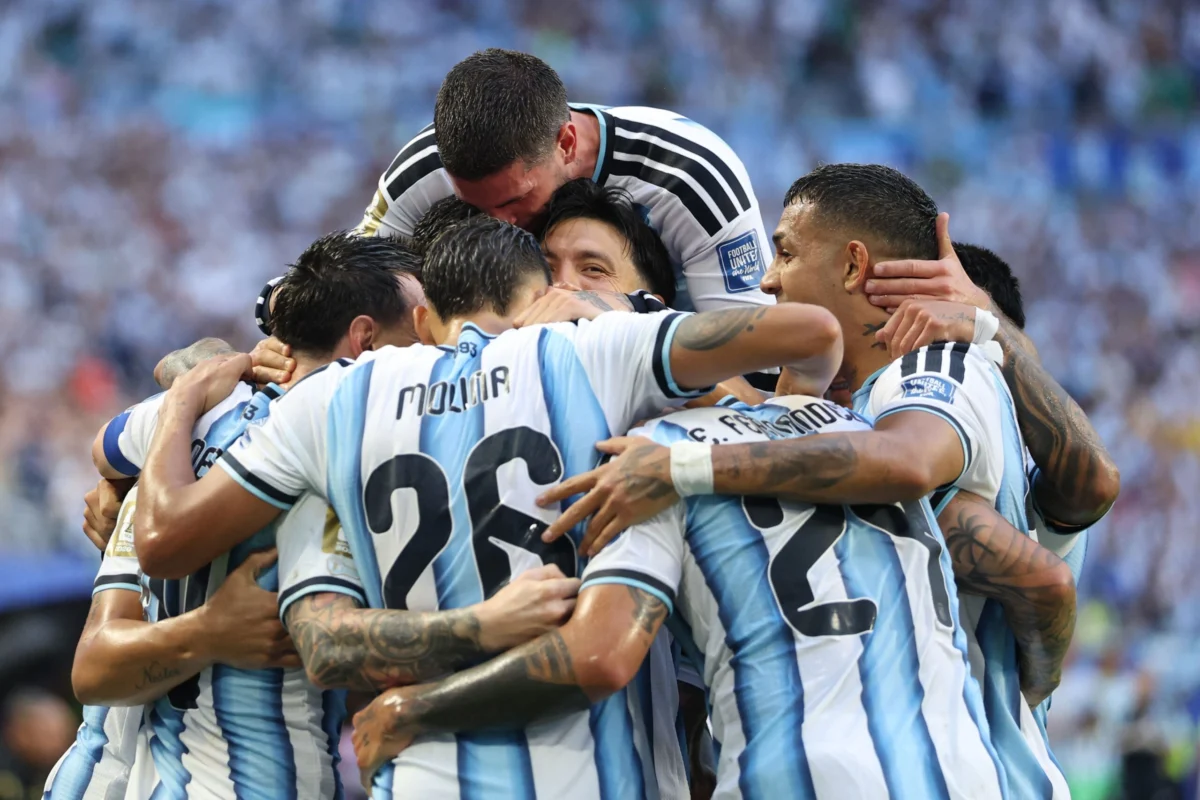
Del adiós a otra final del Mundial: Messi regresa al lugar donde todo parecía terminar junto a un equipo que hizo propio su legado
The air in Manhattan crackles with an undeniable energy, a palpable excitement that permeates every avenue and park. Today is not just another day; it is the eve of a World Cup final, and the city is a sea of albiceleste. From the iconic expanse of Central Park, where thousands of devoted fans gathered for their traditional banderazo (flag-waving rally), to the bustling spectacle of Times Square, where chants momentarily drowned out the cacophony of digital billboards, the presence of Argentinian football is overwhelming. On the subway, on the sidewalks, in the hushed corners of bars, it is virtually impossible to walk a block without encountering the iconic number 10 jersey, a constant reminder of Lionel Messi’s indelible impact.
This weekend, the footballing world’s gaze will be fixed on the stadium in New Jersey, where Argentina and Spain are set to clash in a final that transcends mere competition. It is a culmination of journeys, a testament to evolving football philosophies, and for Lionel Messi, a poignant return to a place that once symbolized an almost insurmountable hurdle. This final represents not just a chance for glory, but a profound narrative arc for a player and a team that have woven their legacy into the very fabric of the sport.
Argentina vs. Spain: A Clash of Styles in Modern Football
The convergence of Argentina and Spain in this World Cup final is no accident; it is a reflection of their dominance throughout the tournament and a symbol of broader transformations within the sport, particularly at the World Cup level. As early as the first matchday of the group stage, observers noted a marked shift towards more associative play. Matches feature increased passing sequences, longer build-ups, and a reduction in speculative long shots. Despite this, goal averages have remained robust, a testament to enhanced precision in finishing.

Both Argentina and Spain have exemplified this evolution, finding their decisive edge in the final third. Spain, long lauded for their possession-based game, has honed their attacking efficiency, while Argentina, under Lionel Scaloni, has demonstrated remarkable efficacy. Argentina’s 19 goals scored surpass what might be statistically predicted based on their shot volume and expected goals (xG). While Spain slightly edges Argentina in shots per 90 minutes (17.1 vs. 14.6) and expected goals per 90 minutes (1.91 vs. 1.87), Argentina has consistently outscored their underlying metrics, netting six more goals than their Spanish counterparts. This tactical battle between two distinct yet highly effective approaches promises a compelling final.
The Near Miss: Spain’s Pursuit of Messi
The narrative of this final is also tinged with a "what if" scenario, a pivotal moment in football history that nearly saw Lionel Messi don the colors of another nation. The question lingers: what would Argentinian football have become had Messi accepted Spain’s overtures? Would the World Cup title of Qatar still have been within reach? Would the "Scaloneta" saga have unfolded in the same manner? And would this final see their captain challenging for the title, or perhaps, trying to deny it to his adopted homeland?
These are unanswerable hypotheticals, yet for years, they were a tangible pursuit for the Spanish Football Federation. Long before Messi made his debut for Argentina, Spain launched a concerted effort to recruit him. Ginés Meléndez, a pivotal figure in Spain’s youth development for decades and instrumental in shaping the generation that triumphed in South Africa in 2010, was at the forefront of this campaign. Meléndez closely monitored the young, prodigious talent emerging from Barcelona’s academy. He engaged with Messi’s coaches and teammates at Barcelona, even exploring the possibility of an official call-up to force a decision. However, Messi’s allegiance was unwavering, a conviction that predated Argentina’s full realization of his global potential.

Spain: A Nation of Diverse Threads
The final opponent, Spain, presents a fascinating contrast and connection to Argentina. The historical ties between the two nations are deeply rooted, stretching back to the 15th century and the era of Spanish conquest in the Americas. For nearly 250 years, Argentinian territories were part of the Spanish Empire, leaving an indelible mark on language, religion, political structures, and cultural traditions. This shared heritage adds a unique layer of familiarity and rivalry to the match.
Spain itself is a nation characterized by its rich tapestry of regional identities, marked by movements for greater autonomy and distinct cultural expressions. From the vibrant cities of Catalonia and the Basque Country to the Spanish enclaves of Ceuta and Melilla in North Africa, the nation embodies a complex mosaic of cultures. This diversity is also reflected in its cinematic output, with a growing body of films produced without subtitles, catering to a Spanish-speaking audience that spans continents.
Scaloni’s Tactical Considerations: Potential Lineup Changes
As the final approaches, anticipation surrounds Lionel Scaloni’s tactical decisions. Reports indicate potential changes to the starting lineup, with the possible returns of Rodrigo de Paul and Gonzalo Montiel being key talking points. The inclement weather that swept through New Jersey on the eve of the final impacted the team’s final training session, forcing a shift from a planned practice match to a more focused ball-work session at the Red Bulls Performance Center. Despite these disruptions, Scaloni’s intentions seem to be leaning towards reinforcing the midfield and defensive stability, with De Paul’s anticipated return being a significant indicator of this strategy.

A Historic Rally in Times Square: Argentinian Passion on Display
The fervor of Argentinian fans has been a constant throughout the tournament, and the lead-up to the final has been no exception. New York City became an impromptu epicenter of this passion, with a historic banderazo unfolding in Times Square. Despite the challenging weather conditions, thousands of Argentinians, both residents and those who traveled from afar, converged to celebrate their team. This gathering was not merely a pre-match ritual; it was described as the most significant and emotionally charged rally in the lead-up to what is being called the most anticipated final in history. The sheer scale of the event underscored the deep connection Argentinians feel with their national team, especially during this critical juncture.
The team’s quest for a fourth World Cup title and a potential second consecutive triumph for Lionel Messi, arguably the most influential Argentinian figure on the global stage, has galvanized an entire nation and its diaspora.
Governmental Support: Provincial Backing for the National Team
The national team’s journey has also garnered significant backing from governmental entities. In the province of Buenos Aires, a close watch has been kept on the team’s progress, with confirmed communications between the administration of Governor Axel Kicillof and the Argentine Football Association (AFA). The provincial government has pledged its full support, ensuring that all necessary resources are available to the squad as they prepare for and potentially celebrate their return. This level of official engagement highlights the unifying power of the national team and its importance beyond the realm of sport.

An Epic Unveiled: A Narrative of Resilience and Recognition
The current World Cup campaign has brought to the forefront a narrative that, for many, had remained largely in the shadows: the profound sacrifices and enduring legacy of the fallen soldiers from the Malvinas War. A poignant journey to the Falkland Islands, specifically to the Darwin Cemetery, offered a stark reminder of this history. The work of the Forensic Anthropology Team, utilizing modern techniques to identify the remains of soldiers previously known only as "Soldado argentino solo conocido por Dios," has been instrumental in providing closure to grieving families. For those whose loved ones were lost at sea, like the sailors from the General Belgrano cruiser, the experience of visiting the island and touching the names inscribed on cenotaphs serves as a powerful, albeit somber, connection to their lost heroes. This World Cup has, in a way, amplified these stories of remembrance and national pride, resonating deeply with the team’s performance.
Messi’s Pre-Final Message: "This Team Has Already Made History"
In a heartfelt message posted on his Instagram account on the eve of the final, Lionel Messi articulated the profound significance of the team’s journey. He reflected on their path to this moment, expressing gratitude to everyone involved in the process led by Lionel Scaloni. Messi’s words, "Pase lo que pase, este equipo ya hizo historia" (Whatever happens, this team has already made history), encapsulate the spirit of achievement and resilience that has defined Argentina’s campaign. This sentiment resonates not only with the players but with the millions of fans who have supported them every step of the way.
María Becerra’s Cryptic Post Amidst Anthem Speculation
Adding to the pre-final buzz, popular artist María Becerra posted a suggestive photo on social media, fueling speculation about who will perform the Argentinian national anthem before the match. Becerra, a rising star in the global music scene, hails from Quilmes, Buenos Aires, and her potential involvement has added another layer of excitement and anticipation to the proceedings. The selection of the anthem performer is often a moment of national pride, and Becerra’s cryptic post has certainly kept fans guessing.

Vicente del Bosque on Argentina: "An Uncomfortable, Pestilent Team"
Vicente del Bosque, the legendary Spanish coach who led his nation to their sole World Cup title in 2010, offered his perspective on the upcoming final. In an interview with El País, del Bosque described the Argentinian team as "uncomfortable, pestilent" (incómodo, puñetero). This characterization, while perhaps provocative, acknowledges Argentina’s tenacious style of play and their ability to disrupt opponents. His comments underscore the perceived challenge Spain faces in overcoming a team known for its grit and determination, particularly with Messi at its helm.
The National Team’s Pre-Final Video: A Declaration of Intent
The official social media channels of the Argentinian national team released an emotionally charged video in the hours leading up to the final. Set to the iconic score of Bill Conti’s "Going the Distance" from the film Rocky, the one-and-a-half-minute video serves as a powerful retrospective of the team’s journey. The accompanying message, "Acá viene el campeón defensor" (Here comes the defending champion), is a bold declaration of intent, acknowledging their status as reigning champions and their readiness to defend their title against Spain. This video encapsulates the team’s spirit and their unwavering focus on achieving ultimate glory.

Related Posts

The Electric Vehicle Battery Health Debate Emerges as Argentina’s EV Market Accelerates

President Donald Trump Confirms Secret Departure from Turkey Amidst Assassination Threat