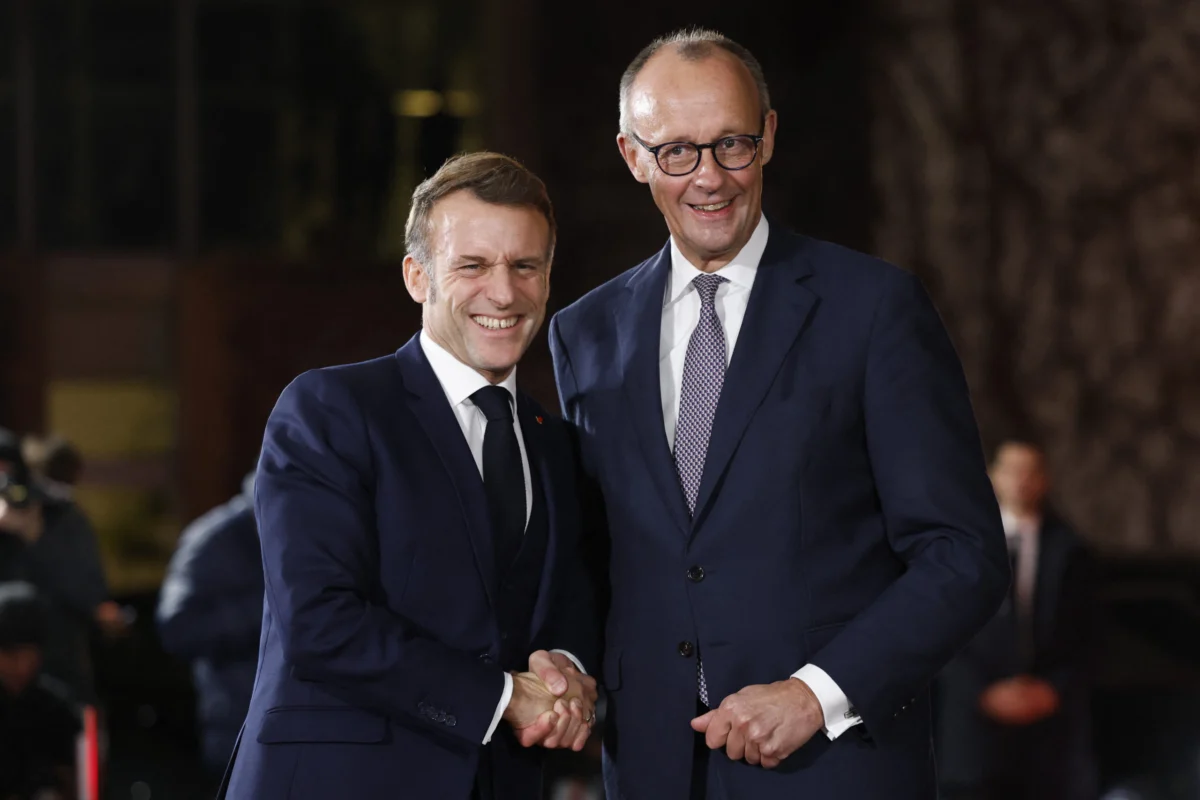
Franco-German Defense Summit in Cologne Aims to Resurrect Strategic Cooperation Amid Industrial Failures and Nuclear Tensions
The governments of France and Germany are convening for a high-stakes joint ministerial retreat near Cologne this week, an emergency effort to salvage the foundational pillar of European defense cooperation following a series of high-profile industrial collapses. Against a backdrop of shifting transatlantic relations and escalating security threats in Eastern Europe, French President Emmanuel Macron and German Chancellor Friedrich Merz are set to discuss a sweeping agenda that includes nuclear deterrence, integrated missile defense, long-range strike capabilities, and sovereign space infrastructure. The summit, organized under the framework of the Franco-German Defence and Security Council (CFADS), arrives at a critical juncture for the European Union’s two largest economies, as they attempt to prove that their "special relationship" can survive the termination of their most ambitious joint armament programs.
The meeting follows the recent and controversial dissolution of the Future Combat Air System (FCAS), a multi-billion-euro project intended to develop a sixth-generation fighter jet. Industrial rivalries between France’s Dassault Aviation and the German-led Airbus defense wing ultimately proved insurmountable, leaving a void in Europe’s long-term aerial strategy. This failure has been compounded by stagnant progress on the Main Ground Combat System (MGCS)—the "tank of the future"—and the Eurodrone program, which has struggled to compete with American-made Reaper platforms. As Washington continues to pressure its European allies to accelerate rearmament and reduce reliance on the U.S. security umbrella, the Cologne retreat is being framed by officials in Paris and Berlin as a "must-succeed" moment for continental sovereignty.
A Strategic Shift: Nuclear Deterrence and the French Umbrella
One of the most significant items on the Cologne agenda is the discussion of President Macron’s "forward nuclear deterrence" proposal. First unveiled in March 2026, the initiative represents a radical departure from traditional European security architecture. Under this framework, France—the European Union’s only remaining nuclear-armed power—would offer its allies a more integrated role in its strategic doctrine. This includes the possibility of European partners participating in French nuclear deterrence exercises and, more controversially, the temporary hosting of French nuclear assets on non-nuclear soil.
For decades, Germany has relied almost exclusively on the "nuclear sharing" arrangement provided by the United States and the North Atlantic Treaty Organization (NATO). However, the political landscape in Washington has prompted a reevaluation in Berlin. A senior German official confirmed that Chancellor Merz is expected to agree to the participation of German Bundeswehr troops in a French nuclear exercise scheduled for autumn 2026. This move signals a historic shift in German strategic thinking, suggesting a growing willingness to diversify its deterrent dependencies.
The Elysee has characterized these discussions as a necessary evolution of "European strategic autonomy." While France maintains that its nuclear force remains independent and under the sole command of the French president, the offer to involve allies in planning and exercises is intended to reassure neighbors of France’s commitment to the collective security of the bloc.
The Industrial Fallout: Moving Beyond the FCAS Failure
The shadow of the failed FCAS program looms large over the ministerial retreat. The project, which was intended to replace the Rafale and Eurofighter fleets by 2040, collapsed after years of infighting over intellectual property rights and work-share distributions. The termination was a significant blow to the concept of "Europeanized" defense procurement, leading many observers to question if the two nations can ever truly synchronize their industrial bases.
Despite the setback, officials from both sides are working to salvage the technological advancements made during the project’s initial phases. A joint declaration expected on Friday will likely detail how the "Combat Cloud"—a sophisticated software ecosystem designed to link warplanes, drones, and satellites in real-time—will continue as a standalone development. By focusing on data links and interoperability rather than the physical airframe, Paris and Berlin hope to maintain a technological edge that can be integrated into future, perhaps more diverse, platforms.
The "Combat Cloud" is seen as the glue for future multi-domain operations. "The defense industry cooperation between our two nations is far larger than any single project," a French official stated ahead of the summit. "While the FCAS airframe proved too complex for the current industrial alignment, the digital infrastructure we have designed is a sovereign asset that neither nation can afford to abandon."
Missile Defense and the Sovereignty Debate
Another point of friction to be addressed in Cologne is the approach to integrated air and missile defense. Germany has championed the "European Sky Shield Initiative" (ESSI), which largely utilizes off-the-shelf technology from the United States (Patriot) and Israel (Arrow-3). France, conversely, has been a vocal critic of this approach, arguing that it deepens Europe’s dependence on non-European suppliers and undermines the domestic defense industry.
France has long advocated for the SAMP/T (Mamba) system, a Franco-Italian product, as the primary solution for European skies. At the Cologne summit, the Elysee official noted that the talks would center on "what is sovereign." France is expected to push for a new roadmap for long-range strike capabilities and early warning systems that utilize European sensors and interceptors. The goal is to find a middle ground where Germany’s urgent need for immediate protection—driven by the proximity of the Russian threat—can be reconciled with France’s long-term vision for industrial independence.
Chronology of Franco-German Defense Cooperation (2017–2026)
To understand the stakes of the Cologne retreat, one must look at the turbulent timeline of the past decade:
- July 2017: President Macron and then-Chancellor Angela Merkel announce the FCAS and MGCS programs, signaling a "new era" of defense integration.
- January 2019: The Treaty of Aachen is signed, reaffirming the commitment to a common defense culture and joint military deployments.
- 2021–2023: Intense industrial disputes emerge between Dassault and Airbus. Germany’s "Zeitenwende" (turning point) speech in 2022 leads to a €100 billion defense fund, but much of the initial spending goes toward U.S. F-35 fighter jets, irritating Paris.
- March 2024: Ministers Sebastien Lecornu and Boris Pistorius attempt to revive the MGCS tank project with a new work-share agreement, but progress remains slow.
- March 2026: Macron proposes "forward nuclear deterrence," inviting European allies to coordinate with France’s Force de Frappe.
- June 2026: Official termination of the FCAS fighter jet program following a breakdown in final-stage negotiations.
- July 2026: The Cologne Summit convenes to prevent a total collapse of the bilateral defense relationship.
Space Cooperation: IRIS² vs. National Ambitions
The final frontier of the Cologne discussions is space. The European Union’s IRIS² (Infrastructure for Resilience, Interconnectivity and Security by Satellite) project is intended to provide a sovereign, high-speed satellite constellation similar to SpaceX’s Starlink. However, the project has been hampered by Germany’s parallel pursuit of its own military satellite constellation.
Paris views IRIS² as a cornerstone of strategic autonomy, essential for secure government communications and military command-and-control. Germany’s move to develop a national alternative has been interpreted by some in France as a lack of faith in collective EU projects. However, the Elysee indicated that both nations are prepared to reaffirm their support for IRIS² this week, seeking a way to harmonize national military requirements with the broader EU framework. The objective is to ensure that European troops are not reliant on foreign providers for battlefield data in the event of a major conflict.
Supporting Data: Defense Spending and the Economic Reality
The urgency of the Cologne summit is underscored by the massive financial commitments at play. According to 2025 budgetary data:
- Germany: The "Sondervermögen" (special fund) has been largely committed, with the national defense budget now hovering at 2.1% of GDP. However, the expiration of the special fund in 2027 looms, creating a "fiscal cliff" for future joint projects.
- France: The Military Programming Law (LPM) for 2024–2030 has allocated €413 billion to modernize the French armed forces, with a heavy emphasis on the nuclear deterrent and space capabilities.
- Procurement: Over 60% of European defense spending since 2022 has gone to non-EU suppliers, primarily the United States. This "leakage" of capital is a primary driver for Macron’s push to keep Franco-German projects alive.
Implications for European Security
The outcome of the Cologne retreat will have profound implications for the future of the European Union. If Macron and Merz can reach a concrete agreement on nuclear cooperation and the "Combat Cloud," it will signal that the Franco-German engine, while bruised, is still capable of driving European integration. A failure to produce more than vague diplomatic platitudes, however, could lead to a "renationalization" of defense across the continent, with smaller states looking increasingly toward Washington or individual bilateral deals rather than Brussels or Paris.
The "Trump Factor" also remains a silent participant in these talks. With the 2024 U.S. election results still fresh in the minds of European leaders and the continued questioning of NATO’s Article 5 reliability by some American political factions, the Cologne summit is more than a ministerial meeting; it is a defensive hedge against a world where Europe may truly have to stand alone.
As the joint ministerial meeting concludes on Friday, the international community will be watching for the specific language of the "Cologne Declarations." Success will be measured not by the rhetoric of friendship, but by the technical details of shared nuclear exercises and the tangible commitment to sovereign European technology. For France and Germany, the path forward is no longer about a grand, unified vision, but about the pragmatic management of their differences to ensure that Europe remains a relevant military power in the mid-21st century.

Related Posts
Pentagon Forges Landmark Seven-Year Agreements with Boeing and RTX to Accelerate Standard Missile-3 Production and Stabilize Defense Supply Chains
Boeing Unveils Ultra Low-Cost Seeker to Enhance Missile Inventory and Combat Cost Challenges in Modern Warfare