Lebanon Moves Toward Historic Abolition of the Death Penalty as Parliamentary Committees Approve Landmark Reform
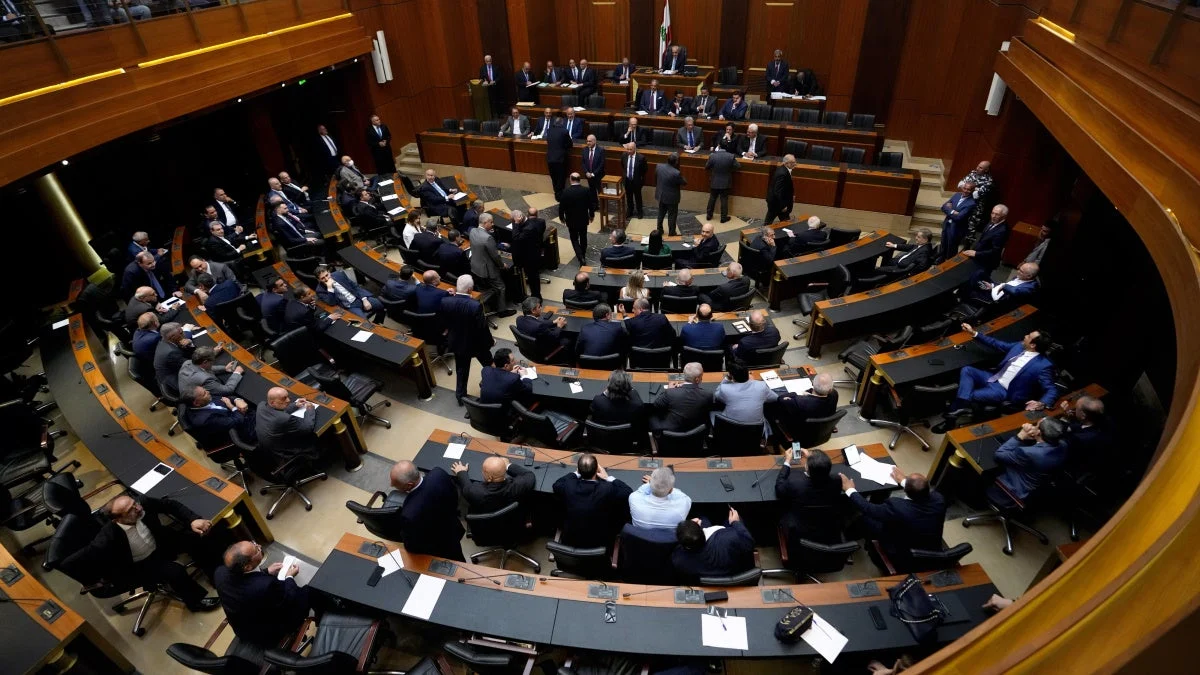
On July 9, 2026, Lebanon reached a pivotal moment in its judicial and human rights history as members of three influential parliamentary committees jointly approved a draft law to formally abolish the death penalty. The decision, announced following a joint session in Beirut, positions Lebanon as a potential trailblazer in the Middle East, potentially becoming the first nation in the region to legally strike capital punishment from its statutes. While the country has maintained a de facto moratorium on executions for over two decades, human rights organizations, including Human Rights Watch (HRW), emphasize that the formal transition into law is a necessary step to ensure that the "cruel and final" practice can never be resurrected by future administrations.
The draft law now moves to the parliament’s general assembly for a final vote scheduled for July 15 and 16, 2026. If passed, the legislation will mark a monumental shift in Lebanese criminal justice, aligning the nation with a growing global consensus against state-sanctioned killing. However, the path to this moment has been paved with years of advocacy, legal maneuvering, and a complex interplay of domestic and regional politics.
Legislative Architecture: Replacing Death with Life
The proposed legislation is comprehensive in its scope, aiming to strip the death penalty from every corner of the Lebanese legal system. According to the draft reviewed by legal experts and human rights monitors, the law seeks to abolish the death penalty "wherever it is mentioned under Lebanese laws." In its place, a new criminal category has been introduced: "life imprisonment with aggravated hard labor."
To facilitate this shift, the draft law amends Article 37 of the Penal Code and completely annuls Article 43, which previously governed the specifics of capital punishment. Furthermore, it seeks the repeal of Articles 420 through 424 of the Code of Criminal Procedure, which detail the administrative and operational protocols for carrying out death sentences.
While the introduction of "aggravated hard labor" has been criticized by some rights groups, such as the Legal Agenda, as an "innovation with no practical effect"—given that Lebanon does not currently enforce hard labor provisions—it is widely viewed as a necessary political compromise to ensure the bill’s passage. International standards, specifically the UN Standard Minimum Rules for the Treatment of Prisoners (the Nelson Mandela Rules), explicitly state that prison labor must not be of an "afflictive nature." Consequently, human rights advocates have indicated that while they support the abolition of the death penalty, their next legislative battle will involve removing the "insulting" hard labor provisions from the books.
A Two-Decade Stagnation: The Context of the Moratorium
Lebanon’s journey toward abolition has been characterized by a long period of judicial limbo. The country has not carried out an execution since 2004, maintaining an unofficial moratorium that has survived multiple cycles of political upheaval and conflict. Despite this pause in executions, Lebanese courts—particularly military tribunals—have continued to hand down death sentences.
The Lebanese Association for Civil Rights (LACR), the primary architect of the draft law, estimates that approximately 84 individuals currently sit on death row in Lebanese prisons. For these individuals, the passage of this law would mean an immediate conversion of their sentences, ending the psychological limbo of facing a state-ordered death that might never come but remains a legal possibility.
Lebanon’s international posture has signaled this shift for several years. In 2020, 2022, and 2024, the Lebanese delegation to the United Nations voted in favor of General Assembly resolutions calling for a global moratorium on executions. This consistent international stance provided the domestic momentum needed for the National Campaign to Abolish the Death Penalty, led by Ogarit Younan, to push the draft law through the arduous committee process.
The Legislative Timeline: From Proposal to the Precipice of Law
The current momentum is the result of a structured legislative timeline that began in late 2025:
- October 7, 2025: Seven members of parliament, representing various political blocs, formally endorsed the version of the law drafted by the LACR and submitted it to the General Secretariat of the Parliament.
- November 20, 2025: The Lebanese Cabinet discussed the draft law and issued an advisory opinion endorsing its passage, while suggesting the specific annulment of Article 43 of the Penal Code to ensure legal consistency.
- Early 2026: The draft underwent rigorous review by the Parliamentary Human Rights Committee and the Administration and Justice Committee.
- July 9, 2026: In a joint session, the Human Rights, Administration and Justice, and Communications committees approved the final version of the draft.
- July 15-16, 2026: The law is slated for a final discussion and vote in the Parliament’s General Assembly.
This timeline reflects a rare moment of legislative cohesion in a country often hamstrung by sectarian and political deadlock. However, the timing is bittersweet for many advocates. Ogarit Younan noted that while the achievement is historic, it comes at a time when Lebanon is embroiled in regional conflict and internal instability. "In Lebanon, people are dying every day because of the war," Younan remarked, suggesting that while the timing is difficult, the affirmation of the right to life is perhaps more relevant than ever.
Regional Contrast: Lebanon as a Human Rights Outlier
The move toward abolition in Beirut stands in stark contrast to recent developments in neighboring states, where the use of the death penalty has seen a resurgence or expansion.
In Israel, the Knesset recently passed a discriminatory bill on March 30, 2026, which expands the application of the death penalty. Critics and international observers have noted that the bill’s language is specifically tailored to target Palestinians, raising significant concerns regarding international humanitarian law and racial discrimination.
Similarly, Jordan ended its own multi-year hiatus on executions on June 21, 2026, when authorities executed six men by hanging. These were the first executions in the kingdom since 2017, signaling a regression that has alarmed human rights monitors across the Levant.
In this regional context, Lebanon’s move is not merely a domestic legal reform but a significant geopolitical statement. By formally abolishing capital punishment, Lebanon distinguishes its judicial system from those of its neighbors, positioning itself as a leader in human rights reform within the Arab world.
The Shadow of the Military Courts
A significant portion of the debate surrounding the death penalty in Lebanon centers on the role of military courts. These tribunals have broad jurisdiction over civilians, a practice that HRW and other monitors have long condemned as a violation of due process and the right to a fair trial.
In 2017, an HRW investigation found that Lebanon’s military courts failed to guarantee basic legal protections. Defendants often reported that confessions were extracted under torture, and sentences were frequently issued without detailed legal explanations. Even as the country moved toward a moratorium, the military court continued to issue death sentences, including two as recently as 2024.
Advocates argue that the abolition of the death penalty must be accompanied by broader judicial reform. This includes removing civilians from military jurisdiction entirely and ratifying the Second Optional Protocol to the International Covenant on Civil and Political Rights (ICCPR), which is specifically aimed at the permanent abolition of capital punishment.
Analysis of Implications and Future Challenges
The potential enactment of this law carries profound implications for Lebanon’s standing in the international community. For decades, the European Union and various international donor agencies have tied certain levels of judicial cooperation and aid to human rights benchmarks, including the abolition of the death penalty. By passing this law, Lebanon may open new doors for international judicial training, security sector reform, and financial assistance.
However, the transition from death to "life with aggravated hard labor" remains a point of contention. Legal scholars suggest that the "hard labor" component is largely symbolic, as the infrastructure to enforce such sentences does not exist in Lebanon’s current penal system. Nevertheless, the retention of the term reflects the lingering influence of "retributive justice" in the Lebanese legislative psyche.
Ramzi Kaiss, Lebanon researcher at Human Rights Watch, emphasized that the upcoming vote is a test of the parliament’s commitment to modernizing the state. "Parliament should ensure that this law is enacted and the death penalty is removed from all provisions of Lebanese law," Kaiss stated. He noted that while the moratorium was a positive step, only a formal law provides the "firm break" from a practice that is "plagued with arbitrariness, prejudice, and error."
As the July 15 session approaches, the eyes of the international human rights community are on Beirut. If the General Assembly votes in favor, Lebanon will set a precedent that many hope will ripple across the Middle East, challenging the long-held assumption that capital punishment is an immovable fixture of the region’s legal landscape. The success of this bill would represent a victory for civil society groups that have campaigned for decades, proving that even in times of war and economic hardship, fundamental shifts in justice and human rights are possible.

Related Posts

Human Rights Watch Calls for Investigation into Death of Detainee Following Removal from Najaf Hospital by Iraqi Drug Police
Human Rights Watch Urges UN Security Council to Extend Lebanon Peacekeeping Mission Amid Escalating Conflict and Humanitarian Crisis