
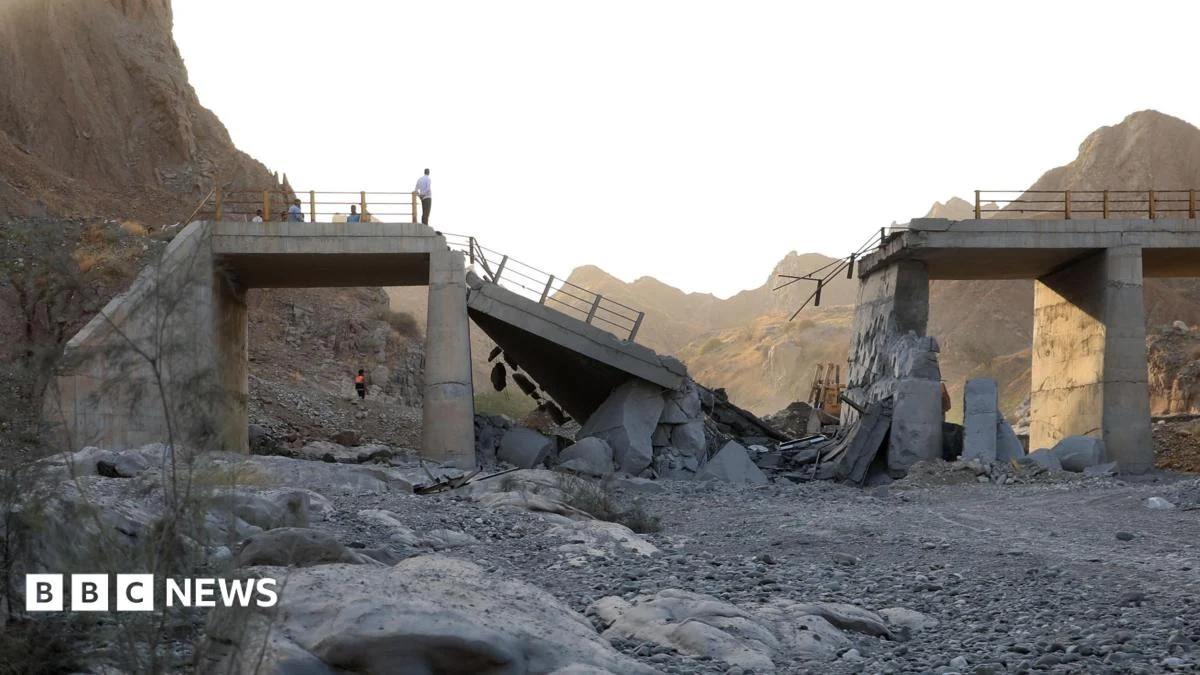
US Launches Eighth Consecutive Night of Strikes on Iran, Targeting Coastal Defenses Amid Escalating Regional Tensions
The United States military on Saturday night launched another significant round of air strikes against Iranian targets, focusing on coastal surveillance and air defense facilities, US military officials confirmed. This latest escalation marks the eighth consecutive night of American military action in response to a rapidly deteriorating security situation in the Middle East, particularly following a deadly drone attack in Jordan that claimed the lives of two US service members.
US Central Command (Centcom) stated that its forces successfully struck Iranian military capabilities, specifically those designed to threaten commercial shipping in the critical Strait of Hormuz. Iranian state media, in a swift counter-narrative, reported that Qeshm Island, strategically located within the Strait of Hormuz, had been hit. Centcom further clarified that these strikes were also aimed at punishing elements of Iran’s Revolutionary Guard Corps (IRGC) deemed responsible for the audacious attack in Jordan on Friday, which also left another American service member missing and multiple others injured.
In a tit-for-tat response, Iran’s army, according to its state media, claimed to have carried out drone attacks on two US bases in Kuwait. The IRGC-affiliated Tasnim news agency specifically detailed these as "large-scale attacks with kamikaze drones" against an American military "depot at Camp Udairi" and another at "Ali Al Salem Air Base in Kuwait." This exchange of hostilities underscores a dangerous spiral of confrontation that has rapidly unfolded in recent days, with both Washington and Tehran accusing each other of targeting critical infrastructure and military assets.
A Volatile Chronology of Escalation
The current surge in hostilities is not an isolated incident but the culmination of a fragile peace unravelling and long-standing geopolitical tensions reaching a boiling point. The timeline of recent events paints a grim picture of escalating conflict:
- Early June: Washington and Tehran had reportedly struck a preliminary deal aimed at de-escalating tensions, hinting at a potential ceasefire after months of indirect skirmishes and maritime incidents.
- July 8: Less than a month after its inception, this tentative agreement spectacularly collapsed. President Donald Trump, then in office, declared the agreement "over," citing renewed Iranian provocations and a lack of genuine commitment from Tehran.
- Mid-July Onward: The collapse of the ceasefire led to a rapid re-imposition of punitive measures by the United States. Washington reimposed its blockade of Iranian ports, a move designed to cripple Iran’s oil exports and maritime trade. In retaliation, Tehran declared the Strait of Hormuz closed, a significant threat given its global importance. This period saw an uptick in maritime incidents, including harassment of commercial vessels and heightened military posturing by both sides.
- The Past Week: A sustained period of renewed hostilities began, characterized by mutual accusations of striking critical infrastructure. While details of all specific targets remain contested, the general consensus is that both nations engaged in actions designed to inflict economic or military pressure.
- Friday’s Deadly Attack in Jordan: The conflict dramatically escalated with a drone attack on a US military outpost in Jordan. Centcom confirmed that two US service members were killed in action, and one remains missing, as US and partner forces defended against what they described as Iranian ballistic missile and drone attacks. This incident marked a direct and lethal blow to US personnel in the region.
- Saturday (Earlier): Following the Jordan attack, Centcom released a statement expressing condolences and affirming that "out of respect for the families, Centcom will withhold additional information, including the identities of the fallen warriors, until 24 hours after the next of kin have been notified." US Defence Secretary Pete Hegseth responded to the deaths with a post on X, stating: "Godspeed, heroes. Their sacrifice only stiffens our resolve."
- Saturday Night’s US Strikes: In direct retaliation for the Jordan attack and to further degrade Iran’s ability to threaten maritime commerce, the US launched its eighth successive night of strikes. These targeted Iranian coastal surveillance and air defense facilities, with Qeshm Island being a reported focus. Centcom explicitly stated the strikes were "designed to further degrade Iran’s ability to threaten commercial shipping in the Strait of Hormuz" and to "swiftly punish Islamic Revolutionary Guard Corps forces who launched attacks against American service members in Jordan last night."
- Saturday (Later): Iran’s claimed drone attacks on US bases in Kuwait served as Tehran’s immediate response to the US strikes, signaling a clear intent to reciprocate military actions.
- Rising US Death Toll: The US death toll in the conflict has now tragically risen to 16. This includes the two service members killed in Jordan and an American Navy pilot who went missing earlier this month and was subsequently declared dead. This marks the second increase in the toll this week, underscoring the increasing human cost of the ongoing confrontation.
The Strategic Nexus: Strait of Hormuz and Regional US Presence
The Strait of Hormuz, a narrow waterway connecting the Persian Gulf to the open ocean, lies at the heart of this latest escalation. It is arguably the most critical oil chokepoint in the world, with approximately 20% of the world’s petroleum liquids and a quarter of its liquefied natural gas (LNG) passing through it daily. Any threat to its free passage sends immediate ripples through global energy markets and impacts international trade. Iran’s repeated threats to close the Strait, and its perceived capabilities to do so through its naval forces and coastal defenses, represent a severe challenge to global economic stability. The US strikes on Iran’s coastal surveillance and air defense facilities are therefore directly aimed at neutralizing this strategic leverage.
The substantial US military presence in the Middle East, including bases in Jordan, Kuwait, Saudi Arabia, and other Gulf states, serves multiple strategic objectives: counter-terrorism operations, deterring regional aggression, protecting critical infrastructure, and ensuring the free flow of commerce. Centcom, the unified combatant command for the Middle East, is responsible for these operations. The attack in Jordan, a key US ally in the region, represents a direct challenge to this presence and a significant escalation by Iranian-backed forces. Jordan hosts several US military facilities and personnel, playing a crucial role in regional security operations. Similarly, Kuwait, with Camp Udairi and Ali Al Salem Air Base, is a vital logistical hub for US forces in the region. Attacks on these bases, if confirmed to be Iranian, would signify a dangerous expansion of the conflict beyond previous proxy engagements.
The Islamic Revolutionary Guard Corps: A Force of Asymmetric Warfare
At the core of the US’s punitive actions is the Islamic Revolutionary Guard Corps (IRGC). Established after the 1979 Iranian Revolution, the IRGC is a major military, political, and economic force in Iran, distinct from the conventional Iranian army. It is responsible for protecting the Islamic Republic’s system, revolutionary ideals, and territorial integrity. The IRGC commands its own ground, naval, air, and missile forces, and crucially, its elite Quds Force operates extraterritorially, supporting and training allied non-state actors and proxy militias across the Middle East.
The US has long designated the IRGC as a foreign terrorist organization, accusing it of destabilizing the region through its support for groups like Hezbollah in Lebanon, various militias in Iraq and Syria, and the Houthis in Yemen. The IRGC’s capabilities include sophisticated drone technology, ballistic missiles, and asymmetric naval warfare tactics, all of which pose a significant threat to US forces and regional allies. The US strikes specifically targeting the IRGC’s capabilities are an attempt to degrade its ability to project power and conduct operations deemed hostile to American interests.
Official Reactions and International Concern
The immediate aftermath of these strikes has been met with firm resolve from Washington and defiant rhetoric from Tehran.
- United States: Beyond Centcom’s operational statements, the White House is expected to reiterate its commitment to protecting American service members and its allies. The State Department is likely to condemn Iran’s destabilizing actions, particularly the Jordan attack, and call for immediate de-escalation from Tehran, while affirming its right to self-defense. Secretary Hegseth’s strong words on X reflect a hardening stance within the US defense establishment, signaling that further retaliatory actions remain on the table if Iranian aggression persists.
- Iran: Iranian state media and officials have largely adopted a narrative of victimhood and justifiable retaliation. While denying direct responsibility for the Jordan attack, they frame US strikes as acts of aggression against Iranian sovereignty, thereby justifying their own claimed drone attacks on US bases in Kuwait as defensive measures. The Iranian Foreign Ministry is anticipated to issue formal condemnations of US "provocations" and warn against any further escalation, while simultaneously asserting Iran’s right to respond to any perceived threats.
- Regional Allies: Countries like Jordan and Kuwait, directly impacted by these events, face a delicate balancing act. Jordan has likely expressed condolences to the US for the loss of its troops and reaffirmed its commitment to the strategic alliance, while perhaps subtly urging de-escalation to prevent its territory from becoming a battleground. Kuwait, if the drone attacks on its bases are fully confirmed, would likely condemn the violation of its sovereignty and potentially call for international intervention to prevent a wider conflict in the Gulf.
- International Community: The United Nations and major global powers are almost certain to express grave concern over the escalating tensions. Calls for restraint, dialogue, and adherence to international law are typical in such circumstances. However, with the direct exchange of military strikes, the efficacy of diplomatic appeals without a clear channel for de-escalation remains uncertain. The risk of miscalculation, given the high stakes and lack of direct communication between Washington and Tehran, is a primary worry for the international community.
Broader Impact and Implications
The current escalation carries profound implications for regional stability, the global economy, and the future of US foreign policy in the Middle East.
- Regional Stability: The immediate concern is the potential for a wider regional conflict. The direct targeting of Iranian military facilities by the US, coupled with Iranian retaliation against US bases, removes a layer of deniability and proxy warfare that previously characterized much of the US-Iran confrontation. This could embolden or provoke other regional actors, potentially drawing in more countries into the conflict. The fragile security architecture of the Middle East, already strained by various conflicts, is now under immense pressure.
- Global Economy: The Strait of Hormuz’s central role means that any sustained threat to shipping or actual disruption would have immediate and severe consequences for global oil prices. Insurance premiums for maritime vessels operating in the region would skyrocket, increasing shipping costs and impacting global supply chains. A prolonged period of instability could deter foreign investment in the region and negatively affect global economic growth.
- US Policy and Presence: The deaths of US service members represent a significant turning point, potentially forcing the Biden administration to reassess its strategy in the Middle East. While the US has aimed to pivot resources towards Asia, the renewed aggression from Iran may necessitate a stronger, more direct military posture in the Gulf. The "stiffened resolve" expressed by US officials indicates a commitment to respond forcefully to attacks on American personnel, raising questions about the threshold for future US military action.
- Iranian Strategic Calculus: For Iran, these strikes and the broader confrontation test its resolve and strategic patience. While projecting strength to its domestic audience and regional allies, Tehran also faces the risk of overextension and severe economic consequences from further US pressure. The balance between maintaining its regional influence through proxies and avoiding direct, debilitating conflict with the United States will be a crucial factor in its future actions. The collapse of the preliminary ceasefire underscores the deep mistrust and the formidable challenges to any future diplomatic breakthroughs.
The current situation represents a perilous juncture in US-Iran relations, with the prospect of further escalation looming large. The coming days will be critical in determining whether a pathway to de-escalation can be found, or if the region is destined for a more profound and dangerous confrontation.

Related Posts
Zambia on Edge: Opposition Leader Arrested Amid Allegations of Insurrection Plot and Election Tensions
Rescuers search for survivors of powerful Indonesia earthquake

