
The US-Iran Conflict Escalates as Ceasefire Crumbles Amidst Seventh Night of US Strikes and Regional Retaliation
The fragile temporary ceasefire between the United States and Iran has decisively collapsed, plunging the volatile Middle East back into a state of heightened conflict following the seventh consecutive night of US military strikes against Iranian targets. This renewed escalation comes less than a month after a preliminary agreement was signed to halt hostilities, with President Donald Trump having declared the deal "over" on July 8th. The US Central Command (Centcom) confirmed its forces conducted extensive operations, striking a range of Iranian military assets, while Iran responded by launching retaliatory attacks against US allies in the region, including Kuwait, Jordan, and Bahrain. The resurgence of direct military confrontation raises profound concerns about regional stability and the potential for a wider, more devastating conflict.
Intensified Hostilities: US Strikes and Iranian Retaliation
The latest wave of US military action, which concluded several hours into Saturday morning local time (21:30 ET Friday / 02:30 BST Saturday), involved a multi-faceted assault employing fighter aircraft, aerial drones, and warships. Centcom detailed the targets as critical components of Iran’s military infrastructure, including surveillance sites, military logistics hubs, underground weapons storage facilities, and maritime capabilities. These strikes aim to degrade Iran’s ability to project power and monitor strategic waterways. Iranian state media reported significant explosions in key locations such as the central city of Yazd, Qeshm island, and the vital port of Bandar Abbas, strategically located near the Strait of Hormuz. Independent verification by BBC Persian corroborated damage to infrastructure, including two videos showing debris on and near the Shahid Mirzaei tunnels, a crucial route north of Bandar Abbas. Civilian infrastructure also bore the brunt of these attacks, with local authorities reporting that a strike on electricity facilities and desalination pumps near Jask left approximately 10,000 residents in 20 villages without access to drinking water. Furthermore, over 100 telecommunications masts were rendered inoperable, severely disrupting landline, mobile, and internet services across the northern Hormozgan province, a critical communication blackout for affected communities.
In response to the US offensive, Iran launched its own series of attacks targeting American allies in the Gulf region. Kuwait reported significant damage to an oil facility, a power plant, and a water distillation plant, with injuries also reported from what it described as "repeated Iranian attacks." The economic implications for Kuwait, a major oil producer and exporter, are substantial, given the disruption to its critical infrastructure. Jordan’s military confirmed it intercepted ten Iranian missiles fired into its airspace overnight, though it reported no damage, indicating the effectiveness of its air defense systems. Similarly, Bahrain announced its air defenses had successfully "thwarted" Iranian attacks. These coordinated strikes by Tehran underscore its willingness to escalate beyond its own borders and target nations perceived as collaborators with the US. While Iran’s armed forces claimed to have attacked multiple US military facilities across the Gulf region, including Kuwait, Bahrain, Jordan, and – for the first time – Syria, the US military has denied these specific claims regarding Syria.
Casualties and Damage Assessment
The human cost of the renewed hostilities is mounting. Centcom reported that two US service members were killed during Friday’s attacks, with one additional service member still missing, marking a tragic loss for the American military. Furthermore, four US personnel required medical evacuation to Jordanian hospitals following Friday’s strikes, though they have since been discharged, according to a Centcom post on X (formerly Twitter). The identities of the deceased soldiers are being withheld pending notification of next of kin.
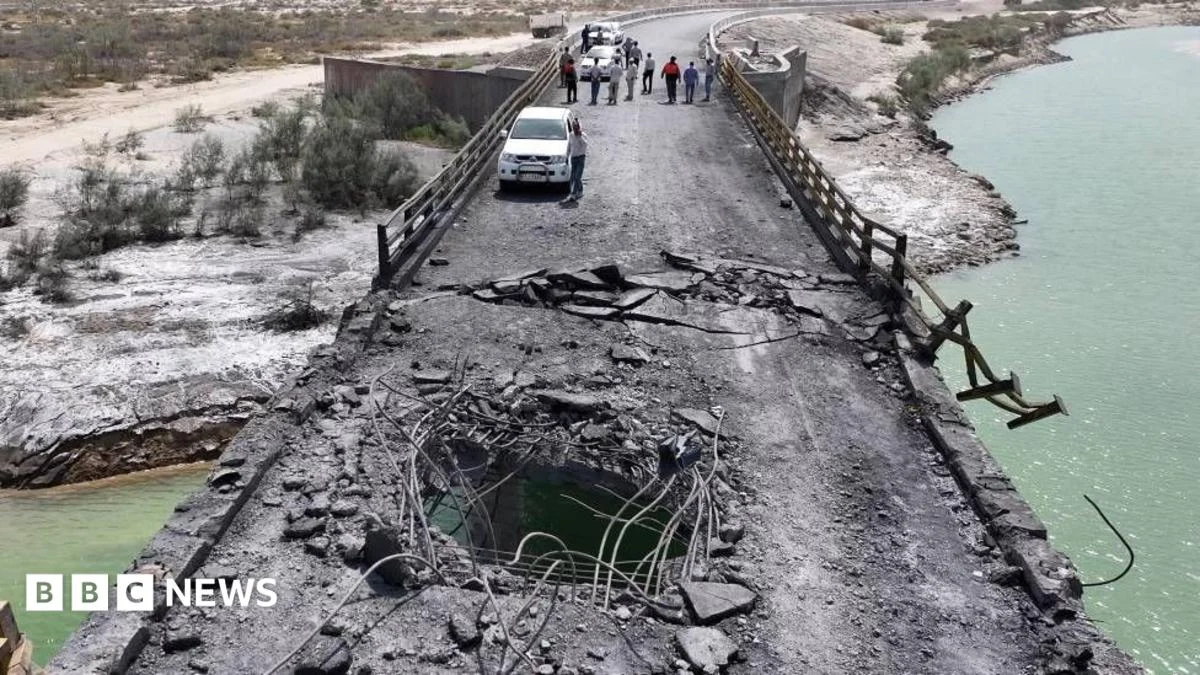
On the Iranian side, reports indicate severe civilian impact. Provincial authorities in Hormozgan province stated that seven people were killed in the attacks, a stark reminder of the devastating consequences for non-combatants. The US, however, has denied Tehran’s accusations of intentionally targeting civilian infrastructure, including bridges, a train station, and an airport. Despite these denials, BBC Verify and BBC Persian provided footage verifying damage to the Gariveh Bridge, showing a ball of flames during the night and a crumbled stretch of road with rubble in daylight. The US military, for its part, confirmed the destruction of a control tower in the port of Chabahar, with Defence Secretary Pete Hegseth sharing an image of the tower collapsing. Centcom identified the tower as part of an Islamic Revolutionary Guard Corps (IRGC) maritime surveillance network, implying it was a legitimate military target. Centcom also explicitly denied a report by Iran’s Fars news agency claiming two oil tankers exploded and caught fire in the Strait of Hormuz, labeling it as "false" and akin to "most IRGC claims."
The Unraveling Ceasefire: A Diplomatic Failure
The current surge in violence follows the complete breakdown of a temporary ceasefire agreement that had been painstakingly negotiated and signed in mid-June. This preliminary deal aimed to halt the fighting and pave the way for substantive talks towards a permanent peace. However, the diplomatic efforts made little headway, and President Trump’s declaration on July 8th that the deal was "over" signaled the abrupt end of this fragile truce.
The initial ceasefire itself was tenuous. Even during its observance, Iran had continued to target oil tankers in the Strait of Hormuz, demanding that all ships seek authorization to transit the vital waterway. These actions often prompted retaliatory US strikes, highlighting the inherent instability of the agreement. The Strait of Hormuz is a choke point of immense global strategic importance, through which approximately one-fifth of the world’s oil and liquefied natural gas ordinarily transits. Its closure or significant disruption would have catastrophic implications for global energy markets and international trade. The US, in response to the renewed hostilities, has reimposed a blockade of Iranian ports, mirroring a tactic often used to exert economic pressure, while Tehran, in turn, has reiterated its threat to shut down the Strait of Hormuz entirely, further amplifying the risks to global commerce.
Official Statements and Regional Condemnation
The escalating crisis has drawn sharp condemnation from regional bodies and strong rhetoric from both Washington and Tehran. Iran’s Supreme Leader, Mojtaba Khamenei, issued a scathing written statement late on Saturday, accusing the United States of "repeated breaches" of the agreement. He asserted that these actions had "laid bare a fundamental truth: the signature of the US president is utterly worthless and devoid of credibility." Khamenei, who has maintained a low public profile since the attack that killed his father at the outset of the war, characterized the events as a "dark episode of criminality and broken promises," serving as irrefutable evidence of American "dishonesty" and its "malicious nature." His strong words signal a deep distrust that will significantly impede any future diplomatic overtures.
On the American side, a White House spokesperson affirmed that the US had "carried out strikes exclusively on military targets, including military logistics infrastructure," maintaining adherence to international law and rules of engagement. Defence Secretary Pete Hegseth’s public sharing of the image of the collapsing Chabahar control tower further emphasized the precision and military focus of the US operations. Centcom’s consistent updates have aimed to provide transparency regarding their actions and to counter what they deem as Iranian disinformation.
The Gulf Cooperation Council (GCC), an alliance of six states comprising Saudi Arabia, Kuwait, Qatar, Bahrain, the United Arab Emirates, and Oman, has unequivocally condemned Iran’s actions. Jasem Mohamed Albudaiwi, the GCC Secretary General, stated that the attacks on Kuwait, Jordan, and Bahrain constituted "a grave violation of international law." He explicitly accused Tehran of deliberately targeting civilian infrastructure, asserting that such actions amounted to "war crimes." Albudaiwi underscored the severity of the situation, declaring the "dangerous escalation" demanded international accountability, suggesting a unified regional front seeking global intervention or condemnation against Iran. Meanwhile, Iran’s Deputy Foreign Minister, Kazem Gharibabadi, told state media that Tehran had been "engaged in negotiations" but had suspended its obligations under the deal only after the US "carried out these aggressive actions," presenting a narrative of reactive measures rather than proactive aggression.
Broader Implications and the Path Ahead
The collapse of the ceasefire and the subsequent military escalation carry severe implications for regional and global stability. The immediate risk is a further widening of the conflict, potentially drawing in more regional actors and international powers. The strategic geography of the Gulf, with its narrow waterways and vital oil infrastructure, makes any sustained conflict inherently dangerous for global energy supplies and the world economy. Oil prices are likely to remain volatile, and shipping insurance premiums for vessels traversing the Strait of Hormuz will undoubtedly soar, increasing costs for consumers worldwide.
From a diplomatic standpoint, the trust between the US and Iran appears to be at an all-time low. Supreme Leader Khamenei’s declaration regarding the "worthlessness" of the US president’s signature signifies a profound erosion of confidence that will make any future peace negotiations exceedingly difficult, if not impossible, in the short term. The current situation suggests a return to a "maximum pressure" posture from the US, potentially coupled with a more aggressive Iranian response, characterized by asymmetric warfare tactics and continued targeting of regional US interests.
The humanitarian impact of attacks on civilian infrastructure, such as power plants, desalination facilities, and telecommunications networks, cannot be overstated. Thousands are already without water and communication, exacerbating suffering and potentially creating a new humanitarian crisis in areas already facing economic hardship. The international community, including the United Nations and various European powers, will undoubtedly face increasing pressure to intervene, either through diplomatic channels to de-escalate the situation or by addressing the humanitarian fallout. However, given the entrenched positions and deep-seated animosities, a swift resolution seems unlikely. The Middle East remains on a knife-edge, with the specter of a broader conflict looming large as the US and Iran continue their dangerous dance of escalation and retaliation.

Related Posts
Zambia on Edge: Opposition Leader Arrested Amid Allegations of Insurrection Plot and Election Tensions
Rescuers search for survivors of powerful Indonesia earthquake

