Senator John Fetterman’s Strong Denunciation of Abdul El-Sayed Sparks Intra-Party Controversy
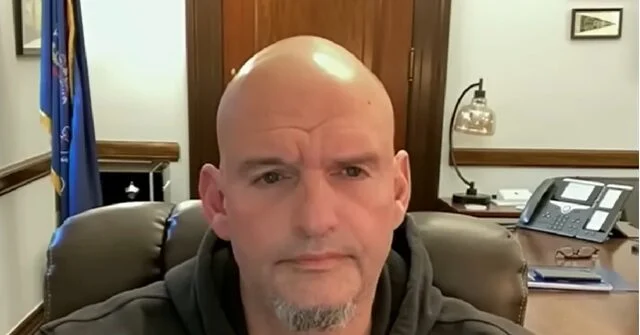
In a striking display of intra-party dissent, Senator John Fetterman (D-PA) appeared on Fox News Channel’s "Saturday in America" broadcast, delivering an unreserved condemnation of Democratic Michigan U.S. Senate candidate Abdul El-Sayed. Senator Fetterman labeled El-Sayed as "essentially, a pro-Hamas candidate" and unequivocally stated that he could "never support" such a figure. This pronouncement has ignited a fresh debate within the Democratic Party regarding its internal divisions, particularly on foreign policy and the Israeli-Palestinian conflict, and underscores the growing fissures between progressive and centrist factions.
Senator Fetterman’s Unprecedented Critique
During his appearance, Senator Fetterman did not mince words, launching a broadside against El-Sayed that extended beyond his stance on the Middle East. He criticized Senator Bernie Sanders (I-VT) for campaigning on behalf of El-Sayed, urging Sanders to "humble yourself, Bernie." Fetterman referenced a past controversy involving Sanders’ support for a candidate in Maine who faced accusations, stating, "You just pushed an accused rapist [that] imploded up in Maine, and now you’re pushing, essentially, a pro-Hamas candidate that’s been anti-American and deeply anti-Israel." This direct challenge to a prominent progressive figure like Sanders highlights Fetterman’s unique position within the Democratic Party, often aligning with more centrist or traditionally hawkish viewpoints on certain foreign policy issues, particularly concerning Israel.
Fetterman’s critique of El-Sayed delved into multiple facets of the Michigan candidate’s public and private life. He characterized El-Sayed as a "socialist that earned $700,000 last year," questioning the authenticity of his progressive bona fides. Further, Fetterman alleged that El-Sayed’s wife, in private medical practice, "refuses to accept Medicaid," which, if true, would present a significant ideological contradiction for a self-proclaimed socialist advocating for broader social welfare programs. The Pennsylvania Senator concluded by branding El-Sayed a "phony" who has "said incredibly anti-American things."
A significant point of contention raised by Fetterman was El-Sayed’s alleged involvement in the "no commitment vote" or "uncommitted" movement during the recent presidential primary campaign. Fetterman broadly dismissed the movement as the work of "the crazies" and implied El-Sayed’s participation was a further mark against him. He emphasized El-Sayed’s reported statement equating Israel with Hamas, declaring, "He said that Israel is as evil as Hamas… That’s not someone I could ever support." This particular accusation cuts to the core of the debate, touching upon deeply held sentiments about the conflict and the nature of the combatants.
Background on Abdul El-Sayed and the Michigan Senate Race
Abdul El-Sayed is a physician, public health expert, and progressive political figure in Michigan. He gained prominence during his 2018 gubernatorial campaign, where he ran on a platform advocating for universal healthcare, environmental protection, and a robust social safety net. While ultimately unsuccessful in that bid, El-Sayed established himself as a voice for the progressive wing of the Democratic Party in Michigan. His current candidacy for the U.S. Senate aims to unseat an incumbent or secure an open seat, depending on the specific race he is targeting. The Michigan Senate race is widely considered a pivotal contest in the 2024 election cycle, with national implications for the balance of power in the Senate.
El-Sayed’s political positions, particularly on foreign policy, align with a growing segment of the progressive movement that is increasingly critical of Israeli government policies and more sympathetic to Palestinian rights. This stance has often put him at odds with more centrist and traditionally pro-Israel Democrats. His alleged statements equating Israel and Hamas, as cited by Fetterman, are highly contentious, as Hamas is designated as a terrorist organization by the United States and many other nations. For many, drawing such a parallel is seen as a profound moral equivalence that dismisses the complexities of the conflict and the nature of the actors involved.
The "Uncommitted" Vote Movement and its Significance
The "uncommitted" vote movement in the 2024 Democratic presidential primary emerged as a significant protest against President Joe Biden’s administration’s policy toward the Israeli-Palestinian conflict, specifically its support for Israel in its war against Hamas in Gaza. This movement gained considerable traction in Michigan, a state with one of the largest and most politically active Arab-American and Muslim populations in the United States. Organizers of the "uncommitted" campaign urged voters to select the "uncommitted" option on their primary ballots to send a clear message to President Biden that his administration’s approach to Gaza was unacceptable to a substantial portion of the Democratic base.
The movement achieved a notable success in Michigan, with tens of thousands of "uncommitted" votes cast, significantly exceeding expectations. This outcome underscored the depth of anger and dissatisfaction among certain demographic groups, particularly within the progressive and Arab-American communities, regarding the humanitarian crisis in Gaza and U.S. foreign policy. El-Sayed’s alleged involvement in or support for this movement places him squarely within the faction of the Democratic Party pushing for a more critical stance on Israel and a stronger advocacy for Palestinian rights. For Fetterman, a staunch supporter of Israel, this involvement appears to be a red line.
Bernie Sanders’ Endorsement and the Progressive-Centrist Divide
Senator Bernie Sanders, a leading figure in the progressive movement, has frequently endorsed and campaigned for candidates who align with his democratic socialist principles. His support for El-Sayed is consistent with his broader efforts to elevate progressive voices within the Democratic Party. Sanders himself has been more critical of Israeli government actions than many mainstream Democrats, advocating for a balanced approach to the Israeli-Palestinian conflict and frequently highlighting the humanitarian plight of Palestinians. However, Fetterman’s direct criticism of Sanders, accusing him of supporting a "pro-Hamas" candidate and referencing a past controversy, reveals the deep ideological chasm that exists even among those ostensibly on the same side of the political spectrum.
The reference to an "accused rapist in Maine" likely pertains to a previous election cycle where a candidate supported by Sanders faced serious allegations. While the specifics were not detailed by Fetterman, the comment was clearly intended to underscore a perceived pattern of problematic endorsements by Sanders. This public rebuke from Fetterman highlights a growing willingness among some Democrats to openly challenge the progressive standard-bearers, even at the risk of exacerbating intra-party tensions.
The Broader Democratic Divide on Israel-Palestine
The Israeli-Palestinian conflict has become a potent wedge issue within the Democratic Party, increasingly fracturing its diverse coalition. The traditional bedrock of strong, bipartisan support for Israel in Washington has begun to erode, particularly among younger voters, progressive activists, and minority groups. Polling data consistently shows a generational and ideological divide, with younger Democrats and progressives expressing more sympathy for Palestinians and greater criticism of Israeli policies than older, more moderate Democrats.
This evolving sentiment creates a significant challenge for the party, especially in key swing states like Michigan, where the votes of Arab-American and Muslim communities can be decisive. The Biden administration has attempted to navigate this complex landscape, balancing support for Israel’s security with calls for humanitarian aid and a future Palestinian state. However, for many, these efforts have been insufficient, leading to sustained pressure from the left flank of the party. Fetterman’s outspoken support for Israel, often diverging sharply from his progressive colleagues, positions him as a prominent voice for the more traditional, pro-Israel wing of the Democratic Party.
Michigan’s Critical Political Landscape
Michigan is a quintessential battleground state, crucial for both presidential and congressional elections. Its diverse demographics, including a significant and influential Arab-American population concentrated in areas like Dearborn, make it a unique political crucible. The "uncommitted" vote in the primary served as a stark reminder of the electoral power of these communities and their capacity to influence outcomes. For any Democratic candidate running statewide in Michigan, navigating the complexities of Middle East policy and appealing to this vital voting bloc is a delicate act.
The Senate race in Michigan will be closely watched, not only for its potential to shift control of the U.S. Senate but also as a barometer for the Democratic Party’s internal dynamics. A candidate like El-Sayed, who appeals strongly to the progressive and Arab-American segments of the party, faces the challenge of broadening his appeal to moderate and centrist voters. Fetterman’s intervention, casting a shadow over El-Sayed’s candidacy, could potentially complicate this effort by drawing national attention to his more controversial stances.
Analysis of Implications
Senator Fetterman’s strong denunciation of Abdul El-Sayed carries several significant implications for the Democratic Party and the upcoming elections:
-
For Abdul El-Sayed’s Campaign: The "pro-Hamas" label, particularly coming from a fellow Democrat, is a potent political weapon. It could energize his progressive base who feel he is being unfairly attacked, but it could also alienate crucial moderate and independent voters who are uncomfortable with such rhetoric. El-Sayed’s campaign will likely need to issue a robust response to counter these accusations and clarify his positions. The scrutiny on his past statements and financial disclosures (as raised by Fetterman) will undoubtedly intensify.
-
For Bernie Sanders and the Progressive Movement: Fetterman’s direct challenge to Sanders highlights the limits of progressive solidarity on certain issues. It forces Sanders to either defend El-Sayed more vigorously or distance himself from the more extreme interpretations of El-Sayed’s views, potentially exposing cracks in the progressive front. This incident could also reinforce the perception among some that the progressive wing is out of step with mainstream Democratic foreign policy views.
-
For the Democratic Party: The public airing of such deep disagreements on national television underscores the growing ideological chasm within the party. As the 2024 general election approaches, maintaining party unity will be paramount. Internal strife, particularly on sensitive issues like the Israeli-Palestinian conflict, risks dampening voter enthusiasm and providing fodder for Republican opponents. The party leadership will face increased pressure to bridge these divides or risk losing crucial electoral support.
-
For Senator Fetterman: This incident further solidifies Fetterman’s image as an independent-minded Democrat, willing to defy party lines and challenge prominent figures. His outspoken pro-Israel stance, which often aligns more closely with Republican foreign policy positions than those of many of his Democratic colleagues, has garnered him both praise and criticism. His actions suggest a continued willingness to be a contrarian voice within his party, particularly on issues he feels strongly about.
-
Impact on U.S. Foreign Policy Discourse: The debate surrounding El-Sayed’s candidacy and Fetterman’s comments reflects a broader shift in how the Israeli-Palestinian conflict is discussed in American politics. There is a clear move away from a monolithic pro-Israel stance towards a more nuanced, and often more critical, perspective among a significant portion of the electorate. This evolving discourse will continue to shape how both parties approach Middle East policy in the years to come.
In conclusion, Senator Fetterman’s unsparing critique of Abdul El-Sayed is more than just a personal disagreement; it is a microcosm of the profound ideological struggles currently unfolding within the Democratic Party. As the 2024 election cycle intensifies, these internal tensions, particularly on issues of foreign policy and social justice, will undoubtedly continue to shape campaign narratives and potentially influence electoral outcomes in critical battleground states like Michigan.

Related Posts
Democratic Candidates Must Moderate to Win General Elections, Says Rep. Greg Stanton
Lisa Demuth Secures Republican Gubernatorial Nomination in Minnesota, Defeating Trump-Endorsed Mike Lindell