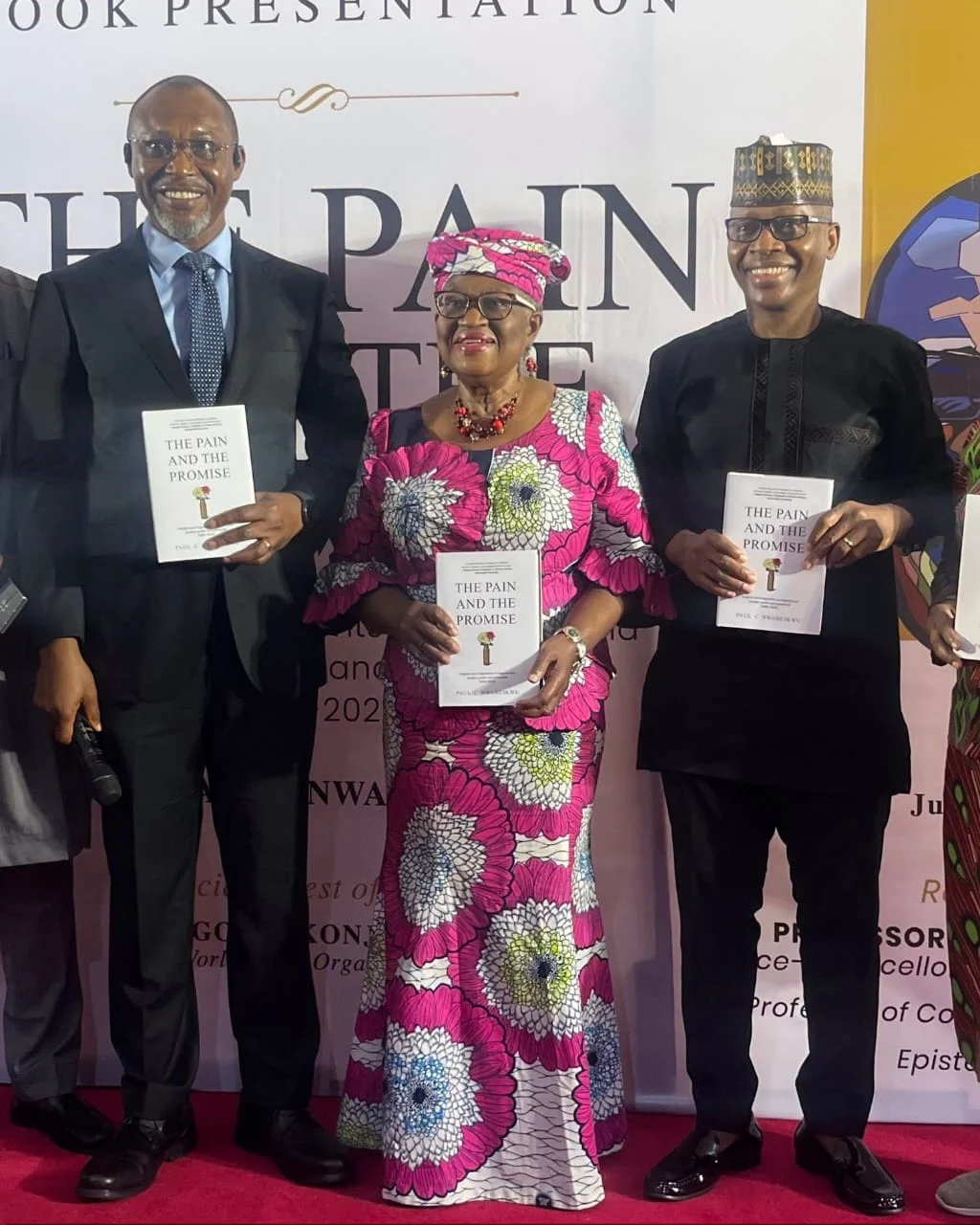
Okonjo-Iweala stopped me from Japa says ex-aviation minister
The decision to remain in Nigeria or seek professional refuge abroad, colloquially known as “japa,” has become a defining dilemma for many of the nation’s political and intellectual elite. Former Minister of Aviation, Osita Chidoka, recently revealed that he was once on the precipice of such a departure, only to be steered back by a profound intervention from the Director-General of the World Trade Organization, Dr. Ngozi Okonjo-Iweala. This disclosure, made during a book presentation for Paul Nwabuikwu, sheds light on the internal struggles of high-level public servants navigating the volatile landscape of Nigerian politics.
A Turning Point in Washington, D.C.
The encounter occurred in early 2020, a period Chidoka describes as one of the most testing times of his career. Having served as the Corps Marshal of the Federal Road Safety Corps (FRSC) and later as a Minister of Aviation, Chidoka had spent years navigating the complexities of Nigerian governance. However, the culmination of the 2019 general election cycle left him emotionally and professionally drained.
Having played a central role in the reconciliation efforts between former President Olusegun Obasanjo and former Vice President Atiku Abubakar, and subsequently managing the logistical and strategic demands of the Atiku/Obi campaign situation room, the political defeat was a significant blow. The subsequent legal battles at the Presidential Election Tribunal, where he served as the principal witness for the People’s Democratic Party (PDP), further exhausted his reserves.
Seeking respite, Chidoka traveled to the United States to join his wife, who was pursuing a PhD program. It was during this period of transition that he sought an audience with Dr. Okonjo-Iweala at her office at Gavi in Washington, D.C. At that moment, Chidoka was prepared to pivot toward international career opportunities or potentially return to his former role at ExxonMobil. His frustration was compounded by a specific judicial decision in early 2020 regarding a governorship election, which he viewed as a final signal that his efforts to influence change within the domestic political framework were yielding diminishing returns.
The Wisdom of a Mentor
During the meeting, Chidoka laid out his grievances and his intention to distance himself from the Nigerian political sphere. He recounted that Okonjo-Iweala, with whom he had fostered a professional bond dating back to his time as FRSC Corps Marshal, listened with characteristic patience. Her response, however, was not one of commiseration, but of firm, strategic guidance.
“Osita, Nigeria needs people like you. Do not allow life’s inevitable setbacks to define your choices. Go back to Nigeria. Stay in the trenches. Don’t give up,” she told him.
Chidoka acknowledges that while her advice was not what he wanted to hear at the time, it served as a vital corrective to his perspective. By opting to return to Abuja rather than pursuing an expatriate career, Chidoka recalibrated his approach to public service. This period of re-engagement paved the way for his transition into new ventures, including the founding of the Athena Centre, the Mekaria Institute, and ClearPath Media, alongside his pursuit of a law degree.
The Context of the “Japa” Phenomenon
The narrative shared by Chidoka resonates with a broader sociological trend in Nigeria. The term “japa,” derived from the Yoruba language, has evolved from a colloquialism to a defining characteristic of the country’s current economic and social climate. Data from the Nigerian Economic Summit Group (NESG) and various migration watchdogs indicate that the trend is not limited to the youth; it encompasses seasoned professionals, medical practitioners, and academics who feel the local environment is no longer conducive to growth or stability.
The economic context of 2020, specifically, was marked by the dual pressures of the global COVID-19 pandemic and the volatility of oil prices, which severely strained Nigeria’s fiscal reserves. Dr. Okonjo-Iweala, who served as Nigeria’s Minister of Finance during two separate administrations, has long been a proponent of structural reform and human capital retention. Her career, which spans decades of international economic policy, often emphasizes the necessity of domestic expertise to drive national development.

Institutional Support and Professional Mentorship
The relationship between Chidoka and Okonjo-Iweala serves as a case study in the importance of mentorship within the Nigerian civil service. During their time together in the Federal Executive Council, Okonjo-Iweala was widely regarded as a guardian figure, particularly for younger appointees.
Reflecting on their earlier collaboration at the FRSC, Chidoka noted that even during periods of extreme national fiscal austerity, Okonjo-Iweala consistently prioritized the funding of essential services, recognizing the agency’s role in national safety and efficiency. This history of professional support formed the bedrock of trust that allowed her advice to carry significant weight during their Washington meeting.
Broader Implications for Nigerian Public Service
The implications of Chidoka’s story extend beyond his personal career trajectory. It touches on the systemic issue of political disillusionment. When high-ranking officials—individuals with the capacity to influence policy and institutional culture—express a desire to exit the country, it signals a deeper crisis of confidence in the nation’s political processes.
Political analysts note that the departure of seasoned professionals often creates a "brain drain" at the leadership level, leaving the public sector vulnerable to stagnation. By choosing to stay, individuals like Chidoka, who possess deep institutional knowledge and experience, help preserve the continuity of governance.
However, observers also point out that the burden of nation-building cannot rest solely on the resilience of individuals. The systemic factors that drive disillusionment—such as electoral instability, economic inflation, and the lack of a clear meritocratic path in politics—remain persistent challenges.
A Reflection on Resilience
Chidoka’s public acknowledgment of this conversation underscores the power of institutional memory and the role of veteran leaders in shaping the next generation of Nigerian policymakers. By documenting his own experience, he provides a rare, transparent look at the "hidden" side of political life—the moments of doubt and the personal costs associated with public service in a developing democracy.
As Nigeria continues to grapple with the multifaceted challenges of the 21st century, the discourse surrounding the retention of talent becomes increasingly critical. Whether in the private sector, academia, or government, the presence of experienced individuals who have "stayed in the trenches" is often cited by development experts as a prerequisite for long-term reform.
In closing his remarks at the book presentation, Chidoka expressed a sentiment of profound gratitude. By crediting "Aunty Ngoo" with changing the trajectory of his life, he highlights that behind every major policy shift or political movement are individual, human moments of decision-making that determine the quality of leadership available to the nation.
The episode serves as a testament to the fact that, even in an era of globalization where international migration is increasingly accessible, the decision to remain and contribute to one’s home country remains a conscious, often difficult, choice—one that is frequently made possible only through the counsel and encouragement of trusted mentors who see the value in staying the course.