
Former US Health Official Anthony Fauci Invokes Fifth Amendment at Acrimonious Senate Hearing Amid Perjury Concerns
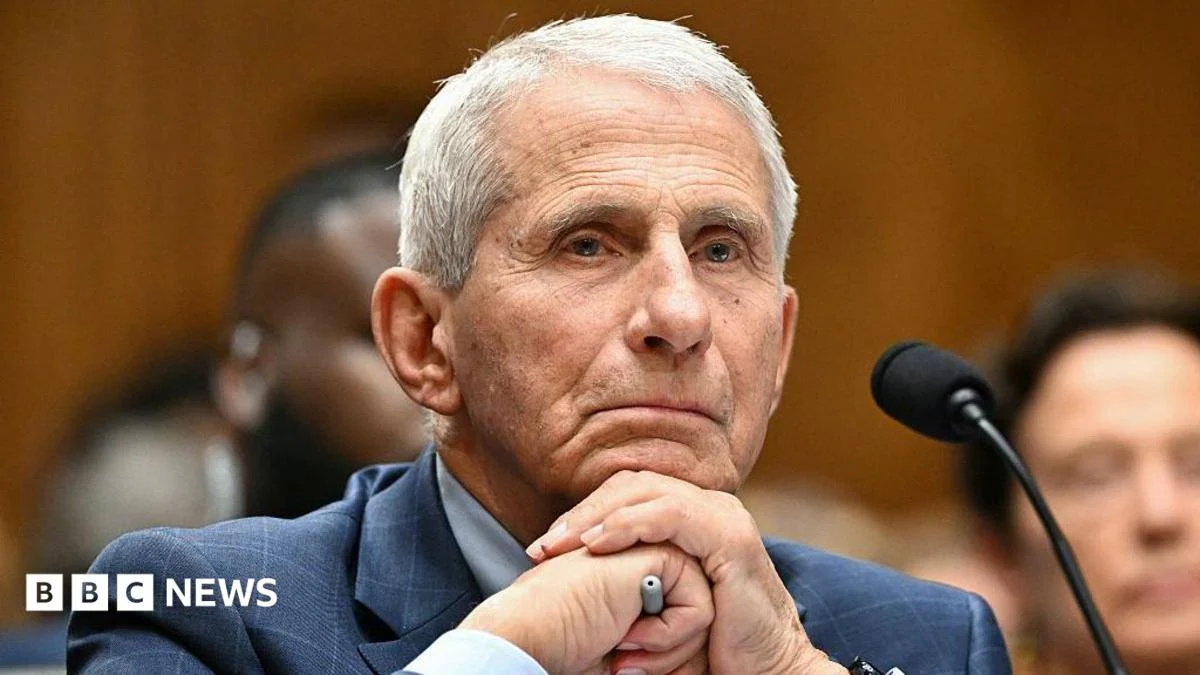
Former top US health official Anthony Fauci has refused to answer questions at a tense US Senate hearing on Covid-19, citing fears that Republicans intended to use his testimony to pursue perjury charges against him. The 85-year-old former leader of the National Institute of Allergy and Infectious Diseases (NIAID), a prominent figure throughout the coronavirus pandemic, invoked the Fifth Amendment to the US Constitution, which states that no person "shall be compelled in any criminal case to be a witness against himself." This constitutional protection allows individuals to decline to provide testimony that could potentially incriminate them, a move that immediately escalated the already fraught political battle surrounding Fauci’s tenure and the origins of the pandemic.
Fauci’s decision, delivered under the advice of his attorneys, marked a significant moment in the ongoing congressional scrutiny of the United States’ response to Covid-19. He expressed regret for taking such a measure, acknowledging his respect for the legislative branch, but underscored the perceived necessity of his action. "Although it pains me to do so because of the respect I have for the legislative branch of government… under the advice of my attorneys, I will invoke my right under the Fifth Amendment of the constitution to refrain from answering your questions," Fauci stated at Wednesday’s hearing before the Senate Committee on Homeland Security. The invocation followed years of intense criticism from Republican lawmakers, who have accused him of obfuscating information about the pandemic and misrepresenting its dangers, allegations Fauci has consistently and vehemently denied, previously calling them "simply preposterous."
Fauci’s Prominence and the Genesis of Republican Scrutiny
Dr. Anthony Fauci’s career spans decades, marked by his leadership in tackling numerous public health crises, most notably the AIDS epidemic. His role as the director of NIAID for 38 years, from 1984 until his retirement in December 2022, and, more recently, as the chief medical advisor to the President during the Covid-19 pandemic, positioned him as the nation’s foremost infectious disease expert. He became a household name, frequently appearing on television to explain the evolving science of the virus, advocate for public health measures, and guide the nation through an unprecedented global health emergency that claimed over 1.1 million American lives. Initially, Fauci enjoyed broad public trust, viewed by many as a steady, scientific voice amidst profound uncertainty.
However, as the pandemic progressed and public health guidance shifted in response to new scientific understanding – regarding mask efficacy, vaccine development, and social distancing measures – Fauci became a lightning rod for political contention. Republican lawmakers, particularly those aligned with former President Donald Trump, increasingly scrutinized his recommendations and public statements. Critics argued that Fauci had been inconsistent, overstepped his authority, or had even actively worked to suppress information, particularly concerning the contentious "lab leak" theory for Covid-19’s origins. These accusations intensified after Fauci’s retirement from government service, turning the focus of congressional investigations squarely on his past actions and communications, with calls for accountability growing louder from conservative quarters.
The accusations against Fauci often centered on the perceived "shifting" of public health guidelines, which Republicans interpreted as evidence of untruthfulness or incompetence. For instance, initial recommendations against universal mask-wearing were later reversed as the understanding of asymptomatic transmission and the effectiveness of masks in preventing spread grew. Similarly, early discussions about herd immunity evolved with vaccine availability and variant emergence. From a purely scientific perspective, such adjustments are standard practice as new data emerges in a rapidly unfolding crisis. However, in a highly politicized environment, these shifts were frequently weaponized by critics to sow doubt about Fauci’s credibility and the broader scientific consensus, contributing to widespread public confusion and mistrust.
The Fifth Amendment: A Constitutional Protection in a Politicized Arena
Invoking the Fifth Amendment is a serious legal maneuver, often misunderstood by the public as an admission of guilt. In reality, it serves as a fundamental protection against compelled self-incrimination, a cornerstone of American jurisprudence enshrined in the Bill of Rights. It ensures that individuals are not forced to provide testimony that could be used against them in a criminal prosecution. Legal experts emphasize that taking the Fifth is not a confession; rather, it is a legal right designed to protect individuals from coercion, unintended mistakes in testimony that could be misconstrued, and the unfair shifting of the burden of proof onto the individual to demonstrate their innocence.
Fauci’s legal team clearly assessed a significant risk that any testimony he provided, even if truthful, could be parsed, taken out of context, and potentially used to build a case for perjury. Perjury, the act of knowingly making a false statement under oath, is a felony that carries severe penalties, including imprisonment and substantial fines. Given the intense partisan atmosphere surrounding the hearing and the explicit threats from some Republicans to pursue legal action against him – including Senator Rand Paul’s repeated public pledges to see Fauci "behind bars" – Fauci’s attorneys evidently concluded that invoking the Fifth was the most prudent course of action to safeguard his legal position.
Complicating the legal landscape is the pre-emptive pardon granted to Fauci by former President Joe Biden. This pardon, intended to protect him from federal prosecution for actions taken between 2014 and 2025, offers a degree of security. However, it is not absolute. The pardon does not shield Fauci from potential state or local charges, which could still be pursued by determined prosecutors. More critically, it does not cover actions taken after the specified date range, including any statements made at the current Senate hearing. This means that if Fauci were to provide testimony and then be accused of perjury based on those statements, he could still face charges. Furthermore, a contempt of Congress charge, as threatened by Senator Rand Paul, is a separate matter that falls outside the scope of the presidential pardon, potentially leading to further legal battles.
A Volatile Senate Hearing: Accusations and Confrontation Unfold
The hearing on Wednesday was chaired by Senator Rand Paul (R-KY), a consistent and vocal critic of Fauci throughout the pandemic. Paul, an ophthalmologist by training, has long spearheaded efforts to investigate Fauci’s role, frequently clashing with him in previous congressional appearances, which often devolved into heated exchanges broadcast widely across news channels. The atmosphere in the hearing room was palpably tense from the outset, reflecting the deep-seated animosity that has defined their interactions.
Fauci, in his prepared statement to the committee, directly attributed his decision to invoke the Fifth Amendment to Senator Paul’s "obvious obsession" with prosecuting him. He articulated his belief that the sole purpose of his summons before the committee was to elicit "something — anything — that could vindicate his repeated public pledges that I end up, in his words, ‘behind bars.’" This statement laid bare the deep personal and political animosity that has characterized their interactions over the past several years, transforming a scientific debate into a public spectacle.
Despite Fauci’s clear refusal to answer questions, Senator Paul pressed on, continuing to pose questions and repeatedly inviting Fauci to "apologize" for his past actions and statements. Paul’s line of questioning frequently circled back to the shifting health guidance during the pandemic and the origins of Covid-19, areas where Republicans have long sought to find discrepancies in Fauci’s record. Paul then announced that the committee would vote next week on a resolution to hold Fauci in contempt of Congress, a move that, if passed by the full Senate and pursued by the Department of Justice, could carry significant legal repercussions, including potential fines or even imprisonment.
Adding to the dramatic proceedings, one of Fauci’s lawyers, David Schertler, who was seated beside him, repeatedly attempted to interject during Senator Paul’s questioning. Schertler sought to make "legitimate legal points" regarding the appropriateness of Paul’s continued questioning given Fauci’s invocation of the Fifth Amendment and the constitutional protections it afforded. However, Paul ultimately ordered Schertler removed from the room, intensifying the already contentious atmosphere and drawing immediate condemnation from legal observers. Following his removal, Schertler issued a scathing statement, labeling Paul’s actions as "outrageous" and asserting that the incident "proves the baseless and vindictive nature of this proceeding and Rand Paul’s personal vendetta against Dr Fauci," further escalating the rhetorical battle.
The Enduring Debate: Covid-19 Origins and the Lab Leak Theory
A central theme of the Republican inquiry, and indeed the broader public debate surrounding the pandemic, has been the origin of SARS-CoV-2, the virus that causes Covid-19. Two primary theories have dominated discussion: the "natural origins" theory, positing a zoonotic spillover from animals to humans, and the "lab leak" theory, suggesting the virus accidentally escaped from a research laboratory, most frequently pointed to the Wuhan Institute of Virology in China.
Throughout the pandemic, the origins debate became heavily politicized, overshadowing much of the scientific inquiry. Former President Donald Trump, who was in office when the pandemic began in early 2020, consistently promoted the lab leak theory, often accusing Fauci of trying to "protect China" by downplaying this possibility. Trump took to social media during Wednesday’s hearing, reiterating his conviction that the virus came from the Wuhan laboratory and calling Fauci "crazy." The former president and Fauci frequently clashed during the pandemic, particularly over Trump’s suggestions of unproven treatments like hydroxychloroquine and bleach, and their differing approaches to public health messaging, which often led to public confusion.
Senator Paul has been a staunch proponent of the lab leak theory, frequently using his platform to question Fauci on this matter in various congressional settings. He suggested during the hearing that while Fauci publicly supported the natural origins theory, he privately harbored beliefs that the virus originated in a medical lab. This accusation drew heavily on recently released pandemic-era diary entries belonging to Fauci, which Paul had made public earlier in the week, framing them as a revelation of Fauci’s alleged duplicity.
These diary entries offer a fascinating glimpse into Fauci’s evolving thinking during the nascent stages of the pandemic. They reflect an initial openness to both natural origins and a lab leak as possible explanations, a stance consistent with early scientific uncertainty. In an entry from February 2020, discussing a conference call among Covid scientists, Fauci noted that the doctors did not have "total agreement" about the virus’s source. Later entries show him becoming more convinced of a natural origin, writing that he "is almost certain that the virus evolved naturally from a species jump, even though… I keep an open mind about the possibility of a lab leak." He also penned a crucial clarifying thought: "[J]ust because two alternatives are possible that does not mean that they are equally probable." This statement highlights the scientific process of evaluating evidence and probabilities, a nuance often lost in the highly politicized public discourse.
The World Health Organization (WHO), in a 2025 assessment, stated that the natural-origins theory remained the "best supported" idea based on the available evidence. However, the WHO report also acknowledged that until more definitive information emerges, the precise determination of the virus’s origin remains "inconclusive," leaving the door open for further investigation into all plausible scenarios. The international scientific community largely agrees that more transparent data from China, particularly from the early days of the outbreak in Wuhan, would be crucial for a conclusive determination, a plea that has largely gone unanswered by Chinese authorities.
Broader Political Reactions and Future Implications
The highly charged hearing and Fauci’s invocation of the Fifth Amendment sparked immediate and polarized reactions across the political spectrum. On the Republican side, the move was seen by many as further justification for their suspicions and accusations of wrongdoing. Senator Ron Johnson (R-WI) angrily informed Fauci that he planned to push for a subpoena, aiming to compel him to answer lawmakers’ questions under threat of legal consequences, signaling an escalation of congressional pressure. Following the hearing’s conclusion, Florida’s Republican Attorney General announced that his office would open an investigation into Fauci, signaling a potential for state-level legal action that could bypass the federal pardon. These reactions underscore the persistent efforts by some Republicans to hold Fauci accountable for what they perceive as missteps or misconduct during the pandemic.
Conversely, several Democratic lawmakers came to Fauci’s defense, characterizing the hearing as a politically motivated attack rather than a genuine oversight effort. Senator Maggie Hassan (D-NH) asserted that the hearing was "designed to entrap" Fauci, echoing the sentiments expressed by Fauci’s legal counsel. Democrats largely view Fauci as a dedicated public servant who navigated an unprecedented public health crisis under immense pressure, often in the face of political interference and threats to his safety and reputation.
The backdrop of this hearing is also marked by personal threats against Fauci. He has faced numerous death threats during and after the coronavirus pandemic, a grim reflection of the intense polarization and animosity directed towards public health officials. Last year, former President Trump removed Fauci’s security protection, a decision that raised significant concerns for his personal safety, given the hostile climate.
Ironically, despite the deep animosity now characterizing their relationship, Fauci was not always at loggerheads with the Trump administration. In 2021, Trump awarded Fauci a presidential commendation for his pivotal work on the US Covid vaccine project, known as Operation Warp Speed. This commendation acknowledged Fauci’s significant contributions to accelerating vaccine development, highlighting a period of cooperation and mutual recognition before political divisions fully fractured their working relationship and transformed Fauci into a symbol of the political divide.
The implications of this contentious hearing extend beyond the immediate legal fate of Anthony Fauci. It highlights the profound challenges of congressional oversight in an era of deep partisan division, particularly when scientific matters become politicized. The invocation of the Fifth Amendment by such a high-profile public health figure could set a precedent, or at least amplify the use of such measures in future highly charged investigations. It also underscores the continued erosion of public trust in both scientific institutions and government, as the politicization of expertise creates an environment where objective facts struggle to gain traction against narratives driven by political agendas.
Fauci’s legacy remains complex and contested. To his supporters, he is a tireless scientist who dedicated his life to public health, guiding the nation through its darkest hours with integrity and unwavering commitment to science. To his detractors, he represents an overreaching bureaucracy that mishandled the pandemic, suppressed dissenting views, and potentially misled the public. The current hearing, rather than offering clarity or resolution, has only deepened these divisions, ensuring that the debates surrounding the Covid-19 pandemic, its origins, and the public health response will continue to be a source of intense political and social contention for years to come. The pursuit of accountability, whether through congressional inquiry or legal channels, appears far from over, leaving a cloud of uncertainty over the future of public health leadership and the integrity of scientific discourse in America.

Related Posts
Zambia on Edge: Opposition Leader Arrested Amid Allegations of Insurrection Plot and Election Tensions

Rescuers search for survivors of powerful Indonesia earthquake

