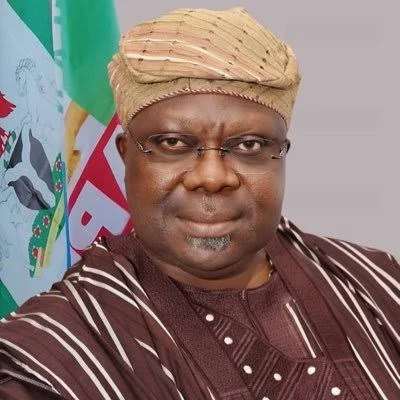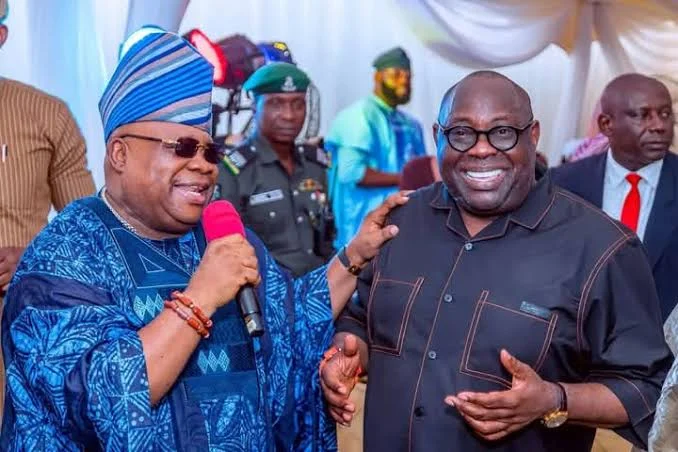
Why I’m backing Adeleke despite being ADC member Dele Momodu
In a move that has sent ripples through the Nigerian political landscape, prominent African Democratic Congress (ADC) chieftain and former presidential aspirant, Dele Momodu, has officially declared his support for Governor Ademola Adeleke of the Accord Party in the upcoming Osun State gubernatorial election. Scheduled for August 15, 2026, the poll is increasingly viewed as a litmus test for opposition consolidation in the face of the ruling All Progressives Congress (APC) dominance. Despite remaining a card-carrying member of the ADC, Momodu’s public endorsement of an opposition candidate from a different platform marks a strategic pivot aimed at preventing vote fragmentation, a phenomenon that has historically handicapped opposition parties in Nigeria’s winner-takes-all electoral system.
The Strategic Imperative for Coalition
Momodu’s decision, unveiled in a formal statement on Tuesday, is rooted in what he describes as a pragmatic response to the political climate in Osun State. According to the veteran journalist and politician, the necessity of defeating the APC—which he characterizes as a "cankerworm" that has eroded the nation’s socio-economic foundations—outweighs party loyalty.
"I joined the ADC on the basis that prominent members of opposition parties in Nigeria decided to form a broad coalition of forces against the APC," Momodu stated. His disappointment, however, is palpable; he had hoped for a unified opposition front during the 2023 general elections, aiming to leverage the combined electoral weight of the second, third, and fourth-placed presidential candidates. When those efforts at a national-level coalition faltered due to what he terms a "clash of voluptuous egos," Momodu shifted his focus to the regional level. He argues that in the context of Osun State, maintaining a separate, competing candidacy would be "foolhardy" and could inadvertently provide the ruling party with the necessary leverage to maintain its grip on the state.
Chronology of the Osun Political Landscape
The political trajectory of Osun State has been one of the most volatile in Nigeria’s Fourth Republic. Following the fiercely contested 2022 elections, the state transitioned from APC governance under Gboyega Oyetola to the current administration. The lead-up to the August 15, 2026 election has been marked by heightened tension, with various stakeholders accusing the ruling party of weaponizing state apparatuses to stifle political dissent.
The timeline of this transition reflects the broader struggle for political control in the South-West. With the 2026 election cycle approaching, the Independent National Electoral Commission (INEC) has signaled that voter registration and sensitization exercises are in their final phases. For the opposition, the challenge has been to unify around a single candidate capable of countering the financial and institutional influence of the APC. Momodu’s endorsement acts as a clarion call for other opposition elements—including those within the Labour Party, the New Nigeria Peoples Party (NNPP), and the ADC itself—to consolidate their resources behind Governor Adeleke.
Data and Performance Metrics
The justification for Momodu’s endorsement goes beyond mere political strategy; he cites a perceived track record of performance that he believes distinguishes Governor Adeleke from his peers. In his assessment, Adeleke is "primus inter pares" (first among equals) among Nigeria’s current crop of governors.
Data regarding state-level performance in Nigeria is often contested, but advocates for the current administration point to improvements in infrastructure development, specifically the rehabilitation of arterial roads and the expansion of rural healthcare facilities. Furthermore, the administration has placed a strong emphasis on staff welfare and the clearing of long-standing pension arrears, a move that has historically boosted popularity among the civil service—a critical voting bloc in Osun.
Conversely, critics within the APC hierarchy maintain that the state’s internally generated revenue (IGR) remains insufficient to sustain the long-term capital projects promised by the administration. They argue that the focus on populist infrastructure does not equate to sustainable economic growth. However, Momodu contends that Adeleke’s "global phenomenon" status—a reference to his widespread appeal beyond traditional political circles—provides him with a unique advantage that transcends traditional economic metrics, suggesting that in a popularity contest, the incumbent would hold a significant lead over the federal government’s influence.
Implications for the 2026 Election
The decision by a national figure of Momodu’s stature to cross party lines for a local election has significant implications. It highlights a growing trend of "pragmatic alliance" over "ideological rigidity." In the Nigerian context, where political parties are often viewed as vehicles for electoral victory rather than repositories of distinct manifestos, such cross-pollination is becoming more frequent.
If other opposition figures follow Momodu’s lead, the August 15 election could witness a rare moment of near-total opposition unity. Such a consolidation would be critical to preventing the APC from exploiting splits in the vote. Momodu’s warning is explicit: "We should never supply the APC an easy alibi to rig the Osun gubernatorial election." This statement suggests that the opposition is bracing for a high-stakes electoral battle where the margin of victory could be slim, and where every vote, if not consolidated, represents a risk of defeat.
Official and Political Reactions
While the APC has yet to issue a formal rebuttal to Momodu’s specific endorsement, party spokespersons have consistently maintained that their candidate represents the best interests of the state, citing federal support and a commitment to continuity. Within the ADC, the reaction has been nuanced. While some party members are concerned about the implications for their own local candidates, others view Momodu’s move as a bold, if unconventional, step toward national political restructuring.
Political analysts suggest that the endorsement serves to amplify the visibility of the Osun election, drawing national attention to a race that might otherwise have remained localized. By framing the election as a referendum on the current administration’s impact on "social cohesion, religious tolerance, and democratic institutions," Momodu has elevated the stakes from a local contest to a national ideological battle.
The Broader Impact on Nigerian Democracy
The broader implication of this endorsement is the potential shift in how opposition parties approach future election cycles. The failure to build a coalition in 2023 left a vacuum that the ruling party was able to occupy. Momodu’s actions suggest an attempt to correct this at the sub-national level, creating a template for future local elections.
However, this strategy carries risks. It can alienate base supporters who are loyal to the ADC’s specific platform and candidates. It also faces the challenge of "personality politics," where voters may be loyal to the party structure rather than the individual candidate endorsed by a national figure.
As the August 15, 2026 election approaches, all eyes will be on the efficacy of this coalition strategy. Will the electorate follow the lead of influential figures like Momodu, or will they stick to traditional party affiliations? The answer to this question will likely define the future of coalition politics in Nigeria and determine whether the opposition can mount a credible challenge to the status quo in the years leading up to the 2027 general elections. For now, the focus remains firmly on Osun, where a singular decision by a seasoned politician has fundamentally altered the geometry of the coming race.

Related Posts

Osun Labour Leaders Charge Civil Servants to Defy Intimidation Ahead of Crucial Governorship Poll

FULL LIST: Funke Akindele unveils star cast for new movie The Four