Osun APC Elders Convene Strategic Meeting with Bisi Akande to Solidify Election Tactics Ahead of Saturday Poll
The political atmosphere in Osun State has intensified as the All Progressives Congress (APC) leadership, represented by the Osun APC Elders’ Caucus, converged at the Ila Orangun residence of former Governor Chief Bisi Akande. The strategic session, held on Saturday, was designed to conduct a comprehensive review of the party’s campaign apparatus and to finalize tactical maneuvers ahead of the pivotal governorship election scheduled for August 15. As the state gears up for this high-stakes contest, the meeting serves as a clear indication that the party is moving to consolidate its support base and resolve lingering internal friction to ensure a unified front against the incumbent, Governor Ademola Adeleke of the Accord Party.
The Dynamics of the Ila Orangun Meeting
The gathering of the state’s political heavyweights was not merely a ceremonial visit but a high-level consultation aimed at addressing the structural challenges facing the party’s campaign. Chief Bisi Akande, a founding figure of the APC and a former interim national chairman of the party, remains a towering influence in the state’s political architecture. His role in mediating and providing strategic direction is considered critical for the party’s cohesion.
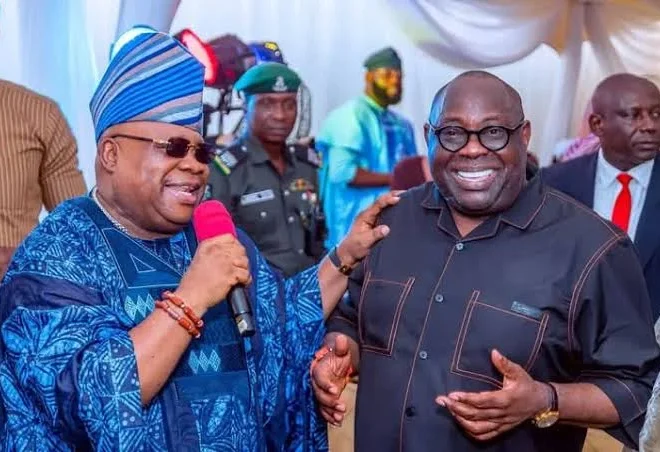
The visual narrative of the event, which dominated local social media discourse, featured a photograph of Chief Akande walking hand-in-hand with former Deputy Governor and prominent party figure, Senator Iyiola Omisore. While some observers initially speculated about the nature of a potential private dialogue, sources close to the event clarified that the interaction was a public display of unity following a formal caucus meeting. The meeting provided a platform for senior party leaders to candidly discuss the current campaign trajectory, evaluate public sentiment, and realign their message to resonate more effectively with the electorate.
Contextualizing the Political Landscape
The Osun State governorship election represents a critical battleground for Nigeria’s major political parties. The state has historically been characterized by razor-thin margins and intense grassroots mobilization. For the APC, this election is viewed as an opportunity to reclaim the executive seat currently occupied by Governor Ademola Adeleke.
The political history of Osun is marked by shifts in power, often determined by the ability of parties to navigate the delicate balance of regional interests and urban versus rural voting blocs. Senator Iyiola Omisore, a veteran of Osun politics, brings a wealth of experience to the party’s current strategy. Having served as Deputy Governor and a Senator of the Federal Republic, his influence in the Ife-Ijesha axis remains a subject of intense analysis by political strategists. His involvement in the current campaign, particularly his presence at the Ila Orangun meeting, suggests a concentrated effort by the APC to secure the necessary support from his traditional power base.
Chronology of the Campaign Period
The lead-up to the August 15 election has been a period of rapid developments. The timeline of the current election cycle began with the Independent National Electoral Commission (INEC) releasing the official schedule of activities early in the year. Following the primaries, which saw the emergence of the APC candidate, the party initiated a series of town hall meetings, ward-to-ward campaigns, and media engagements designed to highlight the perceived lapses of the current administration.
- Early 2026: INEC announces the election timetable and the schedule for political party activities.
- June 2026: Major political parties, including the APC and the Accord Party, conclude their internal screening processes and finalize their candidates.
- July 2026: The campaign intensity shifts from general sensitization to targeted voter mobilization. The APC Elders’ Caucus begins a series of regional consultations to bridge internal gaps.
- August 15, 2026: The date set for the gubernatorial election, where 14 political parties will face the electorate.
Strategic Adjustments: Insights from the Campaign Organization
Mr. Ajibola Famurewa, the Director-General of the Omisore Campaign Organisation, provided context regarding the internal mechanisms of the meeting. According to Famurewa, the gathering was an "Agba Osun" (Elders of Osun) session that transcended mere formalities. He emphasized that the focus was on identifying operational bottlenecks in the campaign and deploying swift, effective solutions.
"We assessed the entire campaign, highlighted the areas where we believe we have issues, and provided solutions," Famurewa stated. This sentiment underscores a pragmatic approach to the final week of campaigning. By inviting stakeholders to "rub minds together," the party leadership is attempting to move beyond traditional campaign rhetoric and focus on logistical and localized strategies that could translate into actual votes on election day. The presence of the Elders’ Caucus is seen as a move to reassure the party faithful that the hierarchy is fully committed to a victory, thereby reducing the risk of voter apathy or internal sabotage.
Analysis of the Electoral Implications
The involvement of senior figures like Chief Bisi Akande and Senator Iyiola Omisore carries significant weight. In Nigerian politics, the endorsement and active participation of party elders are often viewed as the final piece of the puzzle in a campaign’s success. For the APC, the objective is to maintain a unified front while aggressively challenging the incumbent’s performance record.
Data from previous electoral cycles in Osun indicate that turnout in the local government areas remains the deciding factor. The APC’s current strategy appears to be a two-pronged approach: maximizing the turnout in their strongholds while making significant inroads into the regions where the Accord Party currently holds sway. The "reasonable discussion" mentioned by the campaign leadership likely involved the deployment of grassroots organizers, voter education on the use of the Bimodal Voter Accreditation System (BVAS), and the monitoring of polling units to ensure electoral integrity.
The Role of Independent Electoral Commission (INEC)
As with any major election, the role of INEC remains paramount. The commission has cleared 14 political parties to participate in the August 15 poll. The logistical arrangements, including the distribution of sensitive and non-sensitive materials, are being closely monitored by civil society organizations and international observers. The APC’s emphasis on "winning the election" at the meeting in Ila Orangun suggests that the party is preparing for a highly competitive contest that will likely be decided by the efficiency of their field operations.
Broader Political Impact
The upcoming election in Osun State is seen as a bellwether for the political climate in the Southwest region. A victory for the APC would solidify its dominance in the region, while a victory for the Accord Party would suggest a shifting paradigm in the state’s political loyalty. The meeting in Ila Orangun underscores the desperation and the high stakes involved for all parties concerned.
Beyond the immediate goal of winning the governorship, the meeting also signifies a broader trend within the APC to centralize its decision-making processes through its elder statesmen. By leveraging the wisdom and connections of leaders like Chief Bisi Akande, the party hopes to mitigate the risks associated with internal friction. The success of this strategy will be tested on August 15, as voters head to the polls to determine the future direction of the state.
As the campaign enters its final phase, the focus will undoubtedly shift toward the final push for votes and the protection of the ballot. The unity displayed by the APC leadership at the weekend is a calculated message to their constituents that the party is prepared, organized, and focused on the singular goal of capturing the Osun State government house. The electorate now awaits the final outcome, which will be determined not just by the promises made during the campaign, but by the effectiveness of the machinery built by these political veterans.