
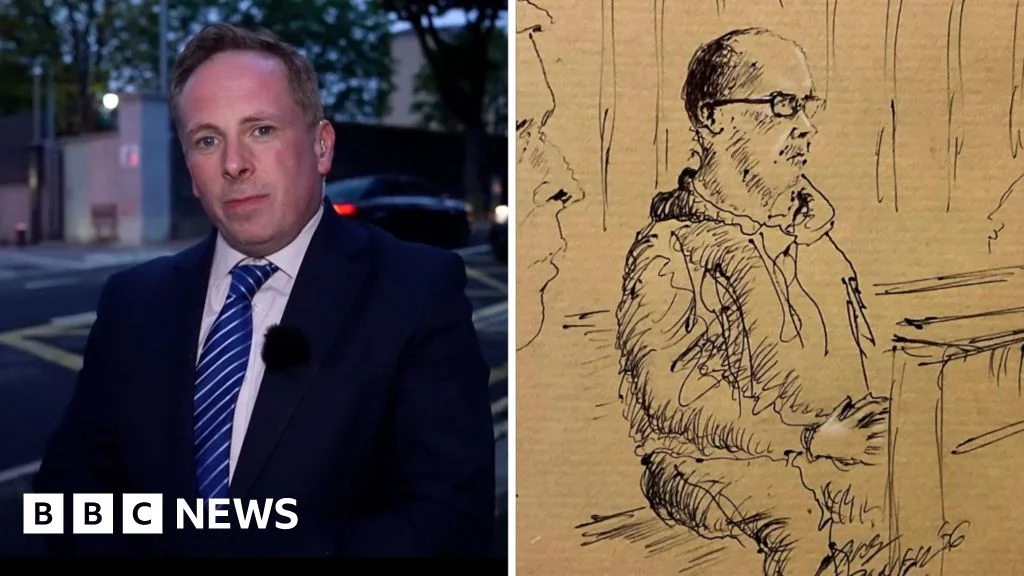
Kinahan: How his hearing unfolded inside the courtroom in Dublin
Suspected crime boss Daniel Kinahan appeared before the Special Criminal Court in Dublin on Sunday, marking a pivotal moment in the relentless, multi-national pursuit of one of the world’s most notorious criminal organisations. His extradition from Dubai, following his arrest there in April, culminated years of intensive investigative work and diplomatic pressure from law enforcement agencies across multiple continents. The 49-year-old stands accused of directing the activities of a criminal organisation between October 2015 and April 2017, a period notorious for intense gangland violence in Ireland. Remanded in custody after his appearance at the non-jury court, Kinahan’s terse declaration – "I think we all know I won’t be getting bail" – underscored the gravity of the charges and the formidable legal challenge he now faces. This development is not merely an arrest; it represents a significant victory for international justice and a profound disruption to the operations of the Kinahan cartel, which, according to the UK’s National Crime Agency (NCA), has been responsible for trafficking tonnes of drugs and firearms globally for more than two decades.
The Ascent and Reach of the Kinahan Cartel
The Kinahan organised crime group, often referred to as the Kinahan cartel, emerged from humble beginnings in Dublin’s south inner city in the late 1990s, founded by Christy Kinahan Sr., known as ‘The Dapper Don’. What began as a local drug distribution network rapidly escalated into a sophisticated transnational criminal enterprise. Under the tutelage of Christy Sr. and the strategic acumen increasingly attributed to his sons, Daniel and Christopher Jr., the cartel diversified its operations and expanded its geographical footprint.
By the early 2010s, the Kinahan cartel had established a formidable presence across Europe, with significant hubs in Spain, the Netherlands, and eventually, the United Arab Emirates. Their illicit activities spanned a vast spectrum: large-scale international drug trafficking, primarily cocaine and cannabis, often sourced directly from South America and Morocco; sophisticated firearms trafficking across Europe; and extensive money laundering operations to legitimise their immense illicit proceeds. Law enforcement estimates suggest the cartel was responsible for importing hundreds of millions, if not billions, of euros worth of illegal drugs into Europe annually, accumulating a vast fortune that allowed them to corrupt officials, intimidate rivals, and maintain a luxurious lifestyle for its key members.
Daniel Kinahan, in particular, gained notoriety for his purported role in restructuring the cartel, professionalising its operations, and extending its influence beyond traditional criminal circles. He became a significant figure in professional boxing, leveraging connections within the sport to project an image of legitimacy and potentially to facilitate money laundering. This dual existence – a reputed global crime boss simultaneously attempting to carve out a legitimate career in sports management – drew considerable scrutiny and eventually contributed to his downfall as international pressure mounted.
A Timeline of Escalation: The Hutch-Kinahan Feud and International Scrutiny
The period between October 2015 and April 2017, specified in Daniel Kinahan’s charges, corresponds to the most brutal phase of the notorious Hutch-Kinahan gangland feud. This internecine conflict, which erupted in September 2015 with the murder of Gary Hutch in Spain – a former associate of the Kinahans – plunged Dublin into an unprecedented wave of violence.
- September 2015: Gary Hutch, nephew of Gerry ‘The Monk’ Hutch, is murdered in Mijas, Spain, believed to be ordered by the Kinahan cartel. This act ignites the feud.
- February 2016: The Regency Hotel shooting in Dublin marks a dramatic escalation. A boxing weigh-in event, attended by Daniel Kinahan, is stormed by gunmen, resulting in the death of David Byrne, a prominent Kinahan associate. This brazen attack, carried out in broad daylight, shocks the nation and prompts a significant response from An Garda Síochána (Irish police).
- Subsequent Months (2016-2017): A brutal tit-for-tat cycle of revenge killings ensues, claiming over 18 lives, primarily in Dublin. Victims include members of both factions, their relatives, and innocent individuals caught in the crossfire. The violence spills onto residential streets, creating widespread fear and outrage.
- Government and Law Enforcement Response: The unprecedented violence spurs the Irish government to allocate additional resources to An Garda Síochána, establishing specialised units to combat organised crime. New legislation targeting criminal organisations and increasing powers for law enforcement is also introduced. The Special Criminal Court, historically used for terrorism cases, increasingly becomes the venue for prosecuting serious gangland figures.
This period of intense violence not only devastated communities but also brought unprecedented international attention to the Kinahan cartel. The sheer scale and public nature of the feud made it impossible for the group to operate quietly, drawing the ire of international law enforcement agencies who recognised the cartel’s far-reaching impact beyond Ireland’s shores.
The Global Dragnet: International Cooperation and Sanctions
The pursuit of the Kinahan cartel evolved from a national policing effort into a sophisticated international operation involving multiple jurisdictions and agencies. Key players in this global dragnet included:
- An Garda Síochána (Ireland): Led the initial investigations into the cartel’s activities and the feud-related murders, working tirelessly to gather intelligence and build cases. Operations like ‘Operation Thistle’ and ‘Operation Hybrid’ specifically targeted the Kinahan organisation.
- National Crime Agency (NCA, UK): Recognising the cartel’s significant presence and impact on the UK, the NCA collaborated closely with Irish authorities, sharing intelligence and coordinating operations against drug and firearms trafficking networks linked to the Kinahans. The NCA’s public statements have consistently highlighted the cartel’s global reach and destructive impact.
- Drug Enforcement Administration (DEA, US): The DEA became increasingly involved as evidence mounted of the Kinahan cartel’s direct or indirect involvement in the transatlantic drug trade, particularly cocaine routes from South America into Europe. Their expertise in dismantling international narcotics networks proved crucial.
- Europol: The European Union Agency for Law Enforcement Cooperation played a vital role in facilitating intelligence sharing and operational coordination among various European police forces, allowing for a more cohesive response to the cartel’s continent-wide activities.
- United Arab Emirates Authorities: Dubai, a perceived safe haven for many international criminals due to its perceived lax extradition policies and luxury lifestyle, became a primary base for the Kinahan leadership. Over time, however, increased international pressure, particularly from the US and UK, led to a shift in the UAE’s stance and greater cooperation in combating organised crime.
A significant turning point came in April 2022, when the United States Department of the Treasury’s Office of Foreign Assets Control (OFAC) designated Daniel Kinahan, his father Christy Kinahan Sr., and brother Christopher Kinahan Jr., along with four key associates and three businesses, as Specially Designated Narcotics Traffickers (SDNTs) under the Kingpin Act. This designation effectively froze any assets they held in the US, prohibited US citizens from engaging in transactions with them, and severely restricted their access to the international financial system. Crucially, the US government also offered rewards of up to $5 million each for information leading to the arrest or conviction of Daniel, Christy Sr., and Christopher Jr. This move was unprecedented in its scale and clearly signalled the highest levels of government commitment to dismantling the cartel. It significantly ratcheted up the pressure on the Kinahans and their network, making it far more difficult for them to operate and travel internationally.
The Extradition from Dubai: A Complex Legal and Diplomatic Achievement
Daniel Kinahan’s arrest in Dubai in April, the exact date of which was not immediately disclosed, marked the culmination of this concerted international effort. Extradition from the UAE, historically challenging, has become increasingly feasible due to enhanced bilateral agreements and a demonstrated commitment by Emirati authorities to combat international crime. The process involved meticulous legal work, extensive diplomatic negotiations, and the presentation of compelling evidence to satisfy the legal requirements for extradition under both Irish and Emirati law.
The successful extradition underscores the growing effectiveness of global cooperation in dismantling criminal networks that exploit international borders. It sends a clear message that no jurisdiction, regardless of its previous reputation, can serve as an impenetrable sanctuary for fugitives from justice. The journey from Dubai to Dublin would have been a highly secure operation, involving coordinated efforts between multiple security agencies to ensure Kinahan’s safe and secure transfer into Irish custody.
The Special Criminal Court: A Unique Legal Battleground
Daniel Kinahan’s appearance before the Special Criminal Court in Dublin on Sunday immediately placed his case within a specific and highly significant legal framework. The Special Criminal Court is a non-jury court established under the Offences Against the State Acts. It was originally created to deal with terrorism-related offences, particularly during the Troubles, but its remit has since expanded to include serious organised crime where intimidation of juries or witnesses is a concern.
The decision to try Kinahan in this court highlights the perceived exceptional nature and seriousness of the charges against him. The court operates with three judges instead of a judge and jury, a measure designed to safeguard the integrity of the judicial process in cases where ordinary trial procedures might be compromised.
Kinahan was formally charged with directing the activities of a criminal organisation between October 2015 and April 2017. This specific timeframe directly encompasses the peak of the Hutch-Kinahan feud, suggesting that the prosecution will present evidence linking him directly to the strategic command and control of the cartel’s violent operations during that period. His brief but impactful statement to the court – "I think we all know I won’t be getting bail" – acknowledges the court’s stringent approach to bail applications for individuals facing such grave charges, particularly those deemed a significant flight risk or a threat to public safety. Given the cartel’s international reach and vast resources, the likelihood of bail being granted was indeed virtually non-existent, a point likely understood by both Kinahan and the legal professionals involved. He was subsequently remanded in custody, a standard procedure for serious indictable offences, to appear again at a later date as the complex legal process begins to unfold.
Broader Implications and Future Outlook
The extradition and charging of Daniel Kinahan represent far more than just another arrest; it is a profound development with wide-ranging implications for both national and international efforts to combat organised crime.
For Irish Law Enforcement and Justice: This is an immense vindication for An Garda Síochána, whose officers have tirelessly pursued the Kinahan cartel for decades, often under intense public scrutiny and personal risk. It demonstrates the resilience of the Irish justice system in bringing alleged high-ranking criminals to account, even those who sought refuge abroad. The trial, when it proceeds, will be one of the most significant organised crime cases in Irish legal history, potentially revealing unprecedented details about the cartel’s inner workings.
Impact on the Kinahan Cartel: While the cartel has shown adaptability in the past, the capture of Daniel Kinahan – long considered a key strategic leader and figurehead – will undoubtedly send shockwaves through its ranks. It will likely disrupt command structures, create uncertainty among associates, and potentially lead to further arrests or defections. The financial sanctions imposed by the US, combined with the loss of leadership, will severely hamper its ability to conduct operations and manage its vast illicit wealth.
Message to Transnational Organised Crime: The success of this extradition serves as a powerful deterrent to other international crime bosses who believe they can evade justice by relocating to seemingly safe jurisdictions. It underscores the growing willingness and capability of nations to cooperate across borders, share intelligence, and enforce justice, making the world a smaller and more dangerous place for those engaged in transnational criminal activities. The ‘no safe haven’ message is now louder and clearer than ever.
International Cooperation Model: This case will likely be studied as a model for effective international law enforcement and judicial cooperation. The synergy between intelligence agencies, national police forces, and diplomatic efforts across multiple continents was crucial to achieving this outcome. It highlights the necessity of a multi-faceted approach, combining traditional policing with financial sanctions and diplomatic pressure.
Public Confidence: For the public, particularly in Ireland, this development offers a significant boost to confidence in the rule of law and the ability of authorities to tackle even the most entrenched and violent criminal enterprises. It provides a measure of justice for the victims of the cartel’s violence and drug trade.
While Daniel Kinahan’s legal battle is just beginning, his presence in a Dublin courtroom signifies a watershed moment. It signals a new era where the long arm of international law is increasingly reaching into the shadows, dismantling criminal empires that once seemed untouchable and reaffirming the commitment to justice on a global scale. The BBC’s Ireland correspondent, Chris Page, inside the court during the hearing, witnessed the initial proceedings of a case that promises to unfold with profound implications for organised crime worldwide.

Related Posts
Zambia on Edge: Opposition Leader Arrested Amid Allegations of Insurrection Plot and Election Tensions
Rescuers search for survivors of powerful Indonesia earthquake

