The Trump Administration Legal Offensive Against State-Level Oversight of Federal Immigration Enforcement Officers
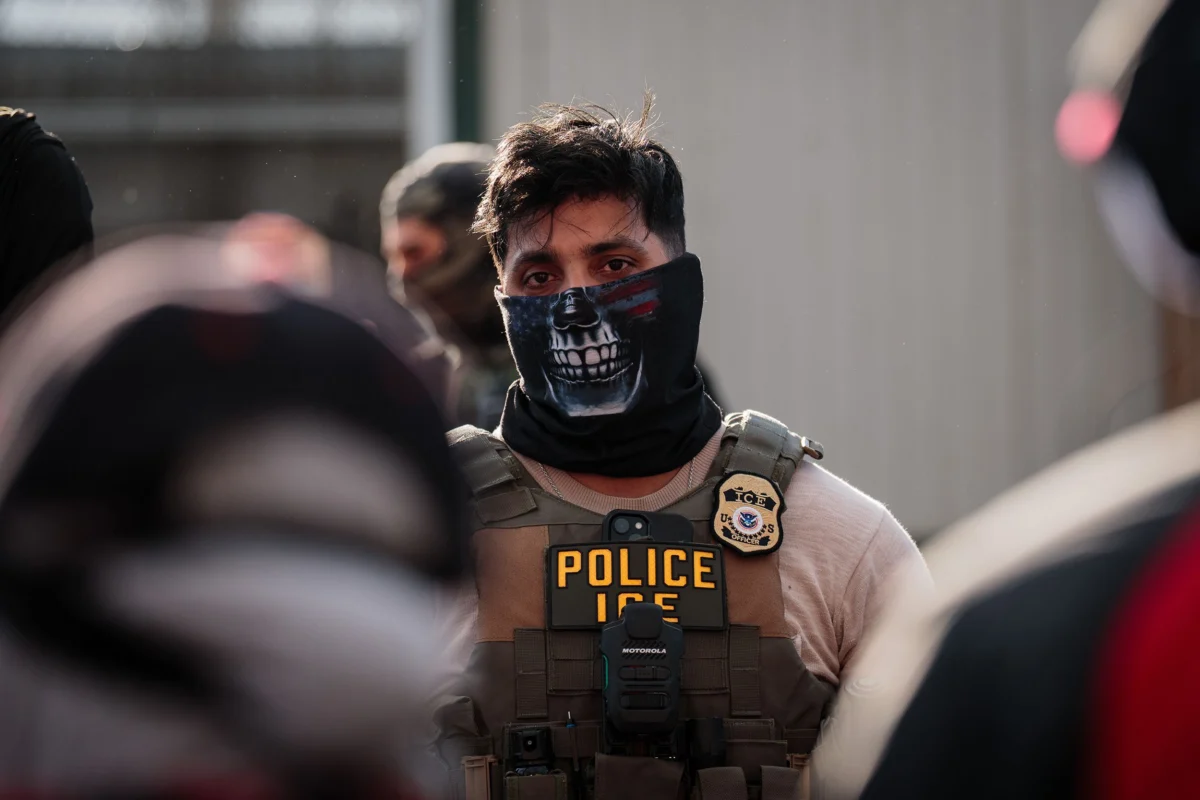
The United States Department of Justice, acting under the direction of the Trump administration, has launched a multi-jurisdictional legal campaign targeting at least five states and the city of Philadelphia over legislative measures designed to mandate accountability for federal law enforcement personnel. At the center of this constitutional clash are local and state statutes that require Immigration and Customs Enforcement (ICE) officers to maintain visible, individual identifiers while conducting enforcement actions and prohibit the use of face coverings during immigration raids. Federal attorneys argue that these transparency measures infringe upon federal authority and, more critically, expose officers to substantial physical danger.
The administration’s legal filings suggest that these accountability mandates inadvertently facilitate the doxing of federal employees. The Department of Justice (DOJ) contends that requiring agents to display their faces or badge numbers enables members of the public to harvest images and subject them to facial recognition software, cross-referencing these captures with social media profiles and websites dedicated to the identification of government personnel.
The Catalyst of Legal Action
The federal government’s arguments specifically cite the existence of digital archives and art projects, such as ICESpy, as evidence of a looming security threat. According to the DOJ, these tools function as conduits for harassment, allowing activists to track and target agents. However, the legal strategy represents a significant escalation in the ongoing tension between federal immigration policy and the "sanctuary" or oversight-oriented policies adopted by various jurisdictions.
The conflict reached a boiling point following a series of state-level legislative efforts to curb what local activists and policymakers describe as "shadow policing." By forcing ICE officers to wear identifiable markings and refrain from masking, proponents of these laws argue they are ensuring that law enforcement remains subject to the same standards of public accountability as local police departments. The Trump administration, conversely, views these local interventions as an unconstitutional interference with federal operations, arguing that the supremacy clause of the Constitution prevents states from impeding the execution of federal immigration law.
Analyzing the ICESpy Controversy
The focal point of the DOJ’s argument regarding digital surveillance—the art project known as ICESpy—has been characterized by its creator, artist Kyle McDonald, as being fundamentally incapable of performing the functions the government claims. A technical analysis of the project reveals a significant discrepancy between the federal government’s description of the tool and its actual utility.
ICESpy relies on a database of approximately 700 individuals who, nearly a decade ago, publicly listed their employment with ICE on the professional networking site LinkedIn. A review of this dataset reveals that the majority of those listed held administrative, executive, or legal positions, such as assistant chief counsel, rather than roles involving field enforcement. Only 39 of the 700 individuals held the title of "deportation officer," and a smaller subset held titles related to enforcement and removal operations.
The efficacy of the tool is further diminished by the massive expansion of the agency. In early 2026, ICE reported a historic surge in manpower, with total personnel jumping from roughly 10,000 to 22,000 in a matter of months. Because the ICESpy database relies on legacy LinkedIn data from around 2018, it fails to account for the vast majority of the current workforce. Consequently, the claim that such a tool could be used to track an active-duty deportation officer is, according to technical experts and the creator himself, statistically impossible.
Data Logs and Real-World Utility
Evidence regarding the actual traffic and usage of such sites further complicates the DOJ’s narrative. Logs reviewed for the period between June 30 and July 6 showed a total of 84 page views for the entire week. Of those, only two attempted to utilize the facial recognition feature, and both yielded results that were described as inaccurate, failing to match any individuals within the existing, outdated dataset.
While the DOJ also highlights the website "ICE List"—a separate initiative that catalogues enforcement actions, vehicle identifiers, and the general professional histories of agency employees—the utility of that site as a weapon for "doxing" remains disputed. Like ICESpy, ICE List primarily aggregates information that individuals previously disclosed themselves on professional platforms. The site provides a public ledger of enforcement trends and incident reports, but it does not offer the sophisticated, real-time facial recognition capabilities that federal attorneys suggest are being used to compromise the safety of agents in the field.
Chronology of the Legal Conflict
The friction between the federal government and state authorities regarding ICE transparency is not a new development, but it has intensified over the last several months.
- Early 2025: Several states, including New York and New Jersey, introduce legislation requiring law enforcement officers to display unique identifiers during civil operations.
- Mid-2025: California faces a targeted DOJ lawsuit regarding similar transparency laws. At that time, the federal government did not invoke digital surveillance tools like ICESpy as a primary rationale for the suit.
- Late 2025/Early 2026: The Trump administration expands its litigation to include New York, Virginia, Connecticut, New Jersey, and the city of Philadelphia, specifically incorporating the narrative of digital security threats.
- January 2026: ICE announces a massive recruitment success, more than doubling its field presence, further rendering legacy databases obsolete for identification purposes.
The Constitutional and Operational Implications
At its core, the dispute is a fundamental disagreement over the reach of federal authority versus the police powers of the states. The Trump administration’s argument rests on the premise that ICE officers are uniquely vulnerable to targeted harassment and that any measure limiting their anonymity—such as banning masks or requiring badge numbers—directly impedes their ability to carry out federal directives.
Legal analysts point out that this case could have far-reaching implications for how federal agencies interact with local authorities. If the federal government successfully argues that state-level transparency laws are preempted by federal operational needs, it could create a legal precedent that effectively shields federal law enforcement from any degree of local oversight.
Conversely, supporters of the state laws argue that the lack of accountability creates a "black box" environment where misconduct can occur without any mechanism for redress. By requiring officers to identify themselves, states contend they are merely upholding the basic tenets of due process and civil rights. The refusal of the DOJ to provide concrete evidence that specific agents have been tracked or harmed via these digital tools remains a point of contention that will likely be addressed as the litigation proceeds through the court system.
Official Stances and Institutional Silence
Despite the gravity of the litigation, official communication from federal agencies remains limited. ICE, when approached for comment on the specific impact of these transparency laws on agent safety, did not provide a formal response. The silence from the agency has left a void that legal experts are currently filling with speculation regarding the administration’s broader goals. Some observers suggest that the litigation is as much about asserting federal dominance over local "sanctuary" politics as it is about the specific issue of agent identification.
As the cases move forward, the courts will be required to balance the legitimate interest of the federal government in protecting the security of its officers against the rights of states to regulate the conduct of law enforcement within their borders. For now, the "digital threat" argument—while rhetorically potent in federal filings—faces significant scrutiny from those who analyze the actual capabilities of the tools in question. The outcome of these cases will likely define the parameters of federal-state cooperation in immigration enforcement for years to come, setting a high-stakes standard for transparency in the modern era of surveillance and administrative law.

Related Posts

The Las Vegas Cybersecurity Summit and the Escalating Threat of Autonomous Digital Exploitation

New York City Council members and privacy advocates launch legislative campaign to ban biometric facial recognition at public entertainment venues