Northern Metropolis and AI vital to Hong Kong’s 5-year plan: business chambers
Hong Kong’s business community has articulated a clear vision for the city’s future development, urging the government to place paramount importance on the ambitious Northern Metropolis project, solidify its standing as a global financial hub, and accelerate its artificial intelligence (AI) strategy within the framework of the upcoming inaugural five-year plan. These priorities, put forth by prominent business organizations including the American Chamber of Commerce in Hong Kong (AmCham) and the Federation of Hong Kong Industries (FHKI), are central to shaping the trajectory of Hong Kong’s economic and technological advancement in the coming years.
The recommendations were formally submitted as part of the public consultation process for Hong Kong’s first-ever five-year plan, a crucial policy document designed to align the city’s development objectives with those of mainland China’s 15th Five-Year Plan, which spans the period from 2026 to 2030. Authorities received an overwhelming response, with over 16,000 submissions before the consultation period concluded on Friday. The comprehensive blueprint, slated for publication in September, is expected to outline the strategic direction for Hong Kong’s growth and innovation.
The Northern Metropolis: A Cornerstone for Future Growth
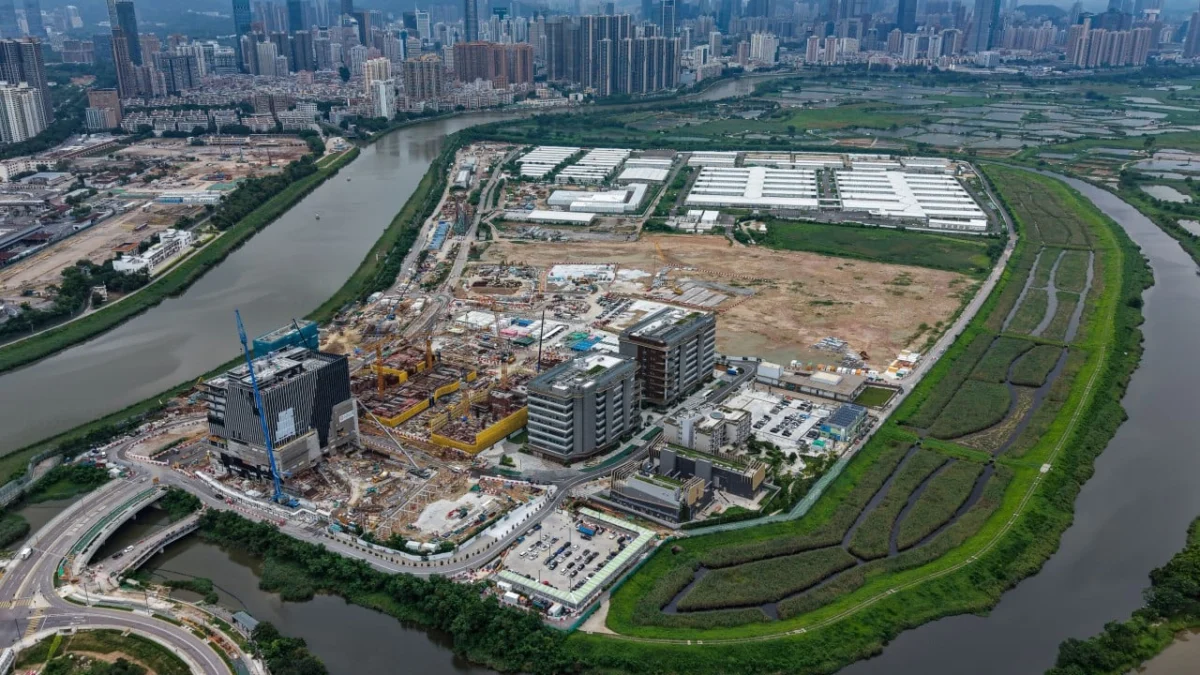
At the forefront of these recommendations is the Northern Metropolis, a transformative mega-development project first unveiled in 2021. This visionary initiative aims to repurpose approximately 30,000 hectares (74,132 acres) of land situated along Hong Kong’s northern border with mainland China. The ambitious scope of the project is designed to establish a new economic engine for the region, create a substantial housing supply to address the city’s perennial affordability challenges, and foster a vibrant university town environment conducive to research and talent development.
The Federation of Hong Kong Industries (FHKI) emphasized that the development of the Northern Metropolis over the next five years should be meticulously guided by clear objectives focused on industrial development, attracting and retaining enterprises, and ultimately, generating positive employment outcomes. This pragmatic approach underscores a desire for tangible economic benefits to be derived from this massive infrastructure undertaking.
The strategic significance of the Northern Metropolis cannot be overstated. Its proximity to the Greater Bay Area (GBA) economic powerhouse positions it as a crucial node for cross-border collaboration, innovation, and trade. By developing this vast tract of land, Hong Kong aims to unlock new avenues for economic diversification, moving beyond its traditional strengths in finance and logistics to embrace emerging industries and technologies. The project envisions a future where the Northern Metropolis serves as a hub for advanced manufacturing, research and development, and high-value services, attracting both domestic and international investment.
Strengthening Hong Kong’s Financial Prowess
Beyond the physical development of new urban areas, business chambers have also stressed the imperative of reinforcing Hong Kong’s status as an international financial centre. This involves not only maintaining its existing competitive advantages but also proactively adapting to evolving global financial landscapes and geopolitical shifts.
The American Chamber of Commerce in Hong Kong (AmCham) has specifically called for the establishment of a dedicated, single statutory entity tasked with streamlining coordination and fostering robust public-private partnerships for key development projects. Such a centralized body, proponents argue, would enhance efficiency, reduce bureaucratic hurdles, and ensure cohesive execution of strategic initiatives, particularly those involving significant private sector participation.
Furthermore, AmCham advocates for deeper integration within the Greater Bay Area (GBA) through the expansion of the Wealth Management Connect scheme. This includes increasing the quotas for cross-border wealth management services and broadening the range of eligible investment products available to investors. Such measures are expected to further enhance Hong Kong’s role as a vital gateway for capital flow between mainland China and the international markets, bolstering its position as a premier financial services hub. The Wealth Management Connect, launched in 2020, has already facilitated significant cross-border investment, and its expansion is seen as a natural progression to deepen financial integration within the GBA and unlock new growth opportunities.
Advancing the Artificial Intelligence Agenda
In parallel with its focus on infrastructure and finance, the business community has identified the advancement of Hong Kong’s artificial intelligence (AI) strategy as a critical pillar for future competitiveness. The rapid evolution of AI technologies across various sectors necessitates a proactive and strategic approach to foster innovation, attract talent, and develop a supportive ecosystem.
The integration of AI is seen as crucial for enhancing productivity, driving economic transformation, and creating new job opportunities. Business leaders are urging the government to invest in AI research and development, support the growth of AI-related industries, and ensure that Hong Kong’s workforce is equipped with the necessary skills to thrive in an AI-driven economy. This includes promoting STEM education, providing training programs for reskilling and upskilling, and creating an environment that encourages AI adoption by businesses of all sizes.
The implications of a robust AI strategy extend to multiple sectors, from healthcare and education to finance and manufacturing. By embracing AI, Hong Kong can enhance its service offerings, improve operational efficiencies, and develop innovative solutions to address societal challenges. Furthermore, a strong AI ecosystem can attract global AI talent and foster collaboration with leading research institutions, solidifying Hong Kong’s position as a regional AI innovation hub.
Background and Context: The Inaugural Five-Year Plan
The introduction of Hong Kong’s first-ever five-year plan marks a significant shift in its strategic planning approach. Historically, Hong Kong’s development has been guided by more ad-hoc policies and annual budgets. However, the current geopolitical and economic landscape, coupled with the city’s desire to align more closely with national development strategies, has necessitated a more structured and forward-looking planning framework.
The alignment with China’s 15th Five-Year Plan (2026-2030) is particularly important. This national blueprint sets out China’s overarching economic and social development goals, and Hong Kong’s five-year plan is designed to complement and contribute to these national objectives, while also addressing the city’s unique circumstances and strengths. This integration is expected to foster greater synergy between Hong Kong and the mainland, creating new opportunities for collaboration and mutual benefit.
The public consultation process, which garnered over 16,000 submissions, underscores the broad engagement from various stakeholders, including businesses, civil society organizations, and individual citizens. This extensive input is intended to ensure that the final five-year plan is comprehensive, inclusive, and reflective of the diverse needs and aspirations of the Hong Kong community.
Timeline of Key Developments
- 2021: The Northern Metropolis mega-development project is first announced, outlining its vision as an engine for growth, a housing hub, and a university town.
- Late 2023/Early 2024: The Hong Kong government launches the public consultation for its inaugural five-year plan.
- Friday [Date of consultation closure]: The public consultation period for the five-year plan officially closes, with over 16,000 submissions received.
- September [Year of publication]: The Hong Kong government is expected to publish its inaugural five-year plan, outlining the strategic direction for the city’s development from 2026 to 2030.
- 2026-2030: The period covered by mainland China’s 15th Five-Year Plan and Hong Kong’s inaugural five-year plan.
Supporting Data and Economic Context
The Northern Metropolis, envisioned to cover a significant portion of Hong Kong’s northern landmass, represents a substantial investment in infrastructure and urban development. The project’s success hinges on its ability to not only provide housing but also to create a vibrant economic ecosystem. According to projections, the Northern Metropolis aims to accommodate a significant population increase, potentially housing hundreds of thousands of residents. This influx of people will necessitate robust job creation within the development itself, ranging from construction and manufacturing to high-tech industries and research.
Hong Kong’s financial sector remains a cornerstone of its economy, contributing a significant percentage to its Gross Domestic Product (GDP). In 2023, financial and insurance activities accounted for approximately 20% of Hong Kong’s GDP. Strengthening this sector, particularly through enhanced GBA integration, could further boost this contribution. The Wealth Management Connect scheme, since its inception, has seen substantial transaction volumes, indicating a strong appetite for cross-border investment. Expanding its scope and quotas could unlock billions of dollars in new investment flows, further solidifying Hong Kong’s position as Asia’s wealth management hub.
The global AI market is experiencing exponential growth, with projected market sizes reaching trillions of dollars in the coming decade. Hong Kong’s strategic investment in AI can tap into this burgeoning market. The city’s existing strengths in finance, logistics, and its status as a gateway to mainland China provide a fertile ground for AI innovation and adoption. Investments in AI research and development, coupled with talent cultivation, are crucial for Hong Kong to capture a significant share of this rapidly expanding global market.
Potential Official Responses and Broader Implications
While official responses to the specific recommendations from business chambers are yet to be formally detailed, the government has consistently acknowledged the importance of these areas. The emphasis on the Northern Metropolis aligns with the administration’s stated commitment to land supply and urban development. Similarly, reinforcing Hong Kong’s status as an international financial centre is a perennial government objective. The proactive engagement with AI development also reflects a broader trend across global economies.
The implications of prioritizing these areas within the five-year plan are far-reaching. A successful Northern Metropolis development could alleviate housing pressures, foster new economic clusters, and create a more balanced urban landscape. A strengthened financial centre, coupled with deeper GBA integration, will enhance Hong Kong’s competitiveness and its role as a global financial gateway. Advancing the AI strategy will position Hong Kong at the forefront of technological innovation, driving productivity gains and creating new avenues for economic growth.
However, the success of these initiatives will depend on effective implementation, robust public-private collaboration, and the ability to attract and retain talent. The government’s commitment to addressing the recommendations from business chambers, alongside broader public input, will be crucial in shaping a comprehensive and impactful five-year plan that charts a prosperous course for Hong Kong. The upcoming publication of the plan in September will provide a clearer picture of how these priorities will be translated into concrete policy actions and developmental strategies.