Nigerian London Bus aunty meets UK PM in viral bus fare campaign
In a high-profile convergence of grassroots social media influence and national policy, Nigerian-born mental health nurse and digital content creator Bemi Orojuogun, widely recognized as the London Bus Aunty, has joined forces with United Kingdom Prime Minister Andy Burnham to promote a significant shift in national transport policy. The collaboration, unveiled on Wednesday, centers on the government’s commitment to implementing a nationwide £2 cap on bus fares across England—a move intended to ease the cost-of-living burden for millions of commuters.
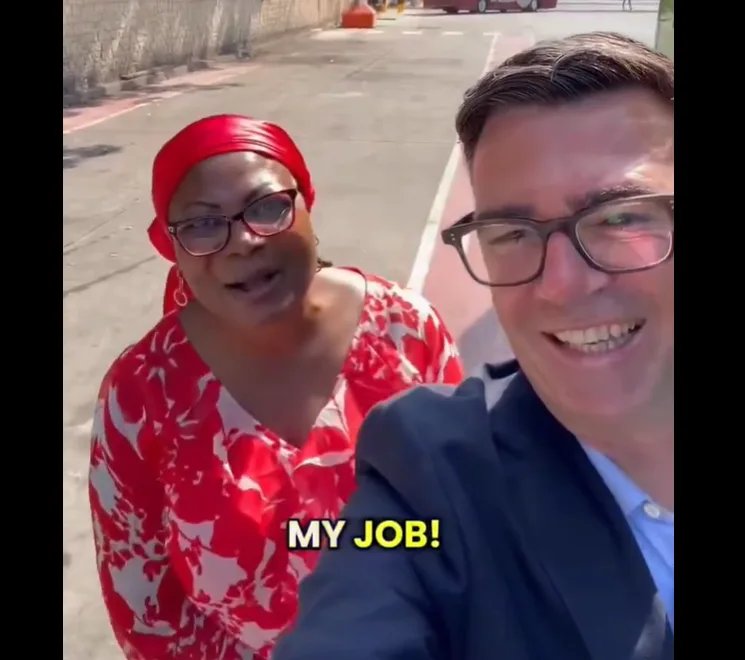
The campaign video, which has rapidly circulated across Instagram and TikTok, features the Prime Minister alongside Orojuogun, leveraging her established brand as a champion of London’s transit system to communicate complex policy changes to a younger, digital-native demographic.
The Genesis of the London Bus Aunty Phenomenon
Bemi Orojuogun’s trajectory from a dedicated healthcare professional to a globally recognized influencer is a study in the power of niche content creation. A resident of the United Kingdom for over three decades, Orojuogun began gaining traction in 2024 through a series of distinctive videos. Employing forced-perspective camera techniques, she captured the movement of London’s iconic red double-decker buses, pairing the visuals with her signature warm demeanor.
What began as a personal hobby soon resonated with a broader audience, eventually amassing a following of more than 200,000 on TikTok and over 20,000 on Instagram. Her ability to transform a mundane urban sight into a compelling digital aesthetic caught the attention of major commercial entities, including luxury fashion house Burberry, audio equipment manufacturer JBL, and the tourism operator City Sightseeing. Her influence reached a critical turning point when she collaborated with London Mayor Sadiq Khan to promote the city’s zero-emission bus fleet, signaling her transition into a trusted voice for public sector messaging.
Chronology of the £2 Fare Cap Initiative
The announcement of the nationwide fare cap represents the culmination of a broader strategy to incentivize public transport usage. The timeline of this policy shift is rooted in regional successes that preceded the national rollout:
- 2023–2024 (Regional Testing): The £2 fare cap was initially piloted in Greater Manchester, under the leadership of then-Mayor Andy Burnham. Data from the Greater Manchester Combined Authority indicated that the cap led to a marked increase in bus patronage, particularly among low-income households and students.
- Early 2025: The success of the Manchester pilot served as the primary evidence base for the national proposal, as the government sought ways to address inflation-driven transport costs.
- Mid-2025: Political discourse intensified regarding the financial feasibility of extending the subsidy to the rest of England, with economists debating the trade-off between fiscal expenditure and the socio-economic benefits of increased mobility.
- July 2026 (The Announcement): Prime Minister Burnham officially confirmed the nationalization of the policy, opting for a high-visibility social media launch featuring Orojuogun to maximize public engagement.
Strategic Collaboration and Official Responses
The decision to feature Orojuogun in the official announcement was a calculated effort by the Prime Minister’s communications team to humanize a policy that might otherwise be perceived as dry or overly bureaucratic. By framing the policy as a win for the "Bus Aunty," the government effectively tapped into her established credibility with the commuting public.
In the viral clip, Prime Minister Burnham addressed the skeptics directly, stating, "For too long, people said it’s not possible to reduce bus fares. Well, we showed everybody in Greater Manchester that it is possible. And today, I’m taking the £2 fare cap national."
Orojuogun’s presence provided a lighthearted, relatable counterpoint to the political rhetoric. When the Prime Minister introduced her as a "special guest," she humorously retorted, "Oh, Prime Minister, you’re stealing my job!" This exchange served to bridge the gap between the administration and the public, transforming a policy milestone into a memorable social media moment. In a playful follow-up on his social media channels, the Prime Minister quipped, "Rebranding as Bus Andy," acknowledging the informal tone that characterizes the most effective modern political communication.

Supporting Data and Economic Context
The policy to cap bus fares at £2 is not merely a symbolic gesture but a strategic intervention in the UK’s cost-of-living crisis. According to transport sector data, public transport costs have risen by approximately 15% over the last three years, often outpacing wage growth.
The economic implications of the £2 cap are twofold:
- Direct Cost Reduction: By providing a price ceiling, the government expects an immediate increase in disposable income for commuters who rely on bus services as their primary mode of transport.
- Increased Patronage: Historical data from the Manchester pilot suggested a 10% to 15% increase in ridership within the first six months of the implementation. Increased ridership is projected to reduce private vehicle traffic, contributing to lower carbon emissions and decreased road congestion—a key pillar of the government’s environmental agenda.
Independent analysts note that while the subsidy requires significant government expenditure, the long-term gains in economic productivity—facilitated by better access to jobs and education—are expected to offset the initial fiscal burden.
Impact on the Digital Content Ecosystem
Orojuogun’s involvement in this campaign highlights a shifting trend in political marketing. Government institutions are increasingly moving away from traditional press briefings in favor of partnerships with influencers who command high levels of audience trust.
This is not the first time Orojuogun has been recognized for her cultural impact. In 2025, her work was formally acknowledged when she received a nomination in the "Video of the Year" category at the TikTok UK Awards. This recognition underscored the shift of social media creators from entertainment-only figures to legitimate cultural stakeholders. By aligning with a public figure like Orojuogun, the Prime Minister’s office has effectively demonstrated an understanding of the current digital landscape, where policy advocacy is most effective when it is embedded within existing cultural conversations.
Broader Implications and Future Outlook
The collaboration between the Prime Minister and the London Bus Aunty serves as a case study for future government engagement strategies. As the UK government moves forward with the implementation of the £2 fare cap, the success of the policy will likely be measured by the stability of the transport network and the sustained growth of passenger numbers.
For Orojuogun, the partnership marks a significant professional milestone, solidifying her status as a bridge between the Nigerian diaspora community and the wider British public. Her journey—from observing buses from the roadside to endorsing national transport policy—mirrors the changing nature of influence in the 21st century.
As the government continues to refine its transport agenda, the inclusion of voices like Orojuogun suggests a departure from exclusionary political discourse. The "Bus Aunty" brand, built on the simple, consistent celebration of public transit, has proven to be a surprisingly effective vehicle for public policy, proving that in the digital age, the most powerful messages are often those delivered with authenticity, consistency, and a touch of humor.
Looking ahead, the government faces the challenge of sustaining the £2 cap amid fluctuating fuel prices and operational costs for private bus operators. However, with the backing of popular digital personalities, the administration has successfully framed the policy as a "win-win" for both the public and the government, setting a high bar for future public-private digital collaborations. The coming months will be critical in determining whether this viral momentum can be translated into tangible, long-term improvements in the daily lives of the British public.