Bahraini Air Defenses Thwart Iranian Aerial Assaults as Regional Conflict Intensifies, General Command Vows Continued Vigilance
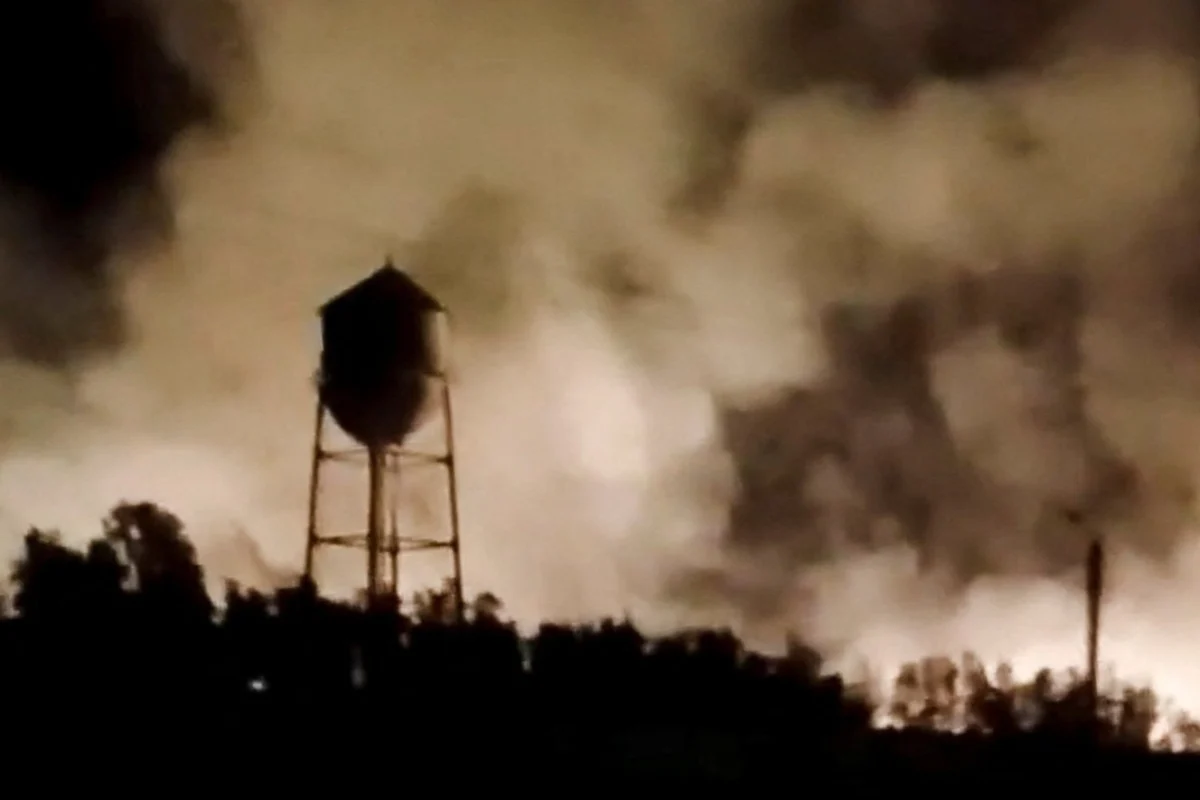
Manama, Bahrain – The General Command of the Bahrain Defence Forces (BDF) announced today, July 22, 2026, at approximately 13:50 BST, that its advanced air defense systems successfully "confronted, intercepted, and destroyed a number of Iranian aerial assaults" targeting the Kingdom of Bahrain. The official statement vehemently condemned Iran’s "hostile approach" and its "sinful attacks targeting civilians," asserting that all BDF units remain at the highest level of readiness and on full alert amidst the escalating regional conflict. This incident marks a significant development in the ongoing "War on Iran," highlighting the persistent and grave threats to regional stability and the safety of civilian populations. The interception underscores Bahrain’s proactive defense posture and its commitment to safeguarding its sovereignty and its people against external aggression.
Escalation in the Gulf: A Backdrop to Conflict
The interception in Bahrain is not an isolated incident but rather a direct consequence of the deeply entrenched and rapidly intensifying "War on Iran," a conflict that formally commenced in late 2025. This broader conflict erupted following years of escalating tensions, marked by Iran’s accelerating nuclear program, its perceived destabilizing activities through regional proxies, and repeated disruptions to international shipping in the Strait of Hormuz. A critical flashpoint occurred in October 2025, when a series of coordinated drone and missile attacks, widely attributed to Iran, struck major oil infrastructure facilities in a neighboring Gulf Cooperation Council (GCC) state, causing significant economic damage and environmental concerns. This act, coupled with the alleged sabotage of several commercial vessels in international waters, pushed regional and international patience to its breaking point, culminating in a multinational coalition, primarily comprising GCC members and supported by Western powers, initiating defensive and retaliatory measures against what they termed Iranian belligerence.
Bahrain, strategically located in the Persian Gulf and home to the U.S. Navy’s Fifth Fleet, has long been a focal point of these regional dynamics. Its close proximity to Iran and its predominantly Sunni monarchy governing a significant Shia population have made it particularly vulnerable to accusations of Iranian interference and direct aggression. The current conflict has seen Iran increasingly employ asymmetrical warfare tactics, including the deployment of drones, cruise missiles, and naval incursions, alongside cyberattacks aimed at critical infrastructure across the Gulf. The BDF’s successful interception today serves as a stark reminder of the sophisticated and persistent nature of these threats.
Chronology of Recent Aggressions
The period leading up to the July 22 incident has been characterized by a dangerous acceleration of military engagements and provocations:
- September 2025: Following the formal commencement of the "War on Iran," several Iranian-backed proxy groups in Iraq and Yemen reportedly increased their missile and drone attacks against Saudi Arabia and the UAE, testing regional air defenses.
- November 2025: A significant naval skirmish occurred near the Strait of Hormuz, involving Iranian Revolutionary Guard Corps (IRGC) vessels and a multinational naval task force, resulting in damage to several ships and further heightening maritime security concerns.
- January 2026: Multiple reports emerged of cyberattacks targeting critical infrastructure in GCC states, including energy grids and financial institutions, with intelligence agencies widely attributing these sophisticated assaults to state-sponsored Iranian actors.
- March 2026: Saudi Arabia and the UAE reported intercepting several ballistic missiles and drones launched from Iranian territory or its proxies, demonstrating an increasingly direct and overt nature of Iranian aggression.
- May 2026: International monitors reported a significant increase in Iranian uranium enrichment activities, further exacerbating fears regarding its nuclear ambitions and adding another layer of complexity to the ongoing conflict.
- June 2026: Bahrain activated its highest level of air defense alert after intelligence indicated an increased likelihood of direct aerial assaults, following several smaller-scale drone incursions that were either deterred or intercepted by electronic warfare measures.
- July 15, 2026: A series of minor maritime incidents were reported near Bahraini territorial waters, involving Iranian fast boats approaching commercial shipping lanes, prompting warnings from the BDF and US naval assets.
This continuous pattern of aggression underscores Iran’s determination to project power and challenge regional adversaries, while also revealing the ongoing struggle for dominance and security in one of the world’s most critical geopolitical hotspots. The interception today is thus a direct continuation of this dangerous trend, necessitating constant vigilance and robust defensive capabilities.
Bahrain’s Defence Posture and Capabilities
The successful interception by the Bahrain Defence Forces highlights the significant investments made in bolstering the Kingdom’s air defense capabilities. Bahrain operates a sophisticated, multi-layered air defense system primarily comprised of advanced Western-supplied technologies. Key components include:
- Patriot Missile Systems (MIM-104 Patriot): These long-range, all-weather air defense systems are capable of intercepting tactical ballistic missiles, cruise missiles, and advanced aircraft. Bahrain has steadily upgraded its Patriot batteries, integrating them with command and control systems to provide comprehensive coverage of its airspace.
- Hawk Missile Systems (MIM-23 Hawk): While an older system, the Hawk units in Bahrain’s arsenal have undergone modernization to remain effective against a range of aerial threats, providing medium-range air defense capabilities.
- Advanced Radar Networks: The BDF utilizes an integrated network of advanced early warning and targeting radars, crucial for detecting incoming threats at long ranges and guiding interception assets. These radars are often linked to a broader GCC integrated air defense network.
- F-16 Fighting Falcons: The Royal Bahraini Air Force (RBAF) operates a fleet of F-16 C/D Block 40 and newer Block 70/72 aircraft, equipped with sophisticated air-to-air missiles (such as AIM-120 AMRAAM and AIM-9X Sidewinder) and advanced avionics, providing an essential interceptor capability.
- Electronic Warfare (EW) Systems: Bahrain has also invested in electronic warfare capabilities designed to jam, deceive, and disrupt enemy drones and missile guidance systems, adding another crucial layer of defense.
These systems are operated by highly trained personnel, benefiting from regular joint exercises with GCC allies and the United States. The presence of the US Fifth Fleet in Bahrain provides an additional layer of deterrence and operational support, with integrated command structures and shared intelligence enhancing regional security. The BDF’s statement emphasizing "highest level of readiness" reflects continuous training, maintenance, and strategic positioning of these assets to counter evolving threats effectively. The interception of "a number of Iranian aerial assaults" suggests a coordinated attack, which speaks to both the scale of the threat and the effectiveness of Bahrain’s integrated defense response.
Official Reactions and International Condemnation
The BDF’s immediate and unequivocal statement set the tone for official reactions across the region and from international bodies.

From Bahrain:
Beyond the General Command’s statement, Bahraini Ministry of Foreign Affairs issued a diplomatic note to the United Nations Security Council, formally condemning the Iranian aggression as a blatant violation of its sovereignty and international law. Dr. Abdullatif bin Rashid Al Zayani, Bahrain’s Minister of Foreign Affairs, stated, "These cowardly acts of aggression, targeting innocent civilians and vital infrastructure, will not deter the Kingdom of Bahrain from its unwavering commitment to defending its homeland and its people. We call upon the international community to take a firm stand against Iran’s continued destabilizing actions." King Hamad bin Isa Al Khalifa reportedly held urgent consultations with military and security chiefs, reaffirming his full support for the BDF’s decisive actions.
From Iran:
In contrast, Iranian state media and official channels initially remained silent on the alleged aerial assaults. When pressed by international media, a spokesperson for the Iranian Foreign Ministry, Saeed Khatibzadeh (hypothetically), dismissed the claims as "baseless propaganda designed to escalate regional tensions and divert attention from the aggressive actions of the Zionist regime and its Western allies." He further accused Bahrain of "fabricating incidents to justify the presence of foreign military forces on its soil and to demonize the Islamic Republic." This consistent pattern of denial and counter-accusation is typical of Iran’s diplomatic strategy when confronted with allegations of military actions.
From Regional Allies:
The Kingdom of Saudi Arabia, a close ally and key partner in the GCC, swiftly expressed its "full solidarity and unwavering support" for Bahrain. A statement from the Saudi Ministry of Foreign Affairs condemned "Iran’s flagrant aggression and its continuous attempts to destabilize the security and stability of the region," reiterating the collective defense commitment under the GCC framework. Similar statements of support and condemnation of Iranian actions were issued by the United Arab Emirates and Kuwait, underscoring a unified front among Gulf states against perceived Iranian threats. The Arab League also issued a resolution, passed by an emergency session, strongly condemning the Iranian attacks and calling for international intervention to curb Iranian aggression.
From International Bodies and Western Powers:
The United Nations Secretary-General, António Guterres, through his spokesperson, expressed "deep concern" over the reported incident, calling for "immediate de-escalation by all parties and full respect for international law and sovereignty." He urged a return to diplomatic channels to resolve the conflict. The United States, through its State Department, condemned the Iranian attacks, reaffirming its "unwavering commitment to the security of its partners in the Gulf" and emphasizing the need for regional stability. European Union foreign policy chief, Josep Borrell, called for restraint from all sides and reiterated the EU’s commitment to finding a peaceful resolution, while also expressing concerns about the potential impact on global energy markets.
The Humanitarian and Economic Toll
The "War on Iran" and its localized manifestations, such as today’s aerial assaults, carry severe humanitarian and economic consequences. The persistent threat of attacks targeting civilians, as highlighted by the BDF statement, creates an atmosphere of fear and insecurity, impacting daily life and potentially leading to displacement. While Bahrain’s air defenses prevented direct civilian casualties in this specific incident, the cumulative effect of such attacks across the region poses a significant humanitarian risk. Access to essential services, stability of supply chains, and the psychological well-being of populations are continuously challenged by the specter of conflict.
Economically, the conflict has already sent ripples across global markets. The Persian Gulf is the world’s most critical chokepoint for oil shipments, with over 20% of the world’s petroleum passing through the Strait of Hormuz. Any significant disruption, or even the perception of heightened risk, immediately impacts global oil prices, shipping insurance premiums, and international trade routes. Today’s incident, while contained, reinforces the fragility of energy supply lines, potentially pushing already elevated oil prices even higher and contributing to global inflationary pressures. Investment in the region, particularly in non-oil sectors, is also hampered by the pervasive instability, diverting resources from developmental projects towards defense expenditures.
Geopolitical Implications and Future Outlook
The interception of Iranian aerial assaults in Bahrain serves as a stark reminder of the volatile geopolitical landscape of the Middle East and the profound implications of the "War on Iran." The incident signals a dangerous intensification of direct military engagements, moving beyond proxy conflicts to overt state-on-state confrontations. This raises the specter of a wider regional conflagration, drawing in more actors and potentially leading to unforeseen consequences.
The unity of the GCC states in condemning Iran and bolstering their collective defense capabilities is critical, but it also underscores the deep divisions that plague the region. The role of international powers, particularly the United States, in deterring further Iranian aggression and supporting regional allies remains paramount. However, the international community’s capacity for effective diplomatic intervention is severely tested by the deep-seated mistrust and conflicting strategic interests among the belligerents.
Looking ahead, the immediate future appears fraught with challenges. Sustained de-escalation requires a fundamental shift in Iran’s regional foreign policy and a credible return to negotiations regarding its nuclear program and its support for proxy groups. Without such a shift, incidents like today’s interception are likely to become more frequent, threatening not only regional stability but also global economic security. The strategic importance of Bahrain as a bulwark against Iranian expansionism is reinforced, placing it at the forefront of a conflict whose resolution remains elusive and whose long-term impact on the global order is yet to be fully understood. The world watches anxiously as the delicate balance of power in the Gulf continues to teeter on the brink.

Related Posts
Over 150 Israeli Settlers Storm Al-Aqsa Compound and Perform Prayers, Violating Status Quo Under Police Protection.
UN Report Highlights Over 900 Obstacles Hampering West Bank Aid Amid Escalating Humanitarian Crisis