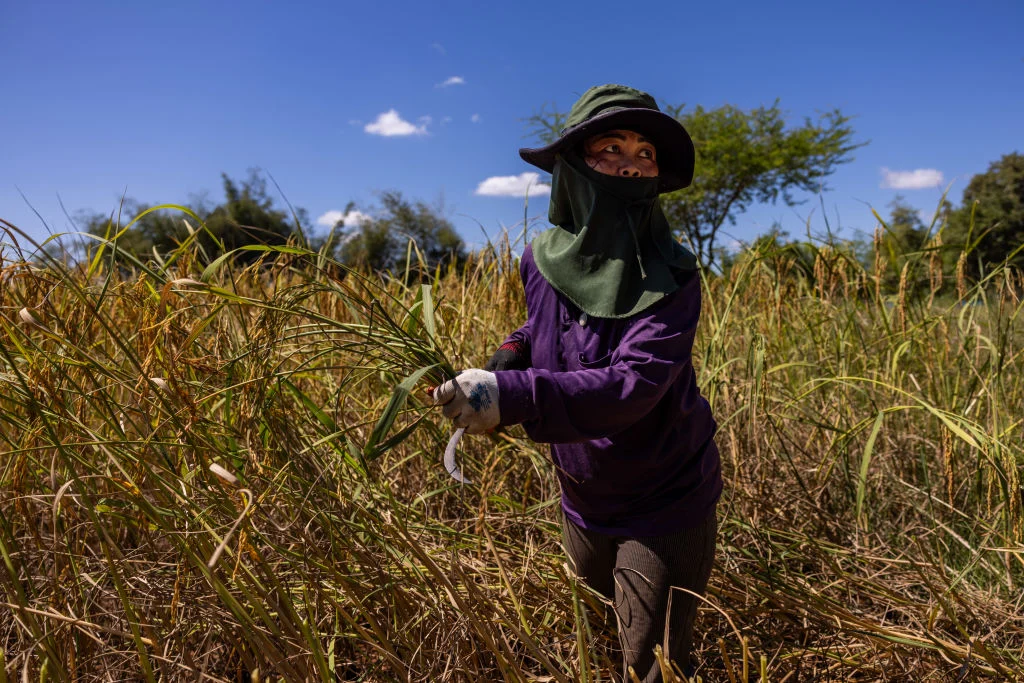
Global Climate Resilience Under Pressure as WMO Forecasts Historic El Nino Event for 2026
The World Meteorological Organization (WMO) has issued a comprehensive forecast indicating that a powerful El Niño event is likely to develop in 2026, potentially ranking as one of the strongest climatic shifts on record. This naturally occurring climate pattern, characterized by the unusual warming of surface waters in the central and eastern Pacific Ocean, threatens to disrupt global weather systems, triggering a cascade of floods, prolonged droughts, and record-breaking heatwaves. Shaun Martin, the vice president for adaptation and resilience at the World Wildlife Fund (WWF) in the United States, recently emphasized the gravity of this projection by invoking the words of H.G. Wells: “Adapt or perish, now as ever, is nature’s inexorable imperative.” A century after those words were written, they have transitioned from philosophical observation to a practical roadmap for survival in an era of rapid environmental volatility.
The Mechanics of El Niño and the 2026 Projection
El Niño is the warm phase of the El Niño-Southern Oscillation (ENSO) cycle. Under normal conditions, trade winds blow west across the Pacific, pushing warm water toward Asia and allowing cooler water to rise from the depths near South America. During an El Niño event, these trade winds weaken or even reverse, allowing the warm pool of water to migrate eastward. This shift releases massive amounts of heat into the atmosphere, altering the path of the jet stream and fundamentally changing precipitation and temperature patterns across every continent.
The WMO’s 2026 forecast is particularly concerning because it occurs against a backdrop of unprecedented baseline global temperatures. While El Niño is a natural phenomenon, its effects are now superimposed upon a world that has seen consistent year-over-year warming due to greenhouse gas emissions. Meteorological models suggest that the 2026 event could push global average temperatures well beyond the 1.5-degree Celsius threshold established by the Paris Agreement, albeit temporarily, creating a "perfect storm" of natural variability and human-induced climate change.
A Chronology of Intensifying Climate Patterns
To understand the significance of the 2026 forecast, it is necessary to examine the timeline of recent ENSO cycles and their escalating impacts.
- 1997–1998: One of the most powerful El Niño events in history caused approximately $35 billion in direct damages and resulted in an estimated 30,000 deaths worldwide due to extreme weather and disease outbreaks.
- 2015–2016: Known as the "Godzilla" El Niño, this event led to record-breaking global temperatures, massive coral bleaching on the Great Barrier Reef, and severe droughts in Ethiopia and Southeast Asia that threatened food security for millions.
- 2020–2023: An unusually long "triple-dip" La Niña (the cool phase) provided a temporary, slight cooling effect, yet these years still ranked among the hottest on record, indicating that the planet’s "cool" phases are now warmer than the "warm" phases of the mid-20th century.
- 2023–2024: A moderate-to-strong El Niño returned, contributing to 2023 becoming the hottest year ever recorded.
- 2026 (Projected): The WMO anticipates a "super" El Niño. Unlike previous events, the 2026 cycle will interact with ocean temperatures that have already reached record highs in 2024 and 2025, suggesting that the upcoming event will have more thermal energy to fuel extreme weather than any prior occurrence.
Quantifying the Impact: Supporting Data and Economic Risks
The economic and human costs of a major El Niño are staggering. According to a study published in the journal Science by researchers at Dartmouth College, major El Niño events can suppress global economic growth for years after the weather patterns return to normal. The 1982-83 and 1997-98 events collectively resulted in $4.1 trillion and $5.7 trillion in global income losses, respectively.
For the 2026 event, analysts suggest the following data-driven risks:
- Agriculture: Significant yield reductions are expected in "breadbasket" regions. In past strong El Niño years, corn and wheat production in parts of Africa and Australia dropped by as much as 20% to 50%.
- Fisheries: The warming of the eastern Pacific suppresses the upwelling of nutrient-rich cold water, which can collapse anchovy and sardine populations off the coast of South America, impacting the global fishmeal supply chain.
- Public Health: Warmer temperatures and altered rainfall patterns expand the habitat for disease vectors. Increased incidences of malaria, dengue fever, and cholera are statistically correlated with El Niño peaks.
- Energy: Hydroelectric power generation in countries like Brazil and Colombia often plummets during El Niño-induced droughts, forcing a reliance on more expensive and carbon-intensive fossil fuel backups.
Official Responses and the Call for Adaptation
International bodies and environmental organizations are shifting their focus from mere mitigation to urgent adaptation. The WMO has used the 2026 forecast to reiterate the importance of the "Early Warnings for All" initiative, a UN-led program aiming to ensure that every person on Earth is protected by early warning systems by 2027.
Petteri Taalas, the former Secretary-General of the WMO, has previously noted that while we cannot prevent an El Niño from forming, we can significantly reduce its lethality through preparation. "The gap between our ability to forecast these events and our ability to respond to them remains our greatest vulnerability," Taalas stated in recent climate briefings.
Shaun Martin and the WWF advocate for "nature-based solutions" as a primary defense mechanism. This includes restoring mangroves to buffer against El Niño-fueled storm surges, protecting tropical forests to maintain local moisture cycles during droughts, and implementing regenerative agricultural practices that improve soil water retention. The WWF argues that the traditional approach of building "hard" infrastructure like concrete sea walls is no longer sufficient; instead, resilience must be integrated into the natural landscape.
Regional Implications and Fact-Based Analysis
The 2026 El Niño will not impact all regions equally. A geographical analysis reveals specific "hotspots" of vulnerability:
Southeast Asia and Australia
These regions typically experience severe drought and extreme heat during El Niño. The 2026 event poses a critical risk for "megafires" in Indonesia and Eastern Australia. The resulting haze and air pollution can cause respiratory crises for tens of millions of people across the ASEAN region, while the agricultural sector faces total crop failures in non-irrigated areas.
South and Central America
In contrast, the west coast of South America often faces torrential rains. Countries like Peru and Ecuador are preparing for massive landslides and infrastructure destruction. In Central America, the "Dry Corridor" is expected to face intensified drought, which has historically been a primary driver of climate-induced migration toward North America.
Sub-Saharan Africa
El Niño often leads to suppressed rainfall in Southern Africa and excessive moisture in East Africa. For a region where a large percentage of the population relies on rain-fed subsistence farming, a strong 2026 El Niño could trigger a widespread humanitarian crisis, requiring preemptive international food aid and water management strategies.
North America
The southern United States typically sees cooler, wetter winters, which can alleviate drought in places like California but also increase the risk of devastating floods and mudlines. Conversely, the northern U.S. and Canada often experience much warmer winters, which can disrupt the timber industry and winter tourism while contributing to an earlier and more intense wildfire season the following spring.
The Adaptation Gap and Future Outlook
The 2026 forecast serves as a litmus test for global climate policy. While the international community has made strides in renewable energy adoption, the "adaptation gap"—the difference between the costs of adapting to climate change and the amount of money actually spent on it—continues to widen. The United Nations Environment Programme (UNEP) estimates that the adaptation finance gap is currently $194 billion to $366 billion per year.
The looming 2026 El Niño emphasizes that climate change is no longer a distant threat but a present reality that requires immediate systemic changes. The transition from H.G. Wells’ philosophical warning to today’s meteorological reality suggests that the window for proactive adaptation is closing.
As 2026 approaches, the focus of global governments must shift toward "climate-proofing" infrastructure, diversifying food sources, and investing in decentralized water management. The strength of the 2026 El Niño may be inevitable, but the extent of the disaster it brings will depend entirely on the speed and scale of human adaptation in the coming months. The message from the WMO and organizations like the WWF is clear: the data is in, the warning has been issued, and the time for theoretical debate has passed. The imperative now is to build resilience before the heat arrives.

Related Posts
Constitutional Court of South Africa Bars Shell Oil Exploration in Landmark Victory for Environmental and Community Rights

The Battle for Saldanha Bay: South Africa’s Ambitious Ocean Economy Strategy Faces Legal and Environmental Reckoning