Caitlin Clark Graces NBA 2K27 Deluxe Edition Cover, Igniting Fan Debate Over Image Authenticity and Franchise Direction
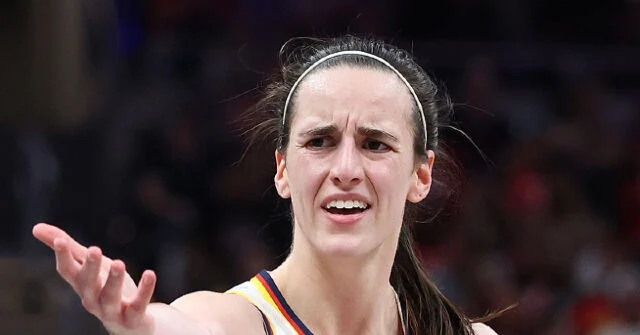
Indiana Fever sensation Caitlin Clark, a transcendent figure in women’s basketball, has been officially unveiled as a featured cover athlete for the NBA 2K27 Deluxe Edition. The announcement, a significant milestone for both Clark and the WNBA, was met with widespread acclaim for recognizing her immense impact on the sport. However, the accompanying visual—a digital rendering intended to depict Clark—swiftly became the subject of intense scrutiny and debate among online fans and media, with many expressing concern over its perceived lack of resemblance to the athlete and speculating about the use of computer-generated imagery (CGI) or artificial intelligence (AI) in its creation.
The Uncanny Valley: Fan Scrutiny of the Digital Likeness
The reveal of Clark on the coveted NBA 2K27 Deluxe Edition cover, a prominent placement historically reserved for the NBA’s biggest stars, was initially celebrated as a testament to her skyrocketing popularity and influence. Yet, the celebratory mood quickly shifted as high-resolution images of the cover began circulating across social media platforms. Fans, known for their meticulous attention to detail and high expectations for realism in sports simulations, immediately took issue with the digital portrayal of Clark. Numerous comments highlighted a perceived disconnect between the digital rendering and Clark’s actual appearance, describing it as "generic," "unsettling," or bearing an "uncanny valley" effect.
Darren Rovell, a well-known sports business journalist, encapsulated the sentiment shared by many, stating, "Weird to put someone else’s face on her. They don’t do that for NBA cover athletes." This observation underscored a critical point of contention: the perceived inconsistency in the quality and accuracy of player likenesses across different iterations or athletes within the same game franchise. For a series renowned for its graphical fidelity and commitment to replicating real-world athletes with astonishing accuracy, the perceived misstep in Clark’s depiction struck a discordant note. Other commentators were more direct, with some questioning whether the image had been generated by AI or was an early, unrefined CGI render. The widespread consensus was that the digital avatar did not faithfully capture Clark’s distinctive facial features, a standard expectation for any athlete gracing a mainstream video game cover, particularly one from a franchise as globally recognized as NBA 2K.
Caitlin Clark’s Phenomenal Rise: A Catalyst for Change
Caitlin Clark’s inclusion on such a prominent NBA 2K cover is not merely a marketing decision but a reflection of her unprecedented ascent in the world of basketball. Her collegiate career at the University of Iowa was nothing short of historic, marked by record-breaking scoring feats that saw her become the NCAA’s all-time leading scorer, male or female. Clark’s electrifying play style, characterized by her deep three-pointers, exceptional court vision, and clutch performances, captivated a national audience, shattering viewership records for women’s college basketball. The 2024 NCAA Women’s Basketball Championship game, featuring Clark’s Iowa Hawkeyes, drew an astounding 18.9 million viewers, surpassing the men’s championship game for the first time ever and solidifying her status as a generational talent capable of drawing unprecedented attention to the sport.
Upon entering the WNBA as the first overall pick in the 2024 draft by the Indiana Fever, Clark’s impact translated immediately. Her professional debut, and indeed every game she has played, has been a major event, leading to sold-out arenas, record-breaking merchandise sales, and a significant surge in WNBA viewership across all platforms. The "Clark Effect" has demonstrably elevated the league’s profile, attracting new fans and unprecedented media interest. This meteoric rise made her an undeniable candidate for a major video game cover, a role that traditionally signifies an athlete’s peak cultural relevance and marketability. Her presence on the NBA 2K27 Deluxe Edition cover, therefore, represents a strategic move by 2K to tap into this immense popularity and broaden the game’s appeal to her expansive fanbase.
The Significance of the NBA 2K Cover: A Mainstream Crossover
Historically, the NBA 2K series has featured an array of basketball legends and contemporary superstars, from Michael Jordan and LeBron James to Stephen Curry and Kevin Durant. Gracing the cover of an NBA 2K edition, especially one as prestigious as the Deluxe Edition, is a definitive marker of an athlete’s global appeal and cultural impact. For a WNBA player to be featured on a mainstream NBA 2K cover, rather than a WNBA-specific edition, is a groundbreaking moment.
In previous years, the 2K franchise had introduced WNBA-specific cover editions, recognizing the growing prominence of women’s basketball. For instance, Angel Reese, another breakout star, made the cover of the WNBA-specific 2K26 game last year. Prior to that, other star WNBA players such as Diana Taurasi, A’ja Wilson, and Sabrina Ionescu had been featured on similar WNBA-centric covers. The decision to place Clark on the NBA 2K27 Deluxe Edition, alongside NBA stars like Victor Wembanyama (standard edition) and Derrick Rose (ultra edition), signals a deliberate strategy by 2K to integrate the WNBA’s burgeoning star power directly into its primary, globally distributed product. The fact that 2K did not announce a separate WNBA edition for 2K27 further strengthens the belief among fans and analysts that the company is leveraging Clark’s cross-gender appeal to honor her with a more mainstream and visible placement, thereby significantly increasing the WNBA’s exposure to a broader gaming audience. This move implicitly acknowledges the blurring lines between fanbases and the shared passion for elite basketball, regardless of gender.
A History of Player Likeness in Gaming: Evolution and Challenges
The controversy surrounding Clark’s digital likeness is not an isolated incident but rather a recurring challenge in the complex world of video game development, particularly for sports titles that pride themselves on realism. The evolution of player likeness in video games has been a long and arduous journey. In the early days of gaming, character models were rudimentary, relying on pixelated approximations. With advancements in graphics technology, particularly in the PlayStation 2 and Xbox eras, developers began to use motion capture and 3D scanning to create more lifelike representations. Today, photogrammetry—a technique involving taking hundreds of photos from various angles to create a detailed 3D model—is standard practice for capturing athlete likenesses in high-budget sports simulations like NBA 2K.
Despite these sophisticated techniques, achieving a perfect, universally accepted digital twin remains incredibly difficult. Human perception is acutely sensitive to facial features, and even minor discrepancies can trigger the "uncanny valley" effect, where an almost human-like figure appears unsettling or repulsive due to subtle imperfections. Factors such as lighting, animation, and the subjective interpretation of artists can all influence the final output. Furthermore, the development cycle for major titles like NBA 2K is extensive, often requiring player scans and asset creation many months, if not a year, before release. This can mean that early renders or models are subject to iterative improvements. However, for a cover athlete, the expectation is that the final, approved image will be polished to perfection. The debate over Clark’s cover image highlights the ongoing tension between technological capabilities, artistic interpretation, and the demanding expectations of a global fanbase that has grown accustomed to near-photorealistic depictions of their favorite athletes.
Broader Context: The Rise of AI and Digital Rendering Scrutiny
The discussion around Caitlin Clark’s NBA 2K27 cover also intersects with a wider contemporary concern: the increasing prevalence and sophistication of AI-generated and heavily manipulated digital imagery. In an era where deepfakes and AI art generators are becoming commonplace, public trust in digital authenticity has eroded. This heightened skepticism means that any image that appears even slightly "off" or unnatural is immediately subjected to intense scrutiny, with many quick to suspect AI involvement.
While video game character models are traditionally created through a combination of 3D modeling software, texture mapping, and human artistry, the rapid advancements in AI in areas like facial reconstruction and generative art blur the lines. It is plausible that AI tools are used in various stages of game development, from enhancing textures to refining character animations, but the notion of an entirely AI-generated cover image for a major title would be a significant, and potentially controversial, departure from traditional methods. The swiftness with which fans attributed the perceived flaws to "CGI or AI" reflects this contemporary cultural anxiety about synthetic media and the desire for genuine, human-crafted artistry, especially when it concerns the representation of beloved public figures.
Strategic Implications for the WNBA and 2K
The decision to feature Caitlin Clark on the NBA 2K27 Deluxe Edition cover, despite the immediate controversy over her likeness, carries significant strategic implications for both the WNBA and the 2K franchise. For the WNBA, it represents an unparalleled opportunity for mainstream exposure. By integrating its most marketable star into the flagship NBA 2K product, the league gains visibility among a vast, predominantly male gaming demographic that might not otherwise follow women’s basketball. This crossover appeal is crucial for the WNBA’s continued growth, helping to convert casual observers into dedicated fans and further legitimizing the league on a global scale. The increased visibility could translate into more viewership, greater sponsorship interest, and ultimately, enhanced financial stability for the league and its players.
For 2K, the move is a calculated risk with potentially high rewards. While the immediate backlash concerning the image quality is a public relations challenge, the underlying strategy is sound. Clark’s name recognition and drawing power are undeniable. Her presence on the cover is expected to drive significant sales, particularly among her extensive fanbase, many of whom might be first-time purchasers of the NBA 2K series. It also positions 2K as a progressive publisher willing to break traditional molds and celebrate diverse talent. The controversy itself, while negative in tone, has undeniably amplified the announcement, ensuring that the NBA 2K27 cover reveal has garnered far more attention than it might have otherwise, effectively turning a potential misstep into a widely discussed cultural moment.
Official Responses and Industry Standards
As of the immediate aftermath of the announcement, 2K Sports, the publisher of the NBA 2K series, had not issued an official statement directly addressing the fan criticisms regarding Caitlin Clark’s digital likeness on the cover. This silence is not uncommon in the gaming industry, where developers often prefer to let the final product speak for itself or defer detailed comments until closer to the game’s release. It is possible that the cover image is an early render and that the in-game model, as well as the final cover art, will undergo further refinement before the game hits shelves. Game development cycles are notoriously dynamic, and assets are frequently updated.
However, the lack of immediate clarification has allowed speculation to fester, intensifying the debate. Industry standards dictate that cover athletes are typically depicted with the highest possible fidelity, serving as a visual promise of the game’s overall graphical quality. The scrutiny faced by 2K highlights the increasingly high bar set by consumers for digital realism and the critical importance of authentic representation, especially for athletes whose public image is so meticulously crafted and recognized.
Looking Ahead: The Impact on NBA 2K27 and Beyond
The revelation of Caitlin Clark on the NBA 2K27 Deluxe Edition cover, accompanied by the controversy surrounding her digital likeness, sets a fascinating precedent for the game’s upcoming release. It underscores the immense power of fan engagement, the evolving demands for digital authenticity, and the strategic importance of cultural icons in modern marketing. As the release date for NBA 2K27 approaches, all eyes will be on 2K to see if they address the concerns with updated visuals or if the initial cover art remains as is. Regardless of the final outcome of the image debate, Clark’s presence on such a prominent platform unequivocally marks a pivotal moment for women’s basketball, cementing her status as a global phenomenon whose influence transcends the traditional boundaries of sports and entertainment. It signals a new era where the WNBA’s brightest stars are no longer confined to niche recognition but are celebrated on the grandest stages, driving conversations and shaping the future of sports media and gaming.

Related Posts

Democratic Candidates Must Moderate to Win General Elections, Says Rep. Greg Stanton
Lisa Demuth Secures Republican Gubernatorial Nomination in Minnesota, Defeating Trump-Endorsed Mike Lindell