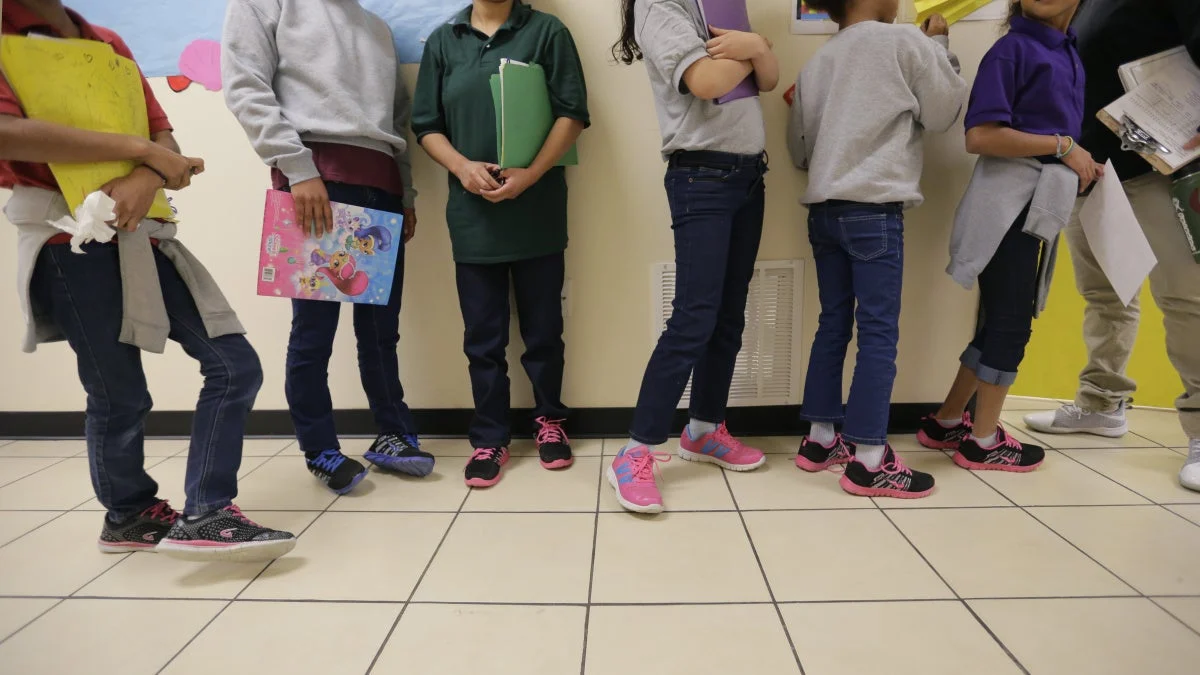
Federal Oversight or Strategic Intimidation: Federal Agents Conduct Unannounced Inspections of Legal Aid Nonprofits Representing Migrant Children
In a series of events that has sent shockwaves through the immigration advocacy community, federal agents from Immigration and Customs Enforcement’s (ICE) Homeland Security Investigations (HSI) and the Department of Health and Human Services (HHS) conducted unannounced visits to several high-profile legal aid nonprofits in the Washington, D.C., metropolitan area this past June. The operations targeted organizations specifically dedicated to the legal representation of unaccompanied immigrant children, including Kids in Need of Defense (KIND), Amica Center for Civic Advocacy, and Ayuda. According to internal reports and media accounts, the agents requested sensitive documents and financial records pertaining to the organizations’ minor clients, a move that legal experts and advocates have characterized as a significant escalation in administrative pressure on the legal infrastructure supporting migrants.
The unannounced nature of these visits, conducted without the presentation of warrants or subpoenas, has sparked a fierce debate regarding the boundaries of federal oversight and the protection of attorney-client privilege. While the Trump administration has maintained a policy of neither confirming nor denying the existence of ongoing investigations, the timing and method of these inquiries have led nonprofit leaders to describe the actions as a calculated "intimidation tactic" designed to disrupt the legal defense of children facing deportation.
A Chronology of Escalating Enforcement
The June visits represent the latest flashpoint in a period of heightened enforcement activity that began in early 2025. To understand the gravity of these unannounced inspections, one must look at the timeline of events leading up to the June encounters:
- January 2025: Following the inauguration, the administration signaled a "zero-tolerance" approach toward undocumented minors, emphasizing expedited removal processes.
- March 2025: Reports surfaced indicating a dramatic shift in deportation priorities. Data later analyzed by ProPublica suggested that the rate of detention and deportation for unaccompanied minors had tripled compared to previous administrative averages.
- September 2025: The administration attempted to summarily expel at least 76 unaccompanied children to Guatemala. This move was met with immediate legal challenges, and while a federal judge initially blocked the expulsions, advocacy groups report that several of those children were eventually deported under revised administrative protocols.
- February 2026: Several nonprofit organizations filed formal grievances alleging that the federal government was withholding millions of dollars in contractually obligated reimbursements for legal services.
- June 2026: Federal agents from HSI and HHS appeared at the offices of KIND, Amica, and Ayuda, demanding client records and financial data without prior notice or legal compulsion via the courts.
This sequence of events suggests a multi-pronged approach by the executive branch: increasing the speed of deportations while simultaneously exerting financial and investigative pressure on the organizations tasked with providing a legal defense for the affected children.
The Legal Mandate for Representation
The controversy over these visits is rooted in the statutory framework governing the treatment of unaccompanied immigrant children (UACs). Under the William Wilberforce Trafficking Victims Protection Reauthorization Act of 2008 (TVPRA), the U.S. government is legally mandated to "ensure, to the greatest extent practicable," that all unaccompanied children in federal custody have access to legal counsel.
This mandate exists because immigration law is notoriously complex, often described by federal judges as second only to the Internal Revenue Code in its intricacy. For a child—often fleeing violence or exploitation and speaking little to no English—navigating these laws without an attorney is a near-impossible task. Human Rights Watch has documented for years that children with legal representation are significantly more likely to identify valid claims for asylum or other forms of legal relief, whereas those without attorneys are almost universally ordered deported.
Despite this legal requirement, the nonprofits involved in these recent visits claim the government is actively undermining their ability to function. The "millions of dollars" in delayed reimbursements mentioned by groups like Estrella del Paso suggest a growing financial crisis within the sector. When federal agents demand records without a warrant, it places these organizations in a precarious legal position: complying could violate the ethical duty of confidentiality to their clients, while refusing could lead to further administrative retaliation or the withholding of vital funding.
Data Analysis: The Surge in Deportations and Legal Challenges
The current landscape for unaccompanied minors is defined by a sharp increase in enforcement metrics. Recent reporting indicates that the current administration is deporting children at three times the rate of the 2017–2021 period. This acceleration has led to a surge in federal litigation as advocacy groups attempt to slow the process through the court system.
One of the most telling statistics regarding the current state of immigration detention involves the use of habeas corpus petitions. These petitions are filed in federal court to challenge the legality of a person’s detention, particularly when it is deemed prolonged, arbitrary, or unconstitutional. A nonprofit legal advocacy group tracking these filings uncovered a remarkable trend regarding applicants for Special Immigrant Juvenile (SIJ) status.
SIJ status is a specific program designed to protect children who have survived abuse, abandonment, or neglect by one or both parents. It provides a pathway to lawful permanent residency for those who cannot be safely reunited with their families. According to the data:
- Since January 2025, 263 habeas petitions have been filed on behalf of young people seeking SIJ status or other protections.
- Federal judges have ruled in favor of the petitioners in 251 of those cases, ordering either immediate release or a bond hearing.
- Only 12 petitions were denied or resulted in continued detention without a hearing.
This 95% success rate in habeas challenges suggests that federal courts frequently find the government’s detention of these minors to be legally deficient. Critics argue that the unannounced visits to legal aid offices in June may be a response to this high success rate in court, serving as an attempt to identify "irregularities" in how these cases are prepared or funded.
Reactions from the Ground: "Intimidation Over Oversight"
The response from the targeted organizations has been one of unified resistance. Leaders from KIND and Ayuda have been vocal in their assessment that the visits were not standard audits. Standard government audits typically involve prior notification, a specific list of requested items, and a clear timeline for compliance.
"To show up at the door of a legal office and demand to see the files of vulnerable children without a warrant is not oversight; it is an intimidation tactic," said one advocate familiar with the situation. "It creates a chilling effect not only for the attorneys but for the families and children who are already terrified of government interaction."
The refusal of the nonprofits to provide records without warrants was based on the fundamental legal principle of attorney-client privilege. In the United States, communications between a lawyer and their client are protected to ensure that individuals can seek legal advice without fear of that information being used against them by the state. Advocates argue that if the government wants access to these records, it must follow the Fourth Amendment’s requirements for "probable cause" and judicial oversight.
The administration, conversely, has remained opaque. Official statements from the Department of Homeland Security (DHS) have focused on the general necessity of ensuring that federal funds are used appropriately and that all organizations under contract with the government adhere to strict regulatory standards. However, the lack of specific allegations of wrongdoing has led many to conclude that the inspections were a "fishing expedition" intended to find grounds for contract termination or to discourage aggressive legal defense.
Broader Implications for Due Process and Human Rights
The implications of these federal actions extend far beyond the offices of a few D.C. nonprofits. At the heart of the issue is the concept of due process—the constitutional guarantee that the government must respect all legal rights owed to a person. When the government targets the very people responsible for defending those rights, the entire system of checks and balances is called into question.
The role of nonprofit legal service providers is imperative in the current climate. Without their intervention, thousands of children are at risk of being "summarily expelled," a process that bypasses the traditional court system and often returns children to the very dangers they fled. The attempt to expel 76 children to Guatemala in 2025 serves as a case study for what can happen when judicial oversight is bypassed.
Furthermore, the financial pressure being placed on these groups—through the withholding of reimbursements—creates a "war of attrition." If legal aid groups are forced to close their doors due to lack of funds or administrative harassment, the government’s mandate to "ensure representation" becomes a hollow promise.
Conclusion
The unannounced visits by ICE and HHS agents to legal aid organizations in June 2026 represent a pivotal moment in the ongoing struggle over immigration policy and the rule of law. As deportation rates continue to climb and federal courts continue to find instances of arbitrary detention, the tension between executive enforcement and judicial protection is reaching a breaking point.
For the children at the center of this conflict, the stakes could not be higher. The ability of organizations like KIND, Amica, and Ayuda to operate without fear of unwarranted government intrusion is directly linked to the survival of the due process rights afforded to the most vulnerable individuals within the American legal system. As the administration continues its aggressive enforcement posture, the eyes of the legal community and human rights observers remain fixed on the D.C. area, watching for the next move in a high-stakes battle over the future of immigrant justice.

Related Posts

Human Rights Watch Calls for Investigation into Death of Detainee Following Removal from Najaf Hospital by Iraqi Drug Police

Human Rights Watch Urges UN Security Council to Extend Lebanon Peacekeeping Mission Amid Escalating Conflict and Humanitarian Crisis