Expansion of Israeli Military Operations in West Bank Refugee Camps Raises Concerns of Mass Displacement and War Crimes
Israeli Defense Minister Israel Katz has officially instructed the Israel Defense Forces (IDF) to prepare for a significant military expansion targeting a Palestinian refugee camp in the West Bank, signaling a continuation of a controversial strategy that has already displaced tens of thousands of civilians. Speaking on July 28, Katz directed military leadership to take control of an additional, as-yet-unnamed camp, explicitly stating that the operation should follow the tactical "model" established during previous incursions into Tulkarem, Nur Shams, and Jenin. This announcement has sparked immediate alarm among international human rights observers and humanitarian organizations, who view the "model" as a blueprint for systematic forced displacement and the destruction of civilian infrastructure.
The directive comes at a period of heightened volatility in the West Bank, where military operations have intensified significantly over the past two years. By invoking the precedents of Tulkarem and Jenin, the Defense Ministry is signaling a shift toward more permanent or long-term military presence within densely populated refugee centers. These camps, which have existed since the 1948 Arab-Israeli War, are among the most vulnerable areas in the occupied territories, characterized by high population density and limited resources.
The Precedent of Operation Iron Wall
To understand the implications of Katz’s latest directive, it is necessary to examine the "Tulkarem, Nur Shams, and Jenin model" established during Operation Iron Wall in early 2025. Conducted throughout January and February of that year, Operation Iron Wall was characterized by the Israeli military as a counter-terrorism initiative aimed at dismantling militant infrastructure. However, the scale of the operation resulted in what many international observers described as the largest mass displacement of Palestinians in the West Bank since the 1967 Six-Day War.
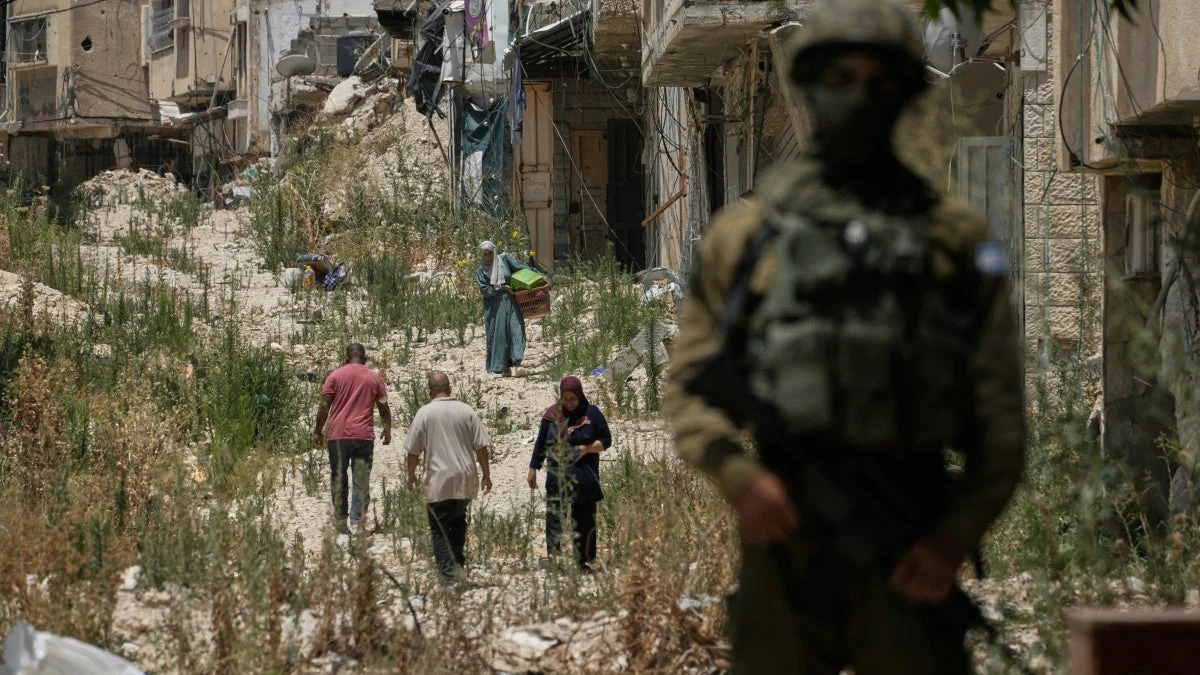
During these operations, the IDF utilized heavy engineering equipment, including armored bulldozers, to systematically raze residential buildings and tear up primary roads. While the military cited "military necessity" and the presence of improvised explosive devices (IEDs) as the justification for these actions, the result was the near-total evacuation of the camps. At the time, Minister Katz stated that the displacement of residents would be a temporary measure lasting approximately one year.
However, the reality on the ground has diverged sharply from those initial assurances. As of late 2026, twenty months after the initial evacuations, the displaced residents have been unable to return. The Israeli military has maintained a strict perimeter around these areas, forbidding all civilian access. This prolonged exclusion has transformed what was initially presented as a temporary security measure into a state of indefinite displacement.
Humanitarian Data and the Scope of Displacement
According to data compiled by the United Nations and the Office for the Coordination of Humanitarian Affairs (OCHA), more than 33,000 Palestinian refugees remain displaced from the Tulkarem, Nur Shams, and Jenin camps. These individuals, many of whom were already multi-generational refugees, have been forced into a precarious existence across the West Bank.
The humanitarian impact is multifaceted:
- Housing Crisis: With their primary homes destroyed or inaccessible, refugees are forced to navigate an overstretched rental market. Many are living in overcrowded conditions with extended family members or relying on the dwindling resources of charitable organizations.
- Infrastructure Erasure: Field reports indicate that the Israeli military has not only prevented return but has also continued to demolish residential structures to facilitate the construction of widened roads and military access ways. This "remodeling" of the camps suggests a long-term strategic plan to alter the topography of the West Bank.
- Economic Paralysis: The displacement has severed thousands of families from their livelihoods, local markets, and community networks, exacerbating poverty levels in the region.
The UN has expressed "profound concern" over the precedent being set. The denial of the right to return, coupled with the systematic destruction of property, suggests a policy that transcends immediate security needs and moves toward demographic and territorial reconfiguration.
Legal Analysis: War Crimes and Crimes Against Humanity
The actions taken under the "Tulkarem model" have been the subject of intense legal scrutiny. In November 2025, Human Rights Watch (HRW) published a comprehensive report titled "All My Dreams Have Been Erased," which analyzed the forced displacement in the West Bank. The report concluded that the Israeli military’s conduct during and after Operation Iron Wall met the criteria for war crimes and crimes against humanity.
Under international humanitarian law, specifically the Fourth Geneva Convention, the "forcible transfer" of a protected population is strictly prohibited unless the security of the population or imperative military reasons so demand. Even in such cases, evacuations must be temporary, and residents must be allowed to return to their homes as soon as hostilities in the area have ceased. HRW’s investigation found that the continued exclusion of 33,000 people, long after active combat operations ended, constitutes a violation of these principles.
Furthermore, the "widespread and systematic" nature of the displacement—targeting multiple camps with similar tactics—elevates these acts to the level of crimes against humanity. The HRW investigation identified a clear chain of command responsible for these policies, naming senior officials including Prime Minister Benjamin Netanyahu and Defense Minister Israel Katz. The report argues that these leaders oversaw a policy that intentionally created uninhabitable zones to achieve strategic military and political objectives.
Lack of Accountability and Official Responses
Despite the findings of international human rights bodies and the wealth of evidence presented by NGOs, there has been a notable absence of internal accountability within the Israeli government. Domestic investigations into the conduct of the military during Operation Iron Wall have been virtually non-existent, and the Israeli judiciary has largely deferred to the military’s definitions of "security necessity."
The international community’s response has also been characterized by a lack of tangible consequences. While various foreign governments and the European Union have issued statements of "deep concern," there have been few moves to impose sanctions or alter diplomatic relations. This environment of perceived impunity is what critics argue has emboldened the Defense Ministry to expand the operation to another camp.
In response to the allegations of war crimes, the Israeli government has consistently maintained that its operations are conducted in accordance with international law. Spokespersons for the IDF emphasize that the refugee camps have become "strongholds for terrorist organizations" and that the destruction of infrastructure is a necessary byproduct of neutralizing underground tunnels and booby-trapped buildings. The government argues that the displacement is a protective measure intended to save civilian lives during high-intensity urban combat.
Broader Geopolitical Impact and Future Implications
The decision to target another refugee camp suggests that the Israeli government views the West Bank operations not as a series of isolated incidents, but as a cohesive strategy to reassert total control over Palestinian population centers. This has significant implications for the future of the region and the possibility of a negotiated settlement.
- Destabilization of the West Bank: The continued mass displacement of civilians risks fueling further radicalization and unrest. As more Palestinians lose their homes and hope for a political solution, the influence of local armed groups is likely to grow, creating a cycle of violence and retaliation.
- Erosion of International Norms: The failure of the international community to enforce the prohibitions against forced displacement and the destruction of civilian property may weaken the global human rights framework. If such actions are permitted to continue without consequence, other actors in different global conflicts may feel justified in employing similar tactics.
- Pressure on the International Criminal Court (ICC): The ICC is currently conducting an ongoing investigation into the situation in Palestine. The inclusion of new operations in the "Tulkarem model" adds to the body of evidence being considered by the court. There is increasing pressure from international legal experts for the ICC to execute arrest warrants for senior officials to prevent further atrocities.
Human rights advocates are calling for urgent intervention. Proposed measures include the imposition of targeted sanctions on officials implicated in forced displacement, the suspension of arms transfers to Israel, and the banning of trade with illegal settlements. Furthermore, there are calls for the European Union to reconsider its preferential trade agreements with Israel, citing the human rights clauses inherent in such treaties.
Defense Minister Israel Katz’s announcement on July 28 serves as a stark reminder that in the absence of accountability, history often repeats itself. As the military prepares to move into a new camp, the 33,000 refugees still waiting to return to Tulkarem and Jenin serve as a testament to the long-term consequences of the "model" currently being exported across the West Bank. The coming months will determine whether the international community will act to prevent a new wave of displacement or if the "Tulkarem model" will become a permanent fixture of the regional landscape.

Related Posts
Human Rights Watch Calls for Investigation into Death of Detainee Following Removal from Najaf Hospital by Iraqi Drug Police
Human Rights Watch Urges UN Security Council to Extend Lebanon Peacekeeping Mission Amid Escalating Conflict and Humanitarian Crisis