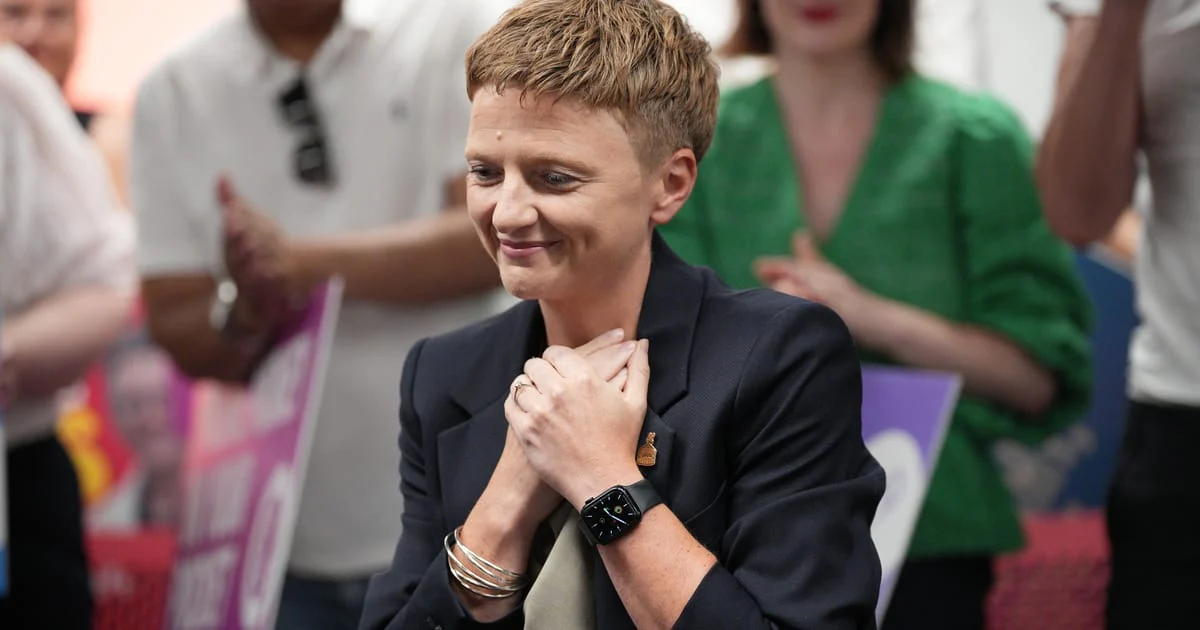
Labour holds Greater Manchester mayoralty after counting goes to second round
A Legacy in Transition
The departure of Andy Burnham to 10 Downing Street has fundamentally altered the political calculus in Greater Manchester. During his years in office, Burnham was credited with pioneering the "Manchester Model" of devolution, a strategy that saw the city-region gain unprecedented control over transport, healthcare, and infrastructure budgets. His ability to lobby central government while maintaining a distinct regional identity turned the Greater Manchester mayoralty into a position of national significance.
As voters prepare to cast their ballots this Thursday, the central question remains whether the incoming administration will maintain the trajectory set by its predecessor or veer toward a new ideological alignment. For the Labour Party, the election is a test of its ability to retain its stronghold in the North without its most charismatic figurehead. For the opposition, it represents the most viable opportunity in nearly a decade to dismantle the regional machinery that has defined local politics for years.
Chronology of the Succession
The chain of events leading to this week’s election began in late June, when the previous Prime Minister announced a surprise resignation, triggering a snap leadership contest within the Labour Party. Andy Burnham’s landslide victory in that internal contest necessitated his resignation as mayor of Greater Manchester, which took effect in early July.

Following his elevation to Prime Minister, a formal notice of election was issued on July 10, compressing the campaign cycle into a rapid three-week window. This period has been marked by a flurry of debates, policy manifestos, and intensive voter outreach, as candidates scrambled to articulate a vision for the region that balances continuity with the need for fresh solutions to persistent problems like public transport reform and the ongoing housing crisis.
Supporting Data and Demographic Shifts
The Greater Manchester region encompasses ten metropolitan boroughs, serving a population of approximately 2.8 million people. Historically a Labour heartland, the region has seen shifting voter demographics, particularly in the outer boroughs where the influence of alternative parties—including the Greens and Reform UK—has begun to erode traditional party loyalty.
Economic data from the last quarter suggests that the region’s growth rate is currently outpacing the national average by 0.4 percent, largely driven by a burgeoning digital and media sector centered around MediaCityUK. However, income inequality remains a significant challenge, with the gap between the affluent southern suburbs and the northern industrial towns remaining a primary concern for voters. Turnout for the 2026 contest is projected to reach approximately 38 percent, a figure that analysts believe will be heavily influenced by the "Burnham factor"—the degree to which the electorate feels a personal connection to the outgoing mayor’s policy initiatives.
Political Friction and Wider National Context
The intensity of the mayoral race has been mirrored by a rise in volatile rhetoric across the broader British political landscape. Recent controversies have underscored the heightened tensions defining this election cycle. Notably, the Green Party has faced scrutiny following an inflammatory social media post by their leader, Zack Polanski, involving an image of a guillotine directed at Reform UK’s Nigel Farage. The incident, which has been referred to the police, has become a flashpoint in the regional campaign, with opponents demanding an apology and questioning the civility of the current political discourse.

Simultaneously, tensions between the United Kingdom and France have spilled over into domestic political discourse. A recent incident involving a French vessel firing shots near a prominent Tory MP, Chris Philp, has sparked outrage among conservative circles. While both British and French authorities have categorized the event as a "routine training exercise" conducted in international waters, the incident has been leveraged by opposition candidates to critique the current government’s handling of national security and border management.
The Green Party and the "Burnham Bounce"
Perhaps the most intriguing subplot of this election is the tactical maneuvering of the Green Party. As they brace for what political commentators are calling the "Burnham bounce"—a residual surge of support for Labour candidates who have aligned themselves closely with the outgoing mayor’s legacy—the Greens have sharpened their attack lines.
The party’s leadership, including figures like Polanski, has attempted to pivot the conversation toward climate resilience and sustainable urban planning, arguing that the "Manchester Model" has prioritized corporate development over the needs of the working-class voter. By positioning themselves as the primary alternative to both the Labour establishment and the right-wing populist surge of Reform UK, the Greens hope to secure a record number of seats on the combined authority, even if the mayoralty itself remains out of reach.
Official Responses and Implications
In a series of statements released earlier this week, the major parties laid out their final arguments to the electorate. The Labour candidate has emphasized "stability and continuity," promising to honor the existing agreements made between the mayor’s office and the central government. Conversely, the Conservative and Reform UK challengers have focused on "accountability," calling for an audit of the mayor’s spending over the past three years and demanding a shift in focus toward crime prevention and tax relief for small businesses.

Independent analysts suggest that the implications of this election extend far beyond the borders of Greater Manchester. A decisive victory for the Labour candidate would signal a continuation of the current government’s devolution agenda. A loss or a significantly reduced margin, however, would force the Prime Minister to reconsider the party’s northern strategy, potentially leading to a cabinet reshuffle or a recalibration of national policy regarding regional funding.
The Path Forward
As the polls open this Thursday, the voters of Greater Manchester hold the keys to a critical political transition. The outcome will be measured not only by the individual who takes the oath of office but by the mandate they are granted. If the electorate chooses to stick with the established framework, the "Burnham era" may effectively continue through his successor. If, however, the voters opt for a change in direction, the region may find itself in a period of ideological restructuring that could ripple throughout the national political landscape.
The logistics of the election are expected to be seamless, with polling stations across the ten boroughs open from 7:00 AM until 10:00 PM. Results are anticipated in the early hours of Friday morning, providing an immediate snapshot of the public’s mood. In a climate of rising populism, international friction, and local economic anxiety, this election stands as a litmus test for the health of British democracy at the grassroots level.
Ultimately, the new mayor will inherit a region that has become a model for the rest of the country, yet remains vulnerable to the pressures of an unpredictable global economy and a polarized domestic political environment. Whether the transition proves to be a seamless passing of the torch or a seismic shift in regional power, the decision made by the people of Greater Manchester this week will reverberate through the halls of Westminster for years to come.