
European Union Proposes Slower Pace for Emissions Cuts, Sparking Debate on Climate Ambition and Industrial Competitiveness
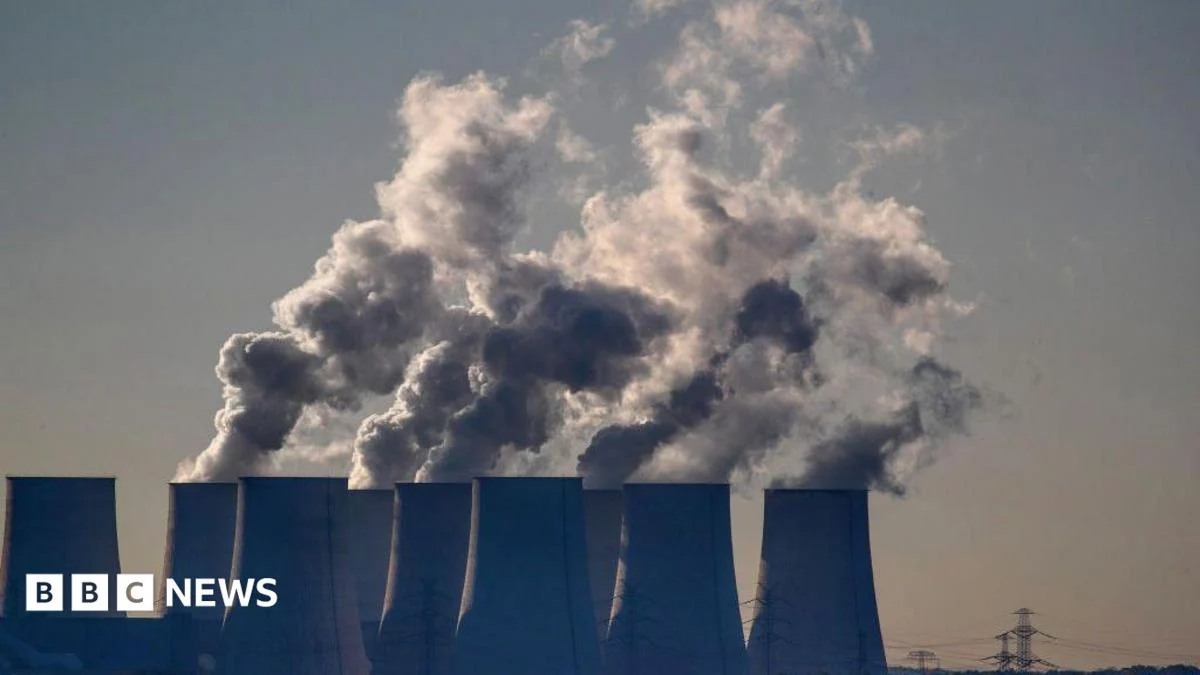
The European Union has unveiled a significant overhaul of its flagship climate policy, the Emissions Trading System (ETS), proposing changes that would decelerate the rate at which businesses must reduce their greenhouse gas emissions limits. This move, presented as a more "business-friendly" and "savvy approach" by EU climate commissioner Wopke Hoekstra, aims to provide industries with extended timelines for decarbonisation efforts, potentially allowing some to obtain emission allowances until 2038 instead of the previously planned 2034. The proposals, which still require approval from EU member states and lawmakers, have ignited a fresh debate between those advocating for industrial competitiveness and those prioritising accelerated climate action.
Details of the Proposed Reforms
At the heart of the European Commission’s new proposals lies a revised schedule for the reduction of the overall cap on emissions, which dictates the total number of allowances available in the market. Under the existing framework, this cap is lowered annually to ensure a steady decline in emissions. The Commission now suggests slowing this rate of reduction. From 2031, the annual cap reduction would be adjusted to approximately 3.7%, further decreasing to 1.7% from 2036. This marks a significant deviation from the current annual reduction rate of 4.3%, effectively providing industries with more breathing room over the next decade and beyond.
A critical component of the reforms addresses the contentious issue of free emission allowances. Historically, a proportion of allowances has been allocated for free to specific energy-intensive industries at risk of "carbon leakage" – the relocation of production to countries with less stringent climate policies. The original plan envisioned a phase-out of these free permits by 2034, to be largely replaced by the Carbon Border Adjustment Mechanism (CBAM), a levy on carbon-intensive imports. However, the new proposals extend the availability of free permits until 2038.
Furthermore, the Commission intends to incentivise decarbonisation investments by offering a substantial portion of these extended free permits upfront. Under the proposed system, companies that commit to investing in decarbonisation projects within Europe would receive 80% of their free permits in advance. The remaining 20% would then be granted upon the successful completion and verification of these investments. This mechanism aims to provide a clear financial signal and support for industrial transformation, albeit over a longer timeframe.
The EU Emissions Trading System: A Pillar of Climate Policy
Introduced in 2005, the EU Emissions Trading System (ETS) stands as the bloc’s primary instrument for curbing greenhouse gas emissions. It operates on a "cap and trade" principle, covering approximately 40% of the EU’s total emissions from over 10,000 power plants and energy-intensive industrial installations across 30 countries (all 27 EU member states plus Iceland, Liechtenstein, and Norway). Under the ETS, companies are required to buy or receive allowances for each tonne of carbon dioxide (CO2) they emit. The declining cap ensures that the total emissions decrease over time, while the trading mechanism creates a market price for carbon, incentivising businesses to invest in cleaner technologies and reduce their carbon footprint.
The ETS has evolved through several phases since its inception. Phase 1 (2005-2007) was a trial period, Phase 2 (2008-2012) coincided with the first Kyoto Protocol commitment period, and Phase 3 (2013-2020) brought significant reforms, including a move towards auctioning as the primary method for allocating allowances and the establishment of a single, EU-wide cap. The current Phase 4 (2021-2030) saw further tightening of the cap, an expansion to new sectors like shipping, and the development of a separate ETS for buildings and road transport (ETS2), alongside the introduction of the Social Climate Fund.
Despite its successes in driving emissions reductions – ETS-covered emissions decreased by 41% between 2005 and 2022 – the system has faced persistent criticism. Some member states, notably Italy, have argued that the ETS functions as a de facto tax, contributing to artificially high energy prices and placing an undue burden on industries, especially during periods of economic strain. The average carbon price in the EU ETS has fluctuated significantly, reaching record highs above €100 per tonne of CO2 in early 2023, before settling somewhat lower, still representing a substantial cost for businesses.
The Rationale Behind the Policy Shift
The European Commission’s decision to propose a softening of ETS rules is multifaceted, reflecting a complex interplay of economic realities, political pressures, and the overarching goal of maintaining industrial competitiveness within the bloc. The current geopolitical landscape, marked by Russia’s war in Ukraine, has led to a severe energy crisis across Europe, pushing energy prices to unprecedented levels. This, coupled with broader inflationary pressures and global economic uncertainties, has placed significant strain on European industries, particularly energy-intensive sectors like steel, cement, chemicals, and fertilisers.
Many industries have argued that the aggressive pace of decarbonisation mandated by the original "Fit for 55" package – the EU’s comprehensive plan to reduce net greenhouse gas emissions by at least 55% by 2030 compared to 1990 levels – combined with the rising cost of carbon allowances, jeopardises their ability to compete with non-EU counterparts that do not face similar carbon costs. Concerns about "carbon leakage" persist, even with the impending introduction of CBAM.
Commissioner Hoekstra’s statement about adopting a "more business-friendly and savvy approach" underscores the Commission’s acknowledgment of these concerns. The proposed changes can be seen as an attempt to strike a better balance between ambitious climate action and the economic viability of European industries, aiming to facilitate a "just transition" that prevents job losses and deindustrialisation. By extending the timeline for free allowances and slowing the cap reduction, the EU hopes to give companies more time and financial stability to invest in the necessary technological upgrades and process overhauls required for deep decarbonisation.
Connecting the Dots: ETS, CBAM, and Industrial Competitiveness
The relationship between the ETS, free allowances, and the Carbon Border Adjustment Mechanism (CBAM) is central to understanding the proposed reforms. Free allowances were initially designed to prevent carbon leakage by shielding EU industries from the competitive disadvantage of paying a carbon price that their international rivals did not. However, the EU also committed to phasing out these free allowances as the CBAM came into full effect, thereby levelling the playing field for both domestic and imported goods based on their embedded carbon emissions.
The CBAM is designed to apply a carbon price to imports of certain goods (initially iron and steel, cement, fertilisers, aluminium, electricity, and hydrogen) from non-EU countries, mirroring the carbon cost paid by EU producers under the ETS. The original schedule envisioned a gradual phase-out of free allowances between 2026 and 2034, running in parallel with the CBAM’s implementation. The proposed extension of free allowances until 2038 means that for several years, some EU industries will benefit from both free allowances and the protection offered by CBAM against carbon leakage from imports. This dual protection could be seen as a significant concession to industry, providing a longer transition period than initially anticipated.
The Commission’s proposal to front-load 80% of free permits for companies with decarbonisation plans is a strategic move to ensure that this extended support is tied directly to tangible climate action. It seeks to prevent industries from simply profiting from free allowances without making the necessary investments in cleaner technologies. This conditionality is crucial for the Commission to argue that the changes remain aligned with the EU’s long-term climate objectives, including its ambitious target to reduce carbon emissions by 90% by 2040 compared with 1990 levels, and its ultimate goal of climate neutrality by 2050.
Diverse Stakeholder Reactions and Political Implications
The unveiling of these proposals has triggered a predictable range of reactions from various stakeholders across the EU’s political spectrum and economic landscape.
On one side, member states grappling with economic pressures and industrial concerns have largely welcomed the proposed flexibility. Poland’s climate minister, Paulina Hennig-Kloska, hailed the proposals as a "huge success for Poland," noting that it represented "a softening of the stance rather than a toughening of it" for the first time. She explicitly stated Poland’s intention to push for even further weakening of the policy, highlighting the persistent demand from some Eastern and Central European countries for more economic leeway in their transition away from fossil fuels. Italy’s previous criticisms of the ETS as a burden are also likely to find resonance with these new proposals. Industry associations, while likely to welcome the extended timelines and free allowances, are expected to maintain calls for even greater support and certainty amidst the complex transition.
Conversely, environmental groups and Green politicians have expressed strong disapproval, viewing the proposals as a dangerous backtracking on climate commitments. Michael Bloss, a German Member of the European Parliament from the Green party, condemned the plans, warning that they would lead to "gigantic climate pollution" and result in a "worse quality of life" for future generations. Environmental NGOs are likely to echo these sentiments, arguing that any delay in emissions reductions undermines the urgency of the climate crisis and risks missing critical climate targets. They would point to scientific consensus on the need for rapid decarbonisation and the increasing frequency and intensity of extreme weather events as evidence against slowing the pace of change.
The debate also highlights the inherent tension within the EU between the need for collective action on climate change and the diverse economic realities and national interests of its 27 member states. The legislative process, which could take up to a year, will undoubtedly see intense negotiations between the European Parliament, which often advocates for more ambitious climate targets, and the Council of the EU, representing the member states, which tend to be more sensitive to national economic concerns.
Implications for EU Climate Ambition and the Path Forward
The proposed reforms present a delicate balancing act for the European Union. While the Commission maintains that the changes are compatible with the EU’s long-term climate goals, including the 90% reduction target by 2040 and climate neutrality by 2050, critics argue that slowing the pace of emissions cuts now could make achieving those later targets significantly harder and more costly. The risk is that deferring action could lead to a steeper, more disruptive transition down the line, or even compromise the EU’s ability to meet its commitments.
Proponents of the changes argue that a more gradual and economically feasible transition is ultimately more sustainable and ensures broader societal acceptance, preventing a backlash that could derail climate action altogether. By providing industries with more time and targeted support for decarbonisation investments, the EU hopes to foster innovation and facilitate the development of green technologies within its borders, strengthening its strategic autonomy in key industrial sectors.
The legislative journey for these proposals will be complex. Both the European Parliament and the Council of the EU will scrutinise the package, and there is considerable scope for amendments and further negotiations. The outcome will depend on the political will of member states to reconcile their industrial competitiveness concerns with the undeniable urgency of the climate crisis. The world will be watching to see if the EU, a global leader in climate policy, can successfully navigate this internal tension and maintain its commitment to an ambitious, yet pragmatic, path towards a carbon-neutral future. The debate underscores the enduring challenge of translating ambitious climate targets into actionable policies that are both effective and equitable across a diverse economic bloc.

Related Posts
Zambia on Edge: Opposition Leader Arrested Amid Allegations of Insurrection Plot and Election Tensions

Rescuers search for survivors of powerful Indonesia earthquake

