
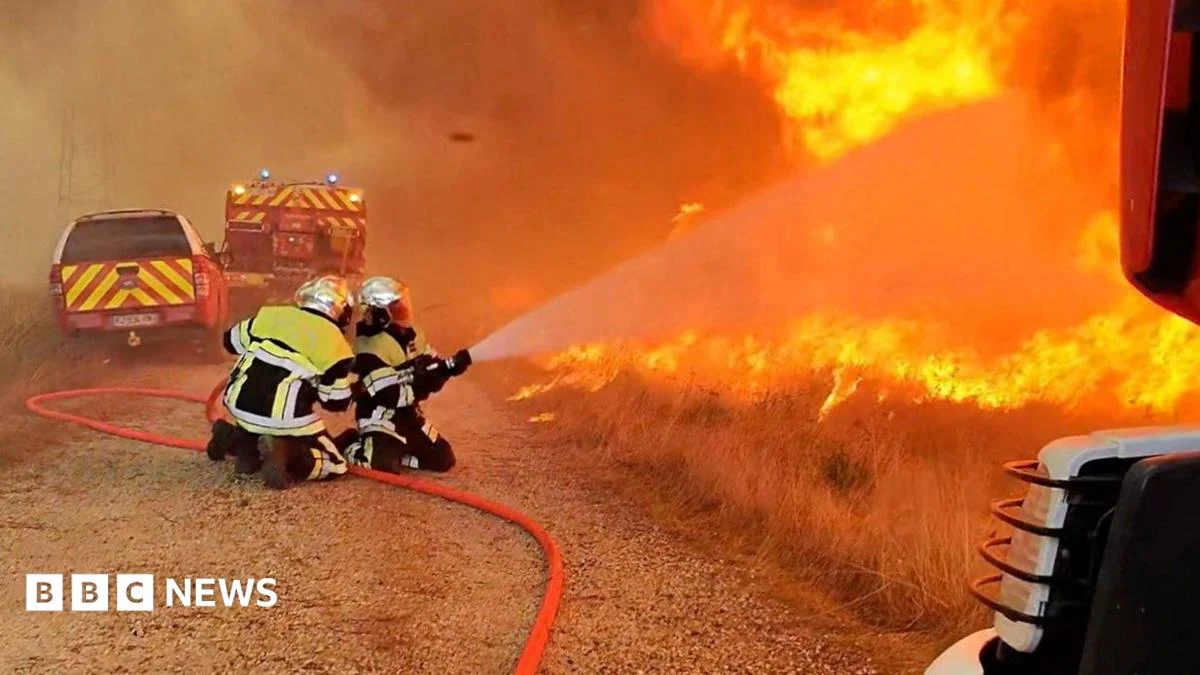
Europe Grapples with Fourth Heatwave and Widespread Wildfires as Temperatures Soar to 40C, Forcing Mass Evacuations and Threatening Key Regions.
The continent is bracing for its fourth significant heatwave of the summer, with temperatures projected to climb to an scorching 40 degrees Celsius across large swathes of the region starting Wednesday. This latest meteorological assault comes as emergency services continue to battle dozens of active wildfires that have already ravaged thousands of hectares, displaced tens of thousands of residents, and cast a pall of smoke over iconic European landscapes. The dual crisis highlights the increasing vulnerability of Southern Europe to extreme weather events, intensifying calls for urgent climate action and robust disaster preparedness.
The Unrelenting Grip of Extreme Heat
This summer has been marked by an unprecedented succession of heatwaves, each more intense and prolonged than the last. The impending fourth heatwave is expected to push thermometers into the low 40s across parts of France, Spain, and Portugal, exacerbating already perilous conditions. Experts attribute the frequency and intensity of these heat events to persistent high-pressure systems, often drawing hot air masses from the Sahara Desert, a phenomenon increasingly linked to global climate change. Such sustained periods of extreme heat not only pose direct health risks, particularly to vulnerable populations, but also dry out vegetation, turning forests into tinderboxes susceptible to rapid ignition and spread. Meteorological data from across Europe indicates a clear trend of rising average temperatures and an increase in the number of heatwave days over the past two decades, with scientists warning that this summer could be a harbinger of future normals.
Wildfires Engulf the Iberian Peninsula
The most immediate and devastating consequence of the prolonged drought and intense heat has been the explosion of wildfires across Spain and Portugal. In Spain, dozens of communities remain under severe threat, with over 70,000 people having been forced to evacuate their homes over the past week. The scale of displacement underscores the ferocity and unpredictability of these blazes. While some evacuation orders have been lifted, allowing approximately 44,000 residents to return or leave temporary confinement, the emotional and economic toll on these communities is immense.
The Madrid region, unaccustomed to such widespread forest fires, has been particularly affected, with smoke plumes visible from the capital and emergency services stretched to their limits. Prime Minister Pedro Sánchez, while acknowledging the "highly challenging hours and days ahead," expressed cautious optimism, stating that "light was beginning to appear at the end of the tunnel." His remarks, delivered from a fire-affected zone, reflect the intense national effort being deployed, involving thousands of firefighters, military units, and aerial support. However, environmental experts warn that even as fires are contained, the long-term ecological damage to biodiversity, soil health, and water resources will persist for years.
In neighbouring Portugal, a nation historically prone to devastating summer fires, 400 firefighters were engaged in a relentless battle against a large fire with three active fronts in the eastern Guarda area. The rugged terrain and strong winds have complicated firefighting efforts, highlighting the logistical challenges faced by emergency crews. The memory of the catastrophic 2017 wildfires, which claimed over 100 lives, looms large, prompting authorities to implement stringent prevention measures and rapid response protocols, yet the sheer scale of this year’s blazes continues to test these systems. Local authorities have emphasized the importance of public vigilance and adherence to fire safety regulations, especially during periods of extreme heat and drought.
France: Bordeaux Under a Veil of Smoke
While geographically further north, France has not escaped the clutches of this environmental crisis. The Gironde region, home to the world-renowned Bordeaux wine country, has been at the forefront of the French firefighting effort. On Monday, one of the wildfires burned within a mere 15 kilometres (9 miles) of Bordeaux’s periphery, prompting significant concern, despite official assurances that the city itself was not under immediate threat.
Commander Rémi Lassoureille, who is spearheading the firefighting response in Gironde, voiced the palpable anxiety: "We are frightened about the impact on Bordeaux and the metropolitan area." His fears are well-founded, given the potential for rapid fire spread in changing wind conditions and the significant economic and cultural importance of the city.
The most immediate impact on Bordeaux residents has been the dramatic deterioration of air quality. Thick smoke and ash have permeated the atmosphere, leading to a visible haze and a pervasive smell of burning. An English holidaymaker from Essex described the scene as "eerie, and very sad," noting that "by Sunday evening everything had really begun to empty out," with people "staying indoors" due to the "really smoky" air and "bits of ash." She added that the smell of smoke clung to clothes for days, and many residents and tourists resorted to wearing masks outdoors, a stark reminder of the unprecedented conditions.
Health Minister Stéphanie Rist underscored the government’s "very vigilant" stance on air pollution, urging residents in affected areas to remain indoors as much as possible to mitigate health risks associated with inhaling fine particulate matter. Prolonged exposure to wildfire smoke can exacerbate respiratory conditions, trigger asthma attacks, and contribute to cardiovascular problems.
Economic and Social Reverberations in Bordeaux
The wildfires and subsequent smoke have cast a long shadow over Bordeaux’s vibrant economy, particularly its crucial tourism and hospitality sectors. Graham White, president of the Bordeaux British Community, observed a marked shift in the city’s usual bustling atmosphere. "The city has been very quiet," he reported, noting that "the shops, restaurants and cafes are fairly empty." While acknowledging the severity, White also offered perspective, pushing back against some news reports that suggested the situation was "akin to being the next Great Fire of London," a comparison he deemed inaccurate but reflective of the widespread concern. Despite the gloom, he noted an intriguing resilience: "Interestingly on Sunday when there was still smoke, there were people brave enough to sit outside on terraces."
The human element of the crisis was evident in a poignant moment recounted by the Essex holidaymaker: a firefighter "got a round of applause" as he walked through the Marché des Chartrons, an area where restaurants were forced to close their doors due to the constant fall of ash. This spontaneous gesture of gratitude highlighted the deep appreciation for the tireless efforts of emergency personnel.
For the region’s iconic wine industry, the situation presents a complex challenge. Peggy Plouhinec, the general director of Château Picque Caillou, one of the few wine estates on the west side of Bordeaux, confirmed her business chose to close over the weekend due to the smoke. While her vineyards were not directly threatened by fire, she lamented the absence of visitors: "Tourists had deserted the region." She noted a slight improvement following a bout of rain on Sunday night, offering a brief respite. However, the broader economic outlook for the summer remains grim. "The hospitality sector will be impacted this summer, that’s for sure," Plouhinec stated, adding, "What is happening is unprecedented. We’re lucky that we haven’t been too affected yet, but the business will still suffer from the lower numbers of tourists." The long-term concern for the wine industry extends beyond immediate tourism losses to potential smoke taint in grapes, a phenomenon that can significantly impact wine quality and market value, though this specific risk has not been widely reported for this particular event.
Voices from the Heart of the Crisis
Beyond the urban centers, the voices from directly affected communities paint a vivid picture of despair and a fierce attachment to the natural environment. A resident of Cap Ferret, a peninsula evacuated late last week, articulated a perspective that contrasted sharply with the focus on the city. His main concern was for his immediate surroundings rather than the inland metropolis. "Everyone talks about saving Bordeaux, but in Bordeaux there’s nothing but concrete. Have you ever seen concrete burn?" he asked, poignantly adding, "Here, there are only trees… and when you see all that has burned, it’s a catastrophe." This statement underscores the profound sense of loss felt by those whose homes and livelihoods are intrinsically linked to the forests now consumed by flames, and highlights the ecological devastation often overlooked in the immediate rush to protect urban infrastructure.
The sheer exhaustion of the emergency services personnel cannot be overstated. Firefighters across Spain, Portugal, and France have been working relentlessly for weeks, often in extreme heat and hazardous conditions. Their bravery and dedication are a constant theme in reports from the frontlines, but their physical and mental toll is immense. Many have foregone rest, working extended shifts to contain fires that often reignite or spread due to changing winds, demonstrating a level of commitment that inspires local communities.
Broader Implications and the Path Forward
The succession of heatwaves and the widespread wildfires sweeping across Europe this summer serve as a stark reminder of the escalating climate crisis. Scientists from the Intergovernmental Panel on Climate Change (IPCC) have repeatedly warned that such extreme weather events will become more frequent and intense in a warming world. The immediate aftermath will require significant resources for recovery, rebuilding, and ecological restoration. The economic impact on agriculture, tourism, and local businesses will be substantial, with estimated losses running into the hundreds of millions of euros across the affected regions.
Beyond the immediate crisis, there is an urgent need for comprehensive long-term strategies. These include enhanced forest management practices, such as controlled burns and creating firebreaks, to reduce fuel loads. Investment in advanced early warning systems and improved cross-border cooperation for firefighting resources are also critical. Furthermore, public education campaigns on fire prevention and adaptation to extreme heat are essential.
Ultimately, addressing the root cause – climate change – remains paramount. This summer’s events are a powerful call to accelerate efforts towards decarbonization, invest in renewable energy, and develop resilient infrastructure capable of withstanding the "new normal" of a rapidly changing climate. The collective experience of Europe grappling with its fourth heatwave and unprecedented wildfires must serve as a catalyst for decisive action, ensuring that future summers are not defined by such widespread devastation and displacement.
Additional reporting by Xavier Pallas

Related Posts
Zambia on Edge: Opposition Leader Arrested Amid Allegations of Insurrection Plot and Election Tensions
Rescuers search for survivors of powerful Indonesia earthquake

