The spectacular split in Poland’s right
The Anatomy of a Political Split
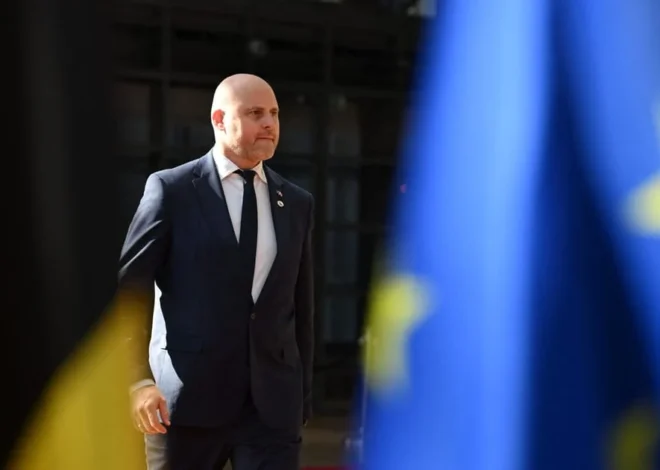
The friction between Morawiecki and Kaczyński is rooted in divergent strategies regarding how to reclaim power. While Kaczyński maintains a traditional, populist-nationalist base that relies on ideological rigidity and anti-Brussels rhetoric, Morawiecki—a former banker with significant experience in European corridors—appears to be angling for a more technocratic, center-right pivot.
The rift became public following the party’s loss of its parliamentary majority in October 2023. Although PiS remained the largest party in the Sejm, it failed to form a governing coalition, allowing Donald Tusk’s Civic Coalition to return to power. Since then, factions within the party have debated whether to double down on the populist policies that defined the 2015–2023 era or to modernize the party’s platform to attract disaffected moderate voters. Morawiecki’s recent maneuvers, including his active role as president of the European Conservatives and Reformists (ECR) group in the European Parliament, suggest he is building an international network independent of Kaczyński’s domestic apparatus.
Chronology of the PiS Hegemony and Decline
The trajectory of the Law and Justice party provides crucial context for the current instability:
- 2015: PiS achieves an unprecedented absolute majority in the Sejm, ushering in an era of judicial reforms, social spending programs like "500 Plus," and heightened tensions with the European Commission.
- 2017: Mateusz Morawiecki is appointed Prime Minister, replacing Beata Szydło, in a bid to professionalize the party’s economic policy.
- 2023 (October): Poland holds general elections. Despite winning a plurality, PiS loses its governing majority as voter turnout hits a record high of 74.4%.
- 2023 (December): Donald Tusk is sworn in as Prime Minister, ending eight years of PiS rule.
- 2024: Internal dissent grows as party polling stagnates. Morawiecki begins to emerge as a distinct pole of influence, focusing on ECR’s institutional standing in Brussels.
Implications for Donald Tusk and the 2027 Election
For Prime Minister Donald Tusk, the internal fracturing of the primary opposition party is a tactical gift. A divided right-wing opposition lowers the threshold for the Civic Coalition to maintain its governing majority. By splitting the conservative vote between a traditionalist wing and a potential new, more moderate-leaning movement, the opposition risks alienating its base or, conversely, failing to reach the necessary coalition numbers.
However, some analysts warn that a rival force on the right could actually be a long-term danger for Tusk. If Morawiecki successfully builds a coalition that bridges the gap between hardline conservatives and the business-oriented center, he could create a "big tent" opposition that is more palatable to urban voters who have historically supported Tusk. The key variable remains whether Kaczyński, who still commands intense loyalty among the party’s rural base, will allow a splinter movement to coexist or whether he will move to purge those perceived as disloyal.
Brussels and the ECR Dynamics
Morawiecki’s influence in Brussels through the ECR is significant. As the leader of this group, he provides a bridge between Central European conservative parties and broader European right-wing movements. The ECR, which has seen its influence fluctuate in the European Parliament, represents a critical bloc that often acts as the "kingmaker" on issues ranging from climate policy to defense spending.
Should Morawiecki solidify his position as a leader independent of Warsaw, he may shift the ECR’s trajectory. His focus on economic stability and security—topics that resonate more in Brussels than the culture-war issues favored by the PiS leadership—could make him a more effective negotiator with the European Commission, thereby potentially softening the adversarial relationship Poland has had with the EU in recent years.
Charleroi Airport: A Logistics Crisis in the Making
Beyond the political turmoil in Warsaw, European infrastructure faces a major hurdle in Belgium. Brussels South Charleroi Airport (BSCA), a critical hub for low-cost carriers like Ryanair, is slated for a massive overhaul that will involve a multi-month closure in 2028.
The economic implications are profound. Charleroi currently processes over 10 million passengers annually and serves as a vital employment engine for the Wallonia region, supporting thousands of direct and indirect jobs. The closure, necessitated by urgent runway and terminal modernization, creates a logistical nightmare for airlines that have built their hub-and-spoke models around the airport’s accessibility to Brussels.
Industry experts suggest that the closure will force a redistribution of air traffic to Brussels Airport (Zaventem) and regional alternatives, likely driving up ticket prices due to capacity constraints. Furthermore, the disruption to the supply chain and regional tourism could result in significant losses for local businesses that rely on the constant stream of transient travelers. The Belgian government is currently in talks with stakeholders to mitigate the impact, but a seamless transition appears unlikely.
Montenegro’s Path to EU Membership
While Poland navigates internal realignment and Belgium manages infrastructure crises, the European Union continues its slow-motion expansion. Montenegro has emerged as the frontrunner among the Western Balkan candidates for EU membership. In a symbolic yet significant move, the European Commission has signaled that it is preparing to recognize Montenegrin as the bloc’s 25th official language.
This development follows years of legislative alignment with EU standards, particularly in the areas of rule of law and judicial reform. Although significant hurdles remain, including anti-corruption measures and economic integration, the formal recognition of the language is viewed as a definitive step toward full accession. For the EU, integrating Montenegro serves as a test case for future enlargement, demonstrating that the bloc remains a viable destination for Balkan states despite the complexities of internal decision-making.
Analysis: The Interplay of Regional Dynamics
The convergence of these events—Polish political fracturing, Belgian infrastructure strain, and Balkan enlargement—underscores the volatility of the current European landscape.
The PiS split illustrates the broader struggle of European conservative parties to adapt to a changing geopolitical reality. As the center-right is pressured by both populist movements and the pragmatic requirements of EU membership, leaders like Morawiecki are attempting to navigate a narrow path between these two poles.
Meanwhile, the Charleroi situation highlights the vulnerability of European transport infrastructure. As the EU pushes for greener and more efficient travel, the maintenance of existing assets often requires disruptive intervention, which creates short-term economic shocks that political leaders are ill-equipped to handle during election cycles.
Finally, the progress of Montenegro indicates that the EU’s "soft power" remains a potent tool for stabilization. By offering the carrot of membership and cultural recognition, Brussels continues to exert influence over its periphery, even as it struggles with internal divisions among its existing members.
Conclusion: A Pivotal Period Ahead
As the 2027 Polish elections draw nearer, the actions of Mateusz Morawiecki and the response from Jarosław Kaczyński will serve as a bellwether for the future of Central European conservatism. Should the right fail to unite, Tusk’s government may find itself with a comfortable path to a second term. Conversely, if the split leads to a more sophisticated, modernized conservative movement, the Polish political landscape could see a dramatic shift that would resonate far beyond the borders of Warsaw.
Simultaneously, the logistical challenges at Charleroi and the diplomatic advancements in Montenegro remind us that European politics is as much about the management of mundane infrastructure and bureaucratic integration as it is about high-stakes political maneuvering. As the bloc moves toward the end of the decade, the ability of these disparate nations to resolve internal conflicts and modernize their essential systems will determine the stability of the continent for the next generation. Whether it is the language of a new member state or the landing strips of a regional airport, the smallest details are increasingly becoming the foundations upon which the future of Europe is being constructed.