Hong Kong Labour Authorities Pledge Review of Heat Stress System Amid Record Temperatures
Hong Kong’s labour authorities have committed to a comprehensive review of the city’s existing heat stress warning system, a significant move that follows mounting pressure from experts and the public. This pledge comes in the wake of a perplexing situation where the lowest-level amber heat stress alert was issued for outdoor workers on Sunday, even as the Hong Kong Observatory recorded a blistering 36.9 degrees Celsius (98.4 Fahrenheit) – a historical high since record-keeping began in 1884. The stark contrast between the extreme heat and the minimal alert level has ignited widespread concern regarding the efficacy and appropriateness of the current index in safeguarding the health and safety of the city’s outdoor workforce.
The commitment to a review was articulated on Monday by the Undersecretary for Labour and Welfare, Ho Kai-ming, who acknowledged the gravity of the situation. "We will review the current mechanism while maintaining our close communications with relevant departments," Ho stated. He further emphasized the Labour Department’s ongoing collaboration with various bodies, including the Hong Kong Observatory, to "mitigate the occupational safety risks faced by workers." This assurance signals a proactive stance by the government in addressing the growing anxieties surrounding heat-related occupational illnesses.
Background: A Record-Breaking Heatwave and a Disconnect in Warnings
Hong Kong has been grappling with an unusually severe and prolonged heatwave. Sunday’s temperature not only shattered the all-time record for August but also marked the highest temperature ever recorded in the city’s meteorological history. The mercury soared across the territory, with residential areas and densely populated districts experiencing even more oppressive conditions, often exceeding the official observatory readings due to the urban heat island effect. Despite these extreme conditions, the prevailing heat stress alert for outdoor workers remained at Level 2 (Amber), which typically signifies that "heatstroke is possible" and advises workers to take precautions.
This discrepancy has been a focal point of criticism. Experts and labour unions have argued that the current heat stress index, which primarily relies on ambient temperature and humidity, fails to adequately account for the critical factor of direct solar radiation, a significant contributor to heat gain for individuals working outdoors. The intense solar insolation, particularly during peak sunlight hours, can dramatically increase the physiological strain on the body, leading to a higher risk of heatstroke, heat exhaustion, and other heat-related ailments.
Calls for Reform: International Standards and Enhanced Monitoring
The pledge for a review follows a chorus of calls from various stakeholders for a more robust and internationally aligned approach to heat stress management. Prominent among these demands is the adoption of a measurement system that gives greater weight to direct sunlight. Many countries and international bodies utilize indices such as the Wet-Bulb Globe Temperature (WBGT), which integrates air temperature, humidity, wind speed, and solar radiation to provide a more comprehensive assessment of heat stress. Proponents argue that adopting such a system would offer a more accurate reflection of the actual thermal load experienced by outdoor workers, enabling more timely and appropriate warnings.
Furthermore, there has been a strong push to increase the number of heat stress monitoring stations across Hong Kong. Currently, the limited number and geographical distribution of these stations are seen as insufficient to capture the diverse microclimates and varying exposure levels experienced by workers in different districts and environments. Expanding the monitoring network would ensure that the risks faced by outdoor workers in all parts of the city are better understood and reflected in the issued alerts. This would include areas with different levels of urbanisation, proximity to green spaces, and exposure to industrial activities, all of which can influence local temperature and humidity.
Timeline of Events and Expert Concerns
- August 9-10, 2026: Hong Kong experiences a severe heatwave, with temperatures reaching unprecedented levels.
- August 10, 2026 (Sunday): The Hong Kong Observatory records a record-breaking 36.9°C. The lowest-level amber heat stress alert for outdoor workers is maintained throughout the day.
- August 10-11, 2026: Social media and local news outlets highlight the disconnect between the extreme temperatures and the minimal alert, sparking public debate and concern. Labour unions and worker advocacy groups express alarm.
- August 11, 2026 (Monday): Experts, including occupational hygienists and meteorologists, publicly call for a review of the heat stress index and increased monitoring. The Undersecretary for Labour and Welfare, Ho Kai-ming, announces the government’s commitment to reviewing the current mechanism.
Dr. Lee Wai-ling, an occupational health specialist who has been advocating for improved heat stress protocols, commented, "The current index is a relic of an era when our understanding of heat physiology and the impact of direct solar radiation was less developed. We are putting workers at risk by relying on a system that doesn’t fully capture the danger they face under direct sunlight, especially during prolonged periods of intense heat. An index like WBGT, which incorporates radiant heat, is crucial for a city like Hong Kong with its dense urban environment and high humidity."
Supporting Data and International Comparisons
The World Health Organization (WHO) recognizes heatwaves as significant public health threats, with rising global temperatures contributing to an increase in heat-related morbidity and mortality. In 2022, the European Union’s Copernicus Climate Change Service reported that heatwaves were the deadliest weather-related disasters in Europe, causing tens of thousands of premature deaths annually. While direct comparisons require careful consideration of differing demographic and environmental factors, the trend underscores the growing urgency of robust heat management strategies worldwide.
Globally, many developed nations have adopted more sophisticated heat stress indices. For instance, in Australia, the Bureau of Meteorology uses the apparent temperature, which accounts for humidity, and also provides warnings based on the WBGT index for specific occupational health contexts. The United States Occupational Safety and Health Administration (OSHA) also provides guidance on heat stress, recommending employers assess environmental conditions, including radiant heat, and implement protective measures. The discrepancy in Hong Kong’s approach, particularly in the face of record-breaking temperatures, draws attention to its relative lag in adopting best practices.
Broader Implications and Analysis
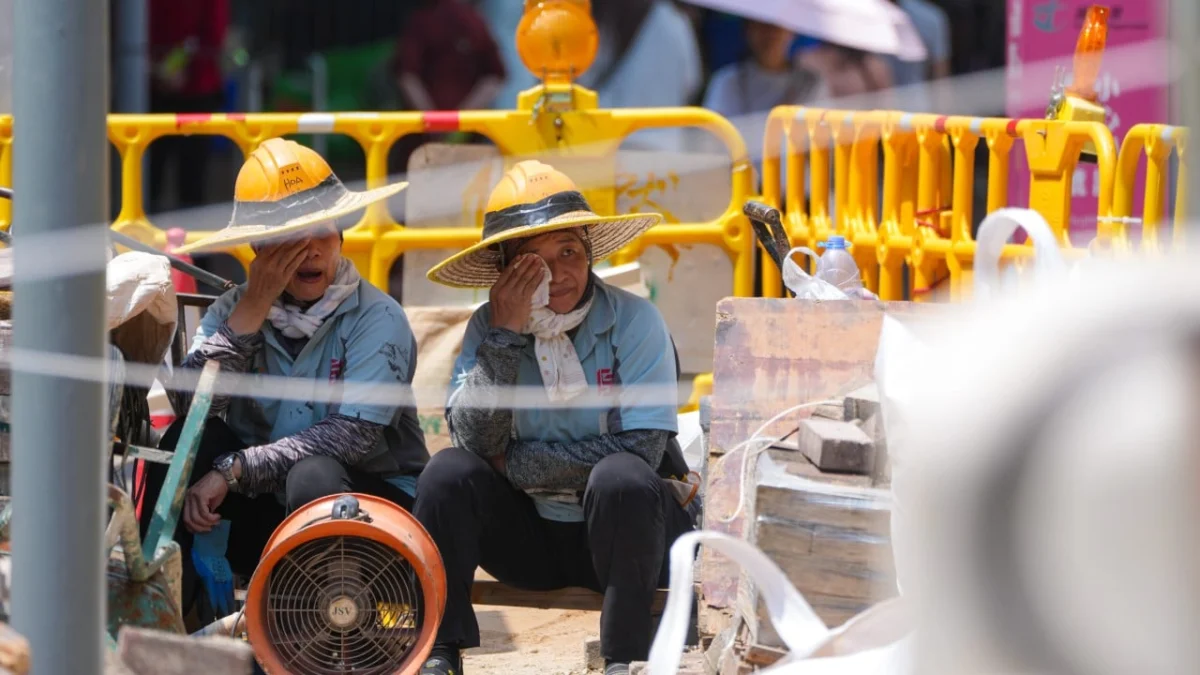
The implications of an inadequate heat stress warning system are far-reaching. For outdoor workers, including construction workers, delivery personnel, sanitation staff, and agricultural laborers, the risks extend beyond immediate discomfort. Prolonged exposure to extreme heat can lead to a spectrum of heat-related illnesses, from heat cramps and heat rash to heat exhaustion and potentially fatal heatstroke. These conditions not only impact individual well-being but also lead to lost productivity, increased healthcare costs, and potential long-term health consequences.
Furthermore, the public’s trust in the effectiveness of government safety measures is at stake. When official alerts appear to downplay or misrepresent the severity of environmental hazards, it can erode confidence and potentially lead to complacency among those most at risk. The current situation highlights the need for greater transparency and a more scientifically grounded approach to public health warnings, especially in the face of escalating climate change impacts.
The pledge to review the system is a positive step, but the effectiveness of this review will depend on its scope, the engagement of independent experts, and the subsequent implementation of meaningful changes. A swift adoption of an internationally recognized index like WBGT, coupled with a significant expansion of the monitoring network, would be crucial in ensuring that Hong Kong’s outdoor workforce is adequately protected against the increasingly severe heat events anticipated in the future. The coming months will be critical in determining whether this commitment translates into tangible improvements in worker safety and resilience against the growing threat of extreme heat.
The Hong Kong Observatory has indicated that the scorching conditions are expected to persist in the coming days, with temperatures in some areas forecast to reach at least 37 degrees Celsius. While more frequent showers are anticipated later in the week, offering some respite, the underlying trend of rising temperatures necessitates a proactive and adaptive approach to heat stress management. The review of the warning system is not merely a procedural step but a vital component of Hong Kong’s broader strategy to adapt to a changing climate and protect its most vulnerable populations.