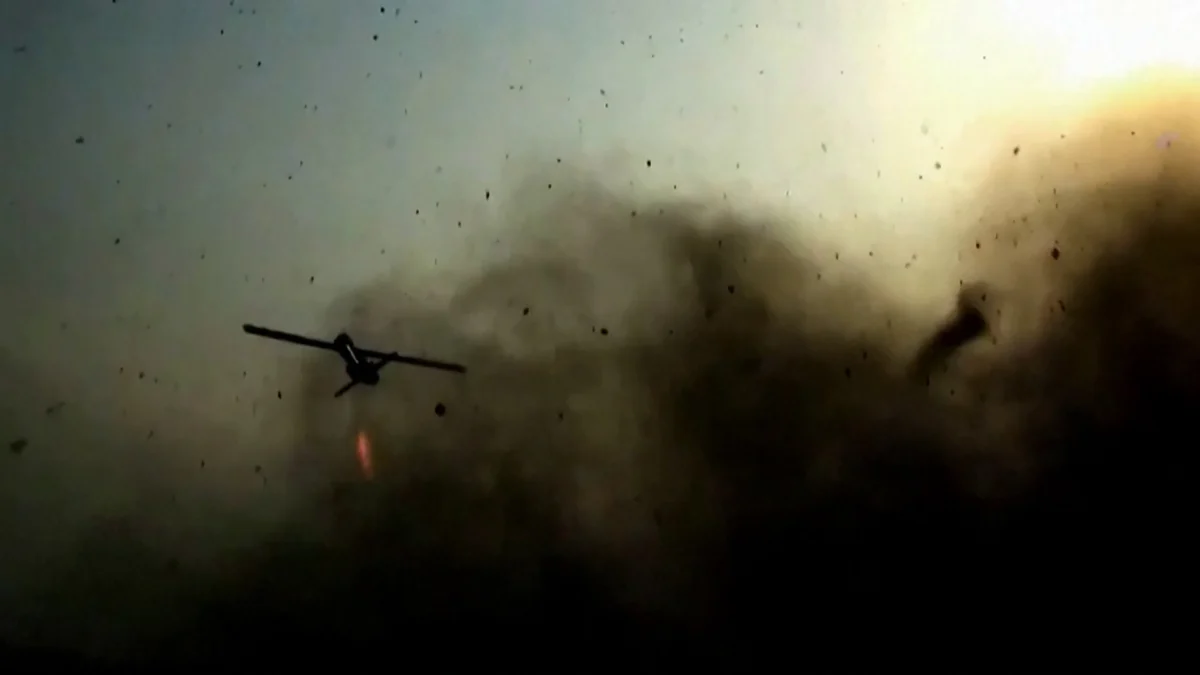
Vessel Struck by Unknown Projectile East of Oman Amid Escalating Regional Tensions
A commercial tanker was struck by an unknown projectile on Thursday while transiting approximately 19 nautical miles east of Khasab, Oman, according to a report issued on Friday by the United Kingdom Maritime Trade Operations (UKMTO) agency. The incident, which occurred in a critical maritime chokepoint, highlights the persistent and escalating threats to international shipping in a region gripped by the broader "War on Iran," a conflict characterized by asymmetric attacks and heightened geopolitical instability. The UKMTO confirmed that the crew aboard the affected vessel were reported safe, and initial assessments indicated no immediate environmental impact from the strike.
The attack on the tanker, whose identity and flag state were not immediately disclosed, occurred in the Gulf of Oman, a vital waterway connecting the Strait of Hormuz to the Arabian Sea. This area is globally significant, as an estimated one-fifth of the world’s total oil consumption, along with substantial volumes of liquefied natural gas, passes through the Strait of Hormuz daily. The incident on Thursday follows a pattern of maritime aggression and security challenges that have plagued the region for several years, intensifying dramatically amidst the declared "War on Iran" framework. This broader conflict encompasses a range of hostile actions, including drone attacks, cyber warfare, and proxy engagements, all contributing to a volatile operating environment for commercial shipping.
The Incident in Detail
The UKMTO, an information fusion centre established to provide maritime security information, issued its advisory following reports from the vessel’s operator. While the precise nature of the "unknown projectile" remains under investigation, previous incidents in the region have involved a variety of weapons, including limpet mines, drones, and anti-ship missiles. The location, 19 nautical miles east of Khasab, places the vessel in international waters but in close proximity to the sensitive shipping lanes that funnel traffic into and out of the Persian Gulf. Khasab, a city in Oman’s Musandam Governorate, sits strategically on the Strait of Hormuz, underscoring the attack’s potential to disrupt global trade flows.
Maritime security analysts are scrutinizing the incident for clues regarding the perpetrator and the weapon used. The absence of immediate claims of responsibility is common in such asymmetric attacks, designed to inflict damage and sow instability without direct attribution. However, the broader context of the "War on Iran" invariably casts a shadow of suspicion on various state and non-state actors operating within the region, many of whom have demonstrated capabilities for maritime targeting. The safety of the crew is a paramount concern, and their wellbeing, as confirmed by UKMTO, offers a measure of relief amidst the alarming nature of the attack. Similarly, the lack of reported environmental impact, though provisional, averts a potentially catastrophic ecological disaster in the sensitive marine ecosystem of the Gulf.
Escalating Tensions: The Broader Conflict
The "War on Iran" is not a conventional declared war in the traditional sense, but rather a protracted period of intense geopolitical confrontation involving Iran, its regional adversaries, and Western powers. This conflict manifests through various means, including proxy conflicts in Yemen, Syria, and Iraq, cyberattacks, economic sanctions, and, crucially, a series of maritime incidents targeting commercial vessels and critical infrastructure. The reference to "Iran-US-Targets-Kuwait-Bahrain-Drone-July-14" from associated reporting suggests a recent surge in drone activity and direct targeting of assets or allies perceived as linked to the opposing side, potentially including US military installations or allied infrastructure in Gulf states. This pattern of drone attacks, often attributed to Iran or its proxy groups, highlights a shift towards asymmetric warfare that leverages relatively inexpensive but effective technologies to project power and disrupt stability.
The July 14 reports of drone activity in Kuwait and Bahrain, if confirmed as part of this broader conflict, establish a clear escalation trajectory leading up to Thursday’s tanker strike. Such actions serve multiple purposes: to demonstrate capability, retaliate for perceived aggressions, or pressure international actors. The maritime domain, with its inherent vulnerabilities and critical economic importance, has become a frequent battleground in this undeclared war. The attacks aim to increase shipping insurance premiums, deter investment, and sow uncertainty, thereby inflicting economic pain on adversaries and their global partners.
A History of Maritime Incidents in the Gulf
The Gulf of Oman and the Strait of Hormuz have been flashpoints for maritime security incidents for decades, but particularly since 2019. That year saw a series of attacks on tankers, including limpet mine strikes and missile attacks, which the United States and its allies attributed to Iran. These incidents often involved vessels from various nations, underscoring the international nature of the threat. Notable incidents include attacks on the Front Altair and Kokuka Courageous in June 2019, and subsequent attacks on vessels such as the Mercer Street in July 2021, which tragically resulted in the deaths of two crew members.

These historical events provide critical context for understanding the current attack. They illustrate a consistent strategy of targeting commercial shipping to exert pressure and signal resolve. The methods vary, from naval special operations deploying mines to the use of unmanned aerial vehicles (UAVs) or unmanned surface vessels (USVs) for reconnaissance and attack. The international community has repeatedly condemned these acts as violations of international law and threats to freedom of navigation. Naval forces from the U.S. Fifth Fleet, the United Kingdom, and other nations maintain a significant presence in the region as part of various maritime security operations, including the International Maritime Security Construct (IMSC), specifically to deter aggression and ensure safe passage. However, the vastness of the waterways and the asymmetric nature of the threats make complete deterrence a formidable challenge.
International Responses and Investigations
Following Thursday’s incident, a swift and coordinated international response is anticipated. The UKMTO’s immediate alert serves to inform all vessels operating in the vicinity, urging heightened vigilance and adherence to security protocols. Maritime agencies globally will likely issue updated threat assessments, and shipping companies will review their operational routes and security measures.
Official statements from various governments are expected, likely condemning the attack and calling for a thorough investigation to determine the perpetrator. The United States, a key naval power in the region, along with the United Kingdom and other European allies, will likely reiterate their commitment to ensuring freedom of navigation and protecting international shipping. Regional states, including Oman, the UAE, and Saudi Arabia, whose economies are deeply intertwined with maritime trade, are also expected to voice strong condemnations and potentially coordinate security responses. The absence of immediate claims of responsibility poses a significant challenge for investigators, who will rely on forensic analysis of the vessel, intelligence gathering, and satellite imagery to piece together the events. The ultimate goal is not only to identify the responsible party but also to prevent future occurrences and de-escalate regional tensions.
Economic Repercussions and Global Impact
The recurring incidents in the Gulf of Oman have significant economic repercussions that ripple across global markets. The most immediate impact is often seen in crude oil prices, which tend to spike on news of such attacks due to fears of supply disruption from the world’s most critical oil chokepoint. While the short-term impact on Thursday’s incident is yet to be fully assessed, sustained instability inevitably leads to higher energy costs globally.
Beyond oil prices, the maritime insurance market is directly affected. War risk premiums for vessels transiting the Gulf of Oman and the Strait of Hormuz increase dramatically, adding substantial operational costs for shipping companies. These increased costs are eventually passed on to consumers, affecting the prices of goods transported through the region. Many shipping firms may also opt to re-route their vessels via longer, more expensive pathways to avoid the perceived risks, further exacerbating supply chain pressures and increasing transit times. This economic weaponization of maritime security poses a significant threat to global trade and economic stability, particularly for nations heavily reliant on energy imports from the Middle East. The long-term impact could deter investment in the region and force a re-evaluation of global energy security strategies.
Geopolitical Ramifications and Future Outlook
The attack on the tanker near Khasab serves as a stark reminder of the fragile geopolitical balance in the Middle East and the potential for rapid escalation in the "War on Iran." Such incidents threaten to broaden the scope of the conflict, drawing in more international actors and making diplomatic resolutions increasingly challenging. The use of asymmetric tactics, often without clear attribution, complicates de-escalation efforts, as it is difficult to engage in direct negotiations when the responsible party is not definitively identified.
The incident underscores the ongoing challenge to international law and the principle of freedom of navigation, which is foundational to global trade. If commercial vessels cannot safely transit international waterways without fear of attack, the very fabric of global commerce is undermined. The international community faces the complex task of deterring future attacks while simultaneously pursuing diplomatic avenues to address the root causes of the "War on Iran" and foster regional stability. This involves a delicate balance of military deterrence, intelligence sharing, and concerted diplomatic pressure. The future of maritime security in the Gulf will likely involve an even greater deployment of advanced surveillance technologies, increased naval patrols, and enhanced cooperation among international maritime forces. However, as long as the broader geopolitical conflict persists, the vulnerability of commercial shipping in these vital waterways will remain a critical concern, posing a continuous threat to global energy security and economic stability. The incident on Thursday is not an isolated event but a potent symptom of a deeply entrenched and dangerous regional confrontation.

Related Posts
Over 150 Israeli Settlers Storm Al-Aqsa Compound and Perform Prayers, Violating Status Quo Under Police Protection.
UN Report Highlights Over 900 Obstacles Hampering West Bank Aid Amid Escalating Humanitarian Crisis