US Navy Initiates Major $30 Billion Modernization of Puget Sound Naval Shipyard to Support Next-Generation Carrier Fleet
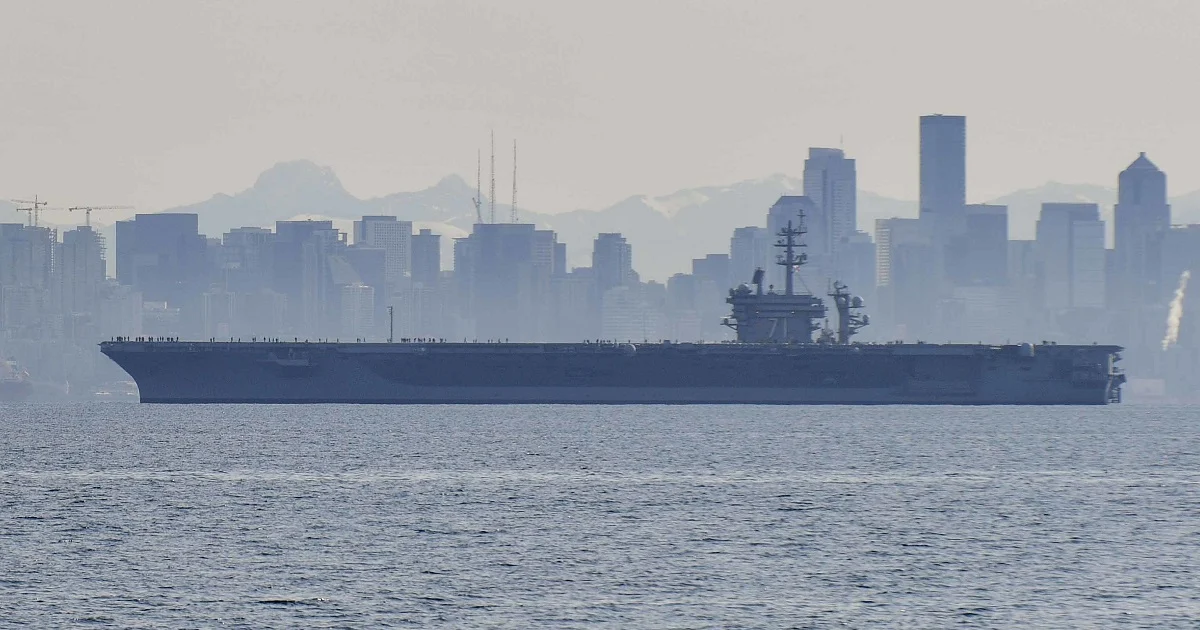
The United States Navy has officially commenced a multi-decade infrastructure overhaul at the Puget Sound Naval Shipyard & Intermediate Maintenance Facility (PSNS & IMF) in Bremerton, Washington, aimed at addressing a critical deficiency in West Coast maintenance capabilities. Highlighting the urgency of the project, the Navy recently issued a "Sources Sought" notice for a massive, multi-award construction contract (MACC) valued at up to $30 billion. This initiative is centered on the design and construction of a new multi-mission dry dock specifically engineered to accommodate the Gerald R. Ford-class aircraft carriers, the newest and most technologically advanced vessels in the American inventory.
This project is a cornerstone of the Navy’s broader Shipyard Infrastructure Optimization Program (SIOP), a 20-year, multi-billion-dollar effort to modernize the nation’s four public shipyards: Norfolk Naval Shipyard in Virginia, Portsmouth Naval Shipyard in Maine, Pearl Harbor Naval Shipyard in Hawaii, and Puget Sound. For years, naval experts and government watchdogs have warned that the aging infrastructure at these facilities poses a significant risk to fleet readiness, particularly as the U.S. shifts its strategic focus toward the Indo-Pacific region.
The Strategic Necessity of the Multi-Mission Dry Dock
The primary driver for the $30 billion investment at Puget Sound is the current inability of West Coast facilities to service the Gerald R. Ford-class carriers. While the Nimitz-class carriers have served as the backbone of the U.S. Navy for decades, the transition to the Ford-class introduces new engineering requirements that existing docks cannot meet. The Ford-class ships feature a larger flight deck, a different hull configuration, and advanced systems such as the Electromagnetic Aircraft Launch System (EMALS) and Advanced Arresting Gear (AAG), which require specialized dockside power and maintenance infrastructure.
Currently, the only facility on the West Coast capable of dry-docking a Nimitz-class carrier is Dry Dock 6 at Puget Sound. However, Dry Dock 6 does not meet modern seismic resiliency standards—a critical concern given the shipyard’s location in a high-risk earthquake zone. Furthermore, Dry Dock 6 cannot fully accommodate the Ford-class carriers due to their specific dimensions and weight distributions. Without a new multi-mission dry dock, the Navy risks a logistical bottleneck where its most advanced Pacific-based carriers would have to travel through the Panama Canal or around Cape Horn to the East Coast for major depot-level repairs, a journey that would significantly degrade operational availability.
Technical Scope and Contractual Structure
The Navy’s Sources Sought notice outlines a comprehensive five-year contract with three one-year options. The project is designed to be executed through a series of complex task orders, typically ranging in value between $2 billion and $6 billion each. The proposed Multi-Mission Dry Dock will be a fully pressure-relieved structure, a sophisticated engineering feat designed to withstand the immense hydrostatic pressures and seismic activity inherent to the Pacific Northwest coastline.
The construction will be centered within the footprint of the existing Dry Dock 3 and will necessitate the demolition of older facilities and the reconfiguration of Piers 6 and 7. According to the Navy’s technical requirements, the project encompasses:
- Advanced Drainage and Flooding Systems: New dewatering systems capable of handling the massive volume of water required for carrier-sized docks.
- Seismic Resiliency: Engineering upgrades to ensure the dock remains operational even after a major tectonic event.
- Utility Infrastructure: Construction of utility routing tunnels, electrical substations, and communications systems to support the high-power demands of modern nuclear vessels.
- Logistical Support: Installation of new portal crane tracks, roadways, rail networks, and a massive new caisson (the floating gate that seals the dry dock).
The project will be rolled out in four distinct task orders. The first will focus on dredging and preliminary work on piers and support buildings. The second task order involves the demolition of the century-old Dry Dock 3 to make way for the new structure. The third task order will install the critical infrastructure, including crane rails and utility tunnels, while the fourth will focus on the construction and delivery of the caisson.
Historical Evolution of Puget Sound Naval Shipyard
The Puget Sound Naval Shipyard has been a pillar of American naval power for over 130 years. Established in 1891 after the Navy purchased 190 acres for just $10,000, the facility originally served as a modest naval station. By 1900, it had transitioned into a full-scale shipyard, and for the first half of the 20th century, it remained the only repair facility on the West Coast capable of handling the Navy’s largest ships.
During World War I, the yard expanded rapidly, and between 1917 and 1969, it constructed 85 ships. Its importance peaked during World War II, when it became the primary repair hub for the Pacific Fleet’s battle-damaged vessels. Following the war, Puget Sound pivoted toward the maintenance of nuclear-powered ships, eventually becoming a leader in the recycling and inactivation of nuclear-powered submarines and cruisers. Today, the shipyard is the Pacific Northwest’s largest naval shore facility and one of the largest industrial employers in Washington State.
The Shipyard Infrastructure Optimization Program (SIOP) Context
The $30 billion Puget Sound project is part of a larger, long-overdue national effort. The SIOP was born out of a 2018 report to Congress which admitted that the Navy’s four public shipyards were in "poor condition" and were failing to meet the needs of the modern fleet. Decades of deferred maintenance had resulted in inefficient workflows, obsolete equipment, and docks that were too small for the next generation of ships.
The SIOP aims to achieve three primary goals:
- Dry Dock Recapitalization: Repairing and modernizing dry docks to accommodate both current and future ship classes.
- Facility Optimization: Reconfiguring the layout of shipyards to improve the flow of materials and personnel, thereby reducing the time ships spend in maintenance.
- Capital Equipment Replacement: Replacing 1960s-era machinery with modern, automated, and digitized industrial tools.
While the original SIOP budget was estimated at $21 billion over 20 years, inflation and the increasing complexity of maritime engineering have driven cost estimates significantly higher. The $30 billion allocation for Puget Sound alone reflects the massive scale of the challenge and the Navy’s commitment to ensuring the shipyard remains viable for the next century.
Strategic Implications and Geopolitical Context
The decision to invest heavily in Puget Sound is inextricably linked to the United States’ "Pivot to Asia" and the growing naval competition in the Pacific. As the People’s Liberation Army Navy (PLAN) of China continues to expand its fleet and modernize its own carrier capabilities, the U.S. Navy’s ability to maintain a persistent presence in the Western Pacific depends on its logistical tail.
"Maintenance is a key component of deterrence," noted one senior naval analyst. "If our carriers are sitting in a queue waiting for a dock that doesn’t fit them, or if they have to sail 6,000 miles for a routine overhaul, we are effectively ceding the operational advantage to our adversaries."
By establishing a Ford-class capable dock in Bremerton, the Navy ensures that its most potent power-projection platforms can remain stationed in and supported by West Coast homeports. This reduces the "transit tax"—the time and fuel lost when ships must travel long distances for service—and increases the number of days a carrier strike group can spend on station in contested waters.
Economic and Regional Impact
Beyond its military significance, the modernization project is expected to have a profound impact on the regional economy of Kitsap County and the broader Seattle-Tacoma metropolitan area. The $30 billion investment will likely support thousands of high-skilled construction and engineering jobs over the next decade.
Furthermore, the upgrade ensures the long-term job security of the roughly 14,000 civilian employees currently working at PSNS & IMF. By modernizing the facility, the Navy is effectively anchoring its presence in Bremerton for the foreseeable future, providing a stable economic engine for a community that has grown around the shipyard for generations.
Challenges and Future Outlook
Despite the clear strategic benefits, the project faces significant hurdles. The engineering challenges of building a seismic-resistant dry dock in a complex marine environment cannot be overstated. Additionally, the Navy must navigate strict environmental regulations regarding dredging and the impact of construction on the Puget Sound ecosystem, which is home to several endangered species.
Budgetary oversight will also be a major factor. The Government Accountability Office (GAO) has previously expressed concerns about the Navy’s ability to manage the costs and schedules of the SIOP. As the Puget Sound project moves forward, Congressional committees are expected to maintain tight scrutiny over the $30 billion expenditure to prevent the cost overruns that have plagued other large-scale defense infrastructure projects.
In conclusion, the initiation of the Multi-Mission Dry Dock project at Puget Sound Naval Shipyard represents a defining moment for the U.S. Navy. It is a recognition that the era of relying on World War II-era infrastructure has ended. As the Navy prepares for a future of high-end maritime competition, the transformation of the Bremerton shipyard will ensure that the Pacific Fleet remains a credible and ready force, capable of maintaining the world’s most advanced warships in the heart of the 21st century’s most critical theater of operations.

Related Posts
Pentagon Forges Landmark Seven-Year Agreements with Boeing and RTX to Accelerate Standard Missile-3 Production and Stabilize Defense Supply Chains
Boeing Unveils Ultra Low-Cost Seeker to Enhance Missile Inventory and Combat Cost Challenges in Modern Warfare