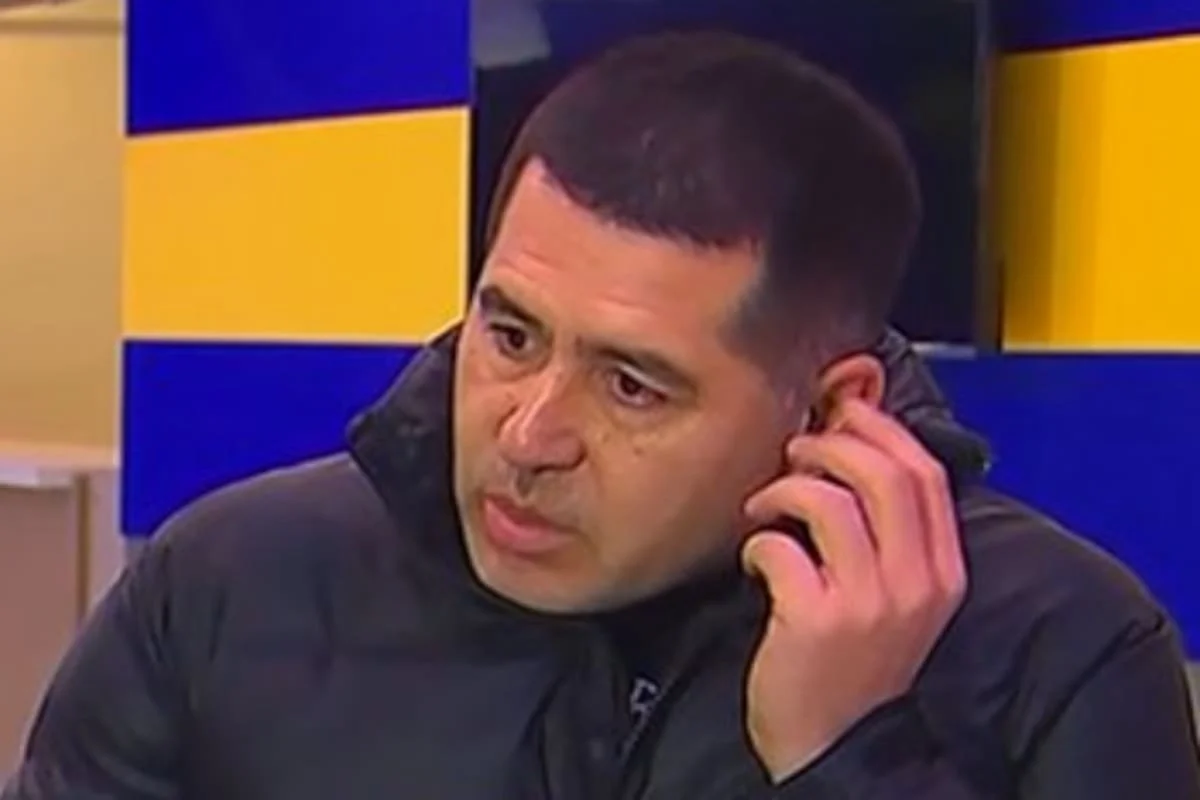
Juan Román Riquelme Defends Sebastián Villa’s Return and Discusses Boca Juniors’ Season and Future
Boca Juniors President Juan Román Riquelme broke his silence on Wednesday from the iconic La Bombonera stadium, addressing the controversial return of former player Sebastián Villa. Villa, who departed the club under a cloud of accusations of gender-based violence and sexual abuse, and subsequent contentious statements, found himself at the center of renewed debate. Riquelme, in an interview with TyC Sports, defended the club’s decision, stating, "No one questioned anything when he was in Mendoza [at Independiente Rivadavia]. He has already served his sentence."
The club president, often perceived as wielding significant influence over technical decisions, emphasized the club’s overarching goal of strengthening its squad. "I am the president, not the coach, but it seems I am by how you ask me. We are happy with every player who arrives at the club. We believe it’s to improve what we have. We always want a more competitive squad," Riquelme asserted. He then focused on the Colombian forward, recalling the player’s tenure with the Xeneizes. "When we had the good fortune of him being at the club, we experienced quite strange moments; I was a footballer and I lived it up close."
Riquelme elaborated on the unique circumstances surrounding Villa’s previous spell. "Sebastián was made to declare on the same days as matches. We lived through strange things, and with him, we were clear and sincere. We told him that he would continue playing and that when they had a decision, be it the judge or whoever, if nothing happened, he would continue. And if he was sentenced, he would stop playing." This statement clarifies the club’s initial stance, indicating a commitment to the player pending legal outcomes.
Following the judicial resolution, Riquelme confirmed that Boca Juniors made the definitive decision to part ways with Villa. He further highlighted the differential media attention the case received in Buenos Aires compared to Villa’s time at Independiente Rivadavia. Reiterating his earlier point, the president declared, "He has already served his sentence," underscoring his belief that the legal process had reached a conclusion that warranted consideration.
From a purely footballing perspective, Riquelme explained the strategic rationale behind the acquisition. He confirmed that the new Boca Juniors coach, Rodolfo Arruabarrena, had explicitly requested the signing of a forward. The club’s leadership, after careful deliberation, concluded that Villa possessed the necessary attributes for the role. "We also know that some take longer to adapt to the world of Boca, and he has the advantage of knowing everything," Riquelme added, suggesting that Villa’s familiarity with the club environment would facilitate a smoother reintegration.
Furthermore, Riquelme vehemently denied any allegations that Villa had extorted money from Boca Juniors. He clarified the player’s financial situation post-trial: "After the trial, to play elsewhere, he had to file a lawsuit against our club because otherwise, they wouldn’t allow him to. But he never showed up to ask for money anywhere." This statement aims to dispel rumors and portray Villa’s departure as a consequence of legal requirements rather than financial demands.
The club president emphasized his belief in offering second chances. "I try to be as clear as possible: in life, we all deserve an opportunity. When he was here, we told him he would play until the last day, and that topic was discussed a lot. It was said that even if he was sentenced, Boca would continue to count on him. We didn’t go on television because we didn’t deem it necessary. We did what we discussed with him, and he was clear about it." This suggests an internal club policy of support and communication with players facing personal or legal challenges.
Regarding Villa’s current disposition, Riquelme noted his apparent contentment, citing the recent birth of his child. "We hope he can enjoy himself because that’s what we want, for him to play football, and we believe he can give us things that the team needs." This sentiment aims to frame Villa’s return as a positive step, focusing on his potential contributions on the field and his personal well-being.
The Complex Case of Sebastián Villa: A Timeline of Events and Club Response
The saga surrounding Sebastián Villa’s association with Boca Juniors has been marked by significant legal and public scrutiny. Villa joined Boca Juniors in the summer of 2018, quickly becoming a key player due to his pace and attacking flair. His initial years at the club were largely successful on the field, contributing to multiple titles.
However, the first public allegations of domestic violence emerged in April 2020. The player was accused by his former partner of physical and psychological abuse. This led to widespread condemnation and calls for his immediate removal from the squad. Boca Juniors, at the time, issued statements acknowledging the seriousness of the allegations and pledged to cooperate with the judicial investigation.
In June 2023, Villa was found guilty of domestic violence against his former partner and received a two-year and one-month suspended prison sentence. This verdict marked a significant turning point, leading to Boca Juniors’ official decision to terminate his contract. The club stated that they would no longer have the player in their ranks, aligning with their commitment to combating gender-based violence.
Following his departure from Boca Juniors, Villa sought to continue his career abroad. Reports indicated that he needed to resolve his contractual situation with Boca to facilitate a transfer. The club’s stance, as articulated by Riquelme, was that Villa would not be permitted to play for another team unless his legal obligations were settled, which, in this context, involved a judicial process. Riquelme’s recent comments suggest that the club views the completion of his sentence as fulfilling this obligation.
The mention of Villa playing for Independiente Rivadavia prior to his move to Boca Juniors is a point of reference for Riquelme to contrast the level of public attention. During his tenure at the smaller club, the allegations, while present, did not generate the same intensity of media scrutiny as they did when he was a prominent figure at one of Argentina’s biggest clubs. This suggests a perception that the legal proceedings were handled with less public pressure during his earlier career stages.
The Return of Rodolfo Arruabarrena: A Familiar Face at the Helm
Beyond the Villa controversy, Riquelme also discussed the return of Rodolfo Arruabarrena as the head coach of Boca Juniors. Arruabarrena, who previously managed the club from 2014 to 2016, was appointed following the departure of Claudio Ubeda after Boca’s elimination from the Copa Libertadores. Riquelme expressed his strong personal connection and admiration for Arruabarrena, highlighting their shared history as teammates and their long-standing friendship.
"We talked a lot about football with the people at the club and took things calmly. We know a lot has been said. I tend to speak little, but I did with Arruabarrena and no one else. He is someone I care about a lot, and I had the good fortune to have him as a teammate at the club and later at Villarreal for many years," Riquelme stated, emphasizing the deep personal bond that underpins this professional decision.
Riquelme further elaborated on Arruabarrena’s commitment to the club. "We shared many days, nights, and years playing football, family meals. He loves the club like the ‘bosteros’ do and didn’t hesitate for a second to come. Now it’s time to work hard. He is a very serious person, and we hope this semester we can enjoy ourselves a lot." The term "bosteros" is an affectionate and sometimes self-deprecating nickname for Boca Juniors supporters, signifying Arruabarrena’s genuine connection to the club’s fanbase.
Arruabarrena’s previous tenure at Boca Juniors was characterized by a period of relative stability and a tactical identity that resonated with the club’s traditions. His return is seen by many as an attempt to recapture that spirit and implement a clear playing philosophy. The club’s management, under Riquelme’s leadership, appears to have placed significant trust in Arruabarrena’s ability to guide the team through the remainder of the season and beyond.
Evaluating Boca Juniors’ First Half of the Year
Riquelme also provided an assessment of Boca Juniors’ performance during the first six months of the year. Despite securing a victory in the Superclásico against arch-rivals River Plate, the team faced disappointment with eliminations from both the domestic league and the Copa Libertadores. Riquelme characterized the competitive landscape as "complicated" and expressed a clear objective to improve in the latter half of the year.
"I have always operated the same way. When I was a footballer and had the good fortune to play here, it became clear to me that you play to bring joy to the fans. A time came when you no longer play for your mother, father, or children, but for the fan. Because if you do well, your family is happy, it’s natural. You play for those whose names you don’t know," Riquelme reflected, emphasizing the paramount importance of the club’s supporters in his philosophy.
He further commented on the volatile nature of Argentine football, where perceptions can shift dramatically based on results. "Argentine football is complicated because when we won the classic, they even bought t-shirts with the face of our coach at the time, who had gone 13 games without losing, which was wonderful. And when we were eliminated, it wasn’t the same." This observation highlights the intense pressure and fluctuating expectations that come with managing a club of Boca Juniors’ stature.
Looking ahead, Riquelme expressed confidence in the current squad’s ability to compete, specifically mentioning the Copa Sudamericana as a realistic target. He also singled out Tomás Aranda, who will inherit the iconic number 10 jersey following Edinson Cavani’s departure, for praise. "He is a boy with a lot of technique and natural abilities. He has played and taken it normally, considering his age. But we have to take care of him and support him because we know that here things happen very quickly. You play two or three games, and we already consider players to be the next Messi." This highlights both the potential of Aranda and the club’s awareness of the need to manage player development and expectations in a high-pressure environment.
The Future of Exequiel Zeballos Amidst Transfer Speculation
The conversation also touched upon the situation of Exequiel Zeballos, a rising star for Boca Juniors. Italian club Napoli has reportedly shown significant interest in the winger. However, negotiations have reportedly stalled due to complications with Zeballos’ contract, which is set to expire in December. Napoli is believed to be keen on acquiring the player after this date.
"He trains with the squad, his contract is until December. I have nothing to do with Napoli. If he is a player until December, we will fulfill our obligations as we should with all the footballers we have each month, as we must, because we are a very well-organized club," Riquelme stated, asserting the club’s commitment to contractual obligations and its structured approach to player management. This statement indicates that Boca Juniors is prepared to honor Zeballos’ current contract and will not be rushed into a premature decision regarding his future. The club’s disciplined financial and contractual management is a recurring theme in Riquelme’s discourse.
The dual focus on the controversial return of Sebastián Villa and the strategic decisions regarding new signings and player retention underscores the multifaceted challenges and responsibilities of leading a club like Boca Juniors. Riquelme’s comments reveal a president attempting to balance club ethics, legal considerations, sporting ambitions, and the immense expectations of a passionate fanbase. The coming months will be crucial in determining whether these strategies translate into on-field success and a more stable period for the Xeneizes.

Related Posts

The Electric Vehicle Battery Health Debate Emerges as Argentina’s EV Market Accelerates
President Donald Trump Confirms Secret Departure from Turkey Amidst Assassination Threat