
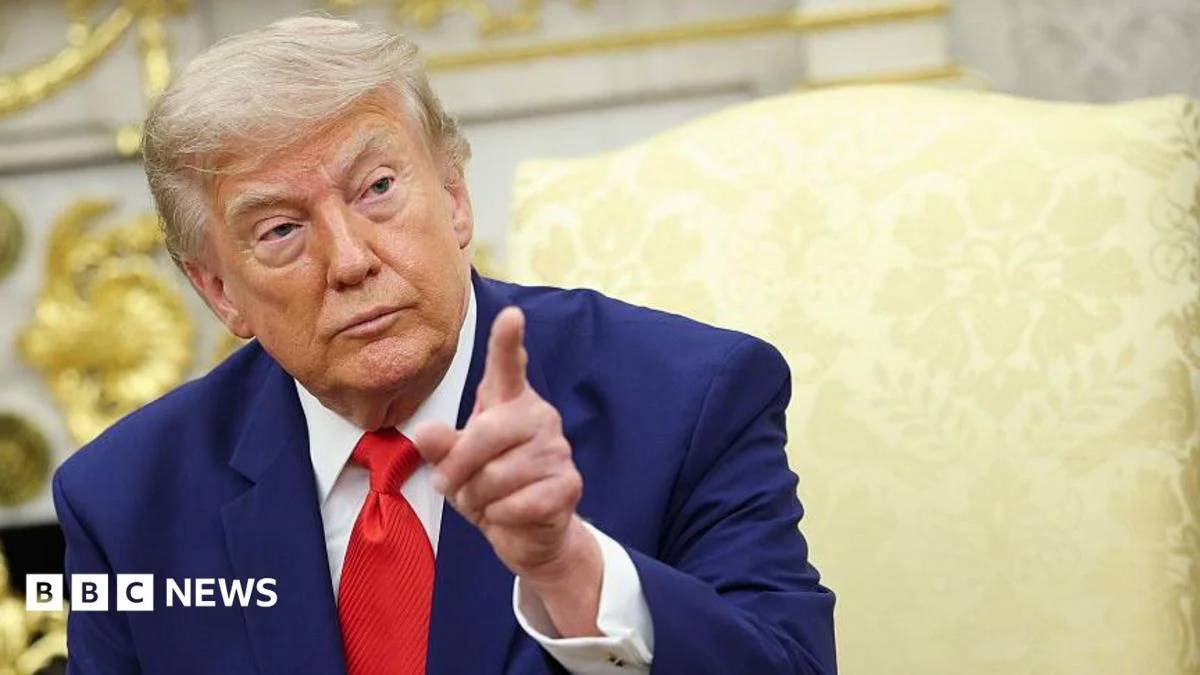
US Imposes Sweeping New Tariffs on 60 Trading Partners Over Forced Labor Concerns, Reigniting Global Trade Tensions
The United States has initiated a significant recalibration of its global trade policy, imposing new tariffs ranging from 10% to 12.5% on imports from 60 key trading partners. This sweeping action, affecting approximately 99.4% of American imports, comes as a temporary global levy, enacted following a February Supreme Court ruling that invalidated a host of prior duties, reached its expiration. The White House, under President Donald Trump’s direction, has justified these new duties by citing the targeted nations’ alleged failure to adequately address and prohibit the importation of goods produced with forced labor. Among the prominent economic powers now facing these tariffs are the United Kingdom, China, the European Union, Canada, Japan, and India, marking a distinct escalation in the global trade landscape that has been largely characterized by protectionist measures since Trump’s return to office last year.
A Pivot in Trade Policy Following Supreme Court Intervention
The latest tariffs represent a strategic shift by the Trump administration to reassert its trade enforcement agenda after a legal setback earlier this year. In February, the US Supreme Court delivered a landmark ruling that many of the tariffs previously imposed globally under emergency presidential powers were illegally enacted. This decision had far-reaching implications, necessitating the refunding of tens of billions of dollars in duties collected from importers and creating a void in the administration’s tariff framework. In response, the White House proposed a temporary 10% blanket levy as an interim solution, which expired on Friday, setting the stage for the current, more targeted measures.
The legal basis for this new wave of tariffs is rooted in Section 301 of the Trade Act of 1974. US Trade Representative Jamieson Greer, acting on Thursday under President Trump’s direction, invoked this statute, which grants the executive branch broad authority to investigate and take action against foreign trade practices that are deemed to burden or restrict American commerce. Greer’s statement underscored the dual objectives of the new tariffs: "Today’s action will begin to correct what is both a human rights abuse and distortive trade practice to improve the welfare of workers everywhere."
This move follows another recent invocation of US trade law. Earlier in the week, the Trump administration utilized Section 338 of the Tariff Act of 1930 to impose a substantial 50% tariff on certain products from Canada, highlighting a multi-pronged approach to trade enforcement.
The Forced Labor Mandate: A Defining Criterion
The core justification for these widespread tariffs, as articulated by the Office of the US Trade Representative (USTR), is the "failure [of trading partners] to impose and effectively enforce a prohibition on the importation of goods produced with forced labour." President Trump has made the adoption of a robust ban on imports produced with forced labor a "critical" component of reciprocal trade agreements with other nations.
The USTR’s announcement specified a tiered tariff structure: trading partners that have "made commitments to adopt, and effectively enforce" bans on forced labor imports will face a 10% tariff, while those that have not will incur the higher 12.5% rate. The USTR noted that, to date, ten trading partners have agreed to enact such a ban within their trade agreements. Furthermore, other countries have implemented bans in recent weeks in response to US investigations, indicating a degree of proactive compliance ahead of the tariffs.
USTR Jamieson Greer expressed cautious optimism, stating he was "encouraged by the trading partners who have moved quickly to adopt forced labour import prohibitions, and look[ed] forward to ensuring their effective enforcement." However, the challenge of proving "effective enforcement" remains significant, a point emphasized by trade policy expert Deborah Elms from the Hinrich Foundation. She noted that it is "unlikely countries hit with tariffs will be able to prove that they have sufficient measures to prevent forced labour imports." This suggests a potentially high bar for affected nations to clear, making the tariffs difficult to circumvent in the near term.
The issue of forced labor has gained increasing international prominence, particularly concerning allegations related to Muslim ethnic minorities in China’s Xinjiang region. While China has consistently denied such claims, asserting "there is no so-called forced labour in China," international human rights groups and several governments have provided extensive documentation suggesting otherwise. The US stance appears to reflect a growing global consensus that supply chain integrity and human rights considerations are inextricably linked to trade policy.
Global Reactions and Economic Repercussions
The immediate aftermath of the US announcement has seen a flurry of condemnations and expressions of regret from affected nations, underscoring the potential for widespread trade friction.
Brazil, subjected to the higher 12.5% US tariff, swiftly labeled the move "unjustified" and "arbitrary." In a sharply worded statement, the Brazilian government accused Washington of choosing to "manipulate an issue of great importance" to workers’ rights in order to advance a protectionist trade agenda. Brazil indicated its intent to respond with measures under its "reciprocity law" and signaled a potential pivot towards strengthening trade ties with other partners. This latest tariff follows a separate 25% duty imposed earlier this month by the US on a range of Brazilian imports, including furniture, machinery, and sugar, though exemptions were granted for certain goods like beef and coffee.
Japan, a crucial US ally and economic partner, expressed its "regret" over the new tariffs on Friday, asserting that its trade practices are fully compliant with international rules. Similarly, Australian Trade Minister Don Farrell decried the levies as "completely unjustified" and vowed to continue lobbying Washington for the removal of all duties on Australian goods.
China, a perennial focus of US trade actions and a target of the new tariffs, reiterated its opposition to any form of unilateral tariff and firmly rejected the allegations of forced labor. Chinese foreign ministry spokesperson Mao Ning stated, "There is no so-called forced labour in China, and we oppose using this as an excuse for political manipulation." Despite these denials, the sustained focus by the US and international human rights organizations on forced labor practices, particularly in Xinjiang, suggests that this issue will remain a flashpoint in US-China relations.
Economically, the new levies are widely anticipated to drive up costs for businesses and consumers in the United States. Wendy Cutler, an economic security expert at the Asia Society Policy Institute, noted that while the impact might be softened by the exemption of certain goods, the overall trend points to increased expenses. Beyond direct costs, the tariffs are likely to disrupt global supply chains, forcing companies to reassess sourcing strategies and potentially accelerate moves towards regionalization or diversification away from heavily tariffed routes.
The broader geopolitical implications suggest a potential erosion of trust among trading partners. Cutler predicted that most affected nations would be "disappointed with the new levies and are likely to focus on ways to ‘reduce their dependence on the US market’ by making deals with other countries." This could accelerate a fragmentation of the global trading system, leading to new bilateral and multilateral agreements that exclude the US or are designed to mitigate the impact of its protectionist policies.
Trump’s Enduring Tariff Strategy and Future Outlook
This latest imposition of tariffs is consistent with President Trump’s long-standing "America First" trade philosophy, which posits that tariffs protect American workers and boost the US economy by leveling the playing field against what he perceives as unfair global trade practices. His administration has frequently used tariffs not just as economic tools, but as leverage in broader diplomatic and geopolitical negotiations, as evidenced by their application against Mexico to address non-trade issues.
The chronology of Trump’s tariff actions highlights a consistent, if sometimes legally challenged, strategy. In April 2025 (as referenced in the original article, this date likely refers to a past event in the article’s implied timeline, meaning April of the previous year), Trump imposed tariffs of up to 50% on global trading partners on what he termed "Liberation Day," aiming to rectify what he saw as unfair treatment of the US. While these specific tariffs were later struck down by the Supreme Court in February for exceeding presidential authority, the administration’s determination to pursue import duties has remained undiminished.
Beyond the current forced labor-related tariffs, the administration appears poised for further actions. It is actively investigating 16 countries – representing the vast majority of US imports – over claims of manufacturing overcapacity. Such investigations frequently precede the imposition of additional tariffs, suggesting that the current wave may not be the last.
Trade policy expert Deborah Elms concluded that the new levies demonstrate the Trump administration’s "determined" commitment to its tariff strategy. The implications extend beyond immediate economic costs, potentially reshaping global trade alliances, accelerating shifts in manufacturing and supply chains, and further straining international diplomatic relations. As countries grapple with the new duties, the global trading system faces an increasingly complex and volatile future, marked by protectionist impulses and the strategic use of trade policy to achieve broader economic and human rights objectives. The long-term effectiveness of these tariffs in achieving their stated goals, particularly in eradicating forced labor and fostering a fairer global trade environment, will be a critical subject of ongoing scrutiny.

Related Posts
Zambia on Edge: Opposition Leader Arrested Amid Allegations of Insurrection Plot and Election Tensions
Rescuers search for survivors of powerful Indonesia earthquake

