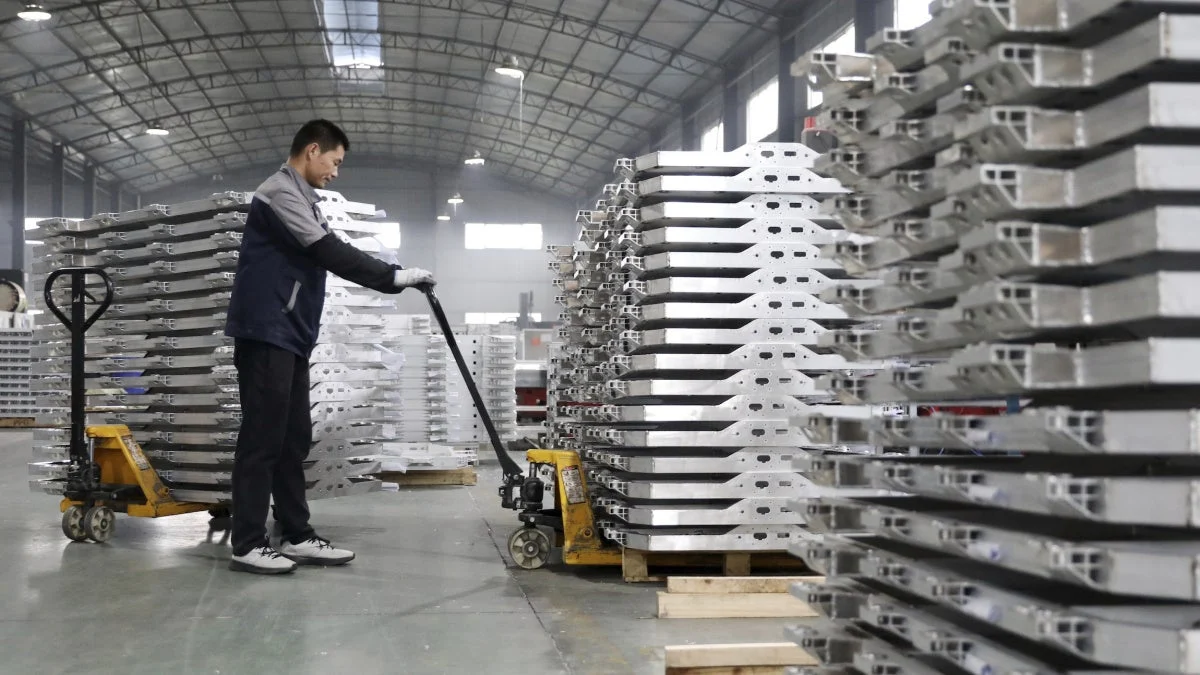
US Expansion of Forced Labor Entity List Targets Aluminum Sector: A New Compliance Challenge for Global Automakers
The United States Department of Homeland Security (DHS) recently announced the addition of 43 Chinese entities to the Uyghur Forced Labor Prevention Act (UFLPA) Entity List, a move that significantly heightens the regulatory pressure on the global automotive industry. This expansion, which includes several major aluminum producers, marks a strategic shift in Washington’s enforcement of trade laws aimed at eradicating forced labor from international supply chains. By specifically targeting the aluminum sector, the U.S. government is sending a clear signal to car manufacturers that the era of opaque sourcing is over, requiring a fundamental restructuring of how raw materials are vetted before entering the American market.
The UFLPA, which was signed into law in December 2021 and took effect in June 2022, operates on a unique legal principle known as "rebuttable presumption." Under this statute, any goods manufactured wholly or in part in the Xinjiang Uyghur Autonomous Region (XUAR), or by entities identified on the UFLPA Entity List, are presumed to be made with forced labor and are prohibited from entering the United States. To bypass this ban, importers must provide "clear and convincing evidence" that their goods were not produced using forced labor—a standard that legal experts and industry analysts describe as exceptionally difficult to meet given the restricted access for independent auditors within the region.
The Significance of the Aluminum Sector Designation
The inclusion of five major Xinjiang-based aluminum producers in the latest update reflects the growing body of evidence linking the metal’s production to state-sponsored labor programs. In July 2024, the U.S. government officially designated aluminum as a "high-priority sector" for enforcement. This designation places aluminum alongside other high-risk commodities such as cotton, tomatoes, and polysilicon, which have been the primary focus of U.S. Customs and Border Protection (CBP) since the law’s inception.
Aluminum is an indispensable component of modern vehicle manufacturing. Its lightweight and durable properties make it essential for engine blocks, vehicle frames, wheels, and heat sinks. Furthermore, as the automotive industry transitions toward electric vehicles (EVs), the demand for aluminum has surged. It is a critical component in EV battery foils and housing units, where weight reduction is vital for extending battery range. The intersection of green energy goals and human rights compliance has thus created a complex dilemma for global automakers who rely heavily on Chinese smelting and processing capabilities.
Data and Background: Xinjiang’s Role in Global Aluminum Production
To understand the scale of the challenge, one must look at the data surrounding China’s aluminum industry. A comprehensive report released in February 2024 by Human Rights Watch found that more than 15 percent of the aluminum produced in China—which translates to approximately 9 percent of the total global supply—originates from the Xinjiang region. China as a whole produces more than half of the world’s aluminum, meaning that a significant portion of the global automotive supply chain is indirectly tethered to XUAR.
The production of aluminum is an energy-intensive process, requiring vast amounts of electricity for smelting. Xinjiang’s massive coal reserves provide the cheap energy necessary to fuel these operations. However, this economic advantage is inextricably linked to human rights concerns. Aluminum producers in the region, along with the coal mines and power plants that support them, have been documented participants in Chinese government "labor transfer" programs. These programs are characterized by the coercive relocation of Uyghurs and other Turkic Muslim minorities into industrial jobs, often far from their homes, under the guise of poverty alleviation and vocational training.
Chronology of Enforcement and Policy Escalation
The journey toward the current enforcement landscape began in 2017 and 2018, when reports from academic researchers and non-governmental organizations first detailed the mass detention and forced labor of ethnic minorities in Xinjiang.
- December 2021: President Joe Biden signs the UFLPA into law with bipartisan support, establishing the framework for the Entity List.
- June 2022: The UFLPA takes full effect. CBP begins detaining shipments of solar panels and apparel linked to Xinjiang.
- Early 2023: Reports surface of luxury vehicles being held at U.S. ports due to components—specifically electronic sub-assemblies—containing materials from blacklisted entities.
- February 2024: Human Rights Watch publishes "Asleep at the Wheel," a report specifically detailing the automotive industry’s exposure to Xinjiang aluminum.
- July 2024: DHS updates the UFLPA strategy, officially naming aluminum as a high-priority sector and adding 43 companies to the Entity List, bringing the total number of listed entities closer to 100.
This timeline illustrates a narrowing focus. While initial enforcement targeted finished consumer goods, the strategy has evolved to target upstream raw materials that are embedded deep within complex, multi-tiered supply chains.
Official Responses and Geopolitical Implications
The U.S. government’s stance remains firm. Secretary of Homeland Security Alejandro Mayorkas stated during the announcement that the DHS is committed to "holding the PRC [People’s Republic of China] accountable for its ongoing genocide and crimes against humanity." The administration maintains that the UFLPA is not a trade barrier but a human rights tool designed to ensure that American consumers are not unwitting participants in the exploitation of forced labor.
Conversely, the Chinese government has consistently denied all allegations of forced labor in Xinjiang, describing the UFLPA as "economic coercion" and a violation of international trade rules. A spokesperson for the Chinese Ministry of Foreign Affairs characterized the addition of the 43 companies as an attempt to "suppress Chinese industries under the pretext of human rights." Beijing argues that the labor programs are voluntary and aimed at improving the economic standing of minority populations.
Industry reactions have been more measured but reflect a sense of urgency. The Alliance for Automotive Innovation, which represents major carmakers in the U.S., has emphasized that its members are committed to ethical sourcing. However, industry experts point out that the complexity of automotive supply chains—which can involve up to ten tiers of suppliers—makes total transparency a Herculean task.
The Challenge of Supply Chain Mapping
For a car manufacturer, the path of aluminum from a mine in Xinjiang to a finished vehicle in a Detroit dealership is convoluted. The raw bauxite is refined into alumina, which is then smelted into aluminum ingots. These ingots are sold to fabricators who create foils, sheets, or castings. These parts are then sold to Tier 2 or Tier 3 suppliers who assemble larger components before they finally reach the Tier 1 supplier that delivers the finished part to the automaker.
To comply with the latest U.S. regulations, car companies must now move beyond "Tier 1" visibility. They are being pushed to map their supply chains down to the raw material level. This involves:
- Traceability Audits: Using blockchain or specialized forensic auditing firms to track the origin of metal batches.
- Contractual Mandates: Requiring suppliers to certify that no materials from the UFLPA Entity List are used at any stage of production.
- Diversification: Shifting sourcing to producers in regions like the Middle East, Australia, Canada, or Scandinavia, where labor practices are more easily verified.
However, shifting sources is not an overnight process. Aluminum smelting requires long-term contracts and specific grades of purity. The sudden removal of 9 percent of the global supply (the Xinjiang portion) from the eligible U.S. pool could lead to increased costs and potential supply shortages for manufacturers who have not already begun the de-risking process.
Analysis of Broader Industry Impact
The inclusion of these 43 companies is likely to trigger a "ripple effect" across the global market. Even manufacturers who do not sell vehicles in the United States may find themselves under pressure to align with UFLPA standards to maintain access to global financing and to satisfy the ESG (Environmental, Social, and Governance) requirements of institutional investors.
Furthermore, the focus on aluminum may be a precursor to increased scrutiny of other automotive materials. Steel, copper, and lithium—all of which have significant production footprints in China—could be next on the high-priority list. The DHS has signaled that it will continue to update the Entity List as new evidence of labor transfers emerges, meaning the list of 43 companies is likely to grow.
From a competitive standpoint, companies that have invested in "clean" supply chains early will likely see a market advantage. Conversely, those found in violation of the UFLPA face not only the seizure of goods at the border but also significant reputational damage and potential legal liabilities under the Tariff Act of 1930.
Conclusion: A New Standard for Corporate Responsibility
The expansion of the UFLPA Entity List serves as a definitive turning point for the automotive industry. It forces a transition from a cost-first procurement model to one that prioritizes legal and ethical compliance as a core business necessity. As aluminum becomes a focal point of trade enforcement, car companies are left with little choice but to disengage from suppliers linked to the Xinjiang region.
The message from the U.S. government is clear: ignorance of the deep tiers of a supply chain is no longer an acceptable legal defense. To ensure their vehicles can be sold in one of the world’s largest markets, automakers must now prove that every gram of aluminum in their frames, engines, and batteries is free from the taint of forced labor. This shift represents one of the most significant challenges to global trade logistics in decades, necessitating a total reimagining of the relationship between industrial production and human rights.

Related Posts

Human Rights Watch Calls for Investigation into Death of Detainee Following Removal from Najaf Hospital by Iraqi Drug Police
Human Rights Watch Urges UN Security Council to Extend Lebanon Peacekeeping Mission Amid Escalating Conflict and Humanitarian Crisis