
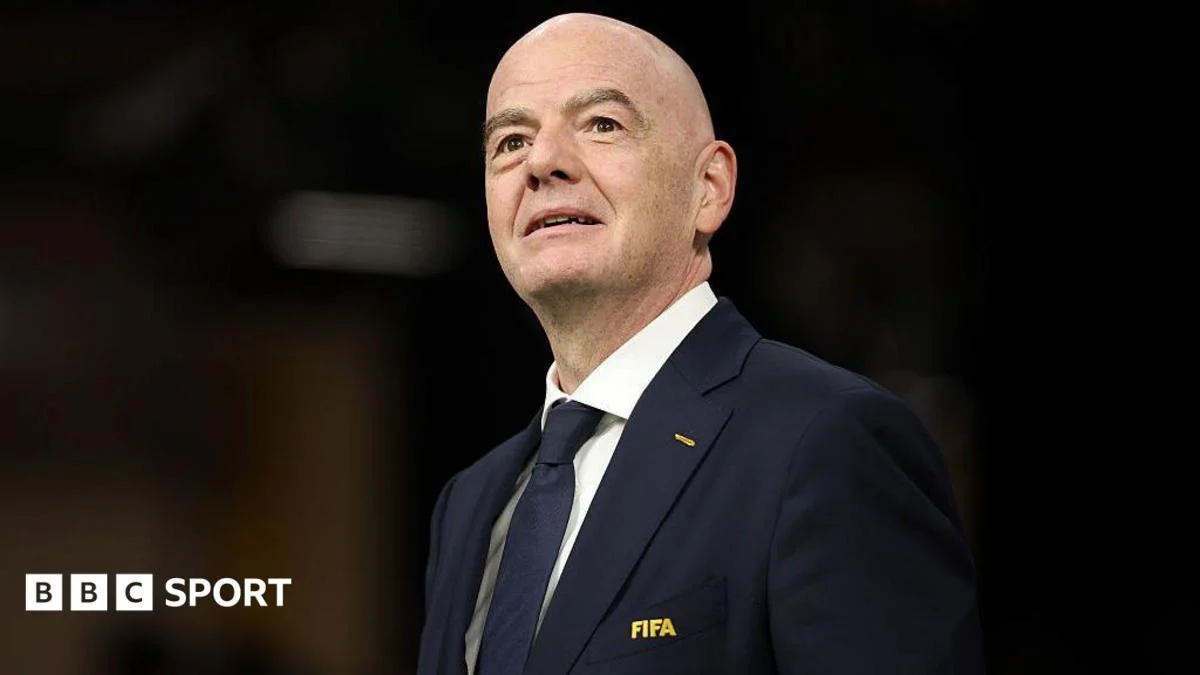
Gianni Infantino says sorry but remains as Fifa president after executive meeting
FIFA President Gianni Infantino has issued an apology for the "errors" made in his controversial proposal to sell significant stakes in the governing body’s flagship competitions to private investors, a mea culpa that has seemingly secured his continued leadership after receiving unanimous backing from senior executives during a crucial meeting in Rabat, Morocco. This development follows a period of intense scrutiny and vocal opposition from key football stakeholders, most notably European governing body UEFA, over the clandestine nature and potential ramifications of the aborted FIFA Forward Enterprise (FFE) plan.
The high-stakes gathering took place at FIFA’s Africa office in Rabat on Wednesday, convened by Infantino himself, as the pressure mounted following widespread condemnation of his ambitious but ultimately retracted scheme. Four hours after the meeting concluded, world football’s governing body released a statement of unequivocal support for its embattled president, a move designed to draw a line under what many observers consider one of the most significant challenges to Infantino’s decade-long tenure.
The Aborted Proposal: FFE and Its Genesis
At the heart of the controversy was Infantino’s proposal to establish a new subsidiary, the FIFA Forward Enterprise (FFE), which would have seen private investors acquire a substantial stake in the commercial and ticketing rights of FIFA’s premier tournaments. This included the highly lucrative men’s and women’s World Cups, events that generate billions of dollars in revenue for the global governing body. The FFE model was reportedly structured to offer all 211 member associations a substantial incentive: $40 million (approximately £30 million) each, contingent upon their backing of the proposal.
The plan, however, was shrouded in secrecy, reportedly kept from senior members of the FIFA hierarchy and the FIFA Council until its details began to leak to the media. The Times newspaper broke the story on July 28, revealing the audacious scope of the proposal and, crucially, a connection to Joshua Kushner, brother of Jared Kushner, former US President Donald Trump’s son-in-law. This particular detail raised immediate red flags regarding transparency, potential conflicts of interest, and the perceived influence of external, non-footballing figures in the sport’s governance. Critics quickly seized upon the lack of due process and the apparent attempt to bypass established governance structures within FIFA.
A Chronology of Controversy
The timeline of events leading up to the Rabat meeting paints a picture of rapidly escalating tension and internal discord:
- Late July: Details of Infantino’s FFE proposal begin to circulate internally, with significant portions reportedly kept from key FIFA bodies.
- July 28: The Times breaks the story, exposing the FFE plan, its private investment component, and the reported $40 million incentive for member associations. The involvement of Joshua Kushner is also highlighted.
- Following Days: Widespread criticism erupts, particularly from European football quarters. Concerns are raised about the deal’s opacity, its potential impact on FIFA’s independence, and the perceived undervaluation of its commercial assets.
- Weekend Prior to Rabat Meeting: UEFA issues a strongly worded statement, declaring it had "lost confidence" in Infantino’s leadership and labelling the FFE proposal a "shabby, back room, opaque deal." The European body even threatened legal action against FIFA, signalling a significant escalation of the dispute. Several UEFA member associations, including Wales (with England reportedly poised to follow), withdraw their support for Infantino’s re-election bid, further undermining his position.
- Tuesday, Prior to Rabat Meeting: Internal dissent within FIFA surfaces. Secretary General Mattias Grafstrom circulates an internal memo to FIFA staff, describing the situation as "a sad and reproachable series of events." This public acknowledgement of internal turmoil from a high-ranking executive underscores the gravity of the crisis facing Infantino. Carlos Cordeiro, Infantino’s senior adviser on global strategy and governance, resigns over the plan, providing a tangible sign of the deep-seated opposition within FIFA’s inner circle.
- Wednesday, Rabat Meeting: Infantino convenes members of the management board at FIFA’s Africa office in Rabat. The meeting is highly anticipated, with speculation rife about the potential outcomes for Infantino’s presidency.
- Four Hours Post-Meeting: FIFA releases a statement announcing Infantino’s apology for "mistakes" regarding FFE and, crucially, the unanimous reaffirmation of full support for him as president by Grafstrom and the management board. Infantino and Grafstrom also send a signed letter to FIFA’s vice-presidents, council, and 211 member associations, reiterating their "sincere apologies" and promising that such errors would "not happen again."
- Post-Meeting Optics: Infantino and Grafstrom are pictured together attending a Women’s Africa Cup of Nations match in Rabat, a clear visual display of unity intended to project stability and reconciliation after the internal strife.
Reactions from the Football World
The FFE controversy has triggered a broad spectrum of reactions, exposing the fault lines within global football governance.
UEFA’s Stinging Rebuke: European football’s governing body emerged as Infantino’s most vocal and powerful critic. UEFA’s condemnation was swift and unreserved, branding the FFE proposal as fundamentally flawed due to its secrecy and lack of transparency. Their declaration of "no confidence" was a significant escalation, given UEFA’s historical influence within FIFA and its substantial financial contributions to global football. The threat of legal action and the prospect of a boycott of FIFA competitions by all 55 UEFA member associations represented an unprecedented challenge to Infantino’s authority. This stance underscored a deep-seated concern within Europe about the potential for FIFA to cede control of its most valuable assets to private entities without proper oversight or consultation.
Internal Dissent and External Calls for Resignation: Mattias Grafstrom’s internal memo was a rare public expression of concern from within FIFA’s executive ranks, highlighting the internal discomfort with Infantino’s approach. While Grafstrom ultimately reaffirmed his support for the president, his initial criticism revealed the extent of the unease. Beyond FIFA, high-profile figures joined the chorus of disapproval. Canadian Prime Minister Mark Carney, whose country co-hosted a recent World Cup, publicly stated he no longer had confidence in Infantino. Former football icon Luis Figo, who himself once challenged Sepp Blatter for the FIFA presidency, called for Infantino’s immediate resignation, stating, "Infantino has debased the office that he promised to elevate. It is too late to save his dignity but it is not too late to save football." These statements from influential political and sporting figures added significant weight to the growing criticism.
The Power Base: Support from Africa and Asia: Despite the strong opposition from Europe and some high-profile individuals, Infantino’s power base in Africa and Asia remained largely intact. Prior to the controversy, many of the 211 member associations had already signed letters of support for his re-election bid. Countries such as Egypt, Morocco, Niger, Mauritania, DR Congo, and the Philippines publicly backed Infantino in the wake of the FFE scandal. This loyalty is often attributed to the significant financial assistance provided through FIFA’s existing FIFA Forward programme, a precursor to the aborted FFE. Under this programme, each member association receives approximately $8 million (£5.94 million) over a three-year cycle, a substantial sum for many smaller federations that rely heavily on FIFA funding for their development projects. This financial leverage grants Infantino considerable influence and a robust voting bloc, making it challenging for UEFA or any other confederation to dislodge him without broader global support.
The Rabat Summit: Apology and Reaffirmation
The meeting in Rabat was a critical juncture for Infantino. FIFA’s statement following the summit acknowledged that "mistakes" were made regarding FFE, specifically noting that it was "not the intention" for the FIFA Council and member associations to "feel excluded from the process and that the process should have been handled differently." The governing body also admitted that "errors were also made after the proposal was leaked to media," indicating a recognition of failures in both process and crisis management.
Crucially, the statement from the management board reaffirmed their "full support" for Infantino as president. This collective endorsement, alongside the joint apology letter signed by Infantino and Grafstrom, was a calculated move to present a united front and restore a semblance of order and confidence within the organization. The visual of Infantino and Grafstrom attending a football match together further solidified this message of reconciliation.
However, the FIFA statement also contained a stern warning, asserting that the organization "will no longer tolerate any attacks on its integrity, good governance and due process and will take all necessary measures to protect and safeguard its name and reputation." This indicates FIFA’s intent to push back against further criticism, framing it as an attack on the institution itself rather than on specific policies or individuals.
Infantino’s Path Forward: Challenges and Strategy
Despite the immediate show of support, Infantino, 56, faces a challenging road ahead as he looks to consolidate his position and potentially fight for a fourth term. The next FIFA Congress, where the presidential election will be held, is scheduled for March 2027 in Morocco. Rivals have until November 18 to put their names forward, and a candidate requires 106 votes from FIFA’s 211 members to secure victory.
The FFE controversy is the latest, and perhaps most significant, in a series of challenges to Infantino’s leadership, which has included questions surrounding Saudi Arabia’s successful bid for the 2034 World Cup, the awarding of a FIFA Peace Prize to former US President Donald Trump, and the handling of player eligibility cases. While these previous controversies did not significantly dent his authority, the FFE plan, with its direct financial implications and perceived governance failings, struck a deeper chord.
Governance and Reform: The incident has highlighted persistent concerns about FIFA’s governance structures, particularly the ease with which such a significant financial proposal could be developed and advanced without broader consultation. While FIFA stated that "everything that was done was done in full compliance with the Fifa regulatory framework," the backlash suggests a need for enhanced checks and balances. Infantino may be pressured to map out a route for reform, potentially involving greater transparency in financial dealings, more robust consultation mechanisms for major strategic decisions, and clearer ethical guidelines to prevent conflicts of interest. Whether he genuinely embraces such reforms or merely offers cosmetic changes remains to be seen. Proposals such as shelving the controversial 64-team World Cup expansion or opening up FIFA’s substantial cash reserves could be considered as olive branches, though they are highly speculative.
The Morocco 2030 World Cup Final Allegation: Adding another layer of complexity to the narrative, FIFA earlier denied a story in The Times alleging that Infantino had promised Morocco the hosting rights for the 2030 World Cup final in exchange for its support. FIFA swiftly dismissed this as a "false and misleading" claim, stating that the decision on the final’s venue, for a tournament also hosted by Spain and Portugal, would be made "in due course." This accusation, even if denied, contributes to the perception of a leader willing to engage in transactional politics to secure backing.
The Broader Landscape: FIFA, Confederations, and Global Power Dynamics
The FFE saga has laid bare the complex power dynamics within global football. UEFA, despite its considerable influence and wealth, finds itself in a challenging position. While it has successfully forced Infantino to backtrack on FFE, its ability to realistically overthrow him on its own is limited. Beyond Europe, only Concacaf has publicly criticised the FIFA president, though it stopped short of expressing a loss of confidence. The Asian Football Confederation (AFC), while rejecting the FFE plan initially, has not issued a blanket statement of no confidence since its abortion.
For UEFA to mount a successful challenge to Infantino’s re-election, it would require significantly more global support, particularly from the powerful African (CAF) and Asian (AFC) confederations. This necessitates a strategic effort to persuade these federations that an alternative presidential candidate could offer similar financial programmes (like FIFA Forward), but with greater transparency, accountability, and a commitment to broader governance reforms. This is a formidable task, given Infantino’s established loyalty networks and the tangible financial benefits many smaller federations derive from his administration.
The incident underscores the enduring challenges of governance within FIFA, an organization that has historically been plagued by allegations of corruption and a lack of transparency, particularly during the Blatter era which Infantino was elected to reform. While he has moved to apologize and secure executive backing, the FFE controversy highlights the persistent struggle to balance commercial ambitions with ethical governance and democratic principles.
Looking Ahead: The Future of FIFA Governance
Infantino will undoubtedly hope that the Rabat meeting and his subsequent apology will allow him to "draw a line" under this latest controversy. However, the deep divisions exposed by the FFE proposal are unlikely to simply vanish. UEFA’s anger and mistrust are palpable and will not be easily assuaged by internal FIFA statements. The episode serves as a stark reminder of the fragile trust within global football governance and the constant tension between FIFA’s central authority and the powerful regional confederations.
The path forward for FIFA under Infantino will likely involve a delicate balancing act: maintaining the loyalty of his key voting blocs through continued financial support, while simultaneously attempting to placate powerful critics like UEFA with promises of enhanced governance and transparency. Whether this latest "error" will ultimately weaken his long-term grip on power or merely be another storm weathered by a resilient leader remains a pivotal question for the future direction of world football. The March 2027 election, though distant, already looms as a critical test of his ability to navigate the complex political landscape of global football.

Related Posts
Zambia on Edge: Opposition Leader Arrested Amid Allegations of Insurrection Plot and Election Tensions
Rescuers search for survivors of powerful Indonesia earthquake

