UN Loss and Damage Fund Defers Initial Funding Decisions Amidst Massive Demand and Resource Shortfall
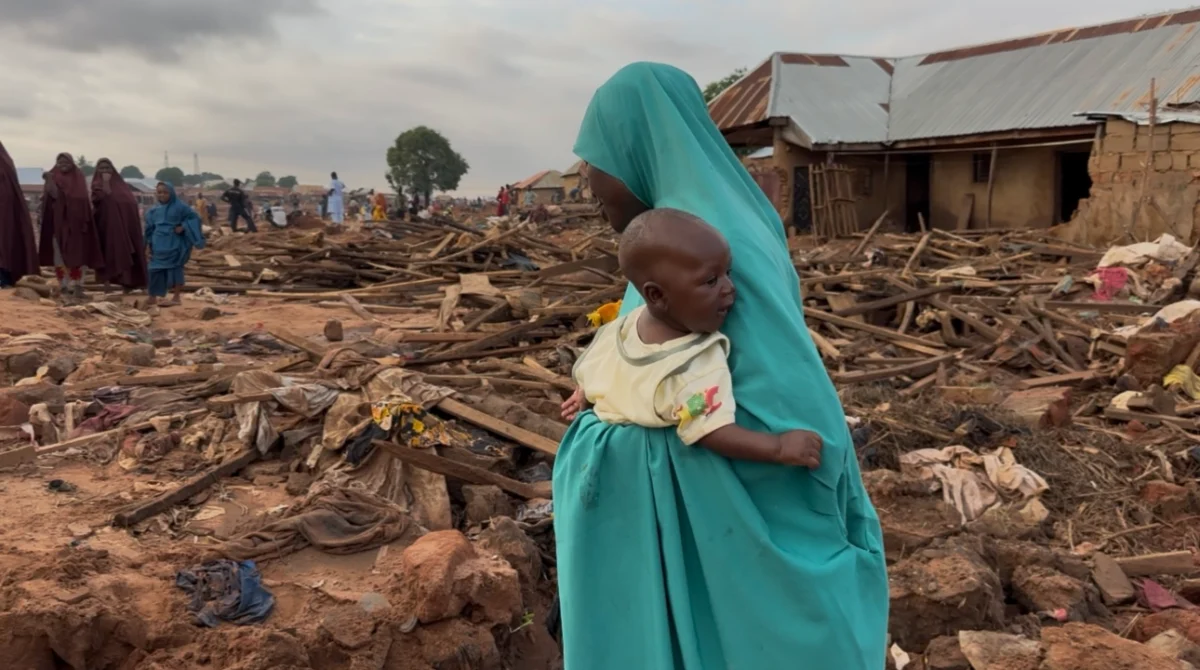
The board of the United Nations’ fledgling Fund for Responding to Loss and Damage (FRLD) concluded its latest high-stakes meeting in Manila with a decision to postpone the approval of its inaugural package of support projects until December. This move confounded the expectations of many observers and climate advocates who had anticipated the backing of an initial set of four pilot proposals during the sessions held this week in the Philippine capital. The decision highlights the immense operational and financial challenges facing the fund as it attempts to transition from a conceptual victory of international diplomacy to a functional lifeline for communities devastated by climate-induced disasters.
As the meeting drew to a close on Friday, the board faced a stark reality regarding the scale of the crisis it is tasked with addressing. Following its first formal call for proposals, the FRLD received nearly 180 submissions from across the globe, representing a total funding requirement of approximately $2.8 billion. This overwhelming demand stands in sharp contrast to the fund’s currently available liquidity. At the start of the week, the fund had only $250 million in ready-to-allocate capital. In a partial move to address the surge in applications, the board agreed on Friday to release an additional $100 million, bringing the immediate pot to $350 million—still less than 13% of the amount requested in the initial wave of proposals.
A Chronology of the Fund for Responding to Loss and Damage
The journey toward establishing the FRLD has been marked by decades of advocacy from developing nations and small island states, often met with resistance from industrialized economies concerned about legal liability. The formal timeline of the fund’s development provides essential context for the current bottlenecks in Manila.
The breakthrough occurred in November 2022 at COP27 in Sharm el-Sheikh, Egypt, where parties finally agreed to establish a dedicated fund for loss and damage. This was seen as a historic acknowledgement that mitigation and adaptation efforts were no longer sufficient to address the permanent losses—such as the disappearance of land to sea-level rise—and the acute damages caused by extreme weather events.
Following the agreement, a Transitional Committee met throughout 2023 to design the fund’s structure. In December 2023, at COP28 in Dubai, the fund was officially operationalized. Within the first few days of the conference, several nations, led by the United Arab Emirates and Germany, pledged an initial sum of roughly $700 million to seed the mechanism. Since then, the board has been tasked with the complex work of setting up governance structures, selecting a host country—eventually choosing the Philippines—and establishing the World Bank as the fund’s interim trustee and host of its secretariat.
The Manila meeting represented the third official gathering of the board in 2024. Its primary objective was to move from administrative setup to active disbursement. However, the sheer volume of applications and the lack of finalized criteria for prioritizing "the most vulnerable" have slowed the momentum, leading to the December deferment.
The Resource Gap: $2.8 Billion in Demand vs. $350 Million in Supply
The financial data emerging from the Manila meeting paints a sobering picture of the "climate finance gap." The $2.8 billion requested by 180 different entities represents a diverse array of needs, ranging from reconstruction of infrastructure destroyed by typhoons to the relocation of coastal villages and the preservation of cultural heritage lost to desertification.
The board’s decision to increase the available allocation to $350 million is a recognition of the "overwhelming demand," yet experts note that this figure is a drop in the bucket compared to actual climate-related losses. For instance, recent estimates suggest that by 2030, the annual cost of loss and damage in developing countries could range between $290 billion and $580 billion.
The current funding pool relies on voluntary contributions, a point of contention for many Global South representatives who argue that funding should be mandatory and based on the "polluter pays" principle. Currently, the pledges made at COP28 have not all been converted into liquid cash, and the fund remains dependent on the political will of wealthy nations to fulfill their promises and provide new tranches of capital.
Transparency and Governance Challenges in Manila
The three-day proceedings in Manila were characterized by a significant degree of opacity, drawing criticism from civil society organizations and climate justice advocates. Much of the deliberation took place behind closed doors, with observers excluded from key sessions where the merits of the 180 proposals were discussed.
According to those present, draft decisions were frequently projected on screens in the final hours of the meeting, leaving little time for public scrutiny or expert feedback before they were adopted on Friday. This lack of transparency has raised concerns about the "democratization" of the fund. Advocates argue that because the FRLD is intended to serve the most marginalized communities, its decision-making processes should be as inclusive and transparent as possible.
The board, composed of representatives from both developed and developing nations, defended the closed-door sessions as necessary for candid diplomatic negotiation and the protection of sensitive project data. However, the tension between administrative efficiency and public accountability remains a defining feature of the fund’s early operations.
Official Responses and Stakeholder Frustration
The closing session of the Manila meeting was marked by a palpable sense of frustration. Government board members from climate-vulnerable regions expressed disappointment that the fund could not deliver an immediate win for their constituents.
"The gap between what is being asked for and what we have to give is not just a financial deficit; it is a moral one," stated one observer representing a coalition of Least Developed Countries (LDCs). "To see nearly 200 proposals on the table and have to tell our people to wait until December—while the storms continue to hit—is a difficult message to carry home."
Representatives from developed nations on the board emphasized the importance of getting the "plumbing" right before turning on the tap. They argued that rushing the approval of the first four projects without a robust vetting process could undermine the long-term credibility of the fund, especially when dealing with the World Bank’s fiduciary standards.
Civil society experts present at the meeting echoed the frustration but focused their critiques on the wealthy nations that have yet to significantly increase their contributions. They pointed out that while $350 million is now on the table, it is less than the cost of a single major infrastructure project in a developed city, yet it is expected to serve the needs of dozens of nations.
Technical Hurdles: Selecting the "Most Vulnerable"
A primary reason for the delay is the ongoing debate over the criteria for project selection. With 180 submissions, the board must decide how to weigh different types of loss and damage. Key questions remain:
- Should the fund prioritize rapid-onset events (like hurricanes) over slow-onset events (like sea-level rise)?
- How should the fund balance economic losses (infrastructure, agriculture) with non-economic losses (loss of life, biodiversity, cultural identity)?
- What constitutes "vulnerability" in a way that is fair across different continents and socio-economic contexts?
The four proposals that were expected to be approved this week were intended to serve as a proof-of-concept. By deferring them to December, the board hopes to refine a "scoring rubric" that can be applied to all 180 submissions, ensuring that the limited $350 million is used where it can have the most catalytic impact.
Broader Implications for COP29 and Global Climate Finance
The outcome of the Manila meeting has significant implications for the upcoming COP29 summit in Baku, Azerbaijan, often referred to as the "Finance COP." A major agenda item in Baku will be the New Collective Quantified Goal (NCQG) on climate finance, which is intended to replace the previous $100 billion annual target.
The delay in FRLD funding and the massive demand-supply mismatch will likely embolden developing nations to demand much higher targets for the NCQG. If a fund specifically designed for loss and damage is already oversubscribed by a factor of eight before it has even approved its first project, it serves as undeniable evidence that current climate finance scales are inadequate.
Furthermore, the choice of the Philippines as the host country for the FRLD board was a strategic move to center the fund in a nation that is routinely on the frontlines of climate disaster. The inability of the fund to act decisively in its new host’s backyard during this meeting may be seen by some as a missed opportunity for a powerful symbolic gesture of readiness.
The Path to December
The FRLD board is now under intense pressure to deliver a comprehensive package of approvals at its December meeting. Between now and then, the secretariat will be tasked with the Herculean effort of reviewing the 180 submissions and whittling them down to a manageable and impactful shortlist.
For the communities that submitted these proposals, the delay is more than a matter of administrative process; it is a period of continued risk. Whether the fund can successfully bridge the gap between the $2.8 billion in expressed need and its modest $350 million treasury will determine its relevance in the global fight for climate justice.
As the international community looks toward the end of the year, the FRLD stands at a crossroads. It must prove that it can move beyond the bureaucracy of the United Nations and the World Bank to provide timely, accessible, and sufficient support. The December meeting will be the ultimate test of whether the fund is a transformative instrument for recovery or merely a symbolic gesture in an era of escalating environmental collapse.

Related Posts
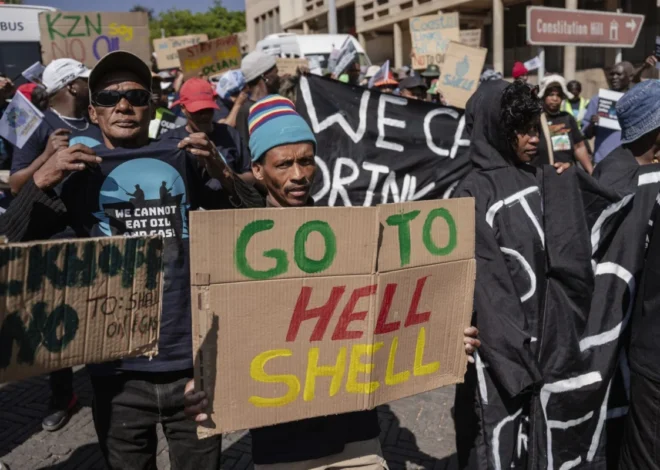
Constitutional Court of South Africa Bars Shell Oil Exploration in Landmark Victory for Environmental and Community Rights
The Battle for Saldanha Bay: South Africa’s Ambitious Ocean Economy Strategy Faces Legal and Environmental Reckoning