U.S. Navy Accelerates Unmanned Surface Vessel Integration Following Successful GARC Live-Fire Exercise During RIMPAC 2024
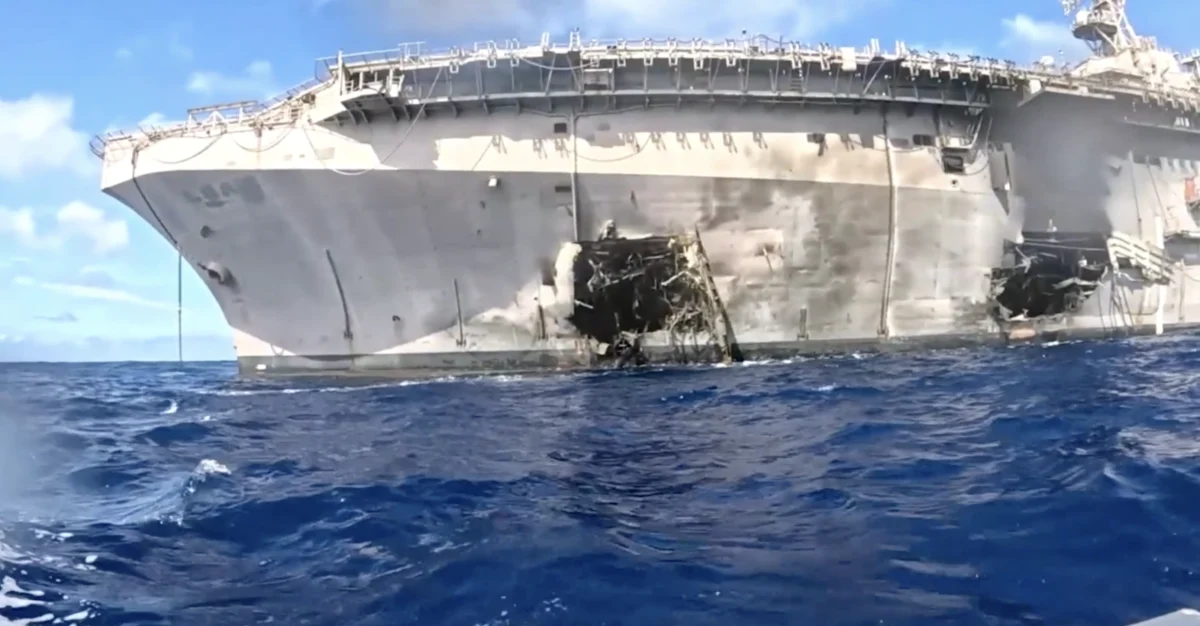
The United States Navy has reached a pivotal milestone in the integration of autonomous maritime technology, confirming the first successful live-fire training exercise of its Global Autonomous Reconnaissance Craft (GARC). This development, occurring during the biennial Rim of the Pacific (RIMPAC) exercise off the coast of Hawaii, marks a significant leap in the Pentagon’s efforts to transition uncrewed surface vessels (USVs) from experimental prototypes to lethal, mission-ready assets. The exercise involved the targeting and eventual sinking of two decommissioned warships, the amphibious assault ship USS Peleliu and the Ticonderoga-class guided-missile cruiser USS Mobile Bay, providing a high-stakes environment to test the precision and operational viability of the Navy’s burgeoning drone fleet.
The confirmation of the GARC’s successful engagement comes on the heels of a rapidly intensifying operational tempo for American unmanned systems. Just weeks prior to the RIMPAC event, U.S. Central Command (CENTCOM) reportedly utilized three Corsair USVs to strike a submarine and ship maintenance facility at the Bandar Abbas naval base in Iran. That operation was heralded as the first instance of American forces employing sea drones in direct combat operations. The subsequent live-fire exercise in the Pacific reinforces a strategic shift within the Department of Defense, emphasizing the "Replicator" initiative—a program designed to field thousands of relatively inexpensive, autonomous systems to counter the mass of near-peer adversaries.
The RIMPAC Sinking Exercise: A Tactical Overview
On July 17, 2024, as part of the massive multi-national RIMPAC exercise, the U.S. Navy conducted a Sinking Exercise (SINKEX) that served as the backdrop for the GARC’s debut in a live-fire capacity. SINKEX events are highly controlled operations where decommissioned vessels are used as targets to test the efficacy of modern weapons systems, including torpedoes, missiles, and now, autonomous platforms. The USS Peleliu, a Tarawa-class amphibious assault ship that served for 35 years before its decommissioning in 2015, and the USS Mobile Bay, a cruiser with a storied history in the Gulf War, were towed into deep water for the exercise.
Footage released by the Navy on July 24 showcased the GARC maneuvering in the vicinity of the Peleliu’s massive hull. Unlike traditional exercises where large manned destroyers or aircraft deliver the finishing blows, this event highlighted the ability of a small, 16-foot autonomous craft to contribute to the kill chain. Sarah Weinstein, a surface warfare officer and the first Commanding Officer of Unmanned Surface Vessel Division 32 (USVDIV-32), confirmed that her unit was responsible for the execution. Weinstein noted that the exercise provided a unique perspective on the SINKEX process, allowing for closer-range data collection and precision targeting that is often difficult to achieve with larger, manned platforms.
Technical Specifications of the Global Autonomous Reconnaissance Craft
The GARC is manufactured by BlackSea Technologies, a Baltimore-based firm specializing in maritime autonomy. The craft is designed to be a versatile, "tactical" small USV (sUSV) capable of operating in high-threat environments where risking human life is undesirable. The GARC’s design philosophy focuses on modularity, allowing the Navy to swap out sensor suites and weapon systems based on specific mission requirements.
Key technical specifications of the GARC include:
- Dimensions: Approximately 16 feet in length, allowing for easy transport via standard shipping containers or launch from larger manned vessels.
- Payload Capacity: The vessel can carry up to 1,000 pounds of equipment, which can include electronic warfare suites, advanced sonar, or kinetic munitions.
- Range and Endurance: It boasts a range of 700 nautical miles, significantly extending the "eyes and ears" of a carrier strike group.
- Speed: The craft maintains a cruising speed of 22 knots, providing the agility necessary for escort duties and intercepting fast-moving surface threats.
- Control Systems: Operators can control the GARC individually via a remote interface or deploy them in "swarms" that utilize collaborative autonomy to overwhelm enemy defenses. The vessel can be driven manually or programmed to follow specific targets using onboard radar and GPS.
Chronology of USV Development and Integration
The path to the RIMPAC live-fire exercise has been characterized by a rapid acceleration of testing over the last 24 months. While the Navy has experimented with unmanned systems for decades, the current GARC program represents a more focused effort to achieve "attritable" mass—systems that are cheap enough to be lost in combat without causing strategic or financial ruin.
- August 2023: The U.S. Navy officially announced it was beginning experimentation with the GARC family of systems. This period focused on basic navigation and "rules of the road" for autonomous maritime travel.
- June 2024: USVDIV-32 deployed GARC units during Exercise BALTOPS, NATO’s premier maritime exercise in the Baltic Sea. During this time, Commander Sarah Weinstein emphasized that the Navy was still in the "learning phase," discovering that the GARC could handle roles beyond its original reconnaissance design, including maritime domain awareness and intelligence gathering.
- July 2024: The RIMPAC SINKEX marked the transition from reconnaissance to kinetic capability. The GARC was integrated into a complex strike package involving international partners, demonstrating that autonomous systems could operate safely alongside manned fleets from 29 different nations.
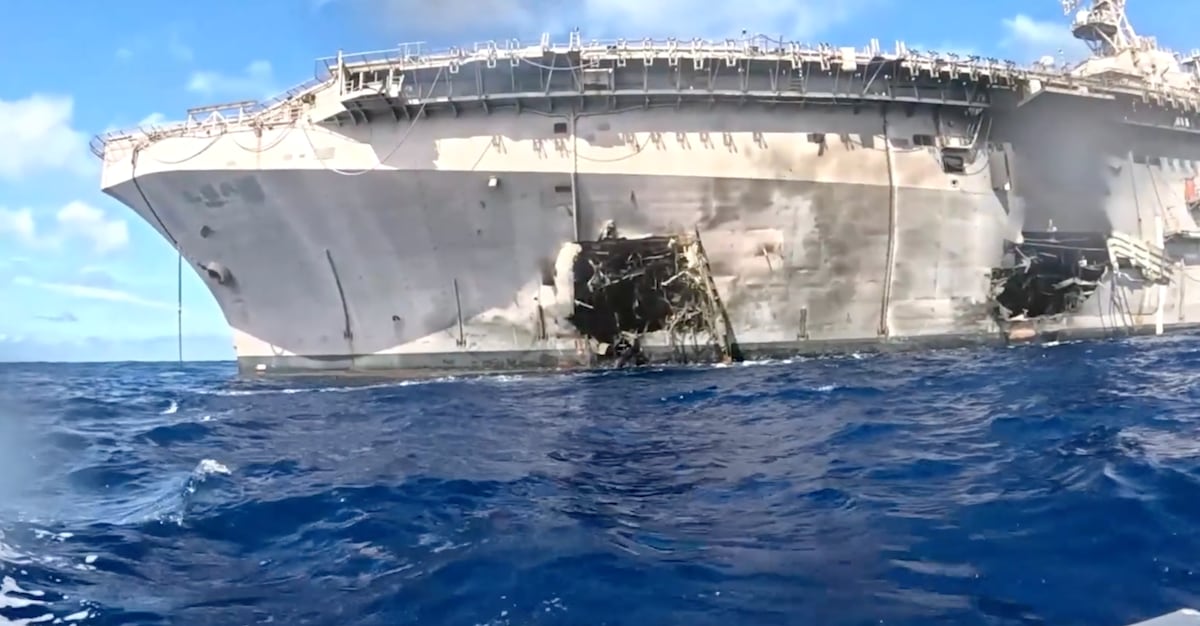
- Late July 2024: Official confirmation and video release of the GARC’s involvement in the sinking of the USS Peleliu, solidifying the craft’s status as a combat-capable asset.
Strategic Implications and Official Responses
The successful integration of the GARC into RIMPAC operations has drawn praise from naval leadership and defense analysts. The ability to deploy small, autonomous platforms that can provide real-time targeting data—or deliver munitions themselves—changes the calculus of maritime warfare, particularly in the Indo-Pacific theater.
Commander Weinstein’s statements to the press reflect a broader cultural shift within the Navy. She noted that the GARC has already surpassed its original design limitations, evolving from a simple scout into a multi-role platform capable of escorting manned ships and providing a "protective screen" against asymmetric threats like those seen in the Red Sea or the Black Sea. "We are at the beginning, and we don’t even know where we’re going to take it yet," Weinstein told the Wall Street Journal, highlighting the open-ended potential of the technology.
From a strategic standpoint, the GARC’s success validates the "Hellscape" concept discussed by U.S. Indo-Pacific Command. This strategy envisions deploying thousands of autonomous air, sea, and undersea drones to create a chaotic environment for any adversary attempting to cross the Taiwan Strait. By utilizing low-cost USVs like the GARC, the Navy can saturate an area with sensors and weapons, forcing an enemy to expend expensive anti-ship missiles on "drone decoys" while the primary manned fleet remains at a safe distance.
Data Analysis: The Cost-Effectiveness of Autonomous Warfare
The financial aspect of the GARC program is a critical driver for its adoption. A traditional Arleigh Burke-class destroyer costs approximately $2 billion to build and requires a crew of over 300 sailors. In contrast, a fleet of GARCs can be produced for a fraction of that cost, with no risk to personnel.
Supporting data from recent maritime conflicts, particularly the Ukrainian use of Magura V5 sea drones against the Russian Black Sea Fleet, suggests that small USVs have a disproportionate impact on naval parity. Ukraine has successfully disabled or sunk several large Russian vessels using drones that cost less than $250,000 each. The U.S. Navy’s GARC, while more sophisticated and integrated into a broader command-and-control network, follows a similar logic of asymmetric advantage. By proving that a 16-foot boat can contribute to the destruction of an 800-foot amphibious assault ship, the Navy is signaling a move toward a "hybrid fleet" architecture.
Future Outlook and Challenges
While the RIMPAC exercise was a success, challenges remain for the full operational deployment of the GARC and its counterparts. Chief among these is the issue of "command and control" in a contested electromagnetic environment. If an adversary manages to jam the satellite links or radio frequencies used to control the USVs, the drones must rely on high levels of onboard artificial intelligence to continue their missions autonomously.
Furthermore, the Navy must develop new logistical frameworks to maintain and deploy these craft at scale. Unlike traditional ships that return to port for overhauls, the GARC is designed for high-frequency use and modular repair. This requires a shift in how the Navy manages its supply chains and technical ratings for sailors.
As USVDIV-32 continues to refine its tactics, the focus will likely shift toward "heterogeneous swarming"—the ability to have different types of unmanned systems (air, surface, and subsurface) communicate and coordinate a strike without human intervention. The sinking of the USS Peleliu and USS Mobile Bay was a dramatic demonstration of current capabilities, but for the U.S. Navy, it is merely the opening chapter in a new era of autonomous maritime power. The GARC has moved beyond the realm of "experimentation" and is now firmly positioned as a cornerstone of the future American surface fleet.

Related Posts
Pentagon Forges Landmark Seven-Year Agreements with Boeing and RTX to Accelerate Standard Missile-3 Production and Stabilize Defense Supply Chains
Boeing Unveils Ultra Low-Cost Seeker to Enhance Missile Inventory and Combat Cost Challenges in Modern Warfare