U.S. Army Awards Prototype Contracts to Ford, GM Defense, and BC Customs for New Heavy Infantry Squad Vehicle
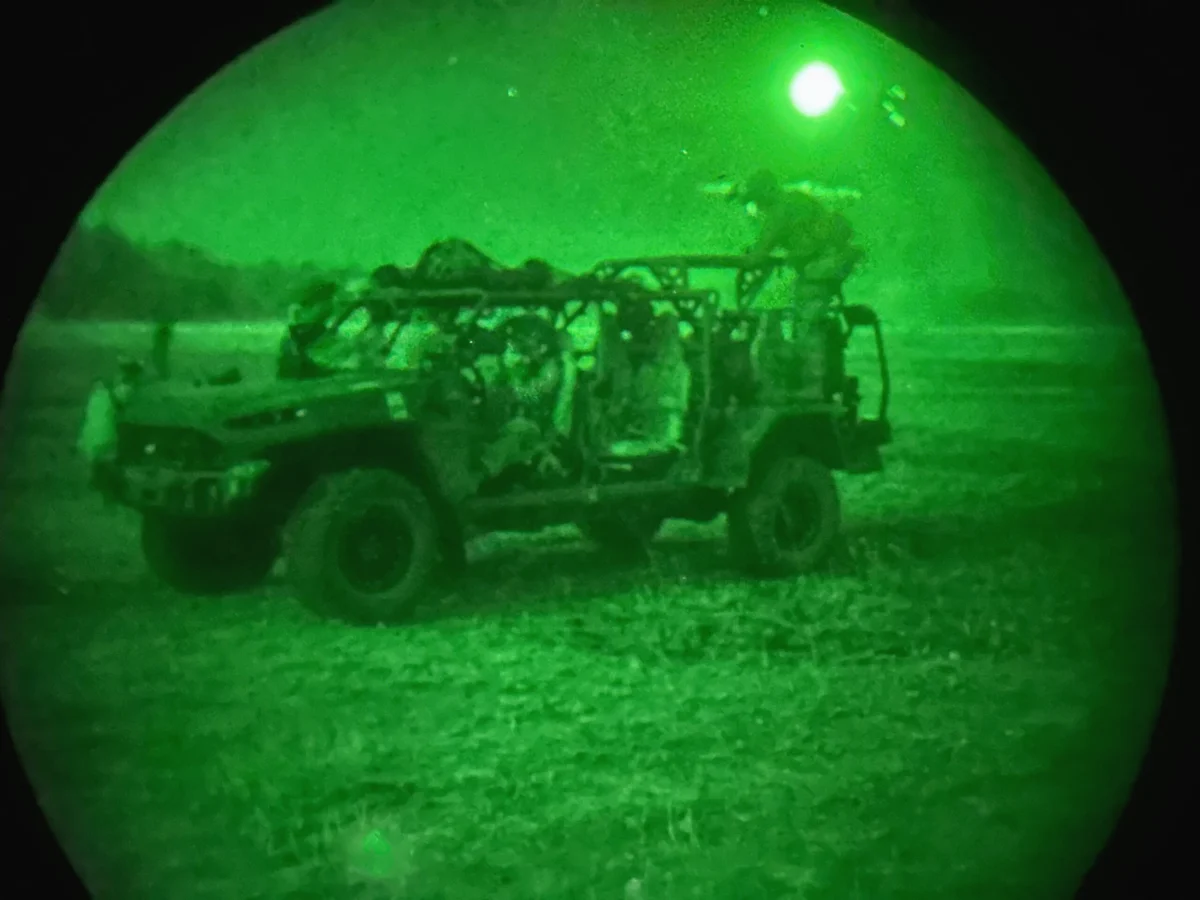
The United States Army has officially launched a competitive prototyping phase for its next-generation tactical transport, selecting three distinct manufacturers to develop the Infantry Squad Vehicle-Heavy (ISV-H). On June 30, the service awarded firm-fixed-price Other Transaction Agreements (OTAs) to Ford Motor Company, GM Defense, and BC Customs to produce competing models of a platform designed to bridge a critical gap in mobile power generation and tactical versatility. Each of the three companies is tasked with delivering three prototype units, with the first deliveries slated for March 30, 2027. These platforms will subsequently undergo rigorous performance and durability trials conducted by the Army Test and Evaluation Command to determine which design best meets the evolving needs of the modern battlefield.
The ISV-H program represents a significant evolution in the Army’s approach to light tactical mobility. While the existing Infantry Squad Vehicle (ISV), currently manufactured by GM Defense, focuses on the rapid insertion of a nine-soldier squad through rugged terrain, the "Heavy" variant shifts the priority toward payload capacity and onboard energy production. This move is driven by the increasing integration of power-hungry technologies at the tactical edge, including counter-unmanned aircraft systems (C-UAS), electronic warfare (EW) suites, and directed-energy weapons.
Technical Specifications and the Power Generation Mandate
In its Commercial Solutions Opening (CSO) published in April, the Army detailed a demanding set of requirements for the ISV-H that distinguishes it from previous light vehicle programs. Central to the requirement is the ability to export 60 kW of continuous high-voltage DC power. This level of power is unprecedented for a vehicle of this size class and is intended to transform the truck from a simple transport into a mobile micro-grid capable of sustaining advanced sensor and weapon arrays.
The vehicle must be capable of carrying a 4,000-pound payload while simultaneously towing a 6,500-pound trailer. Unlike the standard ISV, which seats nine, the ISV-H is configured for a six-person crew, providing more internal volume for "ergonomic mobile workstations" and mission-specific hardware. The Army has also stipulated that the rear seating must be modular; soldiers must be able to reconfigure the interior without the use of tools to accommodate a medical litter for casualty evacuation.
Operational flexibility in extreme climates is another cornerstone of the program. The prototypes must demonstrate the ability to operate in temperatures ranging from -25 degrees Fahrenheit to 130 degrees Fahrenheit. Furthermore, the Army is seeking a high-efficiency recharging capability, requiring the vehicles to be able to replenish their power systems to 90% capacity within six hours, ensuring minimal downtime during high-tempo operations.
Bridging the Capability Gap in Mobile Brigades
The strategic impetus for the ISV-H was underscored during a June Senate Armed Services Committee hearing. Jess Tolleson, the principal deputy assistant secretary of the Army for Acquisition, Logistics, and Technology, identified a "critical capability gap" regarding power generation within mobile brigade combat teams. As the Army moves toward a more distributed and technologically dense operating model, the reliance on towed generators or stationary power sources has become a tactical liability.
The ISV-H is intended to provide "power on the move," allowing units to maintain electronic dominance and drone defense without sacrificing the agility that defines light infantry units. This requirement coincides with the Army’s broader push to field energy-directed weapons on lighter platforms. The service has already conducted operational tests using AeroVironment’s 20-kilowatt LOCUST laser mounted on both the standard ISV and the Joint Light Tactical Vehicle (JLTV). The 60 kW requirement for the ISV-H suggests an ambition to support even more powerful or multiple simultaneous systems.
The Competitors: Three Distinct Engineering Philosophies
The selection of Ford, GM Defense, and BC Customs brings together a mix of massive automotive industrial capacity and specialized tactical vehicle engineering.
GM Defense, the incumbent for the standard ISV, is leveraging its existing military production lines and commercial supply chain. The company has indicated that its prototype will be an optimization of the Chevrolet Silverado 3500HD heavy-duty pickup truck. By using a proven commercial-off-the-shelf (COTS) chassis, GM Defense aims to offer a balance of reliability, ease of maintenance, and rapid scalability. Their previous success with the ISV, which utilized the Chevrolet Colorado ZR2 architecture, provides a blueprint for militarizing commercial platforms.
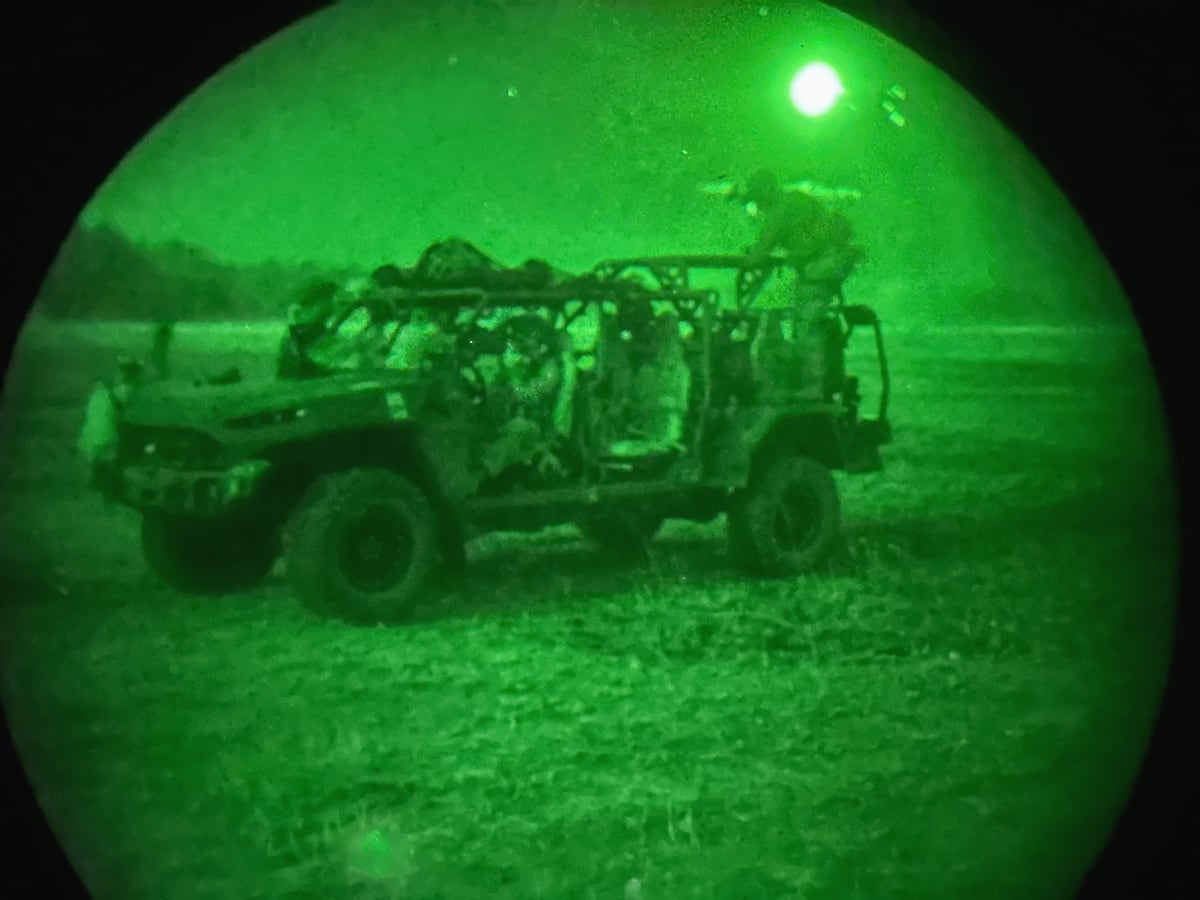
Ford Motor Company enters the fray with its F-Series Super Duty platform. In a statement following the contract award, Ford emphasized that its heavy-duty trucks are inherently suited for the rigors of military application due to their high torque, towing capacity, and robust frames. Ford’s participation marks a significant return to the tactical vehicle space, utilizing the F-Series’ position as one of the most widely produced and modified vehicle architectures in the world.
BC Customs offers a different approach, focusing on a "ground-up" design rather than a modified commercial truck. Dave Baringer, the company’s chief operating officer, noted that their design is "purpose-driven" and "endlessly modifiable." BC Customs is partnering with Raglan, a firm specializing in electronic infrastructure, to handle the complex power management and digital architecture required by the Army. This partnership aims to deliver a vehicle where the 60 kW power export is integrated into the core design rather than added as an auxiliary system.
Chronology of Development and Procurement
The ISV-H program is moving on an accelerated timeline typical of the Other Transaction Authority (OTA) process, which allows the military to bypass some of the traditional, slower procurement hurdles to foster innovation.
- April 2024: The Army releases the Commercial Solutions Opening (CSO) outlining the 4,000-pound payload and 60 kW power requirements.
- June 30, 2024: The Army officially awards the prototype contracts to Ford, GM Defense, and BC Customs.
- 2024–2026: Engineering and development phase where the three companies finalize their respective designs and begin initial assembly.
- March 30, 2027: Deadline for the delivery of the three prototypes from each manufacturer (nine vehicles total) to the Army.
- Late 2027–2028: Intensive testing by the Army Test and Evaluation Command, including mobility, power export stability, and environmental resilience trials.
- Fiscal Year 2027 Budget Request: The Army has already signaled its long-term intent by requesting funds for an initial purchase of 34 ISV-H units.
The Army’s fiscal 2027 budget request estimates the cost per vehicle at approximately $463,000. While the initial order is small, the service has established a long-term acquisition objective of 606 vehicles, making this a high-stakes competition for the three vendors involved.
Future-Proofing: Autonomy and Digital Architecture
Beyond power and payload, the Army is looking toward the future of autonomous warfare. The ISV-H requirements include "drive-by-wire" architecture, a necessary precursor for remote-controlled or fully autonomous operation. This aligns with the Army’s Robotic Combat Vehicle (RCV) initiatives, suggesting that the ISV-H could eventually serve as a manned-unmanned teaming (MUM-T) node, where a manned ISV-H controls a fleet of smaller robotic platforms.
The inclusion of "ergonomic mobile workstations" also points to a shift in how infantry squads operate. Rather than just being passengers, soldiers in the ISV-H may act as system operators, managing drone feeds, signal intelligence, or cyber-warfare tools while in transit. This transformation of the "back seat" into a command-and-control hub is a hallmark of the Army’s modernization strategy for 2030 and beyond.
Analysis of Implications for Modern Warfare
The development of the ISV-H highlights a paradigm shift in light infantry doctrine. Historically, light units traded protection and heavy firepower for speed and deployability. However, the proliferation of cheap, lethal drones and the necessity of electronic masking have made "naked" light infantry increasingly vulnerable.
By providing a vehicle that can carry heavy EW and C-UAS equipment, the Army is attempting to give light units a "bubble" of protection that was previously only available to heavier, mechanized formations. The 60 kW power export requirement is perhaps the most telling statistic; it acknowledges that in future conflicts, the side that can generate and manage the most power at the tactical edge will likely hold the advantage in sensing, jamming, and defending against precision-guided threats.
The competition between Ford, GM, and BC Customs will also serve as a test of the American industrial base’s ability to adapt commercial technology to military needs. If the commercial-based designs from Ford or GM prove successful, it could lead to significant cost savings and faster maintenance cycles. Conversely, if BC Customs’ ground-up approach wins, it may signal that the Army’s specialized power and modularity requirements have finally outstripped what commercial truck frames can provide.
As the first prototypes head toward their 2027 delivery date, the defense industry will be watching closely to see how these three manufacturers balance the competing demands of weight, power, and ruggedness in a platform that must be ready for the most extreme environments on earth.

Related Posts
Pentagon Forges Landmark Seven-Year Agreements with Boeing and RTX to Accelerate Standard Missile-3 Production and Stabilize Defense Supply Chains
Boeing Unveils Ultra Low-Cost Seeker to Enhance Missile Inventory and Combat Cost Challenges in Modern Warfare