U.S. Air Force Seeks New Fighter Jet Engine Sources Amid Growing Supply Chain and Quality Concerns
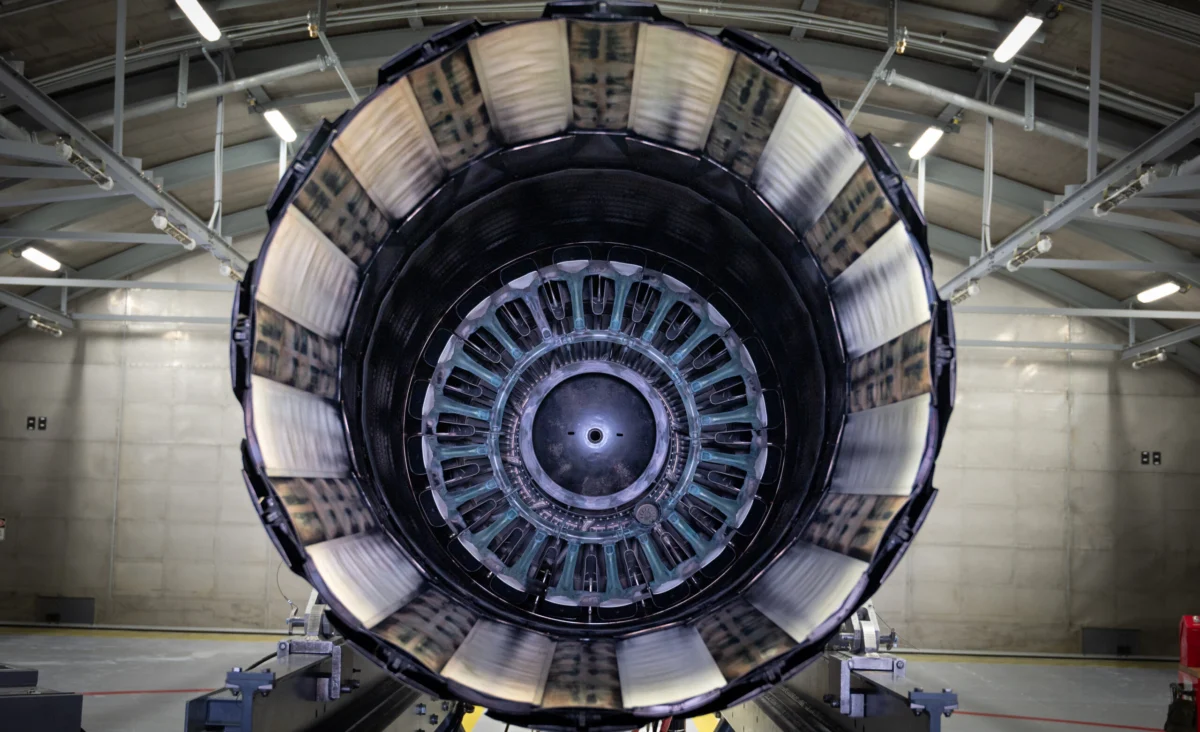
The United States Air Force has issued a formal Request for Information (RFI) seeking to identify new sources and innovative manufacturing partners for its fighter jet engine programs, signaling a profound dissatisfaction with the performance, quality, and reliability of the current defense industrial base. This move marks a potential departure from decades of reliance on a limited number of established aerospace giants, as the service attempts to address persistent production delays, cost overruns, and critical material shortages that have hampered the readiness of the nation’s frontline combat aircraft. The RFI, which carries a response deadline of August 28, outlines a vision for a "strategic competition" designed to overhaul how the military procures and sustains propulsion systems for the F-15EX Eagle II and the F-16 Fighting Falcon, while setting a new standard for future platforms.
A Crisis in Propulsion and Procurement
The Air Force’s decision to look beyond its traditional suppliers is rooted in years of frustration over the industrial base’s inability to meet contract specifications and delivery schedules. In its RFI, the Air Force explicitly warned that the current manufacturing landscape is plagued by "significant challenges," citing quality control issues and "critical obsolescence" of key engine components. This obsolescence refers to diminishing manufacturing sources and material shortages (DMSMS), where the original parts for older engine designs are no longer produced, or the raw materials required to build them have become prohibitively difficult to source.
The impetus for this shift is underscored by recent reports from the Government Accountability Office (GAO). For nearly two decades, the F-35 Lightning II program—the backbone of the modern U.S. fighter fleet—has struggled with propulsion issues. A GAO report released last year noted with concern that the primary engine contractor continues to deliver engines that do not meet original contract specifications, even after 20 years of production. These deficiencies have necessitated expensive retrofits and have limited the operational availability of the fifth-generation stealth fighter.
The issues extend to the Air Force’s strategic bomber fleet as well. The B-52 Stratofortress modernization program, specifically the Commercial Engine Replacement Program (CERP), has faced significant setbacks. According to the GAO, engine-related complications have contributed to a $3 billion increase in program costs and a 15-month delay in reaching initial operational capability. For a service attempting to maintain a global reach with an aging fleet, these delays represent a strategic vulnerability that the Pentagon is no longer willing to tolerate.
The Five Pillars of the New Engine Strategy
To rectify these systemic failures, the Air Force has introduced "five foundational pillars" intended to drive a paradigm shift in engine procurement. These pillars move the service away from "legacy procurement"—which often prioritized the lowest initial bid—toward a model that incentivizes industry-led technological evolution and guarantees long-term supply chain resiliency.
- Vendor Accountability: The Air Force intends to hold manufacturers strictly to their delivery schedules and performance benchmarks. This includes rigorous enforcement of quality control standards to ensure that engines arriving at the flight line are ready for immediate installation and operation without the need for immediate corrective maintenance.
- Total Lifecycle Cost Management: Rather than focusing solely on the "sticker price" of a new engine, the Air Force will prioritize the total cost of ownership over the engine’s entire service life. This includes fuel efficiency, the frequency of required overhauls, and the cost of spare parts. By focusing on the lifecycle, the service hopes to incentivize manufacturers to build more durable and easily maintainable systems.
- Ease of Maintenance: A key goal of the RFI is to reduce the burden on Air Force maintainers. The service is seeking designs that allow for faster repairs and more intuitive troubleshooting, which in turn reduces aircraft downtime and increases the "sortie generation rate"—the number of flights a squadron can perform in a given period.
- Supply Chain Resiliency: The Air Force is demanding that contractors prove they have a secure and redundant supply chain. This is a direct response to the global disruptions seen in recent years, as well as the specific risks posed by the concentration of raw material processing in adversarial nations.
- Capacity Expansion and Scalability: The Air Force is projecting a need for more than 180 engines per year by 2034 to support both domestic requirements and Foreign Military Sales (FMS). The RFI asks potential partners to demonstrate how they would scale production to meet surge requirements in the event of a peer-level conflict.
Historical Context: The Return of the Great Engine War
The current push for competition mirrors the famous "Great Engine War" of the 1980s. During that era, the Air Force grew frustrated with the reliability and cost of the Pratt & Whitney F100 engines used in the F-15 and F-16. In response, the service brought in General Electric to develop the F110 engine as a competitor. This forced both companies to innovate and lower costs, resulting in significantly improved propulsion systems that have powered the U.S. fleet for the last forty years.
However, since the end of the Cold War, the defense industrial base has undergone massive consolidation. What was once a vibrant ecosystem of dozens of aerospace firms has shrunk to a handful of "primes." This lack of competition is viewed by many analysts as a primary driver of the current stagnation. By issuing this RFI, the Air Force is signaling that it is willing to break the current duopoly and potentially bring in non-traditional defense contractors or international partners to restore a competitive edge to the propulsion market.
Supply Chain Vulnerabilities and Geopolitical Risks
A significant portion of the RFI is dedicated to the "producibility" of engines and the availability of specialized materials. Modern jet engines require advanced nickel-based superalloys and specialized titanium to withstand the extreme heat and pressure of supersonic flight. The Air Force is asking respondents to identify "manufacturing process bottlenecks," such as limited capacity in advanced casting and forging facilities.
The geopolitical dimension of this search cannot be overstated. China currently dominates the global market for rare earth elements and has recently begun restricting the export of certain materials used in high-tech defense applications. The Air Force is seeking "guaranteed supply chain resiliency from day one," requiring manufacturers to detail how they will secure raw materials without relying on vulnerable or hostile foreign sources.
Furthermore, the Air Force is inquiring about the role of private capital. The RFI asks companies to specify the minimum production volume required to justify private investments in facility expansion, tooling modernization, and advanced automation. This suggests that the government is looking for partners willing to share the financial risk of modernization in exchange for long-term, high-volume contracts.
Analysis of Implications for Future Readiness
The Air Force’s aggressive new stance has wide-ranging implications for the future of American air power. If the service is successful in attracting new manufacturers or forcing current ones to reform, it could lead to a "streamlined logistics footprint." This would mean fewer parts held in inventory, more standardized components across different aircraft types, and a more agile response to mechanical failures in the field.
However, the path to a new engine source is fraught with technical and financial hurdles. Developing a modern fighter engine is one of the most complex engineering challenges in existence, often taking over a decade from initial design to full-rate production. New entrants into the market would face steep barriers to entry, including the need for massive capital investment and a highly specialized workforce.
For current contractors, the RFI serves as a "shot across the bow." It indicates that the Air Force is no longer willing to accept "business as usual" and is prepared to redirect billions of dollars in future funding toward companies that can prove they are capable of meeting modern manufacturing standards.
Looking Ahead to 2034
As the August 28 deadline approaches, the aerospace industry is bracing for a period of realignment. The Air Force’s vision of 180 engines per year by 2034 reflects a commitment to maintaining a massive, modernized fleet of F-15EX and F-16 aircraft well into the mid-21st century. These aircraft, often referred to as "4.5 generation" fighters, are intended to complement fifth-generation stealth fighters by providing "magazine depth"—carrying large quantities of munitions that stealth aircraft cannot fit in their internal bays.
The success of this initiative will ultimately depend on whether the U.S. defense industrial base can rediscover the agility and innovative spirit of previous decades. By prioritizing lifecycle costs, maintenance ease, and supply chain security, the Air Force is attempting to build a more sustainable and resilient force. Whether new manufacturers will rise to the challenge or the existing giants will reform their practices remains the central question for the future of American air superiority.
In the words of the RFI, the government is seeking a "paradigm shift." If achieved, this shift will ensure that when a pilot pushes the throttle forward, the engine responds with the reliability and power necessary to prevail in an increasingly contested global environment. The move is a clear message to the industry: the era of unchecked delays and quality compromises has come to an end.

Related Posts
Pentagon Forges Landmark Seven-Year Agreements with Boeing and RTX to Accelerate Standard Missile-3 Production and Stabilize Defense Supply Chains
Boeing Unveils Ultra Low-Cost Seeker to Enhance Missile Inventory and Combat Cost Challenges in Modern Warfare